
The ocean and human health
Writing team: Michael Moore (coordinating author), Lorraine Backer, Maria Bebianno (lead member),Elisa Berdalet, Timothy Bouley, Alistair Boxall, Donovan Campbell (co-lead member), Lora Fleming,William Gaze, William Gerwick, Awadhesh Jha, Hanna Joerss, Jae Ryoung Oh, Francesco Regoli, Aldo Viarengo and Zhiyong Xie.
Key points
- The health of the ocean and of the human population are inextricably linked within a highly complex network that is global as well as regional.
- Benefits include seafood, medicines from marine organisms and the well-being opportunities of populations living near the sea.
- Harmful effects arise from exposures to algal toxins, pathogens, combustion-derived and synthetic chemicals, microparticles and nanoparticles (particularly plastics), coupled with climate change, biodiversity loss and ecosystem degradation due to excess nutrients (nitrogen and phosphorous), diffuse waste and contaminant mixtures, as well as natural threats.
- Despite various international agreements, marine biodiversity continues to decline, and several ecosystems, such as the Atlantic cod fishery, the Black Sea fishery, and the northern Benguela upwelling system, have declined.
- Identifying a single causative factor for many adverse health effects is overly simplistic: a holistic interdisciplinary approach to ocean and human Health is required to focus on the integrated impact of pollutants and environmental factors, including temperature, salinity, hypoxia and acidification.
1. Introduction
For millenniums, humans have lived in close proximity to the sea, and the populations of the global coastal zone (within 100 km from the coast) is currently 38% of the human population Ref 52. This trend reflects the range of benefits coastal living offers, including access to marine resources, opportunities to trade by sea and a sense of well-being that many coastal dwellers derive. However, the trend has already resulted in severe damage to marine ecosystems worldwide as humanity has not interacted sustainably with the oceans; and the more benefits acquired, the greater the damage, in turn threatening future benefits Ref 59 Ref 58 Ref 172. The Black Sea fishery has not yet experienced a total, irreversible collapse, but the combined impacts of long-term overfishing, recent environmental disasters and persistent unsustainable practices, such as ships' ballast water releases, and the report on The State of Mediterranean and Black Sea Fisheries indicates that excessive exploitation has diminished in the region, particularly for key species subject to multilateral management plans. All are recovering, although not necessarily at the previous level. However, 73% of commercial species are still overfished and under fishing pressure, which, while lower than in the past, is still double what is considered sustainable (see Sharma and others (eds.), 2025, for information on specific stocks. Unfortunately, numerous international agreements have failed to prevent the progressive introduction of alien species Ref 59.
Human health and well-being are intrinsically linked with marine ecosystem integrity, depending on the global ocean for food, oxygen, water and climate regulation Ref 87. Human health linkages were first promulgated in the Intergovernmental Oceanographic Commission of the United Nations Educational, Scientific and Cultural Organization (UNESCO- (IOC) Health of the Oceans component of the multi-agency Global Ocean Observing System in the 1990s. The second World Ocean Assessment highlighted the complex network of interactions with ocean and human health, and figure I shows these linkages in much greater detail. Many of these health-related interactions are beneficial, while others can be detrimental Ref 134.
Figure I A tangled net: selected interactions between human health and activities in the marine and coastal environment
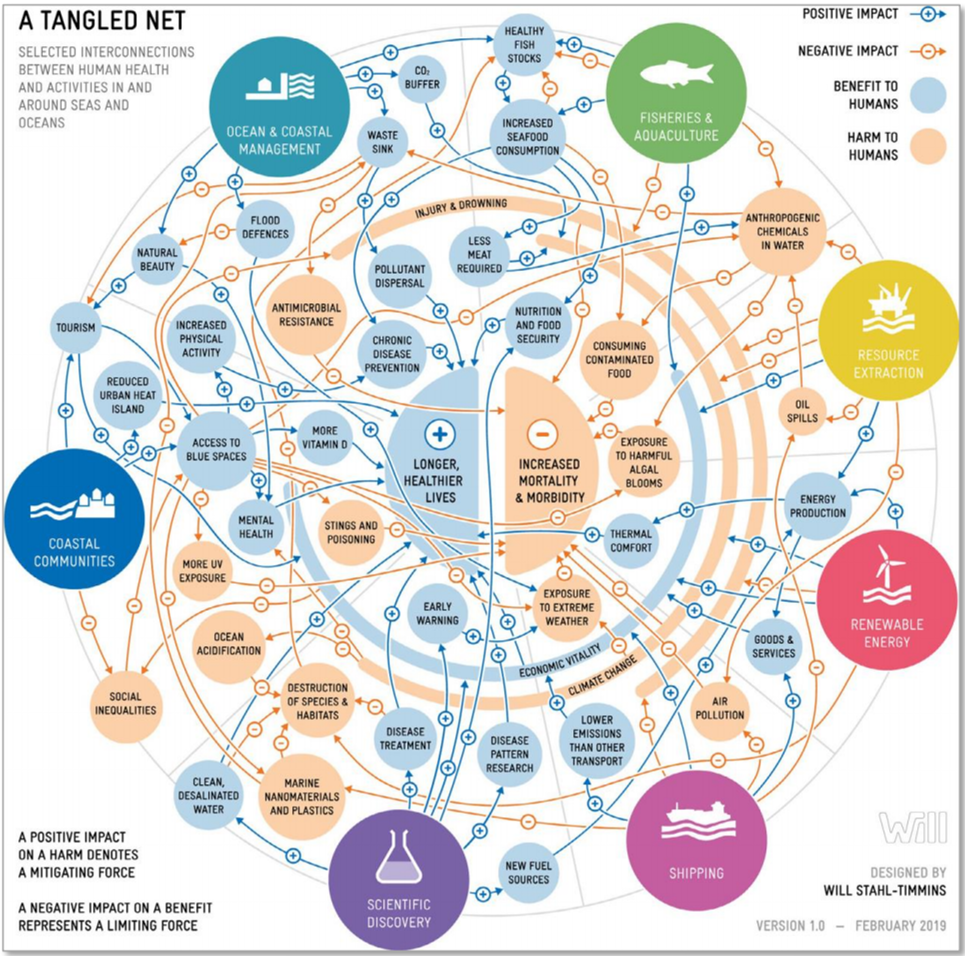
Linkages between human health and well-being (see subsect. 5B, chaps. 3 and 4) and the ocean have been known for a long time. New information and understanding by environmental scientists and epidemiologists reinforce the importance of these linkages (Planetary Health Alliance; United Nations Right to Healthy Environment; Convention on Biological Diversity, Biodiversity and Health). Linkages include benefits such as seafood as a source of protein and micronutrients: at least 3.3 billion people obtain approximately 20% of their dietary protein from this resource Ref 83. Additional health-related benefits are derived from medicines from marine organisms and opportunities to enhance well-being by living near the sea Ref 85 Ref 162.
Conversely, negative linkages include adverse impacts on health from exposure to natural and/or anthropogenically sourced events such as: exposure to biotoxins from harmful algal blooms (see sect. 4, subchap. 4H); microbial pathogens from sewage and agricultural run-off, agricultural pesticides, offensive odours and pathogens from the presence of animal carcasses/abattoirs, pathogens from hospital waste; chemical/particle pollutants, including nanoplastics and microplastics (see sect. 4, chap. 6); and radiological contamination (see figure II).
Figure II Routes of human uptake of harmful biogenic toxins, pathogens, particles and chemicals
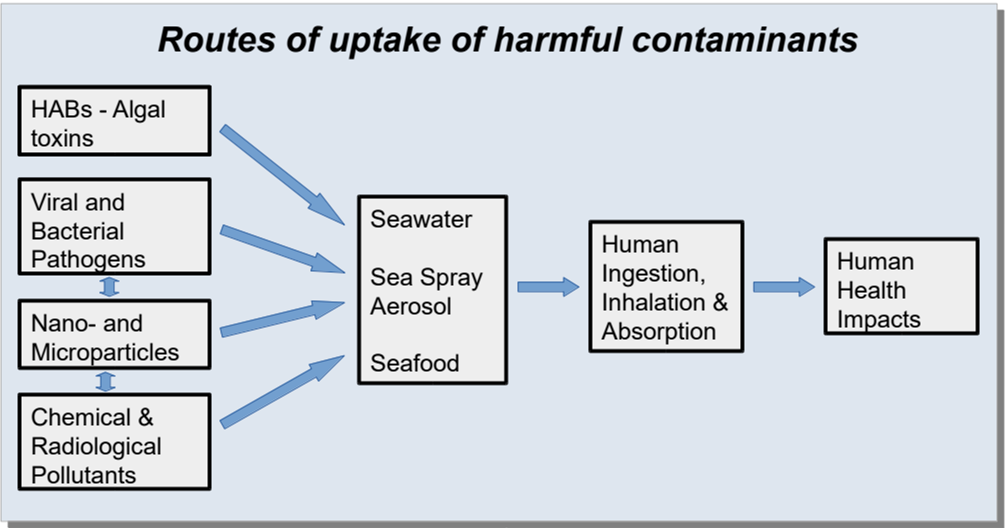
This chapter contains an assessment of the benefits and adverse impacts from selected ocean-human interactions that are generally global and regional in scope; and emerging health-related issues and problems of future concern are also identified (see tables 1 and 2). Major health challenges discussed below include: antimicrobial resistance (AMR), toxic chemical and pharmaceutical contaminants, nanoparticles and microparticles and environmental radiation, all within the context of climate change, biodiversity loss and environmental degradation, such as habitat loss and coastal zone destruction.
Socioeconomic decline is associated with marine ecosystem degradation and gives rise to, or exacerbates, pre-existing human physical and mental health issues (see subsect. 5B, chaps. 1 and 3). Concerns about pollutant mixtures and their potential interactions are also discussed, as harmful contaminants are rarely found in isolation. Lastly, key knowledge and capacity-building gaps are identified, as well as possible actions to effectively monitor and/or measure the risks and benefits of the links between the health of the ocean and that of the human population (see figure I). 'The ocean's degradation is affecting the enjoyment of human rights, including the rights to health and a clean, healthy and sustainable environment. (see report of the Special Rapporteur on the human right to a clean, healthy and sustainable environment, Astrid Puentes Riaño (A/HRC/58/59)).
2. General aspects of the relationship between the ocean and human health
Human health and well-being depend upon the health of the global ocean. The ocean provides food and livelihoods, such as fishing, transport and leisure, for more than 3 billion people (40% of the world's population) and is a source of cultural, spiritual and artistic expression (Fleming and others, 2023, chap. 1, with permission; figure III).
Figure III The Global Challenges Research Fund (UKRI - GCRF) Blue Communities Project examined the "health" of the environment and the people living in and around marine protected areas (MPAs) in four South-East Asian Countries
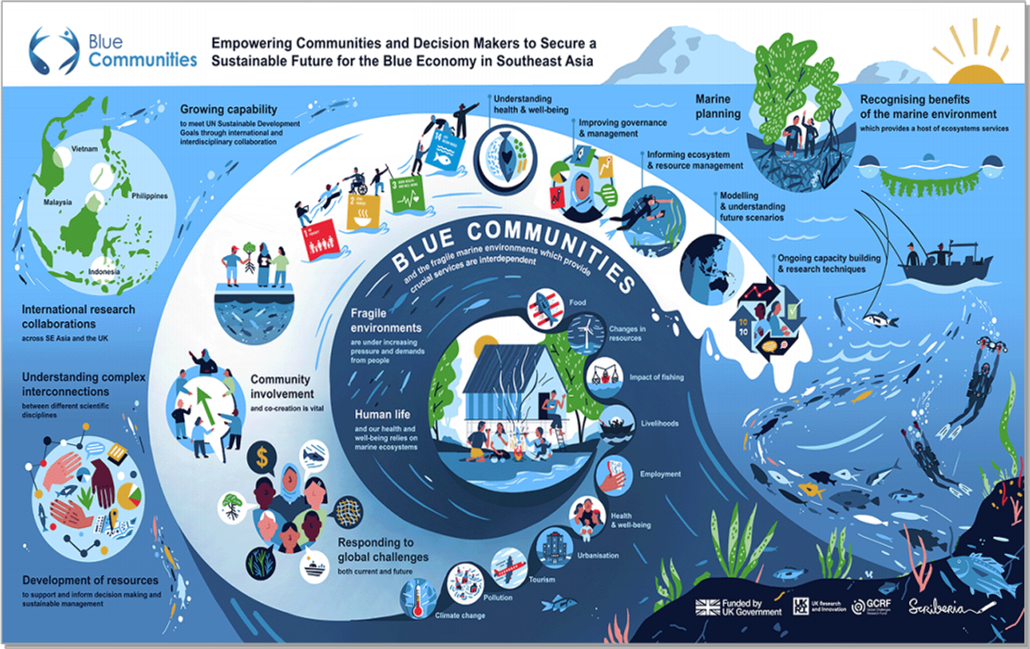
Source: https://www.plymouth.ac.uk/research/institutes/marine-institute/our-research/blue-communities, with permission from Lora Fleming.
3. Assessment of health benefits (table 1)
Health of coastal communities relative to inland communities
The Global Burden of Disease study found that the relative burden of disease has already shifted from infectious to noncommunicable diseases (NCDs), such s cardiovascular diseases, diabetes and depression, in many countries. It is in the prevention of NCDs that living near the ocean may offer important human health benefits Ref 85.
Relatively poorer coastal communities may benefit most from interactions with the ocean (Garrett and others, 2019), and people living nearer the coast report better overall health Ref 70 Ref 96. The benefits of residing near a coast can be seen globally Ref 158 and are enhanced during times of stress, such as the COVID-19 pandemic (Pouso and others, 2021; subsect. 5B, chap. 4). Nevertheless, there are challenges associated with coastal living, as noted in a recent report by the Chief Medical Officer of the United Kingdom (2021),even in a relatively high- income country such as the United Kingdom. Challenges include rapid and human-generated environmental change, social and environmental inequalities, poor investment in infrastructure and a lack of a long-term vision.
Research is beginning to show that communities near marine protected areas (MPAs) and other areas designated as "protected" experience diverse human health and well-being benefits, including decreased overall national mortality and improved child health, as well as positive ecosystem impacts Ref 156 Ref 114 Ref 182. It is clear that collaborative, equitable and effective management of these areas with ongoing involvement and economic improvement of local communities is essential to creating and sustaining these ocean and human health benefits Ref 23 Ref 104 Ref 204.
Pharmaceuticals from the sea
Marine-derived pharmaceuticals are currently valued at $4.1 billion and are anticipated to reach $9.1 billion by 2033 (Fact.MR, 2023). As at 2024, there were some 56 marine natural product-inspired pharmaceuticals in use or in human clinical trials (Antunes and others, 2023). For example, one of the fastest growing classes of anticancer agent, an antibody-drug conjugate (ADC), immunologically directs a toxin to selectively kill cancer cells. The toxic component was inspired by dolastatin 10, a natural product of a marine cyanobacterium Ref 220.
The health of functional marine ecosystems is in danger, and numerous marine species are rapidly disappearing, some of which we do not even get to know Ref 57. What unique adaptations do these species possess, and how could they benefit human health? This is a loss of unknowable yet presumably vast impact and consequence.
There is an urgent need to characterize, catalogue and use the DNA genetic blueprints of at least representative marine life.
Marine biotechnology
"Biotechnology", broadly defined, encompasses the exploration and application of biological processes for innovation across medicine, agriculture, manufacturing and any other sector that involves living systems. "Marine biotechnology" refers to those innovations derived from, or applied to, the ocean.
For thousands of years, humans have used marine resources for land-based biologic needs Ref 62, long before "biotechnology" became an established term. Medicines, foods and food supplements, topical ointments, colours and dyes - each are examples of innovative adaptation of local marine resources and are precursors to the advanced technologies that have emerged over the past century.
Building on traditional knowledge, anatomists and physiologists have used marine species to achieve greater understanding of basic biomedical processes. Biochemists extracted and isolated compounds for use in modern medicine and cosmetics. Molecular biologists and geneticists developed marine-based laboratory tests, applied enzymes for gene sequencing and are building reference libraries which hold untold biomedical value. Aquaculturists and conservationists are increasingly adopting sophisticated biotechnological techniques to optimize the feeding, reproduction and health of farmed species and wild marine life.
The explosive growth of synthetic biology, artificial intelligence and data science and new genetic tools means that the potential for new biotechnological adaptation of marine resources has never been greater, underscoring the continued importance of protecting and preserving a healthy ocean Ref 35.
Seafood security - sea fisheries and aquaculture
The role that oceans play as a source of healthy food is widely recognized. Foods from the ocean are considered among the healthiest foods, providing a wide range of essential nutrients, some even difficult to find in natural forms in other foods. Seafood provides high-quality proteins, omega-3 fatty acids (n-3 polyunsaturated fatty acids (PUFAs)) and other nutrients, such as iodine and other trace elements and vitamins (Liu and Ralston, 2021; The Role of Seafood in Child Growth and Development, National Academies; sect. 4, subchap. 4D; subsect. 5A, subchaps. 1A-1D). The conclusion from the recent Joint FAO/WHO Expert Consultation on the Risks and Benefits of Fish Consumption is very clear. Consumption of aquatic foods is highly beneficial for people at all ages, even when considering potential hazards.
Blue gym and mental and physical well-being
There is growing research evidence that interacting recreationally with unpolluted blue spaces (including the coasts and seas) can have beneficial effects on human physical health and mental well-being, such as anti-depression effects (Britton and others, 2020; Depledge and Bird, 2009; Fleming and others, 2024;White and others, 2021).
Coastal residents are more likely than inland dwellers to meet recommended levels of physical activity through recreational exercise Ref 191, reducing the risk of many NCDs. After correcting for income and other factors, longitudinal studies demonstrate that moving to the coast is associated with sustained improvements in mental health Ref 254. Because of these and other factors, such as generally lower levels of air pollution, several comparative studies across multiple countries indicate that many people living nearer the coast report better overall health and well-being Ref 96.
4. Assessment of adverse health impacts (table 2)
Harmful effects of exposure to contaminated seawater, marine aerosols and contaminated seafood
Despite health benefits, many microbial, chemical and particle pollutants and toxins can contaminate seafood. These include marine biotoxins, chemicals produced by certain marine organisms, that cause adverse health effects such as gastrointestinal and neurological symptoms and therefore pose unique food safety concerns Ref 118 Ref 168. According to the World Health Organization (WHO), food-borne illnesses are responsible for approximately 600 million cases and 420,000 deaths each year.
New marine biotoxins and other pollutants are continually being identified, and global demand for seafood continues to grow. Thus, oversight and quality control of seafood should be a priority to prevent future contamination and ensure safe, nutritious and high-quality seafood for consumers (FAO, 2020; subsect. 5A, subchap. 1E).
Harmful biological agents (table 2)
Harmful algal blooms, respiratory distress and toxicity
The term harmful algal blooms refers to a wide range of natural events that occur in aquatic systems that have negative impacts on humans, animals and/or ecosystems (table 2; figure III; GlobalHAB, 2017; Gobler and others, 2017; sect. 4, subchap. 4H and chap. 6 .; subsect. 5B, chap. 1). Some harmful algal blooms, through their production of natural toxins, cause massive mortalities of wild and cultured animals Ref 98. Although these toxic compounds can target certain organisms, they can also be transferred through food webs by non-affected vectors and induce adverse health effects in other animals and humans Ref 28 Ref 29 Ref 136 Ref 268.
Major efforts in interdisciplinary research and monitoring of cells and toxic compounds have targeted those harmful algal blooms with demonstrated human health impacts Ref 110. There were 11,000 hospital admissions and 4,000 emergency department visits in 2012 related to harmful algal blooms in Florida Ref 144, likely only the "tip of the iceberg" because of misdiagnosis and underreporting. However, in the past 40 years, progress in understanding HAB species- specific dynamics, bloom prediction and effective regulations have been successful in preventing seafood poisonings and mitigating illnesses associated with dermal contact from contaminated water or from inhalation of aerosolized toxins (see sect. 4, subchap. 4H and chap. 6).
Figure IV Harmful Algal Blooms (HABs)
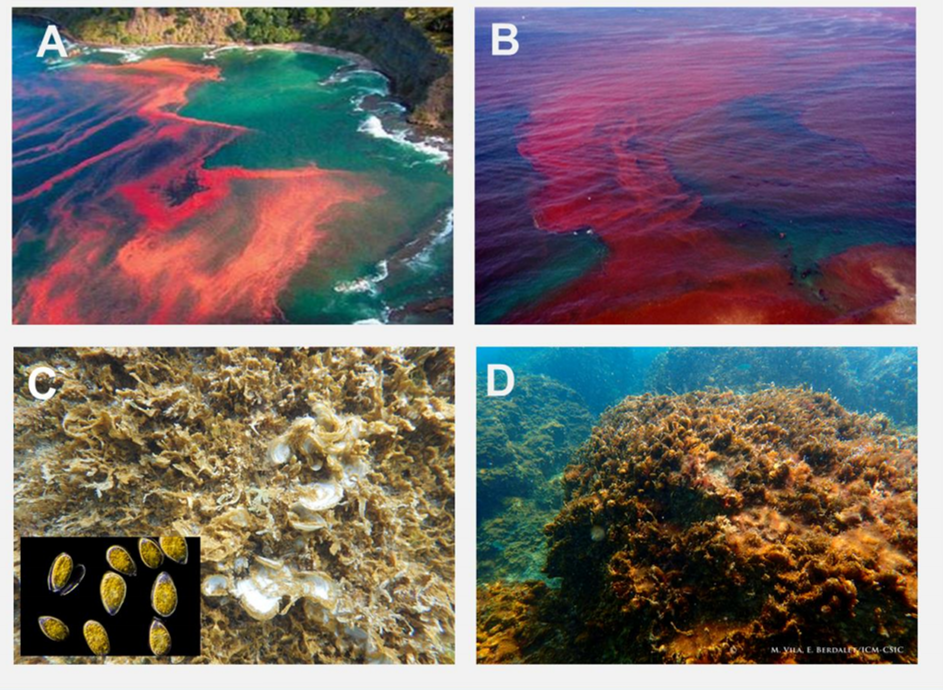
Source: Miriam Godfrey for the National Institute of Water and Atmospheric Research of New Zealand.
B. Red harmful algae, called Lingulodinium polyedra, often produces brightly bioluminescent coloured water discoloration. It has been associated with fish and shellfish mortality events, but its direct threat to human health is still being evaluated.
Source: Photograph: Kai Schumann, California Department of Public Health volunteer, www.noaa.gov/what-is-harmful-algal- bloom
C. Images of bloom of Ostreopsis cf. ovata that causes mortalities among sessile organisms and produces aerosolized toxins
Source: Inset: Microphotography of the benthic dinoflagellate Ostreopsis cf. ovata, by a professional, @RUBENDURO/SCIENCE INTO IMAGES);
D. Detail of the bloom covering macroalgae, north-west Mediterranean Coast, July 2024
Source: Photograph by Elisa Berdalet.
Paralytic shellfish toxins (PST) were dominant in East and West Coast America, South America, South- East and North-East Asia; diarrhetic shellfish toxins (DST) in the Mediterranean and Europe; and ciguatera in the Indian Ocean and the tropical Pacific, Australia and New Zealand and Central America and the Caribbean. Currently, adequate monitoring or regulatory tools are in place for diarrhetic shellfish toxins, paralytic shellfish toxins and amnesic shellfish toxins (AST).However, this is not true for fish- killing harmful algal blooms (Trainer and others, 2020) or for ciguatera toxins for which there are no simple or reliable toxin detection tools Ref 47.
Allergies, food sensitivities and poisonings from consumption of seafood
Seafood can be contaminated by naturally occurring or anthropogenic chemicals and toxins, including agents that cause poisonings, allergic reactions and food sensitivities. This part of the chapter (see table 2) focuses on natural toxins, such as saxitoxin and ciguatoxin (Backer and others, 2005) and chemicals that may naturally occur and/or be anthropogenic, such as mercury Ref 229. These chemical agents are responsible for both acute poisonings and exacerbation of chronic illnesses. Landrigan and others (2020) published an extensive review of human health and ocean pollutants, including adverse health impacts from exposure to industrial discharges, pharmaceutical wastes, pesticides, persistent organic pollutants (POPs), mercury and microplastics and nanoplastics.
Allergic reactions may occur after eating seafood, such as shrimp Ref 210 or fish that has been improperly handled (American Academy of Allergy, Asthma and Immunology, 2024). Food protein-induced enterocolitis syndrome in adulthood can be triggered by consuming seafood, particularly in the presence of other gastrointestinal pathologies such as irritable bowel syndrome symptoms Ref 106. These immune-mediated reactions typically occur shortly after consuming seafood.
Seafoods may also induce or exacerbate chronic health conditions. Non-immune-mediated reactions are known as "food sensitivity" or "intolerance" and comprise a delayed response involving the digestive system Ref 177 Ref 14.
Microbial infections and parasitic infestations from consumption of seafood and seawater exposure (mainly from human sewage and agricultural run-off)
Marine environments including recreational waters are polluted by human, animal and industrial waste containing diverse microorganisms including viruses, bacteria and single-celled and multicellular parasites. A systematic review of self-reported symptoms of recreational coastal water users in OECD countries indicated that marine recreational water users are approximately twice as likely to report symptoms of illness as non-marine water users Ref 140. The relationship is strengthened in many low- and middle-income countries, where untreated sewage may be discharged to the ocean and elevated temperatures from climate change favour survival and growth of indigenous marine pathogens such as Vibrio bacteria Ref 22.
A comprehensive literature review on viruses and bacteria in seafood contained reports of 371,962 cases, 18,723 hospitalizations and 445 deaths associated with 19,554 outbreaks in the United States from 2001 to 2021 recorded by the United States National Outbreak Reporting System (see figure V). More than 450 pathogenic viruses have been detected in sewage and in sewage-contaminated seawater (see figure V; Tisza and others, 2023). Norovirus is an important cause of recreational waterborne gastrointestinal llness Ref 128 owing to high loads in wastewater combined with a very low infective dose.
Figure V Human pathogenic enteric viruses in seawater and seafood.
| Human enteric viruses with potential waterborne and seafood transmission | |
| Popular name | Diseases caused |
| Polio | Paralysis, meningitis, fever |
| Coxsackie A, B | Herpangina, meningitis, fever, respiratory disease, hand- foot-and-mouth disease, myocarditis, heart anomalies, rush, pleurodynia, diabetes? Echo Meningitis, fever, respiratory disease, rush, gastroenteritis |
| Hepatitis A | Hepatitis |
| Human rotavirus | Gastroenteritis |
| Human adenovirus | Gastroenteritis, respiratory disease, conjunctivitis |
| Norovirus | Gastroenteritis |
| Sapporo-like virus | Gastroenteritis - to be determined |
| Hepatitis E | Hepatitis |
| Human astrovirus | Gastroenteritis |
| Human parvovirus | Gastroenteritis |
| Human coronavirus | Gastroenteritis, respiratory disease |
| Human torovirus | Gastroenteritis |
Source: Prepared by the writing team.
Infection risks associated with seafood consumption vary by type of organism and mode of preparation prior to consumption. Bivalve molluscs are of particular concern as they filter large volumes of water and concentrate viral and bacterial pathogens as well as waterborne parasites Ref 165. A study of retail mussels in Canada showed between 1.6% and 5.2%, 3.4% and 10.4% and 0% and 3.3% of packages of fresh mussels and oysters polymerase chain reaction (PCR) positive for Giardia, Cryptosporidium and Toxoplasma, respectively. Bivalves such as oysters and clams are often consumed raw, increasing the likelihood of pathogen transmission and human infection.
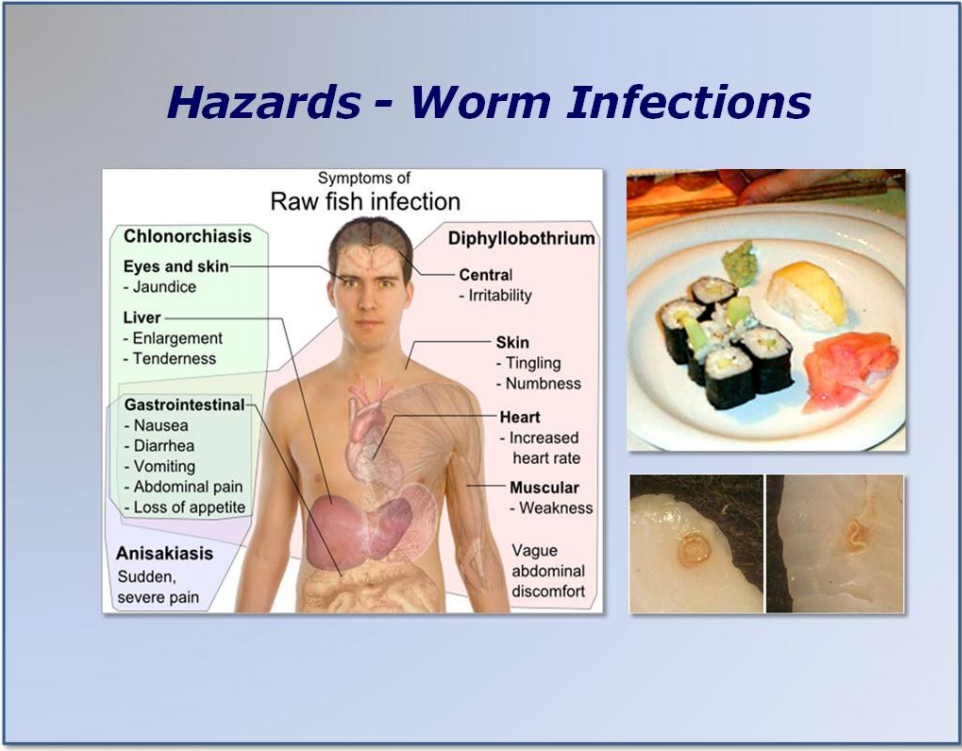
Finfish are the primary source of parasitic worms (see figure VI), and infection is associated with eating raw or undercooked fish Ref 214. Larval stages of tapeworms and Anisakid nematodes infect humans from contaminated raw, pickled, smoked or undercooked fish and cause gastrointestinal pathologies and allergic reactions Ref 19.
Figure VI Harmful parasitic worms in seafood, such as sushi and raw or under-cooked fish, and symptoms of infection
Antimicrobial resistance
Antimicrobial resistance (AMR) is the ability of microorganisms to withstand drugs used to treat infections. AMR refers to antiviral, antibacterial (or antibiotic) and, specifically, antifungal resistance, and antiparasitic drug resistance. Antibiotic-resistant bacterial infections are a growing pandemic, with 1.27 million deaths directly attributable to antibiotic resistant infections and 4.95 million deaths associated with these globally in 2019. Antibiotic resistance is often considered to be a clinical phenomenon; however, antibiotic resistance genes frequently acquired by bacteria through horizontal gene transfer are predominantly of environmental origin (Wright, 2007).
Many antibiotic drugs are natural products produced by environmental bacteria and fungi. However, less understood is that bacteria have evolved resistance mechanisms in deep evolutionary history, and these are now emerging in human pathogens relevant to global pandemics.
Antibiotic resistance has long been found in soil bacteria. When marine environments were screened for resistance using functional metagenomics, antibiotic resistance genes were found at all sites, with only 28% identified as known resistance genes. There was a high diversity of previously uncharacterized genes, demonstrating the scale of the marine environment as a reservoir of novel resistance genes Ref 117, with the potential risk of spreading to seafood and humans. For example, bacteria such as Aeromonas species are opportunistic human pathogens of aquatic (including marine) origin and are the origin of clinical important resistance genes that have subsequently spread to other human pathogens at a global scale Ref 66.
A subset of these bacterial pathogens (and accompanying non-pathogenic commensal bacteria) is resistant to antibiotics. For example, Leonard and others (2015) estimated that 6 million exposure events to a clinically important resistant type of the bacterium occurred (i.e. E. coli alone) in United Kingdom bathing waters. Further work illustrated an association between frequent coastal water exposure and gastrointestinal occupation of the same clinically important resistant E. coli Ref 140. In addition to being a reservoir of antibiotic resistance and facilitating environmental transmission to humans, the coastal environment may be impacted by pharmaceutical and antibiotic pollution that can select for antibiotic resistance, even at the very low concentrations present.
Figure VII Pathways for antifungal chemicals entering the marine environment and anti-fungal resistance
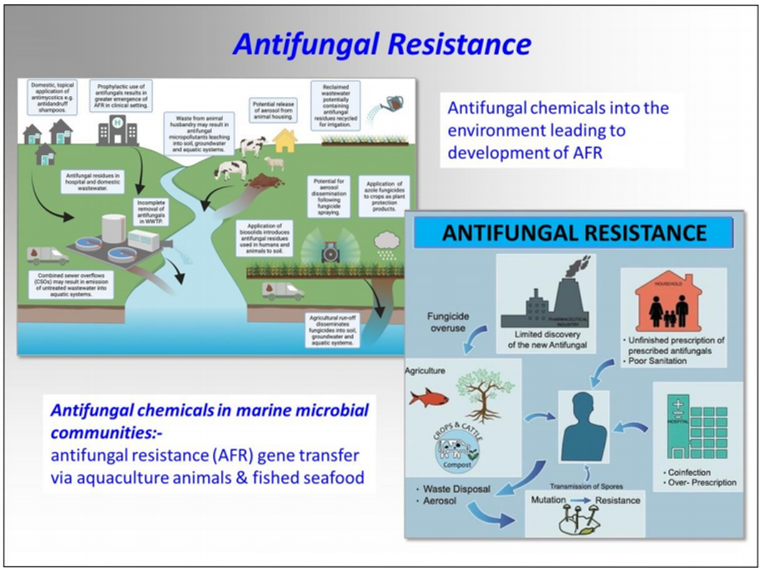
A recent study of more than 2,000 metagenomic DNA samples sequenced from marine environments revealed that more than 50% of distinct gene clusters were fungal Ref 39 Ref 130 Ref 206. In estuarine and coastal environments, antifungal residues from human and animal usage and crop applications may be at sufficient concentrations to select for resistance. However, an understanding of minimal selective concentrations of antifungals required to drive the evolution of resistance is just emerging Ref 224. There are also health concerns around antifungal-resistant fungal pathogens in wastewater inputs in coastal waters with the presence of Aspergillus and Fusarium isolates resistant to antifungals Ref 17.
Harmful non-biological pollutants (table 2)
Toxicity from chemical, particle and radiological contaminants
Non-biological pollutants in seafood can represent a serious health risk Ref 228. Although industrial production of potentially toxic chemicals is estimated to be more than 350,000 substances,only a minimal number of these have been identified and quantified in the environmental matrices by national environmental agencies. Seafood animals accumulate chemicals from seawater, sediments and/or diet with different outcomes according to tissues and species. Specific classes of chemicals, such as POPs and mercury, represent a higher risk for human consumption (Al-Sulaiti and others, 2022; see specific subparts below).
Environmental pollutants can be classified according to the biological mechanisms leading to chronic rather than acute health conditions (Mezzelani and Regoli, 2022). Exposure over time to endocrine disruptors in seawater, sediments, aerosols and seafood can alter hormonal balance in both animals and people. Other chemicals can interact with several cellular receptors to alter biological pathways, including those of lipid metabolism with obesogenic effects. Carcinogenic substances can damage DNA following heir biotransformation or through oxidative mechanisms with increased production of reactive oxygen species.
Particles such as microplastics and nanoplastics have been increasingly reported in all species of marine food webs and in human tissues Ref 246 Ref 230. Toxicological potential of microparticles and nanoparticles is inversely related to size, below 20 um down to nanoscale, alterations of immune system, inflammation, decreased growth rate and energy imbalance have been reported (Nardi and others, 2024). nRadioactive contaminants in seafood might potentially affect human health because of the intrinsic long-term risk potential of radiation to cause mutations and an increased risk of cancer (Smith and others, 2023).
Metals
Many metals and metalloids can impact the health of both aquatic organisms and humans: therefore, maximum permissible concentrations in fish and shellfish exist for mercury (Hg), arsenic (As; metalloid), cadmium (Cd) and lead (Pb) Ref 67 Ref 203.
The main ocean-related toxicity of mercury derives from its bacterial methylation to MeHg, rapidly accumulated and biomagnified, and accounting for up to 100% of total mercury in seafood. MeHg is neurotoxic for the developing nervous system, and dietary guidelines have been provided for a safe level of fish consumption by pregnant women (US-EPA and FDA, 2024). Long-term exposure to cadmium (Cd) results in renal dysfunction, osteoporosis and some cancers in humans Ref 211. Humans can be exposed to arsenic through the consumption of fish contaminated with arsenic. However, non-toxic organic species of arsenic are believed to be the dominant form of arsenic in fish and shellfish, although other organic metabolites produced by gut microbes may be more toxic Ref 43.
Petrochemicals and combustion products
Petrochemical and combustion products such as polycyclic aromatic hydrocarbons (PAHs) are ubiquitous substances in the marine environment Ref 115 Ref 134 Ref 170 Ref 223. Contamination problems are due to human activities such as petroleum extraction, transport, shipping, chemical transformation and their use (International Energy Agency (IEA), 2018; Rovira and others, 2021; UNEP/RAMOGE, 1999; subsect. 5A, subchap. 3B).
Petrochemical and PAH combustion product contamination may be used to evaluate risk for human health from exposure to petrochemicals and combustion processes Ref 149 Ref 154 Ref 170 Ref 181. However, the risk related to these products should be considered as a component of the general evaluation of human health risk due to the mixture of contaminants present in a particular marine environment, along with other factors such as climate change (see information on pollutant interactions below).
Persistent organic pollutants
POPs are hazardous chemicals that threaten human health and ecosystems: for example, polychlorinated biphenyls (Ritter and others, 1995; Stockholm Convention - pops.int). POPs remain intact for a long time, are widely distributed throughout the environment, bioaccumulate and biomagnify in living organisms through the food chain and are toxic to both humans and wildlife (see sect. 4, chap. 6). Furthermore, as a result of releases to the environment over the past several decades due to human activities, POPs are now widely distributed over large regions. This extensive contamination of both the environment and living organisms includes many foodstuffs, resulting in sustained exposure of many species (including humans) for periods of time that span generations, leading to both acute and chronic health effects.
Neurotoxic pesticides and agrochemicals
Wastewater and land runoff of the most common insecticides, herbicides, fungicides and rodenticides represent a significant environmental and health threat because the same molecular targets attacked in
pests are also present in other species, including diverse marine life and humans Ref 207. Neurotoxic effects in humans are supported by their detection in brains of patients affected by Alzheimer's and Parkinson's diseases Ref 195. Acaracides, such as rotenone and pyridaben, can cause human neurological disorders, including the possible pathogenesis of Parkinson's disease.
Pharmaceuticals and endocrine disruptors
More than 2,000 active pharmaceutical ingredients (APIs) are approved for use around the globe. APIs can be released to the environment during their production, patient and veterinary use and their ultimate disposal.
Monitoring of APIs in the marine environment has been carried out in North America, Asia, Africa, Europe, Latin America and Antarctica (UBA, 2024). Substances detected in seawater and estuarine waters included compounds from analgesic, antibiotic, antidepressant, anti-inflammatory, beta blocker, oestrogen, and lipid-lowering agent classes (UBA, 2024). Concentrations in water are typically in the low ng/L range or below (UBA, 2024; Leonard and others, 2020; see also the information on neurotoxic pesticides and agrochemicals above).
Monitoring of fish and shellfish demonstrates that many of these APIs are taken up by these organisms and potentially enter the food chain; therefore human exposure is possible Ref 157. Assessments have estimated the toxicological risks of seafood contamination to human health; these indicate that, in some instances, concentrations of APIs are at levels that might cause harm to humans Ref 80.
Consequently, there are increasing health risks from endocrine disruptors by being exposed to concentrated emerging chemicals through the consumption of contaminated seafood Ref 9 Ref 134.
Contaminants of emergent concern
Emerging contaminants in marine environments, such as detergents, personal care products (PCPs), perfluoroalkyl and polyfluoroalkyl substances (PFAS - "forever chemicals") (see figure VIII), and plastic additives, pose significant threats to marine organisms and human health Ref 50 Ref 108. PCPs (including triclosan, UV blockers, parabens and oxybenzone) are commonly found in sunscreens, shampoos and lotions Ref 42 Ref 196 Ref 247 Ref 264.
Flame retardants and plastic additives are widespread in the ocean and can cause reproductive and gender abnormalities in marine life owing to their endocrine-disrupting properties (Cocchetti and others, 2022; Liu and others, 2023; Xie and others, 2022 ).
Figure VIII Effects of perfluoroalkyl and polyfluoroalkyl substances (PFAS) on human health
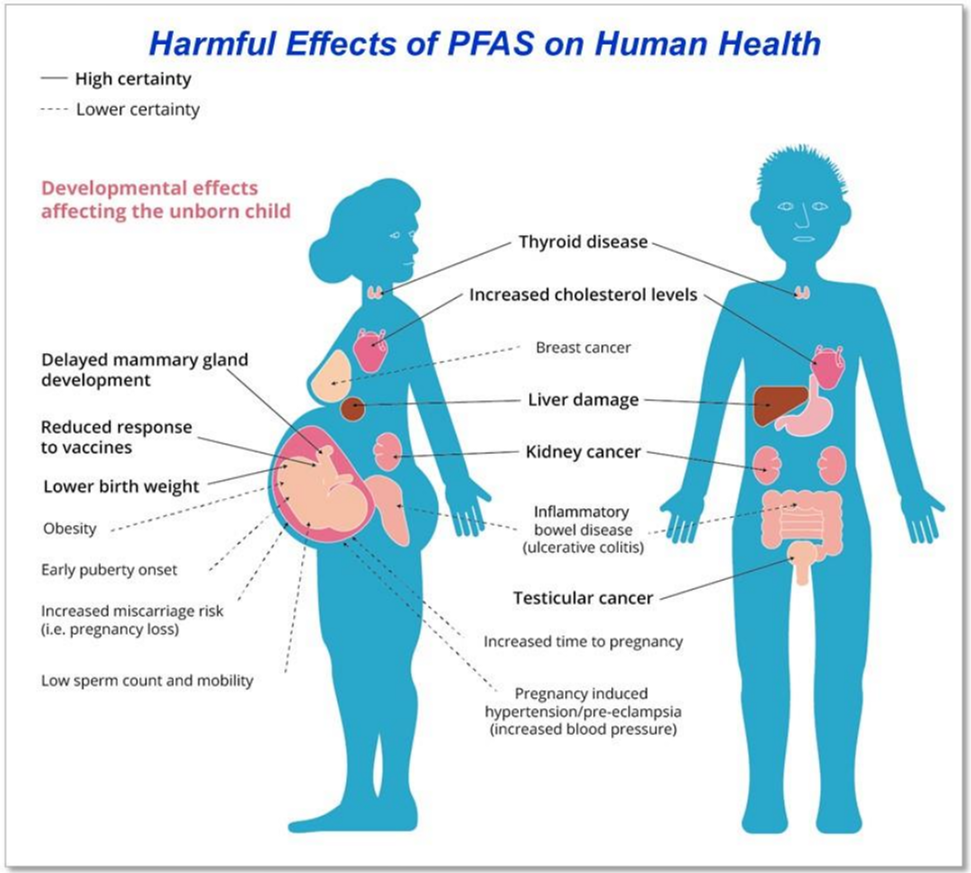
PFAS are ubiquitous in coastal waters and are bioaccumulated in the human seafood chain Ref 222. Exposure to all pollutants is particularly concerning for Indigenous and other coastal communities with high seafood diets: they face significant health risks, including immune suppression as identified by the European Food Safety Authority Ref 32 Ref 46 Ref 88.
Microparticles and nanoparticles (including plastics) and from road run-off
Nanotechnology is generating increasing amounts of nanomaterials that enter the marine environment Ref 105. Other nanomaterials and micromaterials are generated by various combustion and frictional processes: of particular concern are what are known as "hidden plastics" Ref 163. These nanoplastics and microplastics are produced by frictional and partial combustion of vehicle tyres. Tyres are approximately 25% plastic and tyre dust contributes to particulate air polluion and road run-off draining into marine environments and comprises approximately 28% of all nanoplastic and microplastic pollution Ref 163 Ref 184 Ref 219.
Figure IX Tyres contain approximately 25% plastic, and frictional heating and breakdown into tyre dust from road contact generates toxic and carcinogenic polycyclic aromatic hydrocarbons and nanoplastic particles
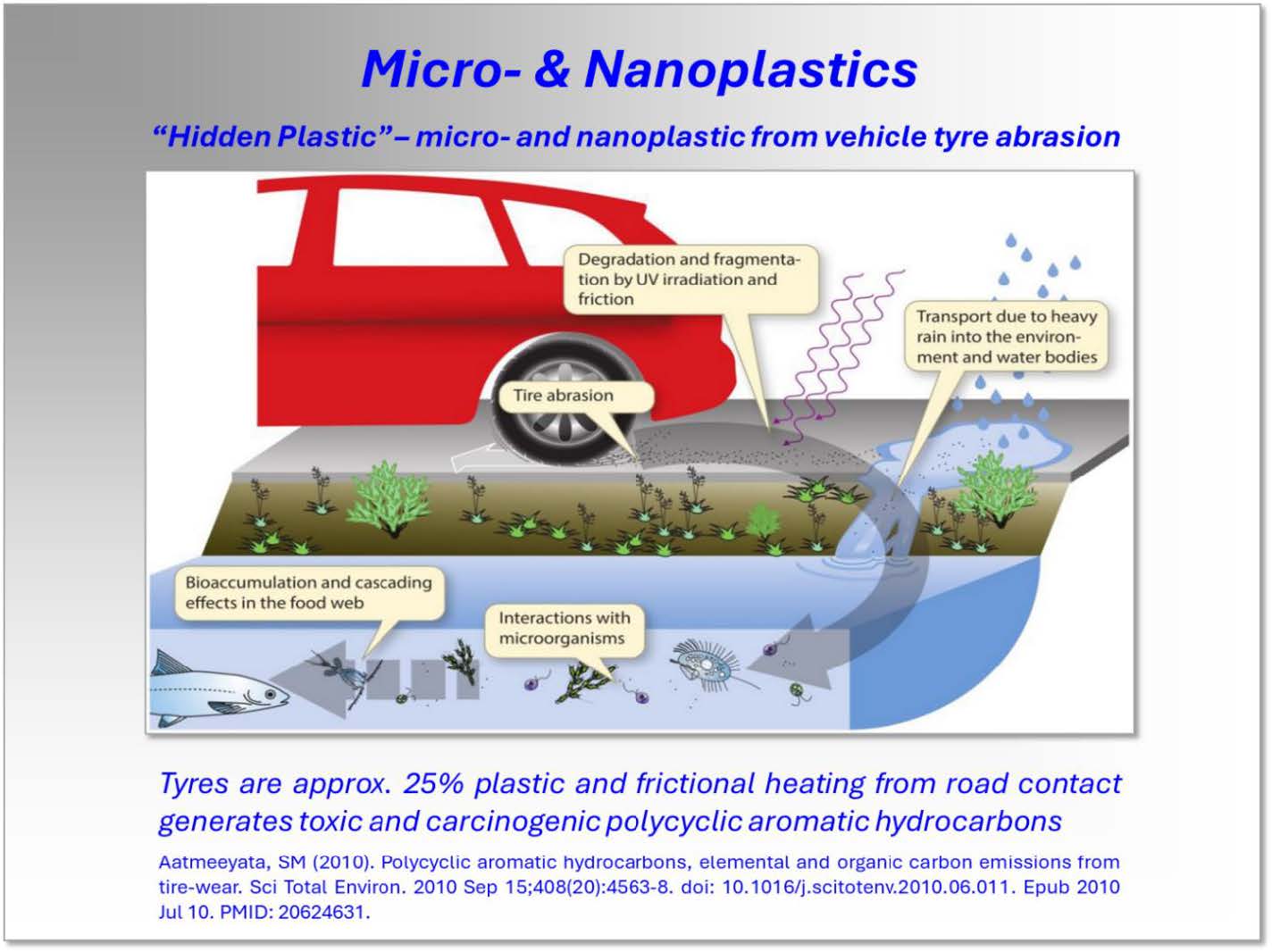
Source: Adapted from Sieber and others, 2022; Aatmeeyata, 2010; Mayer and others, 2024.
Evidence for harmful human health effects of these particles, as well as other various nanoparticles, is growing rapidly, with ingested and inhaled particles finding their way into most human organ systems, as well as emerging evidence for endocrine-disrupting effects (see figure X; Leso and others, 2023; Wang and others, 2023; Yee and others, 2021). Routes of particle uptake include consumption of seafood and inhalation/ingestion of nanoparticles in marine aerosols (i.e. sea spray) Ref 132 Ref 153 Ref 194 Ref 143.
Figure X Potential harmful effects of ingested and inhaled microplastics and nanoplastics
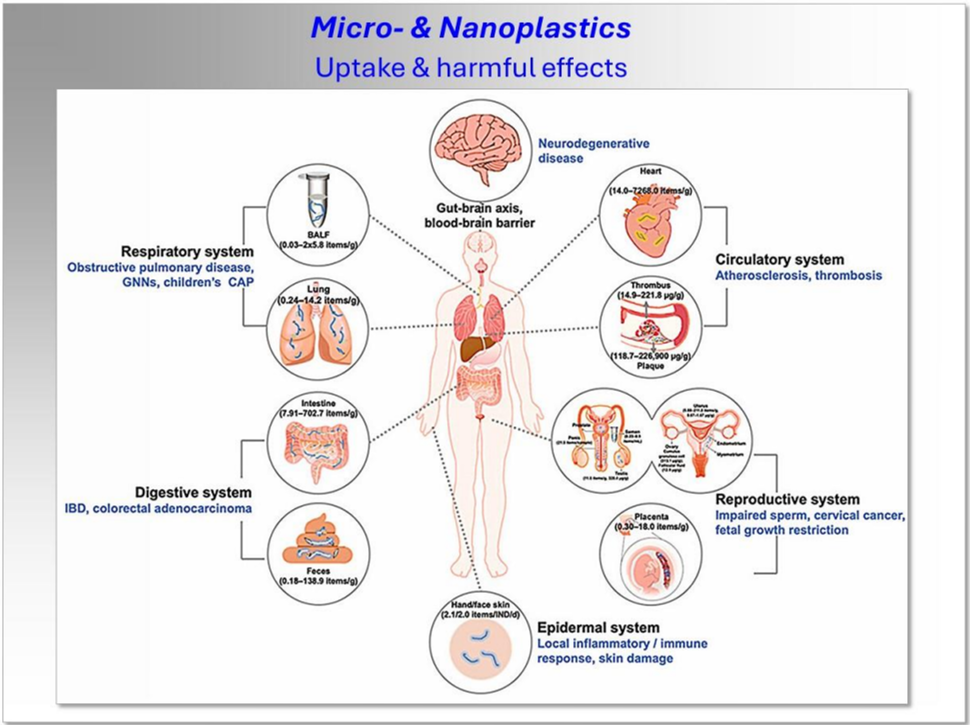
Microplastics and nanoplastics serve as transport vectors for many chemical additives and adsorbed chemicals in the ocean which are persistent, bioaccumulative, mobile and toxic to the marine fish and other organisms Ref 10 Ref 12. Consequently, microplastics and nanoplastics, chemical additives and adsorbed chemicals, such as polycyclic aromatic hydrocarbons, can lead to potential adverse health effects in marine organisms and humans Ref 1 Ref 164.
A new issue of health concern is the presence of microfibres and nanofibres of glass in edible filter- feeding molluscs from degradation of fibreglass hulls of boats, including derelict boats Ref 48.
Environmental radiation
Along with other contaminants, the seas and global ocean are the ultimate recipient of anthropogenic radionuclides. For example, 5.9 x 10¹⁸ becquerel (Bq) of tritium, is discharged in quantities much larger than any other radionuclide Ref 82 Ref 161. 90% of this radionuclide is present in the oceans, compared with 9% and 1% in continental waters and atmosphere, respectively. In this context, the Pacific Ocean currently contains 500,000 TBq of natural and 2,500,000 TBq of anthropogenic tritium, the latter mostly from past atmospheric nuclear weapon testing (Smith and others, 2023).
IAEA concluded in its Comprehensive Report of July 2023 that the discharge of ALPS treated water into the sea from Fukushima Daiichi Nuclear Power Station is consistent with relevant international safety standards and that the discharge will have a negligible radiological impact on people and the environment Ref 5. There are however many unresolved issues in relation to potential short- and long-term impact related to controlled release of radioactive water following the Fukushima Daiichi nuclear accident Ref 81.It is therefore necessary to continue to monitor whether the discharge is being managed as originally planned.
According to the United Nations Scientific Committee on the Effects of Atomic Radiation, DNA is the most important target for the action of ionising radiations. Damage to DNA, if not repaired, is the ultimate cause of many cancers and is associated with many other harmful health impacts. Exposure to radionuclides through different routes, such as consumption of seafood, inhalation or skin penetration, therefore, poses health risks Ref 161. To protect human health, biokinetic models have been developed for specific radionuclides, within specific organs. Data from biokinetic models are then used to calculate absorbed radiation doses and potential biological effects for each target organ (Paquet and others, 2017). It is being emphasized that, in order to minimize the presence of hazardous wastes, Sustainable Development Goals 12 and environmentally sound technologies, Goal 17 should be redefined to include radioactive wastes Ref 259 Ref 258.
Pollutant interactions
It is now well established that biological effects of environmental contaminants are due to their cumulative actions Ref 34 Ref 129. The toxic effects of contaminants present in a mixture may be additive, and even in some cases antagonistic Ref 89 Ref 175; however, synergistic effects of toxic chemicals are also well demonstrated Ref 6 Ref 95 Ref 159 Ref 176. Obviously, there is a clear need to estimate risk for human health from marine pollution, taking into account all available chemical data in terms of contaminant concentrations in waters, sediments, aerosol and seafood. It is important to evaluate the biological effects of contaminants on seafood organisms exposed to all bioavailable contaminants Ref 53 Ref 243 to gain a more complete overview of toxicity and risk.
5. Key remaining knowledge and capacity-building gaps
There clearly remain many unknowns in the field of human health-marine environmental interactions (see figure I). However, there is considerable evidence for research progress and a better understanding of the many and often interconnected areas of interest to scientists and regulators (see figure XI).
Figure XI Key remaining knowledge and capacity gaps that are essential to address for effective ocean regulation and management
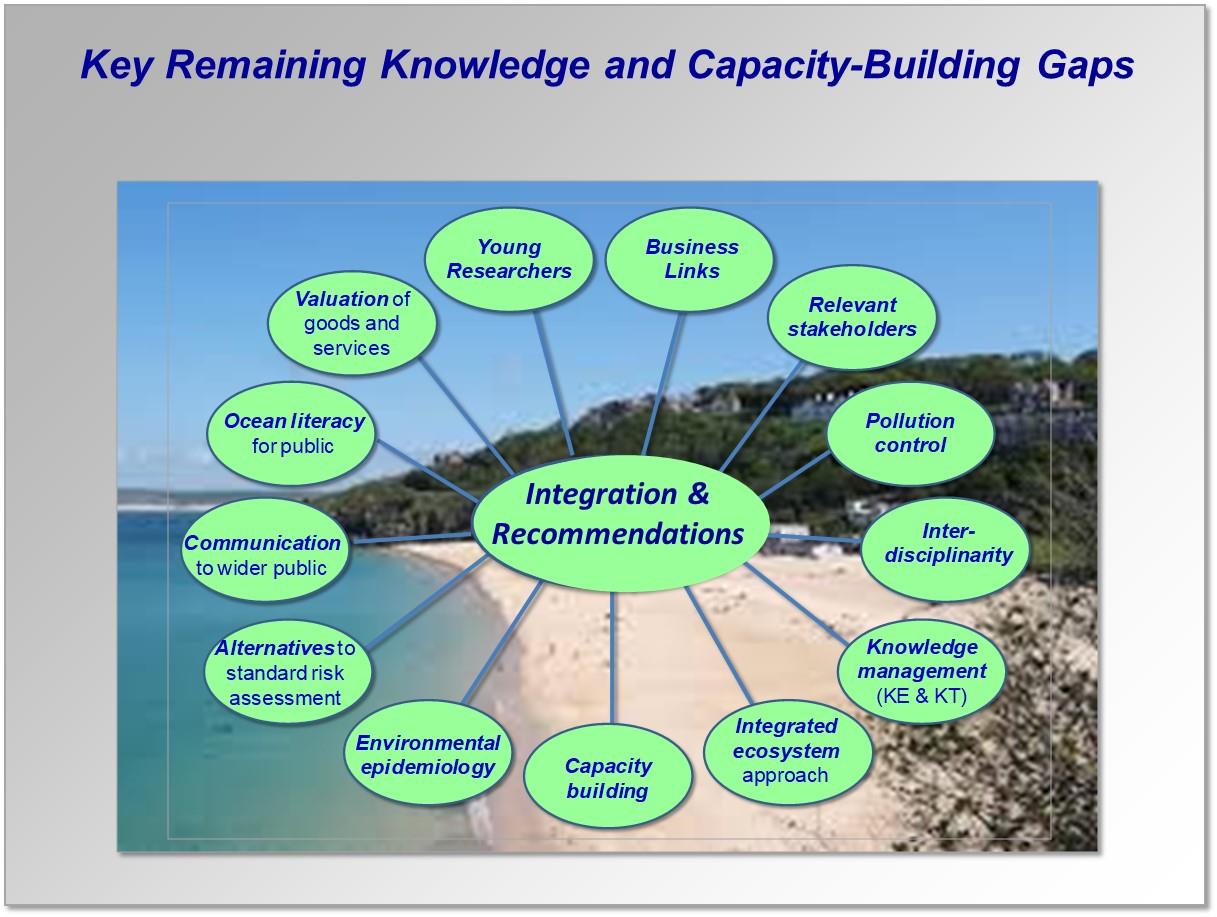
Continuing emphasis should be placed on the following key problem areas and issues of emerging concern given the socioeconomic importance of environmental interactions with human health:
Current lack of an effective international interdisciplinary panel or forum that includes: environmental epidemiologists; public health, biomedical and environmental scientists; clinicians, environmental psychologists, lawyers and economists; marine ecologists and oceanographers; and environmental regulators and managers;
The High Level Panel for a Sustainable Ocean Economy (https://oceanpanel.org) has produced a number of reports on various aspects related to human health but only one specific report;
Important to start linking human health and well-being indicators with ocean "health" indicators, and exploring long-term impacts (risks and benefits) of changing ocean health on human health; and recommended in the Ocean Panel ocean and human health (OHH) report (https://oceanpanel.org/publication/ocean-human-health/) as one of three major recommendations;
Recognition that actions intended to ameliorate risk from particular factors may have unintended adverse consequences for ecosystems and human health;
The evidence indicates that pollution is causing serious health issues, so why are many national authorities not taking action to protect people ?;
Promotion of sustainable and equitable use of decreasing marine resources as a result of increasing population and demand;
Recognition of the benefits of increasing interdisciplinary research efforts into oceans and human health;
Suggest effective monitoring and quantitative assessment (where possible) of risks and benefits of interlinked human and ocean health;
Try to ensure that data are truly available and transparent for use by communities and others;
Increase sustainable and equitable efforts to identify potential marine pharmaceuticals and other natural products;
Try to ensure that seafood monitoring programmes are effective and up to date for biotoxins, pollutant chemicals and micromaterials and nanomaterials;
Suggest increasing efforts to reduce the impact of antimicrobial and antifungal resistance in relation to seafood and aquatic systems;
Aim to end microbial, chemical (including pharmaceuticals) and particulate pollution of the oceans;
Suggest support for a global ban on the production of single-use plastic and promote effective plastic waste management;
Recognize that unpredictable emergent future health challenges will occur;
Recognize that climate change will result in the geographical redistribution of human pathogens; and that enhanced storm-related disturbance of coastal sediments, and erosion of nearshore landfill sites, will release chemical pollutants and other types of waste;
Recognize the importance of serendipity in scientific discovery, such as the production of "dark" oxygen from sea-floor metal-rich nodules Ref 227; the possible role of algaltoxins in inhaled/ingested sea spray aerosols having a beneficial health effect Ref 242; and the role of environmental endocrine disrupters in gender dysphoria Ref 49;
Recognize the benefits of developing an integrated modelling capacity for predicting environmental impacts on human health Ref 7 Ref 173;
Suggest extending regional and international marine pollution control programmes to all countries.
6. Conclusions and vision
The global ocean provides humans with many benefits, including the production of healthy seafood. The marine environment can also be the source of potential health benefits by providing novel pharmaceuticals and related natural products derived from marine organisms, as well as contributing to disease prevention and treatments through encouraging physical activity and enhancing psychological well-being (see table 1).
The complexity of ocean-human interactions is increasing, with mixed exposures from contaminated environments to harmful algal toxins, pathogenic bacteria and viruses, anthropogenic (man-made) chemicals (including microplastics and nanoplastics), as well as other types of pollution. Untangling the relative contributions and interactions of these stressors is challenging, particularly when coupled with climate change, biodiversity loss and ecosystem degradation of the global ocean Ref 7.
Figure XII Schematic diagram illustrating the multiple drivers underlying the various processes contributing to the interactions between marine ecosystems and human health
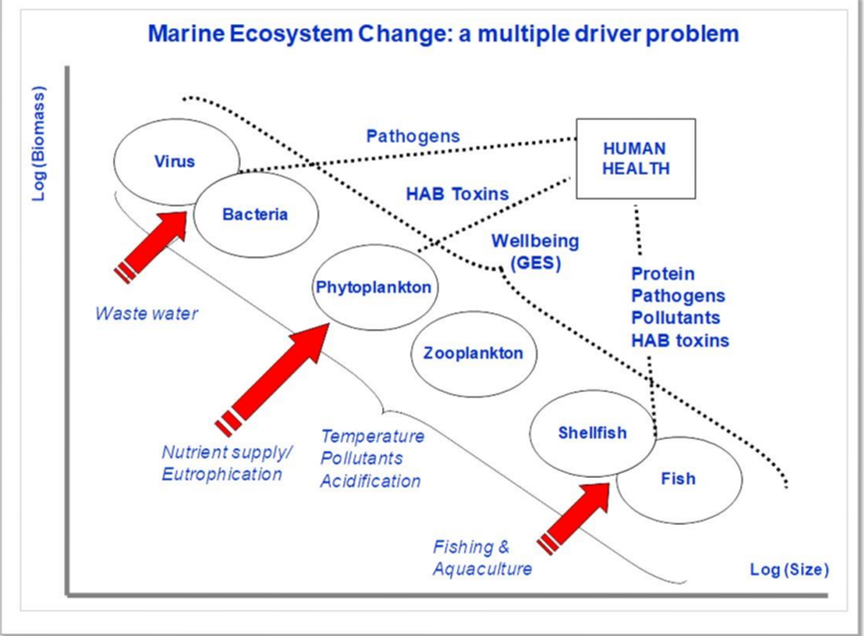
It is crucial that all of these stressors be considered in depth globally to understand the complexity of interactions between the ocean and human health (see figures I, II and XII). At its core, there must be a well-thought-out and clearly articulated vision of what would be an acceptable relationship between humans and the oceans in the future. This means accepting and embracing that the current and future state of the global ocean will in large part determine current and future sustainability and the health and well- being of all humans on Earth.
The attainment of such a vision requires an appropriate international interdisciplinary forum or panel. However, a one-off report on ocean and human health from the High Level Panel for a Sustainable Ocean Economy (Ocean Panel) could provide the example for a potential way forward (https://oceanpanel.org/publication/ocean-human-health/).
Such a panel/forum could prioritize:
The failure of numerous international agreements to prevent progressive loss of marine biodiversity and collapse of several marine ecosystems with implications for human health, and explore strategies to reverse this situation;
Effective protection of coastal communities from natural threats, including flooding and tsunamis/hurricanes;
Knowledge of interactions between natural and anthropogenic stressors that impact ocean and human health;
Most issues are associated with both benefits and threats - it often depends on the context as to whether we sacrifice a benefit to remove a threat or accept a threat to gain a benefit: who then decides and on what basis?;
Awareness of health professionals and documentation of environmentally related illnesses;
Exploring potential unique medicines and other natural marine products, while ensuring sustainable use and protection of marine life and habitats Ref 189;
Developing an integrated modelling capacity for predicting environmental impacts on human health Ref 7 Ref 173.
Acknowledgements
The authors wish to thank Professor Ralf Ebinghaus (Germany, a member of the Pool of Experts for the third World Ocean Assessment) and Professor Michael Depledge (United Kingdom) for their insightful and very helpful comments during the preparation of this chapter.
Table 1 Selected direct and indirect risks, benefits and opportunities for human health and well-being from interactions with the ocean (Fleming and others, in press)
| Benefit/opportunity | Healthy ocean benefit | Potential human health and well- being benefit | Citations |
|---|---|---|---|
| Climate and weather | The ocean is a key player in the regulation of the planet climate; it is critical to the mitigation of climate change. | Prevention of injury, death and mental health impacts from extreme weather. | Villasante and others, 2023; Falkenberg and others, 2023 |
| Heat and CO2 sink | The ocean absorbs 25% of all CO2 emissions and more than 90% of excess atmospheric heat. | Prevention of extreme heat, drought, crop loss, starvation. | Hoegh-Guldberg and others, 2023. |
| Oxygen | The ocean sustains all life on earth by providing 50% of the oxygen produced on Earth each year and 80% of all the oxygen ever created. | Prevention of crop and other biodiversity loss. | Grégoire and others, 2023 |
| Biodiversity (including marine protected areas [MPAs]) | Biodiversity sustains food webs and ecosystems richness and productivity. Emerging research with communities living in/around MPAs and other areas designated as "protected": diverse human health and well- being benefits; collaborative and effective management with ongoing involvement of local communities essential towards creating and sustaining these ocean and human health benefits. | Livelihoods, improved nutrition. Decreased overall national mortality, and improved child health, as well as positive ecosystem impacts. | Madarcos and others, 2021; Haque and others, 2023; Nowakowski and others, 2023; Ban and others, 2019; Gollan and Barclay, 2020; Rasheed 2020; Winther and others, 2020. |
| Livelihoods and economics | The ocean is a source of wealth. The ocean economy is estimated to generate $1.5 trillion-$2.5 trillion annually and to provide jobs for more than 30 million people. | Seafood as nutrition and prevention of noncommunicable diseases. (NCDs) and mental health impacts. | Dodd and others, 2020; Ocean Panel, 2020 |
| Marine biotechnology (including marine drugs) | Ca. 30,000 unique molecules, 10% currently known natural products discovered in marine life; 23 approved pharmaceutical agents have been developed from marine molecules, and an additional 33 are in clinical trials. The ocean is a source of new medicines and biotechnologies, from essential pain medicines to plastic alternatives to essential DNA libraries. | Development of treatments for inflammation, immune system disorders, skin pathologies, infectious diseases, NCDs and cancers. Alternatives to plastics and creation of sustainable other biomaterials. | Antunes and others, 2023; CHEMnetBASE, 2023; Pascual-Alonso and others, 2024; Bouley and others, 2023 |
| Seafood and food security | For more than 3 billion people, nearly 40% of the world's population, the ocean is an essential source of food and livelihood. | Prevention of: starvation, childhood stunting, noncommunicable diseases. | Golden and others, 2021; FAO, Duke University and WorldFish, 2022; Tigchelaar and others, 2022; Golden and others, 2016 |
| Blue spaces (including culture) | Interactions with the ocean and with other blue spaces enhance the physical health and mental well-being of humans from infancy to old age. | Supports culture, physical health and mental well-being. | White and others, 2021; Fleming and others, 2019 |
| Threat | Unhealthy ocean risks | Potential human health and well- being risks | Citations |
|---|---|---|---|
| Heat | The ocean absorbs more heat, sea surface temperature rises: changes in global and local ocean circulation patterns causing increased frequency of extreme weather, polar ice melting, sea level rise, and coastal flooding; migration of fish stocks from dependent communities; increased harmful algal blooms; and pathogen spread. | Death Injury Infectious diseases Starvation HAB illnesses Mental health Noncommunicable diseases (NCDs) Disrupt cultural integrity | Nash and others, 2017; Falkenberg and others, 2021 |
| Acid | Increased atmospheric CO2 absorbed by ocean, resulting in low pH causing weakness of calcium skeletons in coral, shellfish and calcium-containing microorganisms sustaining entire marine web; impacts on fisheries. | Starvation Obesity Mental health NCDs Disrupt cultural integrity | Nash and others, 2017; Falkenberg and others, 2020 |
| Deoxygenation | Dissolved ocean oxygen decreases as water becomes warmer, creating "oceanic dead zones"; impacts on fisheries. | Starvation Obesity Mental health NCDs Disrupt cultural integrity | Grégoire and others, 2023; Falkenberg and others, 2020 |
| Overfishing | Destructive industrial fishing practices with rising temperatures and pollution damage on ocean ecosystems, biodiversity and fisheries exhaustion. | Starvation Obesity Mental health NCDs Disrupt cultural integrity Jobs loss in small fishery communities, forcing population migrations | FAO. 2022; Golden, Koehn, and others, 2021; FAO Duke University and WorldFish, 2022; Tigchelaar and others, 2022; Golden and others, 2016; Maycock, 2023 |
| Oil and gas extraction | Fossil fuel extraction and transport with toxic hydrocarbons release, increasing climate change; oil spills: injury, death of marine organisms; destroy biodiversity; impact fisheries. | Death Injury Mental health Increased NCDs Disrupt cultural integrity | Lelieveld and others, 2019; Nash and others, 2017; Landrigan and others, 2020 |
| Deep-sea mining | Deep-sea mining damages: seabed and vulnerable habitats, radiation releases, impacts on fisheries, biodiversity threats. | Obesity NCDs Possible cancer risk Starvation Disrupt cultural integrity | Hamley 2022; Miller and others, 2021; Landrigan and others, 2020 |
| Pollution | 80% arises on land from human activities includes plastics, heavy metals, oil wastes, manufactured chemicals, pesticides, radiation and nutrients (including sewage): damages ecological health; biodiversity; impacts fisheries. | Harmful algal blooms illnesses Neurotoxicity Fetal/developmental toxicity Reproductive toxicity Mental health Noncommunicable diseases Cancer Disrupt cultural integrity | Landrigan and others, 2023; Landrigan and others, 2020; Short and others, 2021 |
| Economics | Profit-driven, ocean-based economic development with inequitable and short-term economic gain; no concern for protecting and preserving ocean health or for health and well- being of marginalized coastal communities: biodiversity loss and marine ecosystems degradation. | Occupational injury and death Starvation Mental health Disrupt cultural integrity | Germond-Duret, 2022; Das, 2023 |
Table 2 Selected adverse human health impacts from ocean interactions
| Health threat/ source of toxin/ pollutant | Primary exposure route | Known adverse health effects (with key references) | Potential prevention/ mediation actions and/or information to support policymaking |
|---|---|---|---|
| Effects of exposure to contaminated seawater, marine aerosols and seafood | |||
| Harmful algal blooms, respiratory distress and toxicity | |||
| Brevetoxins from Karenia brevis blooms | Sea breezes during the planktonic Karenia brevis blooms | Respiratory distress, asthma exacerbations: Fleming, 2011 www.sciencedirect.com/science/article/abs/pii/S1568988310000934 | Appropriately targeted messaging for coastal communities regarding ocean-borne risks from sea breezes. Monitoring benthic substrates (mainly macroalgae) on shallow beaches to establish early warnings. Coordination of scientists and local authorities. Increasing awareness of the symptoms among general public and medical professionals. |
| Non-identified aerosolized toxins (emerging threat), spreading in temperate coasts with global change | Sea breeze during the benthic Ostreopsis spp. blooms | Respiratory distress, general malaise: Berdalet, E., and others, 2022. https://doi.org/10.1016/j.hal.2022.102320 Lemée, R., and others, 2023. https://anses.hal.science/anses-04169914 Funari, E. and others, 2015. https://doi.org/10.1016/j.hal.2015.10.008 | |
| Ciguatera poisoning, endemic in the tropical latitudes, spreading with global change | Ingestion of fish and some molluscs | Complex array of neurologic, gastrointestinal, cardiovascular, respiratory and psychological symptoms: Chinain, M. and others, 2021. https://doi.org/10.1016/j.hal.2020.101873 Friedman, M. and others, 2017. https://doi.org/10.3390/md15030072 | Early warning systems for alerting local populations, such as the one implemented in French Polynesia. It includes: - Awareness campaigns to warn individuals against specific risk-taking behaviours (most notably with regard to the fish species and parts of the fish preferentially consumed), - Systematic report of ciguatera poisoning; - Prevention messages provided all year round - Public meetings conducted alongside field campaigns. - Dissemination tools in local languages for the general public, schools and healthcare professionals. Monitoring benthic species using artificial substrates and quantitative polymerase chain reaction (qPCR). |
| Paralytic shellfish poisoning (PSP) affecting diverse communities on the Pacific coast of America and in Asia (e.g. the Philippines) | Ingestion of shellfish (e.g. butter clams in Alaska) from subsistence harvesting. | Symptoms include nausea, vomiting, diarrhoea, numbness and tingling of the lips, mouth, face and neck; severe cases: paralysis of chest and abdomen muscles possibly leading to death: Berdalet, E. and others, 2023, in Fleming L. and others, 2023. ISBN: 978-0-323-95227-9 | Monitoring toxic species in the water and paralytic toxin in shellfish guarantees food safety; the challenge is monitoring in remote Indigenous communities. This results in economic losses and difficulties for the local inhabitants. The problem affects poorer regions of the planet, especially in Asia and Latin America. No data from Africa. |
| Extreme HAB events, e.g. Pseudo-nitzschia blooms in response to the 2014-2016 north-east Pacific marine heat wave, and HABs in Chile. | Massive fish kills, poisoning of marine fauna. To date, no known effects of humans because of strict monitoring, but fauna affectation. | Limited evidence of human poisoning due to Alexandrium catenella Trainer, V. and others, 2019, https://doi.org/10.1016/j.hal.2019.03.009 | Monitoring of events with reporting of human cases Appropriately targeted messaging for coastal communities regarding ocean-borne risks from seafood consumption. |
| Dinophysis (diarrhoetic) in Europe | Ingestion of shellfish | Nausea, vomiting, severe diarrhoea, abdominal cramps, respiratory distress: Reguera and others, 2024, https://doi.org/10.3389/frpro.2023.1328026 | Monitoring of events with reporting of human cases Appropriately targeted messaging for coastal communities regarding ocean-borne risks from seafood consumption. |
| Allergies, food sensitivities and poisonings from consumption of seafood | |||
| Allergic reactions to seafood | Typically, crustaceans but may include molluscs. | Symptoms include hives, wheezing, trouble breathing, cramps, nausea, vomiting and anaphylaxis: Wai and others, 2020, https://doi.org/10.3390%2Fijms21062234; Ruethers and others, 2018, https://doi.org/10.1016/j.molimm.2018.04.008 American Academy of Allergy, Asthma and Immunology, 2024, "Histamine toxicity (scombroid poisoning): overview", updated 2024, accessed 7- July 24. | Appropriately targeted messaging for coastal communities regarding ocean-borne risks from seafood consumption. Rapid methods to determine toxin concentrations in suspected seafood and clinical specimens. Global database for reporting human and animal allergies, food sensitivities and poisonings from consuming seafood. [One Health Harmful Algal Bloom System; One Health Harmful Algal Bloom System (OHHABS) | Harmful Algal Blooms |CDC; National Outbreak Reporting System (NORS); National Outbreak Reporting System (NORS) CDC]. Required reporting for specific foodborne and waterborne diseases [National Notifiable Diseases Surveillance System | CDC] Enhanced seafood monitoring programmes. Modelling to connect environmental data with illness data (e.g., electronic health records [Centers for Medicaid and Medicare Services. www.cms.gov/]) to allow prediction of increased risks [Environmental Public Health Tracking Network https://ephtracking.cdc.gov/]. |
| Food sensitivities and intolerance | Seafood consumption | Symptoms include bloating, flatulence, constipation and stomach pain: Muthukumar and others, 2020, https://doi.org/10.1016/j.foodres.2020.109780 González-Delgado and others, 2022, https://doi.org/10.1016/j.jaip.2022.05.006 | |
| Seafood poisonings | Fresh and processed seafood consumption | Wide range of effects, mostly self-limiting, depending on the toxin involved: Ansdell, 2019. https://doi.org/10.1016/B978-0-323-54696-6.00049-5 Backer and others, 2004, in Dabrowski and Sikorski, Toxins in Food. https://doi.org/10.1201/9780203502358 Takahashi and others, 2019. https://doi.org/10.3390/ijms20102435 Landrigan and others, 2020. https://doi.org/10.5334/aogh.2831 | |
| Asthma induction and/or exacerbation | Fish processing activities, skin contact, aerosols | Occupational asthma: Añibarro and others, 2023. Occupational asthma induced by fish exposure - PubMed (nih.gov) | Targeting messaging and enhanced personal protective equipment for those working in fish processing activities. |
| Microbial infections and parasitic infestations from consumption of seafood and seawater exposure (mainly from human sewage and agricultural run-off) | |||
| Seawater infections | Infections (skin/wound, gastrointestinal, ear, nose and throat (ENT), eye, respiratory, blood) associated with ocean exposure, including plastics: Bowley and others, 2022 https://doi.org/10.1016/j.tim.2020.06.011 | ||
| Seafood contamination with bacteria | Seafood, ocean plastics exposure | Bacterial infections (skin/wound, gastrointestinal, ENT, eye, respiratory, blood) associated with ocean exposure, including plastics: Iwamoto and others, 2010 https://doi.org/10.1128/CMR.00059-09 Bowley and others, 2021 https://doi.org/10.1016/j.tim.2020.06.011 | Appropriately targeted messaging for coastal communities regarding ocean-borne risks from seafood consumption. Global database for reporting human and animal allergies, food sensitivities, and poisonings from consuming seafood. [One Health Harmful Algal Bloom System; One Health Harmful Algal Bloom System (OHHABS) | Harmful Algal Blooms | CDC; National Outbreak Reporting System (NORS); National Outbreak Reporting System (NORS)| CDC]. Required reporting for specific foodborne and waterborne diseases [National Notifiable Diseases Surveillance System | CDC]. Enhanced seafood monitoring programmes. |
| Vibrio cholera | Seafood | Cholera (severe bacterial gastrointestinal illness): Kanungo and others, 2022 https://doi.org/10.1016/S0140-6736(22)00330-0 | |
| Vibrio vulnificus | Seafood | Gastrointestinal disease, gangrene, death: Archer and others, 2023, https://doi.org/10.1038/s41598-023-28247-2 | |
| Norwalk virus | Seafood | Gastrointestinal disease: Campos and Lees, 2014, https://doi.org/10.1128/AEM.04188-13 | |
| Parasitic illnesses | Seafood | Gastrointestinal disease: Overstreet, 2013, https://doi.org/10.1007/978-1-4419-0851-3877 | |
| Antimicrobial resistance (AMR) | |||
AMR associated with ocean exposure
Anti-fungal resistance (AFR) associated with ocean exposure | Water, skin and aerosol exposure, ingestion of seafood, beach sand exposure, ocean plastics exposure.
Water skin and aerosol exposure, ingestion of seafood, beach sand exposure, ocean plastics exposure. | Resistant or untreatable bacterial infections (skin/wound, gastrointestinal, ENT (ears, nose, throat), eye, respiratory, blood) associated with ocean exposure, including plastics: Krupesha Sharma and Sumithra, 2023, https://doi.org/10.1007/978-981-16-9723-4_6-1 Stevenson and others, 2023, https://doi.org/10.1016/j.scitotenv.2023.168234 Resistant or untreatable fungal infections (skin/wound, ENT, eye, respiratory, blood) associated with ocean exposure: Babic and others, 2022 https://doi.org/10.3390/jof8080860 Stevenson and others, 2022 https://doi.org/10.3389/ffunb.2022.918717 | Decreased use of antibiotics, veterinary and human. Increased environmental and human antimicrobial resistance monitoring. Decreased use of antifungals in veterinary and human medicine. Increased environmental and human antifungal monitoring. |
| Harmful non-biological pollutants (chemical, particle and radiological pollution) | |||
| General exposure to pollutants | |||
| Chemical exposure to pollutants in seawater, seafood and sediment/sand | Water skin and aerosol exposure, ingestion of seafood, sediment/ sand exposure. | Dermatologic, cancer, reproductive, neurologic: Landrigan and others, 2020, https://doi.org/10.5334/aogh.2831 Multiple toxicological targets: Mezzelani and Regoli, 2022, https://doi.org/10.1146/annurev-marine-040821-075606 Tacon and others, 2023; https://doi.org/10.1080/23308249.2023.2238821 Microplastics and nanoplastics can cause alterations of the immune system, inflammation, decreased growth rate and energy unbalance Nardi and others, 2024, https://doi.org/10.1016/j.envpol.2024.123327 Radiological injury Smith and others, 2023, https://doi.org/10.1126/science.adi5446 | Appropriately targeted messaging for coastal communities regarding ocean-borne risks from seafood consumption. Global database for reporting human and animal allergies, food sensitivities and poisonings from consuming seafood. [National Outbreak Reporting System (NORS); National Outbreak Reporting System (NORS)| CDC]. Required reporting for specific foodborne and waterborne diseases [National Notifiable Diseases Surveillance System | CDC]. Enhanced seafood monitoring programmes Increased research for toxicological pathology related to consumption of contaminated seafood. |
| Metals | |||
| Industrial and natural processes | Seafood consumption of pollutant metals and metalloids. | Neurotoxicity, oxidative stress and cancers EC, 2023 https://eur-lex.europa.eu/legal-content/EN/TXT/?uri=celex%3A32023R0915 | Appropriately targeted testing of seafood. |
| Petrochemicals, fires and combustion products | |||
| Industrial and natural processes, incomplete combustion, transport and shipping | Ingestion of seafood, inhalation of aerosols and skin contact. | Polycyclic aromatic hydrocarbons (PAHs) are considered toxic primarily due to their carcinogenic potential, meaning they can cause cancer, particularly of the skin, lung, and bladder, when exposed to significant levels over long periods; other potential toxic effects include impacts on the reproductive system, immune system dysfunction and developmental issues, especially when exposure occurs during pregnancy; short-term exposure may cause irritation to the eyes, skin, and respiratory tract depending on the level of exposure. International Energy Agency - IEA, 2018; El-Maradny and others, 2023; Rovira and others, 2021; Hassaan and others, 2024; Landrigan and others, 2020; Liu and others, 2023; Montuori and others, 2021; Shi and others, 2022; Speight, 2019 | Appropriately targeted testing of seafood. |
| Persistent organic pollutants | |||
| Industrial | Seafood consumption. | Oxidative stress, increased cancer risk, reproductive disorders, alteration of the immune system, neurobehavioural impairment, endocrine disruption, genotoxicity and increased birth defects Ritter and others, 1995; Stockholm Convention - pops.int www.pops.int/Home/tabid/2121/Default.aspx | Appropriately targeted testing of seafood. |
| Neurotoxic pesticides and agrochemicals | |||
| Agricultural / industrial from wastewater and land runoff | Seafood consumption. | Neurotoxicity contributing to Parkinson's disease and possibly to Alzheimer's disease: Richardson and others, 2019 | Appropriately targeted testing of seafood. |
| Pharmaceuticals and endocrine disruptors | |||
| Industrial production, use by the patient or in veterinary use, and ultimate disposal including hospital waste | Bathing and seafood consumption. | Toxicological risks of exposure have not yet been established, although human health assessment for APIs contaminating freshwater environments would suggest that the level of risk from this route is likely to be low (WHO, 2012): WHO (2012) Pharmaceuticals in drinking water www.who.int/publications/i/item/9789241502085 UBA - Umweltbundesamt (2024) Database- pharmaceuticals in the environment www.umweltbundesamt.de/en/database- pharmaceuticals-in-the-environment-0#undefined Madikezela and Ncube, 2022 | Precautionary approach and further toxicological assessment focused on human health. Appropriately targeted testing of seafood and bathing water. |
| Contaminants of emergent concern | |||
| Industrial waste, domestic wastewater | Seafood consumption. | Endocrine disruption including reproductive and gender abnormalities in marine life and may contribute to human gender dysphoria (Combi and others, 2022; Guo and others, 2023; Cocchetti and others, 2022; Liu and others, 2023; Xie and others, 2022) | Precautionary approach and further toxicological assessment focused on human health. Appropriately targeted testing of seafood. |
| Microparticles and nanoparticles (including plastics) and from road run-off | |||
| Industrial waste, atmospheric pollution, run-off from highways and degradation of fibreglass boat hulls | Seafood consumption and inhalation/ingestion of marine aerosols. | May contribute to endocrine disruption, oxidative stress, dementias and cancers Amelia and others, 2021; Andrade and others, 2021; Megha and others, 2024; Ciocan and others, 2024 | Precautionary approach and further toxicological assessment focused on human health. Appropriately targeted testing of seafood. |
| Environmental radiation | |||
| Nuclear industry and historical weapons testing | Seafood consumption, exposure to bathing water and inhalation / ingestion of marine aerosols. | Radiation injury, oxidative stress and cancers Matsumoto and others, 2021; Smith and others, 2023 | Appropriately targeted testing of seafood and bathing water. |
| Pollutant interactions | |||
| Multiple sources: seafood consumption and inhalation/ingestion of marine aerosols | Seafood consumption, exposure to bathing water and inhalation/ingestion of marine aerosols. | Synergistic and antagonistic toxicities in animal investigations Forest, 2021; Moore and others, 2021; Albani and others, 2023; Gauthier and others, 2014; Martin, 2023; Moore and others, 2018 | Precautionary approach and further toxicological assessment focused on human health. Appropriately targeted testing of seafood. |
References
- Aatmeeyata, S.M. (2010). Polycyclic aromatic hydrocarbons, elemental and organic carbon emissions from tire-wear. Sci Total Environ., Sep 15; 408(20): 4563-8. doi: 10.1016/j.scitotenv.2010.06.011. Epub 2010 Jul 10. PMID: 20624631.
- Abdel-Shafy, H.I., Mansour, M.S.M. (2016). A review on polycyclic aromatic hydrocarbons: Source, environmental impact, effect on human health and remediation. Egypt. J. Pet., 25, 107-123.
- Adeniji, A.O., Okoh, O.O., and Okoh, A.I. (2019). Distribution pattern and health risk assessment of polycyclic aromatic hydrocarbons in the water and sediment of Algoa Bay, South Africa. Environ Geochem Health, 41, 1303-1320.
- Adhikari P.L., Maiti, K., Overton, E.B., Rosenheim, B.E., Marx, B.D. (2016). Distributions and accumulation rates of polycyclic aromatic hydrocarbons in the northern Gulf of Mexico sediments. Environ Pollut., 212, 413-423.
- IAEA (2023). IAEA Comprehensive Report on the Safety Review of the ALPS-Treated Water at the Fukushima Daiichi Nuclear Power Station, International Atomic Energy Agency, Vienna.
- Albani, G., Asiedu, D., Abrokwah, S., Jónasdóttir, S.H., Nielsen, T.G., Acheampong, E., Ruiz, L.H., Ekumah, B., Koski, M. (2023). Synergistic and additive effects of microplastic, nickel and pyrene on survival, reproduction, and egestion of a tropical copepod. Aquat Toxicol., 265, 106737.
- Allen, J.I. (2011). Marine Environment and Human health: An Overview. In Environmental Science and Technology, 33 Marine Pollution and Human Health, pp. 1-24, R.E. Hester, and R.M. Harrison, eds. Royal Society of Chemistry.
- Al-Sulaiti, M.M., Soubra, L., Al-Ghouti, M.A. (2022). The Causes and Effects of Mercury and Methylmercury Contamination in the Marine Environment: A Review. Current Pollution Reports, 8: 249- 272. https://doi.org/10.1007/s40726-022-00226-7.
- Alvarez-Muñoz, D., Rodríguez-Mozaz, S., Jacobs, S., Serra-Compte, A., Cáceres, N., Sioen, I., Verbeke, W., Barbosa, V., Ferrari, F., Fernández-Tejedor, M., Cunha, S., Granby, K., Robbens, J., Kotterman, M., Marques, A., Barceló, D. (2018). Pharmaceuticals and endocrine disruptors in raw and cooked seafood from European market: Concentrations and human exposure levels. Environment International, 119, 570- 581.
- Amelia, T.S.M., Khalik, W., Ong, M.C., Shao, Y.T., Pan, H.J., Bhubalan, K. (2021). Marine microplastics as vectors of major ocean pollutants and its hazards to the marine ecosystem and humans. Progress in Earth and Planetary Science, 8.
- American Academy of Allergy Asthma and Immnology (2024). Histamine Toxicity Symptoms, Diagnosis, Treatment & Management (aaaai.org). Updated 2024 ..
- Andrade, H., Glüge, J., Herzke, D., Ashta, N.M., Nayagar, S.M., Scheringer, M. (2021). Oceanic long- range transport of organic additives present in plastic products: an overview. Environmental Sciences Europe, 33.
- Ansdell, V. (2019). 49 - Seafood Poisoning, In Travel Medicine (Fourth Edition), Jay S. Keystone, Phyllis E. Kozarsky, Bradley A. Connor, Hans D. Nothdurft, Marc Mendelson, Karin Leder, eds., pp. 449-456. Elsevier. doi.org/10.1016/B978-0-323-54696-6.00049-5.
- Añibarro, B., Feijoo, L., de Las Cuevas, N., Seoane, F.J. (2023). Occupational asthma induced by fish exposure. Occup Med (Lond)., Dec 30; 73(9): 581-583. doi: 10.1093/occmed/kqad127. PMID: 38016183.
- Antunes, C., Aleem, A., Curtis, S.A. (2024). Gastroesophageal Reflux Disease, 2023 Jul 3. In StatPearls [Internet]. Treasure Island (FL): StatPearls Publishing; Jan. PMID: 28722967.
- Archer, E.J., Baker-Austin, C., Osborn, T.J., Jones, N.R., Martínez-Urtaza, J., Trinanes, J., Oliver, J.D., González, F.J.C., Lake, I.R. (2023). Climate warming and increasing Vibrio vulnificus infections in North America. Sci Rep., Mar 23; 13(1): 3893. doi: 10.1038/s41598-023-28247-2.
- Assress, H.A., Nyoni, H., Mamba, B.B., and Msagati, T.A. (2020). Occurrence and risk assessment of azole antifungal drugs in water and wastewater. Ecotoxicology and environmental safety, 187, p. 109868.
- Atlas, E., Giam, C.S. (1981). Global transport of organic pollutants: ambient concentrations in the remote marine atmosphere. Science, 211(4478), 163-165.
- Audicana, M. T., Ansotegui, I. J., de Corres, L. F., and Kennedy, M. W. (2002). Anisakis simplex: dangerous -- dead and alive ?. Trends in parasitology, 18(1), 20-25. https://doi.org/10.1016/s1471- 4922(01)02152-3.
- Ausili A., Gabellini M., Cammarata G., Fattorini D., Benedetti M., Pisanelli B, Gorbi S., Regoli F. (2008). Ecotoxicological and human health risk in a petrochemical district of southern Italy. Mar. Environ. Res., 66, 215-217. https://doi.org/10.1016/j.marenvres.2008.02.062.
- Backer, L.C., Schurz-Rogers, H., Fleming, L.E., Kirkpatrick, B., Benson, J. (2004). Marine phycotoxins in seafood. In Toxins in Food, Waldemar M. Dabrowski, Zdzislaw E. Sikorski, eds., pp. 155-190. CRC Press, Boca Raton, 376 p.
- Baker-Austin, C., Lake, I., Archer, E., Hartnell, R., Trinanes, J., Martinez-Urtaza, J. (2024). Stemming the rising tide of Vibrio disease. Lancet Planet Health, Jul 8(7): e515-e520. doi: 10.1016/S2542- 5196(24)00124-4. PMID: 38969478.
- Ban, N.C., Gurney, G.G., Marshall, N.A., and others (2019). Well-being outcomes of marine protected areas. Nat Sustain, 2, 524-532. https://doi.org/10.1038/s41893-019-0306-2.
- Barakat, A.O., Mostafa, A., Wade, T.L., Sweet, S.T., El Sayed, N. (2011). Distribution and characteristics of PAHs in sediments from the Mediterranean coastal environment of Egypt. Mar. Pollut. Bull., 62, 1969- 1978.
- Baumard, P., Budzinski H., Michon, Q., and others (1998). Origin and Bioavailability of PAHs in the Mediterranean Sea from Mussel and Sediment Records. Estuar. Coast. Shelf Sci., 47(1), 77-90.
- Bellinger D.C. (2008). Very low lead exposures and children's neurodevelopment. Curr. Opin. Pediatr., 20, 172-177. https://doi.org/10.1097/MOP.0b013e3282f4f97b.
- Benedetti M., Giuliani M.E., Regoli F. (2015). Oxidative metabolism of chemical pollutants in marine organisms: Molecular and biochemical biomarkers in environmental toxicology. Annals of the New York Academy of Sciences, 1340, 8-19. https://doi.org/10.1111/nyas.12698.
- Berdalet, E., Fleming, L.E., Gowen, R., Davidson, K., Hess, P., Backer, L.C., Moore, S.K., Enevoldsen, H., Hoagland, P. (2016). Marine Harmful Algal Blooms, Human Health and Wellbeing: challenges and opportunities in the 21st century. Journal of the Marine Biology Association of the United Kingdom, 96 (Special Issue 01): 61-96. doi:10.1017/S0025315415001733.
- Berdalet, E., Pavaux, A .- S, Abós-Herrandiz, R., Travers, M., Appéré, G., Vila, M., Thomas, J., de Haro, L., Estrada, M., Medina-Pérez, N .- I., Viure, L., Karlson, B., Lemée, R. (2022). Environmental, human health and socioeconomic impacts of Ostreopsis spp. blooms in the NW Mediterranean. Harmful Algae, 119, 102320. https://doi.org/10.
- Berdalet, E., Chinain, M., Kirkpatrick, B., Tester, P.A. (2023). Harmful algal blooms cause ocean illnesses affecting human health. In Oceans and Human Health: Opportunities and Impacts, second edition, Fleming, L., Creencia, L.A., Gerwick, W.H., Goh, H.C., Gribble, M.O., Maycock, B., Solo- Gabriele, H., eds. Cambridge: Academic Press, 2023. doi.org/10.1016/B978-0-323-95227-9.09990-5.
- Bergamasco, A., Culotta, L., De Stefano, C., Orecchio, S., Sammartano, S., Barreca, S. (2014). Composition, Distribution, and Sources of Polycyclic Aromatic Hydrocarbons in Sediments of the Gulf of Milazzo (Mediterranean Sea, Italy). Polycyclic Aromatic Compounds, 34(4), 397-424.
- Bilela, L.L., Matijosyte, I., Krutkevicius, J., Alexandrino, D.A.M., Safarik, I., Burlakovs, J., Gaudencio, S.P., Carvalho, M.F. (2023). Impact of per- and polyfluorinated alkyl substances (PFAS) on the marine environment: Raising awareness, challenges, legislation, and mitigation approaches under the One Health concept. Marine Pollution Bulletin, 194.
- Boonyatumanond, R., Wattayakorn, G., Togo, A., Takada, H. (2006). Distribution and origins of polycyclic aromatic hydrocarbons (PAHs) in riverine, estuarine, and marine sediments in Thailand. Mar Pollut Bull., 52, 942-956.
- Bopp, S.K., Barouki, R., Brack, W., Dalla Costa, S., Dorne, J.C.M., Drakvik, P.E., Faust, M., Karjalainen, T.K., Kephalopoulos, S., van Klaveren, J., Kolossa-Gehring, M., Kortenkamp, A., Lebret, E., Lettieri, T., Nørager, S., Rüegg, J., Tarazona, J.V., Trier, X., van de Water, B., van Gils, J., Bergman, Å. (2018). Current EU research activities on combined exposure to multiple chemicals. Environ Int., 120, 544-562.
- Bouley, T.A., Machalaba, C., Keast, J., Gerwick, W.H., Fleming, L.E. (2023). Chapter 6 - Marine biotechnology: A One Health approach to linking life on land to life underwater. In Oceans and Human Health (Second Edition), Lora E. Fleming, Lota B. Alcantara Creencia, William H. Gerwick, Hong Ching Goh, Matthew O. Gribble, Bruce Maycock, Helena Solo-Gabriele, eds. Academic Press, pp. 149-180. doi.org/10.1016/B978-0-323-95227-9.00024-5.
- Bowley, J., Baker-Austin, C., Porter, A., Hartnell, R., Lewis, C. (2021). Oceanic hitchhikers-assessing pathogen risks from marine microplastic. Trends in microbiology, 29(2), pp. 107-116. doi.org/10.1016/j.tim.2020.06.011.
- Britton, E., Kindermann, G., Domegan, C., and Carlin, C. (2020). Blue care: A systematic review of blue space interventions for health and wellbeing. Health Promotion International, 35(1), 50-69.
- Campos, C.J., Lees, D.N. (2014). Environmental transmission of human noroviruses in shellfish waters. Applied and environmental microbiology, 80(12), 3552-3561. doi.org/10.1128/AEM.04188-13.
- Cardoso, J., Nakayama, D.G., Sousa, E., Pinto, E. (2020). Marine-Derived Compounds and Prospects for Their Antifungal Application. Molecules, Dec 11; 25(24): 5856. doi: 10.3390/molecules25245856. PMID: 33322412; PMCID: PMC7763435.
- Carvalho, R.N., Arukwe, A., Ait-Aissa, S., Bado-Nilles, A., Balzamo, S., Baun, A., Belkin, S., Blaha, L., Brion, F., Conti, D., Creusot, N., Essig, Y., Ferrero, V.E., Flander-Putrle, V., Fürhacker, M., Grillari- Voglauer, R., Hogstrand, C., Jonáš, A., Kharlyngdoh, J.B., Loos, R., Lundebye, A.K., Modig, C., Olsson, P.E., Pillai, S., Polak, N., Potalivo, M., Sanchez, W., Schifferli, A., Schirmer, K., Sforzini, S., Stürzenbaum, S.R., Søfteland, L., Turk, V., Viarengo, A., Werner, I., Yagur-Kroll, S., Zounková, R., Lettieri, T. (2014). Mixtures of chemical pollutants at European legislation safety concentrations: how safe are they? Toxicol Sci., 141, 218-233.
- Castro-Jiménez, J., Berrojalbiz, N., Wollgast, J., Dachs, J. (2012). Polycyclic aromatic hydrocarbons (PAHs) in the Mediterranean Sea: atmospheric occurrence, deposition and decoupling with settling fluxes in the water column. Environ. Pollut., 166, 40-47.
- Chakraborty, A., Adhikary, S., Bhattacharya, S., Dutta, S., Chatterjee, S., Banerjee, D., Ganguly, A., Rajak, P. (2023). Pharmaceuticals and Personal Care Products as Emerging Environmental Contaminants: Prevalence, Toxicity, and Remedial Approaches. Acs Chemical Health & Safety, 30, 362-388.
- Chandel, M., Sharma, A.K., Thakur, K., and others (2024). Poison in the water: Arsenic's silent assault on fish health. J Appl Toxicol, 44: 1282-1301. CHEMnetBASE (2023). RGL22-0697 (taylorandfrancis.com).
- Chen, F., Lin, Y., Cai, M., Zhang, J., Zhang, Y., Kuang, W., Liu, L., Huang, P., Ke, H. (2018). Occurrence and Risk Assessment of PAHs in Surface Sediments from Western Arctic and Subarctic Oceans. Int J Environ Res Public Health, 15, 734.
- Cedergreen, N. (2014). Quantifying synergy: a systematic review of mixture toxicity studies within environmental toxicology. PLoS One, 9(5): e96580.
- Chen, Z.W., Zhan, X.Y., Zhang, J.R., Diao, J.Y., Su, C.H., Sun, Q.P., Zhou, Y.Q., Zhang, L.L., Bi, R., Ye, M., Wang, T.Y. (2023). Bioaccumulation and risk mitigation of legacy and novel perfluoroalkyl substances in seafood: Insights from trophic transfer and cooking method. Environment International, 177.
- Chinain, M., Gatti, C.M.i., Darius, H.T., Quod, J .- P., Tester, P.A. (2021). Ciguatera poisonings: a global review of occurrences and trends. Harmful Algae, 102. https://doi.org/10.1016/j.hal.2020.101873.
- Ciocan, C., Annels, C., Fitzpatrick, M., Couceiro, F., Steyl, I., Bray, S. (2024). Glass reinforced plastic (GRP) boats and the impact on coastal environment - Evidence of fibreglass ingestion by marine bivalves from natural populations. Journal of Hazardous Materials, 472 134619. https://doi.org/10.1016/j.jhazmat.2024.134619.
- Cocchetti, C., Rachoń, D., Fisher, A.D. (2022). Environmental Impact on Sexual Response. In Pivonello, R., Diamanti-Kandarakis, E., eds. Environmental Endocrinology and Endocrine Disruptors. Endocrinology. Springer, Cham. https://doi.org/10.1007/978-3-030-38366-4_11-1.
- Combi, T., Montone, R.C., Corada-Fernández, C., Lara-Martín, P.A., Gusmao, J.B., Santos, M.C.D. (2022). Persistent organic pollutants and contaminants of emerging concern in spinner dolphins (Stenella longirostris) from the Western Atlantic Ocean. Marine Pollution Bulletin, 174.
- Corminboeuf, A., Montero-Serrano, J.C., St-Louis, R. (2021). Spatial and temporal distributions of polycyclic aromatic hydrocarbons in sediments from the Canadian Arctic Archipelago. Mar Pollut Bull., 171, 112729.
- Cosby, A.G., Lebakula, V., Smith, C.N., and others (2024). Accelerating growth of human coastal populations at the global and continent levels: 2000-2018. Sci Rep, 14, 22489. https://doi.org/10.1038/s41598-024-73287-x.
- Dagnino, A., Viarengo, A. (2014). Development of a decision support system to manage contamination in marine ecosystems. Sci Total Environ., 466-467, 119-126.
- Das, J. (2023). Blue Economy, Blue Growth, Social Equity and Small-scale Fisheries: A Global and National Level Review. Studies in Social Science Research, 4, p. 38. 10.22158/sssr.v4n1p38.
- Davies I.M., Vethaak, D. (2012). Integrated marine environmental monitoring of chemicals and their effects. ICES Cooperative Research Reports (CRR).
- De Almeida, M., do Nascimento, D.V., de Oliveira Mafalda, P. Jr., Patire, V.F., de Albergaria-Barbosa, A.C.R. (2018). Distribution and sources of polycyclic aromatic hydrocarbons (PAHs) in surface sediments of a Tropical Bay influenced by anthropogenic activities (Todos os Santos Bay, BA, Brazil). Mar Pollut Bull., 137, 399-407.
- Del Monte-Luna, P., Nakamura, M., Vicente, A., Pérez-Sosa, L. B., Yáñez-Arenas, A., Trites, A. W., and Lluch-Cota, S. E. (2023). A review of recent and future marine extinctions. Cambridge prisms. Extinction, 1, e13. https://doi.org/10.1017/ext.2023.11.
- Depledge , M.H., Harvey, A.J., Brownlee, C., Frost, M., Moore, M.N., Fleming, L.E.(2013). Changing views of the interconnections between the Oceans and Human Health in Europe. Microbial Ecol., 65, 852-859.
- Depledge, M.H. (2024). Re-thinking human interactions with the oceans. R. Soc. Open Sci., 11: 240808. https://doi.org/10.1098/rsos.240808.
- Depledge, M.H., Bird, W.J. (2009). The blue gym: health and wellbeing from our coasts. Mar Pollut Bull, 58: 947-948. https://doi.org/10.1016/j.marpolbul.2009.04.01.
- Dhananjayan, V., Muralidharan, S., Peter, V.R. (2012). Occurrence and distribution of polycyclic aromatic hydrocarbons in water and sediment collected along the Harbour Line, Mumbai, India. International Journal of Oceanography, 403615.
- Dias, D.A., Urban, S., Roessner, U.L. (2012). A historical overview of natural products in drug discovery. Metabolites, 2(2): 303-36. doi: 10.3390/metabo2020303. PMID: 24957513; PMCID: PMC3901206.
- Dodd, R., Reeve, E., Sparks, E., George, A., Vivili, P., Tin, S.T.W., Buresova, D., Webster, J., Thow, A-M. (2020). The politics of food in the Pacific: coherence and tension in regional policies on nutrition, the food environment and non-communicable diseases. Public Health Nutrition, 23(1), 168-180. doi:10.1017/S1368980019002118.
- Dong, C.D., Chen, C.F., Chen, C.W. (2012). Determination of polycyclic aromatic hydrocarbons in industrial harbor sediments by GC-MS. Int J Environ Res Public Health, 9, 2175-2188.
- Dudhagara, D.R., Rajpara, R.K., Bhatt, J.K., Gosai, H.B., Sachaniya, B.K., Dave, B.P. (2016). Distribution, sources and ecological risk assessment of PAHs in historically contaminated surface sediments at Bhavnagar coast, Gujarat, India. Environ Pollut., 213, 338-346.
- Ebmeyer, S., Kristiansson, E., and Larsson, D. J. (2021). A framework for identifying the recent origins of mobile antibiotic resistance genes. Communications biology, 4(1), 8.
- EC (2023). European Union Commission Regulation 2023/915 on Maximum levels for certain contaminants in food. https://eur-lex.europa.eu/legal-content/EN/TXT/?uri=celex%3A32023R0915.
- El-Maradny A, Radwan IM, Amer M, Fahmy MA, Mohamed LA, Ibrahim MIA, 2023. Spatial distribution, sources and risk assessment of polycyclic aromatic hydrocarbons in the surficial sediments of the Egyptian Mediterranean coast. Mar Pollut Bull. 188, 114658.
- El-Maradny, A., Ibrahim, M.I.A., Radwan, I.M., and others (2022). Horizontal and vertical segregation of polycyclic aromatic hydrocarbons in the Egyptian Mediterranean coast. Environ Sci Pollut Res, 29, 86707-86721.
- Elliott, M., Borja, Á., and Cormier, R. (2025). Managing marine resources sustainably-But how do we know when marine management has been successful ?. Ocean & Coastal Management, 265, 107623.
- European Environment Agency (2023). Emerging chemical risks in Europe - 'PFAS' - European Environment Agency (europa.eu).
- Everaert, G., Aerts, R., Bourgois, J.G., Buysse, A., Covaci, A., De Rijcke, M., Diopere, E., Hooyberg, A., Lachat, C., Lahousse, L., Mees, J., Michels, N., Plusquin, M., Raes, F., Rappé, K., Roose, H., Severin, M., Van Campenhout, K., Vanhaecke, L., Janssen, C., Asselman, J. (2025). Ocean for Health: A Transdisciplinary Framework to Accelerate Research on Ocean-Human Health Connections. Environ Sci Technol., Jul 1. doi: 10.1021/acs.est.5c05463. Epub ahead of print. PMID: 40592480.
- FAO (2020). The State of World Fisheries and Aquaculture 2020 (fao.org). Umweltbundesamt (2024) Database- pharmaceuticals in the environment. https://www.umweltbundesamt.de/en/database- pharmaceuticals-in-the-environment-0#undefined.
- FAO, Duke University and WorldFish (2022). Small-scale fisheries and sustainable development: Key findings from the Illuminating Hidden Harvests report. Rome, FAO; Durham, USA, Duke University; Penang, Malaysia, WorldFish. https://hdl.handle.net/20.500.12348/5405.
- FAO (2022). The State of World Fisheries and Aquaculture 2022: Towards Blue Transformation. https://openknowledge.fao.org/handle/20.500.14283/cc0461en.
- Falkenberg, L.J., Bellerby, R.G.J., Connell, S.D., Fleming, L.E., Maycock, B., Russell, B.D., Sullivan, F.J., Dupont, S. (2020). Ocean Acidification and Human Health. Int J Environ Res Public Health, Jun 24; 17(12): 4563. doi: 10.3390/ijerph17124563. PMID: 32599924; PMCID: PMC7344635.
- Falkenberg, L.J., and Joyce, P.W. (2023). Internationalisation at Home: Developing a Global Change Biology Course Curriculum to Enhance Sustainable Development. Sustainability, 15(9), p. 7509.
- Falkenberg, L. J., Simons, D. L., and Anderson, K. M. (2021). Ocean warming reduces gastropod survival despite maintenance of feeding and oxygen consumption rates. Limnology and Oceanography Letters, 6(4), 165-172.
- Fattorini, D., Notti A., Regoli, F. (2006). Characterization of arsenic content in marine organisms from temperate, tropical, and polar environments. Chemistry and Ecology, 22(5), 405-414, https://doi.org/10.1080/02757540600917328.
- Fehrenbach, G.W., Pogue R., Carter F., Clifford E., Rowan N. (2022). Implications for the seafood industry, consumers and the environment arising from contamination of shellfish with pharmaceuticals, plastics and potentially toxic elements: A case study from Irish waters with a global orientation. Sci Total Environ, 844: 157067.
- Ferreira, M.F., A. Turner, A.N. Jha (2024). The controlled release of radioactive water from Fukushima Daiichi nuclear power plant: Should we be concerned? Environmental Science and Technology, 58, 4840-4843. https://doi.org/10.1021/acs.est.3c08702.
- Ferreira, M.F., A. Turner, E.L. Vernon, C. Grisolia, L. Lebaron-Jacobs, V. Malard, A.N. Jha (2023). Tritium: Its relevance, sources and impacts on non-human biota. Sci Total Environ, 876, 162816. http://dx.doi.org/10.1016/j.scitotenv.2023.162816.
- Fleming, L., Creencia, L.A., Gerwick, W.H., Goh, H.C., Gribble, M.O., Maycock, B., Solo-Gabriele, H., eds. (2023). Oceans and Human Health: Opportunities and Impacts, second edition. Cambridge: Academic Press, 2023. https://doi.org/10.1016/B978-0-323-95227-9.09990-5.
- Fleming, L.E., Kirkpatrick, B., Backer, L.C., Walsh, C.J., Nierenberg, K., Clark, J., Reich, A., Hollenbeck, J., Benson, J., Cheng, Y.S., Naar, J., Pierce, R., Bourdelais, A.J., Abraham, W.M., Kirkpatrick, G., Zaias, J., Wanner, A., Mendes, E., Shalat, S., Hoagland, P., Stephan, W., Bean, J., Watkins, S., Clarke, T., Byrne, M., Baden, D.G. (2011). Review of Florida red tide and human health effects. Harmful Algae, 10, I224-233. doi.org/10.1016/j.hal.2010.08.006.
- Fleming, L.E., Landrigan, P.J., Gerwick, W., Heymans, J.J., Hicks, C.C., Morrissey, K., White, M.P., Alcantara-Creencia, L., Alexander, K.A., Ashford, O.S., Astell-Burt, T., Berlinck, R.G.S., Cohen, P.J., Hixson, R., Islam, M.M., Iwasaki, A., Praptiwi, R.A., Raps, H., Remy, J.Y., Sowman, G., Swift, A., Ternon, E., Thiele, T., Thilsted, S.H., Whitman, E.M. (2024). How can a healthy ocean improve human health and enhance wellbeing on a rapidly changing planet? Washington, D.C .: World Resources Institute (WRI). https://oceanpanel.org/publications/ocean-human-health/.
- Fleming, L.E., Maycock, B., White, M.P., Depledge, M.H. (2019). Fostering human health through ocean sustainability in the 21st century. People Nat., 00: 1-8. https://doi.org/10.1002/pan3.10038.
- Ford, A.T., Ginley, F. (2024). Insights into PFAS contaminants before and after sewage discharges into a marine protected harbour. Chemosphere, Oct 10: 143526. doi: 10.1016/j.chemosphere.2024.143526. Epub ahead of print. PMID: 39395480.
- Forest, V. (2021). Combined effects of nanoparticles and other environmental contaminants on human health - an issue often overlooked. NanoImpact, 23, 100344.
- Friedman, M.A., Fernandez, M., Backer, L.C., Dickey, R.W., Bernstein, J., Schrank, K., Kibler, S., Stephan, W., Gribble, M.O., Bienfang, P., Bowen, R.E., Degrasse, S., Flores Quintana, H.A., Loeffler, C.R., Weisman, R., Blythe, D., Berdalet, E., Ayyar, R., Clarkson-Townsend, D., Swajian, K., Benner, R., Brewer, T., Fleming, L.E. (2017). An Updated Review of Ciguatera Fish Poisoning: Clinical, Epidemiological, Environmental, and Public Health Management. Mar Drugs, Mar 14; 15(3): 72. doi: 10.3390/md15030072.
- Funari, E., Manganelli, M. and Testai, E. (2015). Ostreopsis cf. ovata blooms in coastal water: Italian guidelines to assess and manage the risk associated to bathing waters and recreational activities. Harmful Algae, 50, 45-56. doi.org/10.1016/j.hal.2015.10.008.
- Garcia-Bustos, V., Acosta-Hernández, B., Cabañero-Navalón, M.D., Ruiz-Gaitán, A.C., Pemán, J., and Rosario Medina, I. (2024a). Potential Fungal Zoonotic Pathogens in Cetaceans: An Emerging Concern. Microorganisms, 12(3), p. 554.
- Garcia-Bustos, V. (2024b). Is Candida auris the first multidrug-resistant fungal zoonosis emerging from climate change? Mbio, 15(4), pp. e00146-24.
- J.K. Garrett, T.J. Clitherow, M.P. White, L.R. Elliott, B.W. Wheeler, L.E. Fleming (2019), Coastal proximity and mental health among urban adults in England: the moderating effect of household income, Health Place, 59, p. 102200.
- Gauthier, P.T., Norwood, W.P., Prepas, E.E., Pyle, G.G. (2014). Metal-PAH mixtures in the aquatic environment: a review of co-toxic mechanisms leading to more-than-additive outcomes. Aquat Toxicol., 154, 253-269.
- Geiger, S. J., White, M. P., Davison, S. M., Zhang, L., McMeel, O., Kellett, P., and Fleming, L. E. (2023). Coastal proximity and visits are associated with better health but may not buffer health inequalities. Communications Earth & Environment, 4(1), 166.
- Germond-Duret, C. (2022). Framing the Blue Economy: Placelessness, Development and Sustainability. Development and Change, 53, 308-334. https://doi.org/10.1111/dech.12703.
- GlobalHAB (2023). Fish-Killing Marine Algal Blooms: Causative Organisms, Ichthyotoxic Mechanisms, Impacts and Mitigation (Paris, UNESCO-IOC/Scientific Committee on Oceanic Research), G.M. Hallegraeff and others (eds.)
- GlobalHAB (2017). Global Harmful Algal Blooms, Science and Implementation Plan, E. Berdalet, and others, eds. SCOR and IOC, Delaware and Paris, 64 pp.
- Gnandi, K., Musa Bandowe, B.A., Deheyn, D.D., Porrachia, M., Kersten, M., Wilcke, W. (2011). Polycyclic aromatic hydrocarbons and trace metal contamination of coastal sediment and biota from Togo. J Environ Monit., 13, 2033-2041.
- Gobler, C.J., Doherty, O.M., Hattenrath- Lehmann, T.K., Griffith, A.W., Kang, Y., Litaker, R.W. (2017).Ocean warming since 1982 has expanded the niche of toxic algal blooms in the North Atlantic and North Pacific oceans. Proceedings of the National Academy of Sciences of the USA, 114 (19): www.pnas.org/cgi/doi/10.1073/pnas.1619575114.
- Golden, C., Allison, E., Cheung, W., and others (2016). Nutrition: Fall in fish catch threatens human health. Nature, 534, 317-320. https://doi.org/10.1038/534317a.
- Golden, C.D., Koehn, J.Z., Shepon, A., Passarelli, S., Free, C.M., Viana, D.F., Matthey, H., Eurich, J.G., Gephart, J.A., Fluet-Chouinard, E., Nyboer, E.A. (2021). Aquatic foods to nourish nations. Nature, Oct 14; 598(7880): 315-20.
- Gollan, N., Barclay, K. (2020). It's not just about fish: Assessing the social impacts of marine protected areas on the wellbeing of coastal communities in New South Wales. PLOS ONE, 15(12): e0244605. doi.org/10.1371/journal.pone.0244605.
- Gonçalves, J. M., and Bebianno, M. J. (2021). Nanoplastics impact on marine biota: A review. Environmental pollution (Barking, Essex : 1987), 273, 116426. https://doi.org/10.1016/j.envpol.2021.116426.
- González-Delgado, P., Muriel, J., Jiménez, T., Cameo, J.I., Palazón-Bru, A., Fernández, J. (2022). Food Protein-Induced Enterocolitis Syndrome in Adulthood: Clinical Characteristics, Prognosis, and Risk Factors. J Allergy Clin Immunol Pract., Sep; 10(9): 2397-2403. doi: 10.1016/j.jaip.2022.05.006. Epub 2022 May 19. PMID: 35598865.
- Grégoire, M., Oschlies, A., Canfield, D., Castro, C., Ciglenecki, I., Croot, P., Salin, K., Schneider, B., Serret, P., Slomp, C., Tesi, T. (2023). Ocean Oxygen: the role of the Ocean in the oxygen we breathe and the threat of deoxygenation. Future Science Brief, 10. European Marine Board, Ostend, Belgium, 82 pp. ISBN 9789464206180 doi10.5281/zenodo.7941157.
- Guo, X.T., Lv, M., Song, L.H., Ding, J., Man, M.S., Fu, L.W., Song, Z.H., Li, B.Q., Chen, L.X. (2023). Occurrence, Distribution, and Trophic Transfer of Pharmaceuticals and Personal Care Products in the Bohai Sea. Environmental Science & Technology 57, 21823-21834.
- Habibullah-Al-Mamun, M., Kawser Ahmed, M., Hossain, A., Masunaga, S. (2019). Distribution, Source Apportionment, and Risk Assessment of Polycyclic Aromatic Hydrocarbons (PAHs) in the Surficial Sediments from the Coastal Areas of Bangladesh. Arch Environ Contam Toxicol., 76, 178-190.
- Hallegraeff, G.M., Anderson, D.M., Belin, C., Dechraoui Bottein, M-Y., Bresnan, E., Chinain, M., Enevoldsen, H., Iwataki, M., Karlson, B., Cynthia H. Mckenzie, C.H., Sunesen, I., Pitcher, G.C., Provoost, P., Anthony Richardson, A., Schweibold, L., Tester, P.A., Trainer, V.L., Yñiguez, A.T., Zingone, A. (2021). Perceived global increase in algal blooms is attributable to intensified monitoring and emerging bloom impacts. Communications Earth & Environment, 2, 117. doi.org/10.1038/s 43247-021- 00178-8.
- Hamley, G.J. (2022). The implications of seabed mining in the Area for the human right to health. RECIEL, 31(3), 389-398. doi:10.1111/reel.12471.
- Han, Y., Nambi, I.M., Prabhakar Clement, T. (2018). Environmental impacts of the Chennai oil spill accident - A case study. Sci Total Environ., 626, 795-806.
- Haque, S.S., Bennett, B.J., Brewer, T.D., Morrissey, K., Fleming, L.E., Gribble, M.O. (2023). Marine Protected Area expansion and country-level age-standardized adult mortality. EcoHealth, 20, 236-248. doi.org/10.1007/s10393-023-01658-3.
- Hassaan, M.A., Ragab, S., Sikaily, A.E., Nemr, A.E. (2024). Sources of hydrocarbons and their risk assessment in seawater and sediment samples collected from the Nile Delta coast of the Mediterranean Sea. Sci Rep., 14, 5082.
- Hatami Manesh, M., Haghshenas, A., Mirzaei, M., and others (2021). Seasonal variations of polycyclic aromatic hydrocarbons in coastal sediments of a marine resource hot spot: the case of pars special economic energy zone, Iran. Environ Geochem Health, 43, 3897-3919.
- Hatosy, S. M., and Martiny, A. C. (2015). The ocean as a global reservoir of antibiotic resistance genes. Applied and environmental microbiology, 81(21), 7593-7599. https://doi.org/10.1128/AEM.00736-15.
- Hites, R.A., and others (2004). Global Assessment of Organic Contaminants in Farmed Salmon. Science, vol. 303, January.
- Hoegh-Guldberg, O., Dove, S.G., Spady, B.L., Skirving, W., Geiger, E.F., Liu, G., De La Cour, J., Manzello, D. (2023). Coral reefs in peril in a record-breaking year. Science, 382, 1238-1240. doi: 10.1126/science.adk4532.
- International Energy Agency (IEA) (2018). The future of petrochemicals: Towards more sustainable plastics and fertilisers. Paris. https://doi.org/10.1787/9789264307414-en.
- Iwamoto, M., Ayers, T., Mahon, B.E., Swerdlow, D.L. (2010). Epidemiology of Seafood-Associated Infections in the United States. Clin Microbiol Rev, 23, 399-411. doi.org/10.1128/cmr.00059-09.
- Jernelöv A., Lindén O. (1981). Ixtoc I: A Case Study of the World's Largest Oil Spill. Ambio, 10, 299- 306.
- Jinshu, Z., Richardson, B.J., Shouming, O., and others (2004). Distribution and sources of polycyclic aromatic hydrocarbon (PAH) in marine environment of China. Chin. J. Ocean. Limnol. 22, 136-145.
- Johnson M.D., Kenney N., Stoica A., Hilakivi-Clarke L., Singh B., Chepko G., Clarke R., Sholler P.F., Lirio A.A., Foss C., Reiter R., Trock B., Paik S., Martin M.B. (2003). Cadmium mimics the in vivo effects of estrogen in the uterus and mammary gland. Nat. Med., 9, 1081-1084. https://doi.org/10.1038/nm902.
- Johnson-Restrepo, B., Olivero-Verbel, J., Lu, S., Guette-Fernández, J., Baldiris-Avila, R., O'Byrne-Hoyos, I., Aldous, K.M., Addink, R., Kannan, K. (2008). Polycyclic aromatic hydrocarbons and their hydroxylated metabolites in fish bile and sediments from coastal waters of Colombia. Environ Pollut., 151, 452-459.
- Kanungo, S., Azman, A.S., Ramamurthy, T., Deen, J., Dutta, S. (2022). Cholera. Lancet, 9; 399(10333): 1429-1440. doi: 10.1016/S0140-6736(22)00330-0.
- Kennedy, L.C., Costantini, V.P., Huynh, K.A., Loeb, S.K., Jennings, W.C., Lowry, S., Mattioli, M.C., Vinjé, J., Boehm, A.B. (2023). Persistence of human norovirus (GII) in surface water: Decay rate constants and inactivation mechanisms. Environmental Science and Technology, 57(9): 3671-3679. doi: 10.1021/acs.est.2c09637.
- Kienzler, A., Bopp, S.K., van der Linden, S., Berggren, E., Worth, A. (2016). Regulatory assessment of chemical mixtures: Requirements, current approaches and future perspectives. Regul Toxicol Pharmacol, 80, 321-334.
- Laiolo, E., Alam, I., Uludag, M., Jamil, T., Agusti, S., Gojobori, T., Acinas, S.G., Gasol, J.M., and Duarte, C.M. (2024). Metagenomic probing toward an atlas of the taxonomic and metabolic foundations of the global ocean genome. Frontiers in Science, 1, p. 1038696.
- Lakhmanov, D.E., Kozhevnikov, A.Y., Pokryshkin, S.A., Semiletov, I.P., Kosyakov, D.S. (2022). Polycyclic aromatic hydrocarbons in the Siberian Arctic seas sediments. Mar Pollut Bull., 180, 113741.
- Lambert, S., Vercauteren, M., Catarino, A.I., Li, Y., Van Landuyt, J., Boon, N., Everaert, G., De Rijcke, M., Janssen, C.R., and Asselman, J. (2024). Aerosolization of micro-and nanoplastics via sea spray: Investigating the role of polymer type, size, and concentration, and potential implications for human exposure. Environmental Pollution, 351, p. 124105.
- Landrigan, P.J., Raps, H., Cropper, M., Bald, C., Brunner, M., Canonizado, E.M., Charles, D., Chiles, T.C., Donohue, M.J., Enck, J., Fenichel, P., Fleming, L.E., Ferrier-Pages, C., Fordham, R., Gozt, A., Griffin, C., Hahn, M.E., Haryanto, B., Hixson, R., Ianelli, H., James, B.D., Kumar, P., Laborde, A., Law, K.L., Martin, K., Mu, J., Mulders, Y., Mustapha, A., Niu, J., Pahl, S., Park, Y., Pedrotti, M.L., Pitt, J.A., Ruchirawat, M., Seewoo, B.J., Spring, M., Stegeman, J.J., Suk, W., Symeonides, C., Takada, H., Thompson, R.C., Vicini, A., Wang, Z., Whitman, E., Wirth, D., Wolff, M., Yousuf, A.K., Dunlop, S. (2023). The Minderoo-Monaco Commission on Plastics and Human Health. Ann Glob Health, Mar 21; 89(1): 23. doi: 10.5334/aogh.4056. Erratum in: Ann Glob Health. 2023 Oct 11; 89(1):71. doi: 10.5334/aogh.4331.
- Landrigan, P.J., Stegeman J.J., Fleming, L.E., Allemand, D., Anderson, D.M., Backer, L.C., Brucker- Davis, F., Chevalier, N., Corra, L., Czerucka, D., Bottein, M.D., Demeneix, B., Depledge, M., Deheyn, D.D., Dorman, C.J., Fénichel, P., Fisher, S., Gaill, F., Galgani, F., Gaze, W.H., Giuliano, L., Grandjean, P., Hahn, M.E., Hamdoun, A., Hess, P., Judson, B., Laborde, A., McGlade, J., Mu, J., Mustapha, A., Neira, M., Noble, R.T., Pedrotti, M.L., Reddy, C., Rocklöv, J., Scharler, U.M., Shanmugam, H., Taghian, G., van de Water, J.A.J.M., Vezzulli, L., Weihe, P., Zeka, A., Raps, H., Rampal, P. (2020). Human Health and Ocean Pollution. Ann Glob Health, 86, 151.
- Lawal, A.T., Fantke, P. (2017). Polycyclic aromatic hydrocarbons. A review. Cogent Environmental Science, 3(1).
- Lefebvre, K.A., Quakenbush, L., Frame, E., Huntington, K.B., Sheffield, G., Stimmelmayr, R., Bryan, A., Kendrick, P., Ziel, H., Goldstein, T., Snyder, J.A., Gelatt, T., Gulland, F., Dickerson, B., Gill, V. (2016). Prevalence of algal toxins in Alaskan marine mammals foraging in a changing arctic and subarctic environment. Harmful Algae, 55, 13-24.
- Lelieveld, J., and others (2019). Effects of fossil fuel and total anthropogenic emission removal on public health and climate. Proc Natl Acad Sci U S A, Apr 9; 116(15): 7192-7197. doi: 10.1073/pnas.1819989116.
- Lemée, R., and others (2023). https://anses.hal.science/anses-04169914. Avis de l'Anses relatif aux risques pour la santé humaine liés aux proliférations d'Ostreopsis spp. sur le littoral basque. Saisine n°2021-SA-0212, Anses, 40 p. (anses-04169914).
- Leonard, A.F.C. and others (2015) 'Human recreational exposure to antibiotic resistant bacteria in coastal bathing waters', Environment International, 82, pp. 92-100. Available at: https://doi.org/10.1016/j.envint.2015.02.013.
- Leonard, A.F., Singer, A., Ukoumunne, O.C., Gaze, W.H., Garside, R. (2018). Is it safe to go back into the water? A systematic review and meta-analysis of the risk of acquiring infections from recreational exposure to seawater, International Journal of Epidemiology, 47, 572-586, https://doi.org/10.1093/ije/dyx281.
- Leonard, A.F., Garside, R., Ukoumunne, O.C., and Gaze, W.H. (2020). A cross-sectional study on the prevalence of illness in coastal bathers compared to non-bathers in England and Wales: Findings from the Beach User Health Survey. Water Research, 176, p. 115700.
- Leso, V., Battistini, B., Vetrani, I., Reppuccia, L., Fedele, M., Ruggieri, F., Bocca, B., Iavicoli, I. (2023). The endocrine disrupting effects of nanoplastic exposure: A systematic review. Toxicol Ind Health, Nov; 39(11): 613-629. doi: 10.1177/07482337231203053. Epub 2023 Sep 27. PMID: 37753827.
- Li, P., Liu, J. (2024). Micro(nano)plastics in the human body: sources, occurrences, fates, and health risks. Environ. Sci. Technol., 58, 7, 3065-3078. doi.org/10.1021/acs.est.3c08902.
- Lim, C.C., Yoon, J., Reynolds, K., Gerald, L.B., Ault, A.P., Heo, S., Bell, M.L. (2023). Harmful algal bloom aerosols and human health. EBioMedicine. Jul; 93: 104604. doi: 10.1016/j.ebiom.2023.104604. Epub 2023 May 8. PMID: 37164781; PMCID: PMC10363441.
- Liu, C., Ralston, N.V.C. (2021). Seafood and health: What you need to know? Adv Food Nutr Res., 97: 275-318. doi: 10.1016/bs.afnr.2021.04.001. Epub 2021 May 6. PMID: 34311902.
- Liu, J.Y., Gao, D., Wang, H., Li, Y.H., Chen, M.M., Ma, Q., Wang, X.X., Cui, M.J., Chen, L., Zhang, Y., Guo, T.J., Yuan, W., Ma, T., Jiang, J.N., Dong, Y.H., Zou, Z.Y., Ma, J. (2023). Long-term exposure to exogenous phthalate, masculinity and femininity trait, and gender identity in children: a Chinese 3-year longitudinal cohort study. Environmental Health, 22.
- Liu, L.Y., Wang, J.Z., Wei, G.L., Guan, Y.F., Zeng, E.Y. (2012). Polycyclic aromatic hydrocarbons (PAHs) in continental shelf sediment of China: implications for anthropogenic influences on coastal marine environment. Environ Pollut., 167, 155-162.
- Liu, M., Zheng, H., Cai, M., Leung, K.M.Y., Li, Y., Yan, M., Zhang, Z., Zhang, K., Chen, M., Ke, H. (2023). Ocean Stratification Impacts on Dissolved Polycyclic Aromatic Hydrocarbons (PAHs): From Global Observation to Deep Learning. Environ. Sci. Technol., 57, 46, 18339-18349.
- Long, E.R., Macdonald, D.D., Smith, S.L., Calder, F.D. (1995). Incidence of adverse biological effects within ranges of chemical concentrations in marine and estuarine sediments. Environmental Management, 19, 81-97.
- Lunde Hermansson, A., Hassellöv, I.M., Jalkanen, J.P., Ytreberg, E. (2023). Cumulative environmental risk assessment of metals and polycyclic aromatic hydrocarbons from ship activities in ports. Mar Pollut Bull., 189, 114805.
- Lunde Hermansson, A., Hassellöv, I-M, Moldanová, J., Ytreberg, E. (2021). Comparing emissions of polyaromatic hydrocarbons and metals from marine fuels and scrubbers. Transportation Research Part D: Transport and Environment, 97, 102912.
- Lunde Hermansson, A., Hassellöv, I.M., Grönholm, T., and others (2024). Strong economic incentives of ship scrubbers promoting pollution. Nat Sustain, 7, 812-822.
- Luo, Y., Xu, X., Yin, Q., Liu, S., Xing, S., Jin, M., and others (2025). Mapping micro(nano)plastics in various organ systems: their emerging links to human diseases? Trends Anal Chem, 183, Article 118114. 10.1016/j.trac.2024.118114.
- Ma, Y., Halsall, C. J., Xie, Z., Koetke, D., Mi, W., Ebinghaus, R., Gao G. (2017). Polycyclic aromativc hydrocarbons in ocean sediments from the North Pacific to the Arctic Ocean. Environ. Poll., 227, 498- 504.
- Macías-Zamora, J .V., Mendoza-Vega, E., Villaescusa-Celaya, J.A. (2002). PAHs composition of surface marine sediments: a comparison to potential local sources in Todos Santos Bay, B.C., Mexico. Chemosphere, 46, 459-468.
- Madarcos, J.R.V., Creencia, L.A., Roberts, B.R., White, M.P., Noyoan, J., Morrissey, K., Fleming, L.E. (2021). Understanding local perceptions of the drivers/pressures on the coastal marine environment in Palawan, Philippines. Frontiers in Marine Science, 8. doi: 10.3389/fmars.2021.659699.
- Madikezela, L.M., Ncube, S. (2022). Health effects and risks associated with the occurrence of pharmaceuticals and their metabolites in marine organisms and seafood. Science of the Total Environment, 837: 155780.
- Maharja, C., Praptiwi, R. A., and Purwanto, Y. (2023). Understanding the cultural impacts of climate change harms on small-scale fisher communities through the lens of cultural ecosystem services. Maritime Studies, 22(4), 41.
- Martin, O.V. (2023). Synergistic effects of chemical mixtures: How frequent is rare? Curr Opin Toxicol, 36, 100424.
- Martins, C.C., Bícego, M.C., Tanigichi, S., Montone, R.C. (2004). Aliphatic and polycyclic aromatic hydrocarbons in surface sediments in Admiralty Bay, King George Island, Antarctica. Antarctic Science, 16, 117-122.
- Matsumoto, H., Shimada, Y., Nakamura, A.J., Usami, N., Ojima, M., Kakinuma, S., Shimada, M., Sunaoshi, M., Hirayama, R., Tauchi, H. (2021). Health effects triggered by tritium: how do we get public understanding based on scientifically supported evidence? J Radiat Res., Jul 10; 62(4): 557-563. doi: 10.1093/jrr/rrab029. PMID: 33912931; PMCID: PMC8273802.
- Maycock, B., Then, A.Y., Taufek, N.M., Mills, D.J., Blackford, K. (2023). Food from the ocean. In: Oceans and Human Health: Opportunities and Impacts, second edition, Fleming, L., Creencia, L.A., Gerwick, W.H., Goh, H.C., Gribble, M.O., Maycock, B., Solo-Gabriele, H., eds., pp. 71-101. Cambridge: Academic Press.
- Mayer, P.M., Moran, K.D., Miller, E.L., Brander, S.M., Harper, S., Garcia-Jaramillo, M., Carrasco- Navarro, V., Ho, K.T., Burgess, R.M., Thornton Hampton, L.M., Granek, E.F., McCauley, M., McIntyre, J.K., Kolodziej, E.P., Hu, X., Williams, A.J., Beckingham, B.A., Jackson, M.E., Sanders-Smith, R.D., Fender, C.L., King, G.A., Bollman, M., Kaushal, S.S., Cunningham, B.E., Hutton, S.J., Lang, J., Goss, H.V., Siddiqui, S., Sutton, R., Lin, D., Mendez, M. (2024). Where the rubber meets the road: Emerging environmental impacts of tire wear particles and their chemical cocktails. Sci Total Environ., Jun 1; 927: 171153. doi: 10.1016/j.scitotenv.2024.171153. Epub 2024 Mar 7. PMID: 38460683; PMCID: PMC11214769.
- Megha, K.B., Anvitha, D., Parvathi, S., Neeraj, A., Sonia, J., Mohanan, P.V. (2024). Environmental impact of microplastics and potential health hazards. Critical Reviews in Biotechnology.
- Merks, H., Boone, R., Janecko, N., Viswanathan, M., and Dixon, B. R. (2023). Foodborne protozoan parasites in fresh mussels and oysters purchased at retail in Canada. International Journal of Food Microbiology, 399, 110248.
- Mezzelani M., Regoli, F. (2022). The Biological Effects of Pharmaceuticals in the Marine Environment. Annual Review of Marine Science, 14, 105-128. https://doi.org/10.1146/annurev-marine-040821-075606.
- Miller, R.L., G.A. Schmidt, L. Nazarenko, S.E. Bauer, M. Kelley, R. Ruedy, G.L. Russell, A. Ackerman, I. Aleinov, M. Bauer, R. Bleck, V. Canuto, G. Cesana, Y. Cheng, T.L. Clune, B. Cook, C.A. Cruz, A.D. Del Genio, G.S. Elsaesser, G. Faluvegi, N.Y. Kiang, D. Kim, A.A. Lacis, A. Leboissetier, A.N. LeGrande, K.K. Lo, J. Marshall, E.E. Matthews, S. McDermid, K. Mezuman, L.T. Murray, V. Oinas, C. Orbe, C. Pérez García-Pando, J.P. Perlwitz, M.J. Puma, D. Rind, A. Romanou, D.T. Shindell, S. Sun, N. Tausnev, K. Tsigaridis, G. Tselioudis, E. Weng, J. Wu, and M .- S. Yao (2021). CMIP6 historical simulations (1850-2014) with GISS-E2.1. J. Adv. Model. Earth Syst., 13, No. 1. e2019MS002034, doi:10.1029/2019MS002034.
- Mol, S., Coșansu, S. (2022). Seafood Safety, Potential Hazards and Future Perspective. Turkish Journal of Fisheries and Aquatic Sciences, 22(6), TRJFAS20533. http://doi.org/10.4194/TRJFAS20533.
- Fehrenbach, G.W., Pogue, R., Carter, F., Clifford, E., Rowan, N. (2022). Implications for the seafood industry, consumers and the environment arising from contamination of shellfish with pharmaceuticals, plastics and potentially toxic elements: A case study from Irish waters with a global orientation. Sci Total Environ., 844: 157067.
- Montuori, P., De Rosa, E., Di Duca, F., Provvisiero, D.P., Sarnacchiaro, P., Nardone, A., Triassi, M. (2021). Estimation of Polycyclic Aromatic Hydrocarbons Pollution in Mediterranean Sea from Volturno River, Southern Italy: Distribution, Risk Assessment and Loads. Int J Environ Res Public Health, 18(4): 1383.
- Moore, M.N., Depledge, M.H., Fleming, L., Hess, P., Lees, D., Leonard, P., Madsen, L., Owen, R., Pirlet, H., Seys, J., Vasconcelos, V., Viarengo, A. (2013). Oceans and human health (OHH): a European perspective from the Marine Board of the European Science Foundation (Marine Board-ESF). Microbial Ecol., 65, 889-900.
- Moore, M.N., Depledge, M.H., Fleming, L., Hess, P., Lees, D., Leonard, P., Madsen, L., Owen, R., Pirlet, H., Seys, J., Vasconcelos, V., Viarengo, A. (2014). Linking Oceans & Human Health: A strategic research priority for Europe. Position Paper 19. European Marine Board, Ostend, Belgium, 111 p.
- Moore M.N., Lowe D., Köhler, A. (2004). Biological effects of contaminants: measurement of lysosomal membrane stability. ICES Techniques in Marine Environmental Sciences, No. 36., 31 pp.
- Moore, M.N., Sforzini, S., Viarengo, A., Barranger, A., Aminot, Y., Readman, J.W., Khlobystov, A.N., Arnt, V.M .; Banni, M., Jha, A.N. (2021). Antagonistic cytoprotective effects of C60 fullerene nanoparticles in simultaneous exposure to benzo [a] pyrene in a molluscan animal model. Sci Total Environ, 755: 1-27. https:// doi.org/10.1016/j.scitotenv.2020.142355.
- Moore, M.N., Wedderburn, R.J., Clarke, K.R., McFadzen, I.R.B., Lowe, D.M., Readman, J.W. (2018). Emergent synergistic lysosomal toxicity of chemical mixtures in molluscan blood cells (hemocytes). Environ Pollut., 235, 1006-1014.
- Muthukumar, J., Selvasekaran, P., Lokanadham, M., Chidambaram, R. (2020). Food and food products associated with food allergy and food intolerance - An overview. Food Res Int., Dec; 138(Pt B): 109780. doi: 10.1016/j.foodres.2020.109780.
- Nardi A., Pittura L., d'Errico G., Cesaroni D., Mongera F., Gorbi S., Benedetti M., Regoli F. (2024). Cellular effects of microplastics are influenced by their dimension: Mechanistic relationships and integrated criteria for particles definition. Environmental Pollution, 344, 123327. https://doi.org/10.1016/j.envpol.2024.123327.
- Nash, A.K., Auchtung, T.A., Wong, M.C., Smith, D.P., Gesell, J.R., Ross, M.C., Stewart, C.J., Metcalf, G.A., Muzny, D.M., Gibbs, R.A., Ajami, N.J., Petrosino, J.F. (2017). The gut mycobiome of the Human Microbiome Project healthy cohort. Microbiome, Nov 25; 5(1): 153. doi: 10.1186/s40168-017-0373-4.
- Nash, K.L., and others (2022b). Oceans and society: feedbacks between ocean and human health. Rev Fish Biol Fish., 32(1): 161-187. doi: 10.1007/s11160-021-09669-5.
- Nourian, G., Jaafarzadeh Haghighi Fard, N., Pazira, A.R., Kohgardi, E. (2024). An extensive investigation on human risk associated with PAHs in fish and sediment in Bushehr, Northern of Persian Gulf. Sci Rep., 14(1) :10585.
- Nowakowski, G.S., Yoon, D.H., Mondello, P., Joffe, E., Peters, A., Fleury, I., Greil, R., Ku, M., Marks, R., Kim, K., Zinzani, P.L., Trotman, J., Sabatelli, L., Waltl, E.E., Winderlich, M., Sporchia, A., Kurukulasuriya, N.C., Cordoba, R., Hess, G., Salles, G. (2023). RE-MIND2: comparative effectiveness of tafasitamab plus lenalidomide versus polatuzumab vedotin/bendamustine/rituximab (pola-BR), CAR-T therapies, and lenalidomide/rituximab (R2) based on real-world data in patients with relapsed/refractory diffuse large B-cell lymphoma. Ann Hematol. Jul; 102(7): 1773-1787. doi: 10.1007/s00277-023-05196-4. Epub 2023 May 12. Erratum in: Ann Hematol. 2023 Sep; 102(9): 2643-2644. doi: 10.1007/s00277-023- 05321-3.
- Obanya, H.E., Khan, F.R., Carrasco-Navarro, V., Støhle Rødland, E., Walker-Franklin, I., Thomas, J., Cooper, A., Molden, N., Amaeze, N.H., Patil, R.S., Kukkola, A., Michie, L., Green-Ojo, B., Rauer, Ct., Couceiro, F., Hutchison, G.R., Tang, J., Ugor, J., Lee, S., Hofmann, T., Ford, A.T. (2024). Priorities to inform research on tire particles and their chemical leachates: A collective perspective. Environmental Research, 263 (3). doi.org/10.1016/j.envres.2024.120222.
- Ocean Panel (2020). High Level Panel for a Sustainable Ocean Economy. World Resources Institute (wri.org).
- Olayinka, O.O., Adewusi, A.A., Olujimi, O.O., Aladesida, A.A. (2019). Polycyclic Aromatic Hydrocarbons in Sediment and Health Risk of Fish, Crab and Shrimp Around Atlas Cove, Nigeria. J Health Pollut., 9, 191204.
- Oliva, A.L., Quintas, P.Y., Ronda, A.C., Marcovecchio, J.E., Arias, A.H. (2020). First evidence of polycyclic aromatic hydrocarbons in sediments from a marine protected area within Argentinean Continental Shelf. Mar Pollut Bull., 158, 111385.
- Overstreet, R. (2013). Waterborne Parasitic Diseases waterborne parasitic diseases in Ocean. In Infectious Diseases: Selected Entries from the Encyclopedia of Sustainability Science and Technology, P. Kanki, and D.J. Grimes, eds. Springer Science+Business Media New York. doi 10.1007/978-1-4614-5719-0_15.
- Papon, N., Copp, B.R., Courdavault, V. (2022). Marine drugs: Biology, pipelines, current and future prospects for production. Biotechnol Adv., Jan-Feb; 54: 107871. doi: 10.1016/j.biotechadv.2021.107871. Epub 2021 Nov 19. PMID: 34801661.
- Paquet, F., and others (2016). ICRP, 2016. Occupational intakes of radionuclides: Part 2. ICRP Publication 134. Ann. ICRP 45(3/4), 1-352.
- Pasanen, T. P., White, M. P., Wheeler, B. W., Garrett, J. K., and Elliott, L. R. (2019). Neighbourhood blue space, health and wellbeing: The mediating role of different types of physical activity. Environment international, 131, 105016.
- Pascual-Alonso, A., Xiol, C., Smirnov, D., Kopajtich, R., Prokisch, H., Armstrong, J. (2024). Multi-omics in MECP2 duplication syndrome patients and carriers. Eur J Neurosci, 60(2), 4004-4018. doi: 10.1111/ejn.16389.
- Patel, A.B., Shaikh, S., Jain, K.R., Desai, C., Madamwar, D. (2020). Polycyclic Aromatic Hydrocarbons: Sources, Toxicity, and Remediation Approaches. Front Microbiol., 11, 562813.
- Patil, P.B., Maity, S., Sarkar, A. (2022). Potential human health risk assessment of microplastic exposure: current scenario and future perspectives. Environ Monit Assess, 194, 898. https://doi.org/10.1007/s10661- 022-10539-1.
- Paul, K.C., Cockburn, M., Gong, Y., Bronstein, J., Ritz, B. (2024). Agricultural paraquat dichloride use and Parkinson's disease in California's Central Valley. Int J Epidemiol., Feb 1; 53(1): dyae004. doi: 10.1093/ije/dyae004.
- Pironti, C., Ricciardi, M., Proto, A., Bianco, P.M., Montano, L., Motta, O. (2021). Endocrine-Disrupting Compounds: An Overview on Their Occurrence in the Aquatic Environment and Human Exposure. Water, 13, 1347. https://doi.org/10.3390/w13101347.
- Planetary Health Alliance, https://www.planetaryhealthalliance.org.
- Popowich, A., Zhang, Q., Chris Le, X. (2016). Arsenobetaine: the ongoing mystery, National Science Review, volume 3, Issue 4, December, Pages 451-458. https://doi.org/10.1093/nsr/nww061.
- Pouso, S., Borja, Á., Fleming, L. E., Gómez-Baggethun, E., White, M. P., and Uyarra, M. C. (2021). Contact with blue-green spaces during the COVID-19 pandemic lockdown beneficial for mental health. The Science of the total environment, 756, 143984. https://doi.org/10.1016/j.scitotenv.2020.143984
- Pozo, K., Perra, G., Menchi, V., Urrutia, R., Parra, O., Rudolph, A., Focardi, S. (2011). Levels and spatial distribution of polycyclic aromatic hydrocarbons (PAHs) in sediments from Lenga Estuary, central Chile. Mar Pollut Bull., 62, 1572-1576.
- Préndez, M., Barra, C., Toledo, C., Richter, P. (2011). Alkanes and polycyclic aromatic hydrocarbons in marine surficial sediment near Antarctic stations at Fildes Peninsula, King George Island. Antarctic Science, 23, 578-588.
- Queb-Suarez, J.E., Ruiz-Marin, A., Canedo-Lopez, Y., Aguilar-Ucan, C.A., Montalvo-Romero, C., Flores- Trujillo, J.G., Perez-Morga, N. (2022). Source Identification, Toxicity, and Persistence of PAHs in Sediment Core from a Natural Protected Area in Mexico. Energies, 15, 7116.
- Raj, K., and Das, A.P. (2023). Lead pollution: Impact on environment and human health and approach for a sustainable solution. Environmental Chemistry and Ecotoxicology, 5, pp. 79-85.
- Rasheed, A.R. (2020). Marine protected areas and human well-being - A systematic review and recommendations. Ecosystem Services, 41, 101048, ISSN 2212-0416. doi.org/10.1016/j.ecoser.2019.101048.
- Reguera, B., García-Portela, M., Velasco-Senovilla, E., Rial, P., Escalera, L., Díaz, P.A., Rodríguez, F. (2024). Dinophysis, a highly specialized mixoplanktonic protist. Frontiers in Protistology, 1. doi.org/10.3389/frpro.2023.1328026.
- Ribeiro, R., Pinto, E., Fernandes, C., and Sousa, E. (2022). Marine cyclic peptides: Antimicrobial activity and synthetic strategies. Marine Drugs, 20(6), p. 397.
- Richardson, J.R., Fitsanakis, V., Westerink, R., Kanthasamyet ,A.G. (2019). Neurotoxicity of Pesticides. Acta Neuropathol., Sep; 138(3): 343-362. doi: 10.1007/s00401-019-02033-9.
- Ritter, L., Solomon, K., Forget, J., Stemeroff, M., and O'leary, C. (1995). A Review of Selected Persistent Organic Pollutants. International Programme on Chemical Safety (IPCS). PCS/95.39. World Health Organization, Geneva, vols. 65, 66.
- Rovira, J., Nadal, M., Schuhmacher, M., Domingo, J.L. (2021). Environmental impact and human health risks of air pollutants near a large chemical/petrochemical complex: Case study in Tarragona, Spain. Sci Total Environ., 787, 147550.
- Ruethers, T., Taki, A.C., Johnston, E.B., Nugraha, R., Le, T.T.K., Kalic, T., McLean, T.R., Kamath, S.D., Lopata, A.L. (2018). Seafood allergy: A comprehensive review of fish and shellfish allergens. Mol Immunol, 100: 28-57. doi: 10.1016/j.molimm.2018.04.008.
- Satarug, S., Vesey, D.A., Gobe, G.C. (2017). Current health risk assessment practice for dietary cadmium: Data from different countries. Food Chem. Toxicol., 106, 430-445. https://doi.org/10.1016/j.fct.2017.06.013.
- Savinov, V.M., Savinova, T.N., Carroll, J., Matishov, G.G., Dahle, S., Næs, K. (2000). Polycyclic aromatic hydrocarbons (PAHs) in sediments of the White Sea, Russia. Mar. Pollut. Bull., 40, 807-818.
- Savinov, V.M., Savinova, T.N., Matishov, G.G., Dahle, S., Naes, K. (2003). Polycyclic aromatic hydrocarbons (PAHs) and organochlorines (OCs) in bottom sediments of the Guba Pechenga, Barents Sea, Russia. Sci Total Environ., 306, 39-56.
- Shamsi, S., and Sheorey, H. (2018). Seafood-borne parasitic diseases in Australia: are they rare or underdiagnosed ?. Internal medicine journal, 48(5), 591-596.
- Schøyen, M., Green, N.W., Hjermann, D.Ø., Tveiten, L., Beylich, B., Øxnevad, S., Beyer, J. (2019). Levels and trends of tributyltin (TBT) and imposex in dogwhelk (Nucella lapillus) along the Norwegian coastline from 1991 to 2017, Marine Environmental Research, 144, 1-8. https://doi.org/10.1016 /j.marenvres.2018.11.011.
- Shi, W., Xu, M., Liu, Q., Xie, S. (2022). Polycyclic aromatic hydrocarbons in seawater, surface sediment, and marine organisms of Haizhou Bay in Yellow Sea, China: Distribution, source apportionment, and health risk assessment. Mar Pollut Bull., 174, 113280.
- Short, R.E., Gelcich, S., Little, D.C., Micheli, F., and others (2021). Harnessing the diversity of small- scale actors is key to the future of aquatic food systems. Nat Food, 2, 733-741. doi.org/10.1038/s43016- 021-00363-0.
- Shreadah, M., Moneim, M., Said, T., Fathallah, E., Mahmoud, M. (2013). PAHs in Seawater of the Semi- Closed Areas along the Alexandria Coast of Egyptian Mediterranean Sea. Journal of Environmental Protection, 4, 1307-1317.
- Sieber, G., Beisser, D., Rothenberger, J., Shah, M., Schumann, M., Sures, B., Boenigk, J. (2022). Microbial community shifts induced by plastic and zinc as substitutes of tire abrasion. Sci Rep, 12, 18684. https://doi.org/10.1038/s41598-022-22906-6.
- Singh, V. K., and Häder, D .- P. (2022). Revisiting the role of cyanobacteria-derived metabolites as antimicrobial agent: A 21st century perspective. Frontiers in Microbiology, 13, 1034471. doi.org.
- Smith J., Marks N., Irwin, T. (2023). The risks of radioactive waste water release, Science, 382(6666), 31-33, https://doi.org/10.1126/science.adi5446.
- Sonne, C., Desforges, J.P., Gustavson, K., Bossi, R., Bonefeld-Jorgensen, E.C., Long, M.H., Rigét, F.F., Dietz, R. (2023). Assessment of exposure to perfluorinated industrial substances and risk of immune suppression in Greenland and its global context: a mixed-methods study. Lancet Planetary Health, 7, E570-E579.
- Speight, J. (2019). Title: Handbook of petrochemical processes / James G. Speight. Description: Boca Raton, FL: CRC Press/Taylor & Francis Group, Series: Chemical industries.
- Stevenson, E.M., Gaze, W.H., Gow, N.A., Hart, A., Schmidt, W., Usher, J., Warris, A., Wilkinson, H. and Murray, A.K. (2022). Antifungal exposure and resistance development: defining minimal selective antifungal concentrations and testing methodologies. Frontiers in Fungal Biology, 3, p. 918717.
- Stockholm Convention. https://www.pops.int/Home/tabid/2121/Default.aspx.
- Sun, R.X., Lin, Q., Ke, C.L., Du, F.Y., Gu, Y.G., Cao, K., Luo, X.J., Mai, B.X. (2016). Polycyclic aromatic hydrocarbons in surface sediments and marine organisms from the Daya Bay, South China. Mar Pollut Bull., 103, 325-332.
- Sweetman, A.K., Smith, A.J., de Jonge, D.S.W., and others (2024). Evidence of dark oxygen production at the abyssal seafloor. Nat. Geosci., 17, 737-739. https://doi.org/10.1038/s41561-024-01480-8.
- Tacon, A.G.J., Coelho, R.T.I, Levy, J., Machado, T.M., Neiva, C.R.P., Lemos, D. (2023). Annotated Bibliography of Selected Papers Dealing with the Health Benefits and Risks of Fish and Seafood Consumption. Reviews in Fisheries Science & Aquaculture, 32, 211-305. https://doi.org/10.1080/23308249.2023.2238821.
- Takahashi, T., Takayoshi, S. (2019). Vascular Dysfunction Induced by Mercury Exposure. International Journal of Molecular Sciences, 20(10), 2435. doi.org/10.3390/ijms20102435.
- Tan, Z., Berry, A., Charalambides, M., Mijic, A., Pearse, W., Porter, A., Ryan, M.P., Shorten, R.N., Stettler, M.E.J., Tetley, T.D., Wright, S., Masen, M.A. (2023). Tyre wear particles are toxic for us and the environment. Imperial College London. doi: https://doi.org/10.25561/101707.
- Taylor, V., Goodale, B., Raab, A., Schwerdtle, T., Reimer, K., Conklin, S., Karagas, M.R., Francesconi, K.A. (2017). Human exposure to organic arsenic species from seafood. Sci. Total Environ., 580, 266- 282. https://doi.org/10.1016/j.scitotenv.2016.12.113.
- Tigchelaar, M., Leape, J., Micheli, F., Allison, E.H., Basurto, X., Bennett, A., Bush, S.R., Cao, L., Cheung, W.W., Crona, B., DeClerck, F. (2022). The vital roles of blue foods in the global food system. Global Food Security, 33: 100637. doi.org/10.1016/j.gfs.2022.100637.
- Trainer, V., and others (2019). Pelagic harmful algal blooms and climate change: Lessons from nature's experiments with extremes. Harmful Algae, 91. 10.1016/j.hal.2019.03.009.
- Tsapakis, M., Apsotolaki, M., Eisenreich, S., and Stephanou, E.G. (2006). Atmospheric deposition and marine sedimentation fuxes of polycyclic aromatic hydrocarbons in the eastern Mediterranean Basin. Environ. Sci. Technol., 40, 4922-4927.
- UBA - Umweltbundesamt (2024). Database- pharmaceuticals in the environment.
- https://www.umweltbundesamt.de/en/database-pharmaceuticals-in-the-environment-0#undefined.
- UK Chief Medical (2021). Chief Medical Officer's annual report 2021: health in coastal communities.
- UN Right to Healthy Environment. https://www.undp.org/sites/g/files/zskgke326/files/2023-01/UNDP- UNEP-UNHCHR-What-is-the-Right-to-a-Healthy-Environment.pdf.
- UNEP/RAMOGE (1999). Manual on the Biomarkers Recommended for the MED POL Biomonitoring Programme. UNEP, Athens.
- U.S. EPA (2001). Water Quality Criterion for the Protection of Human Health - Methylmercury. Federal Register, vol. 66, No. 5, EPA-823-R-01-001. https://www.epa.gov/sites/default/files/2020- 01/documents/methylmercury-criterion-2001.pdf.
- U.S. EPA, and FDA (2024). Joint Federal Advisory for Mercury in Fish. https://www.fda.gov/media/102331/download.
- Van Acker, E., Huysman, S., De Rijcke, M., Asselman, J., De Schamphelaere, K.A.C., Vanhaecke, L., Janssen, C.R. (2021). Phycotoxin-Enriched Sea Spray Aerosols: Methods, Mechanisms, and Human Exposure. Environ Sci Technol., May 4; 55(9): 6184-6196. doi: 10.1021/acs.est.1c00995. Epub 2021 Apr 12. PMID: 33843191.
- Viarengo, A., Lowe, D., Bolognesi, C., Fabbri, E., Koehler, A. (2007). The use of biomarkers in biomonitoring: a 2-tier approach assessing the level of pollutant-induced stress syndrome in sentinel organisms. Comp Biochem Physiol C Toxicol Pharmacol., Sep; 146(3): 281-300. doi: 10.1016/j.cbpc.2007.04.011. Epub 2007 May 3. PMID: 17560835.
- Villasante, S., Ainsworth, G.B., Pita, P., Belgrano, A., Bennett, N., Sumaila, U.R. (2023). The role of marine protected areas (MPAs) in providing ecosystem services to improve ocean and human health. In Oceans and Human Health (Second Edition), Lora E. Fleming, Lota B. Alcantara Creencia, William H. Gerwick, Hong Ching Goh, Matthew O. Gribble, Bruce Maycock, Helena Solo-Gabriele, eds. pp. 23-37. Academic Press, ISBN 9780323952279. doi.org/10.1016/B978-0-323-95227-9.00013-0.
- Viñas, L., Pérez-Fernandez, B., Besada, V., Gago, J., McHugh, B., Parra, S. (2023). PAHs and trace metals in marine surficial sediments from the Porcupine Bank (NE Atlantic): A contribution to establishing background concentrations. Sci Total Environ., 856(Pt 2), 159189.
- Vital, S.A., Cardoso, C., Avio, C., Pittura L., Regoli, F., Bebianno, M.J. (2021). Do microplastic contaminated seafood consumption pose a potential risk to human health? Marine Pollution Bulletin, 171, 112769. https://doi.org/10.1016/j.marpolbul.2021.112769.
- Vuckovic, D., Tinoco, A.I., Ling, L., Renicke, C., Pringle, J.R., Mitch, W.A. (2022). Conversion of oxybenzone sunscreen to phototoxic glucoside conjugates by sea anemones and corals. Science, 376, 644-648.
- Wai, H.A., Lord, J., Lyon, M., Gunning, A., Kelly, H., Cibin, P., Seaby, E.G., Spiers-Fitzgerald, K., Lye, J., Ellard, S., Thomas, N.S., Bunyan, D.J., Douglas, A.G.L., Baralle, D. (2020). Splicing and disease working group. Blood RNA analysis can increase clinical diagnostic rate and resolve variants of uncertain significance. Genet Med, 22(6), 1005-1014. doi: 10.1038/s41436-020-0766-9.
- Wang, L., Wang, H., Tizaoui, C., Yang, Y., Ali, J., and Zhang, W. (2023). Endocrine disrupting chemicals in water and recent advances on their detection using electrochemical biosensors. Sensors & Diagnostics, 2(1), 46-77.
- Wang, X.C., Zhang, Y.X., Chen, R.F. (2001). Distribution and partitioning of polycyclic aromatic hydrocarbons (PAHs) in different size fractions in sediments from Boston Harbor, United States. Mar Pollut Bull., 42, 1139-1149.
- Wang, Z., Liu, Z., Xu, K., Mayer, L.M., Zhang, Z., Kolker, A.S., Wu, W.(2014). Concentrations and sources of polycyclic aromatic hydrocarbons in surface coastal sediments of the northern Gulf of Mexico. Geochem Trans. 15, 2.
- WHO (2012). Pharmaceuticals in drinking water.
- https://iris.who.int/bitstream/handle/https://iris.who.int/bitstream/handle/10665/44630/9 789241502085_eng.pdf;jsessionid=A04913BAAEDED316C54839D2D9A8404F?sequence= 1https://www.who.int/publications/i/item/9789241502085.
- White, B. P., Breakey, S., Brown, M. J., Smith, J. R., Tarbet, A., Nicholas, P. K., and Ros, A. M. V. (2023). Mental health impacts of climate change among vulnerable populations globally: an integrative review. Annals of global health, 89(1), 66.
- White, M. P., Elliott, L. R., Gascon, M., Roberts, B., and Fleming, L. E. (2021). Potential benefits of blue space for human health and well-being. In Urban Blue Spaces (pp. 38-58). Routledge.
- White, P.A. (2002). The genotoxicity of priority polycyclic aromatic hydrocarbons in complex mixtures. Mutat Res., 515, 85-98.
- Willetts, L., Fleming, L.E., Morgera, E. (2025). Biodiversity, health science, and the human right to a healthy environment. The Lancet (Planetary Health), 9: e553-e569; doi: 10.1016/S2542-5196(25)00092- 0.
- Wimmers, A., Bärenbold, R., Bah, M.M., Lordan-Perret, R., Steigerwald, B., von Hirschhausen, C.R., Weigt, H. and Wealer, B. (2023). Decommissioning of nuclear power plants: Regulation, financing, and production (No. 104). DIW Data Documentation.
- Wimmers, A., von Hirschhausen, C. (2024). Organizational models for the decommissioning of nuclear power plants: Lessons from the United Kingdom and the United States. Utilities Policy, 91, 101843. doi.org/10.1016/j.jup.2024.101843.
- Winther, J.G., Dai, M., Rist, T., Hoel, A.H., Li, Y., Trice, A., Morrissey, K., Juinio-Meñez, M.A., Fernandes, L., Unger, S., Scarano, F.R. (2020). Integrated ocean management for a sustainable ocean economy. Nature ecology & evolution, 4(11), 1451-8. doi.org/10.1038/s41559-020-1259-6.
- Wright G. D. (2007). The antibiotic resistome: the nexus of chemical and genetic diversity. Nature reviews. Microbiology, 5(3), 175-186. https://doi.org/10.1038/nrmicro1614.
- Xie, Z.Y., Wang, P., Wang, X., Castro-Jiménez, J., Kallenborn, R., Liao, C.Y., Mi, W.Y., Lohmann, R., Vila-Costa, M., Dachs, J. (2022). Organophosphate ester pollution in the oceans. Nature Reviews Earth & Environment, 3, 309-322.
- Xue, R., Chen, L., Lu, Z., Wang, J., Yang, H., Zhang, J., Cai, M. (2016). Spatial distribution and source apportionment of PAHs in marine surface sediments of Prydz Bay, East Antarctica. Environ. Pollut., 219, 528-536.
- Xue, X.H., Xue, J.C., Liu, W.B., Adams, D.H., Kannan, K. (2017). Trophic Magnification of Parabens and Their Metabolites in a Subtropical Marine Food Web. Environmental Science & Technology, 51, 780-789.
- Yee, M. S. L., Hii, L. W., Looi, C. K., Lim, W. M., Wong, S. F., Kok, Y. Y., ... and Leong, C. O.(2021). Impact of microplastics and nanoplastics on human health. Nanomaterials, 11(2), 496.
- Ytreberg E., Eriksson M., Maljutenko, I., Jalkanen, J-P., Johansson, L., Hassellöv, I-M., Granhag, L. (2020). Environmental impacts of grey water discharge from ships in the Baltic Sea. Mar. Poll. Bull., 152, 110891.
- Zaghden, H., Tedetti, M., Sayadi, S., Serbaji, M.M., Elleuch, B., Saliot, A. (2017). Origin and distribution of hydrocarbons and organic matter in the surficial sediments of the Sfax-Kerkennah channel (Tunisia, Southern Mediterranean Sea). Mar Pollut Bull., 117(1-2), 414-428.
- Zingone, A., Escalera, L., Aligizaki, K., Fernández-Tejedor, M., Ismael, A., Montresor, M., Mozetič, P., Taş, S., Totti, C. (2021). Toxic microalgae and noxious blooms in the Mediterranean Sea: a contribution to the global HAB status report. Harmful Algae, 102. https://doi.org/10.1016/j.hal.2020.101843. 1016/j.hal.2022.102320.
- Zuloaga, O., Prieto, A., Ahmed, K., Sarkar, S.K., Bhattacharya, A., Chatterjee, M., and others (2013). Distribution of polycyclic aromatic hydrocarbons in recent sediments of Sundarban mangrove wetland of India and Bangladesh: a comparative approach. Environ Earth Sci, 68, 355-367.
- Detailed Supplemental Material:
- Fleming, L., Creencia, L.A., Gerwick, W.H., Goh, H.C., Gribble, M.O., Maycock, B., Solo-Gabriele, H., eds. (2023). Oceans and Human Health: Opportunities and Impacts, second edition. Cambridge: Academic Press. https://doi.org/10.1016/B978-0-323-95227-9.09990-5.
- Fleming, L.E., Landrigan, P.J., Gerwick, W., Heymans, J.J., Hicks, C.C., Morrissey, K., White, M.P., Alcantara-Creencia, L., Alexander, K.A., Ashford, O.S., Astell-Burt, T., Berlinck, R.G.S., Cohen, P.J., Hixson, R., Islam, M.M., Iwasaki, A., Praptiwi, R.A., Raps, H., Remy, J.Y., Sowman, G., Swift, A., Ternon, E., Thiele, T., Thilsted, S.H., Whitman, E.M. (2024). How can a healthy ocean improve human health and enhance wellbeing on a rapidly changing planet? Washington, D.C .: World Resources Institute (WRI). https://oceanpanel.org/publications/ocean-human-health/.
Fleming, L.E., Maycock, B., White, M.P., Depledge, M.H. (2019). Fostering human health through ocean sustainability in the 21st century. People Nat., 00: 1-8. https://doi.org/10.1002/pan3.10038.
Fact.MR, 2023. Marine-derived Pharmaceuticals Market | Global Market Analysis Report – 2035.
L.R. Elliott, T. Pasanen, T., White, M.P., Wheeler, B.W., Grellier, J., Cirach, M., Bratman, G.M.,van den Bosch, M., Roiko, A., Ojala, A., Lima, M.L., Nieuwenhuijsen, M., Fleming, L.E. 2023. Nature contact and general health: testing multiple serial mediation pathways with data from adults in 18 countries. Environ. Int., 178 (2023), Article 108077.
Tisza, M., Javornik Cregeen, S., Avadhanula, V., Zhang, P., Ayvaz, T., Feliz, K., Hoffman, K. L., Clark, J. R., Terwilliger, A., Ross, M. C., Cormier, J., Moreno, H., Wang, L., Payne, K., Henke, D., Troisi, C., Wu, F., Rios, J., Deegan, J., Hansen, B., … Maresso, A. W. (2023). Wastewater sequencing reveals community and variant dynamics of the collective human virome. Nature communications, 14(1), 6878. https://doi.org/10.1038/s41467-023-42064-1.