
Non-renewable energies: offshore hydrocarbons
Writing team: Karen Breier (coordinating author), Maria Bebianno (lead member), Anatole Arthur Blin Krah, Koffi Robert Dapa, Evangelina Gontikaki, Bjørn Grøsvik, Sergio Jesus, Ongezwa Mpisana, Gabriel Olmedo, Magnus Onuoha, Almada Laís Palazzo, Samantha Robb, Georgios Sylaios and Katarina Viik (co-lead member).
Key points
- Offshore oil and gas production accounts for nearly one third of global oil and gas output, with deepwater and ultra-deepwater reserves driving recent exploration growth in regions such as the North and South Atlantic, West Africa and South-East Asia.
- Oil spills cause prolonged ecological disruption, with hydrocarbons persisting in food webs and affecting health, reproduction and population dynamics for a long time.
- Despite the growth in the volume of the world's oil production, there is a downward trend in the number of oil spill incidents and in the amount of oil released into the ocean thanks to improved regulation and technology.
- Production, transport and processing correspond to just under 15% of total energy-related greenhouse gas emissions.
- Technological advances in oil and gas are cutting costs, risks and emissions, but new remote- operation challenges and climate goals demand deeper efficiency and reduced demand.
- Offshore hydrocarbon development provides infrastructure growth, job creation, and increased government revenues, yet its benefits are often unevenly distributed, leading to social tensions with local communities.
1. Introduction
In the past 20 years, 30% of global oil production has been offshore. Of this, 43% has been concentrated in five nations: Saudi Arabia (13%), Brazil, Mexico, Norway and the United States of America. In addition, there are important developments under way in shallow water and deep water exploration projects in those geographical locations (see figure I)
Figure I
Global offshore mobile fleet
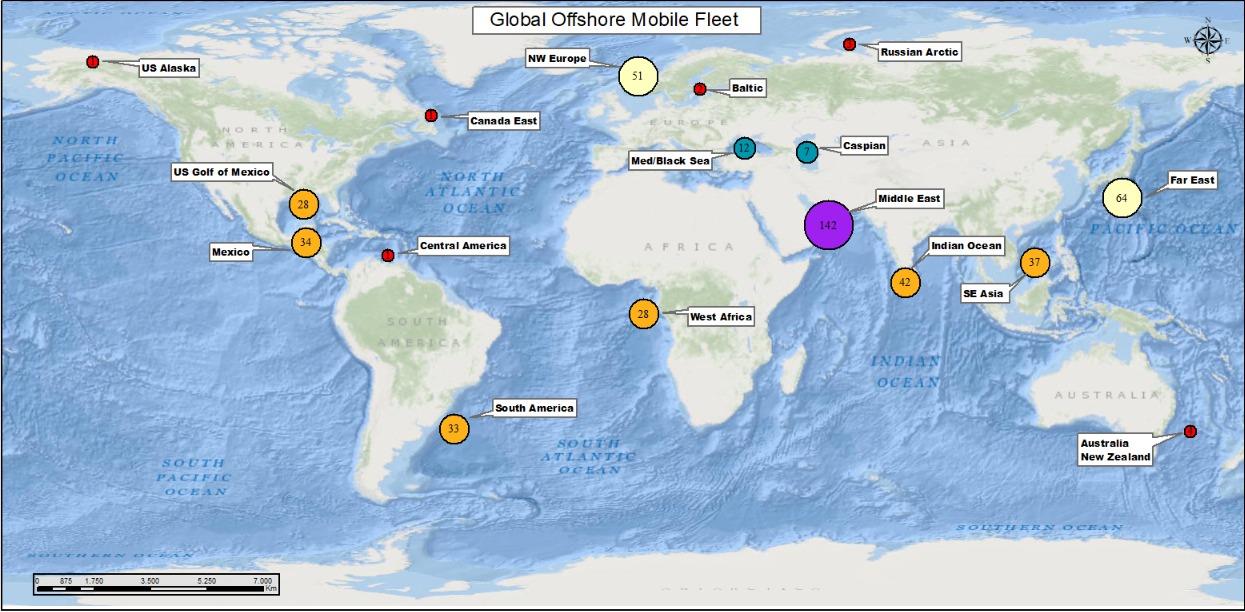
In Asia, offshore hydrocarbon activity has expanded significantly. Indonesia and Malaysia are at the forefront of deepwater developments and offshore shelf expansion. Meanwhile, China is carrying out deepwater developments and Brunei Darussalam and Viet Nam are carrying out ultra-deepwater developments in the South China Sea. At the same time, Pakistan has been conducting offshore deepwater and offshore shelf exploration, and the shallow water fields in India have been productive. Angola, Ghana, Mozambique and Nigeria have emerged as key players in the African offshore sector. The deepwater exploration prospects and results in West Africa have captured the attention of operators worldwide.
In the Caribbean region, the discovery by Guyana of offshore oil and natural gas resources in the Guyana- Suriname Basin in the Atlantic Ocean is a game changer for Guyana, which has become the second- largest crude oil producer in Central and South America after Brazil.
In the South Atlantic, although hydrocarbon volumes are not as significant as in the Caribbean, there is active exploration in both shallow and deep waters. Argentina and Uruguay are pursuing exploratory drilling in the Norte and Punta del Este basins. Hydrocarbon exploration has started on the plateau surrounding the Falkland Islands (Malvinas).ⓘ
Offshore exploration and production activities
The deeper the water, the higher the extraction costs. However, with high-resolution geophysical exploration technology, many major deposits have been discovered that are around 10 times larger than newly discovered onshore fields, which makes deepwater and ultra-deepwater production an attractive prospect despite the higher costs (see figure II).
The deepwater and ultra-deepwater sectors are thus becoming ever more important: oil and gas extraction at water depths greater than 400 m is currently limited in scale, amounting to just 7% of global production.
Figure II
Cost of offshore water drilling by depth over time
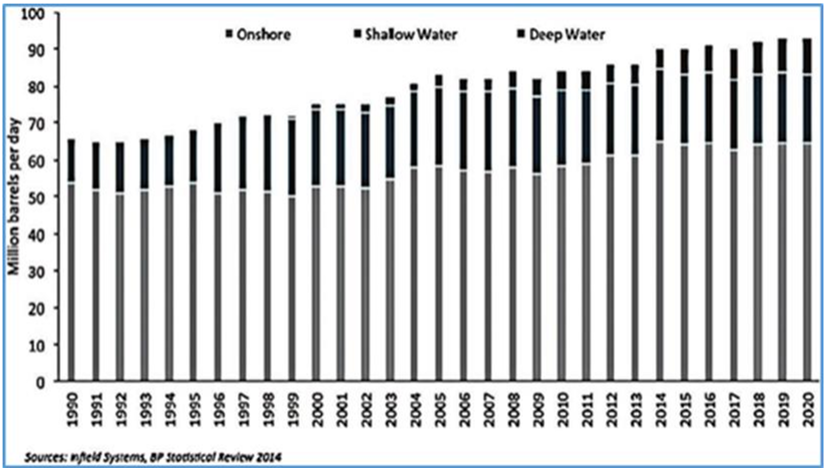
The region with the largest mobile offshore drilling units remains the Middle East, with just over 29% of the global fleet of shallow water jackup rigs. The second- and third-largest regions are still, respectively, the Far East, with approximately 13% of the fleet, and Northwestern Europe, which has just over 10% of the fleet. South America has become more significant due to an increase in offshore drilling units in Brazil and Guyana. Northwestern Europe continued to be the leading region for semisubmersibles, with almost 40% of the global fleet. The Far East and South America round out the top three regions for semisubmersibles. Key information from data gathered in 2023 include the positive developments for global mobile offshore drilling units, which had a 79% equipment occupancy rate.
Production
The year 2024 marked the seventy-seventh anniversary of the first commercial offshore oil well drilled by a "mobile" rig out of sight of land. Since then, operators have moved progressively further offshore and deeper into the ocean in search of exploration and production opportunities, aided by rapid technological advances.
Offshore oil and gas production is conducted in many parts of the world, with the top-producing areas being the Middle East, the North Sea, Brazil, the Gulf of Mexico, the Gulf of Guinea and the Caspian Sea. In addition to resource development, some elements of the supply chain that used to be exclusively onshore notably the liquefaction, storage and re-gasification of natural gas - are now increasingly taking place on specially designed offshore vessels.
Exploration activity has also been focused offshore. The largest recent oil and gas finds have all been in deep water (defined in an International Energy Agency analysis as a water depth greater than 400 m): deepwater finds have accounted for about 50% of the discovered conventional oil and gas volumes for the past 10 years. Some of these have been oil, notably the prolific "pre-salt" finds in Brazil, but more than half of all the new hydrocarbon resources discovered over the past decade have been gas, such as the Zohr and Leviathan gas fields in the Mediterranean, the Rovuma basin finds off Mozambique and Tanzania and other recent discoveries made off Côte d'Ivoire, Mauritania and Senegal in 2021 and 2024.
In recent years, amid low oil prices and the global coronavirus disease (COVID-19) pandemic, offshore oil production growth has been slow. However, as onshore oil and gas recoverable reserves have declined rapidly, offshore oil as a proportion of world oil production has actually increased.
In 2022, global crude oil production increased by a record rate of 5.4%, which is significantly higher than that growth rate in 2021 (1.6%) and the average growth rate from 2010 to 2019 (1.3% per year), in a context of global economic growth and progressive crude oil production adjustment by the Organization of the Petroleum Exporting Countries Plus (+0.4 million barrels per day each month until the phasing out of the 5.8 million barrels per day production adjustment).
Projections
Global deepwater oil resources are mainly concentrated in the middle and south sections of the Atlantic Ocean. Deepwater gas resources are relatively widely spread and mainly found in the deepwater basins in the northern part of Atlantic Ocean, off East Africa, in the Neo-Tethys region and around the Arctic Pole.
There will be six domains for the future oil and gas exploration in global deepwater basins: two "old" domains, which refer to, first, the offshore deepwater basins in the Atlantic and, second, the offshore deepwater basins of the Neo-Tethys structural domain, where the exploration degree is relatively high and the potential is still great; and four "new" domains, which refer to pre-salt and ultra-deepwater basin formations, offshore deepwater basins surrounding the North Pole, and offshore deepwater basins in the west Pacific Ocean. The new domains will be the main fields of deepwater oil and gas exploration in the future.
2. Pressures and impacts
Environmental impacts
Offshore oil and gas exploration can cause significant environmental impacts. These impacts can be acute, resulting from spills and blowouts, or chronic, often from routine discharges over the long term. They can also result from transport processes, such as pipeline breakage or ship accidents. Natural seepage can also be substantial in some areas, contributing to increased background levels.
Key impacts include:
(a) Oil spills and hydrocarbon release
- Acute impacts: large oil spills result in immediate harm to marine life, coating animals and plants, impairing their ability to breathe, move and feed Ref 28.
- Chronic impacts: the continuous release of smaller amounts of hydrocarbons and chemicals can lead to bioaccumulation, disrupting the food chain and affecting species over time.
(b) Chemical discharges (drilling mud and drill cuttings)
- Acute impacts: drilling mud, often laden with toxic chemicals, can smother benthic (seafloor) organisms and contaminate the surrounding water, harming fish, corals and other marine life.
- Chronic impacts: persistent exposure to low levels of toxic chemicals, such as heavy metals in drilling fluids, can lead to reproductive and growth issues in marine species.
(c) Noise pollution (seismic surveys)
- Acute impacts: loud blasts from seismic surveys can cause physical harm to marine mammals, especially those reliant on echolocation (e.g. whales, dolphins), leading to temporary or permanent hearing loss.
- Chronic impacts: continuous noise pollution disrupts communication, migration and mating behaviours in various marine species, potentially reducing population levels over time.
(d) Platform installation and decommissioning
- Offshore oil and gas platforms generate noise during their continuous operation over years of active exploitation of each oil field. An assessment of operation noise of six floating platforms off the coast of Australia has shown that median radiated levels do not depend on platform size or operation mode, and are in the order of 181 dB re 1 uPa in the band 20 - 2500 Hz (Erbe and others, 2013).
(e) Produced water discharge
- Acute impacts: produced water contains oil, heavy metals and naturally occurring radioactive materials, which can be toxic if released in large quantities, especially in shallow waters.
- Chronic impacts: the constant release of produced water contaminates the marine environment, leading to chronic exposure for marine species that results in developmental, reproductive and genetic harm (Commission for the Protection of the Marine Environment of the North-East Atlantic (OSPAR Commission), 2021).
(f) Habitat alteration and physical disturbance
- Acute impacts: activities such as seabed drilling and pipeline installation disrupt habitats, displacing or killing benthic organisms and damaging coral reefs and seagrass beds.
- Chronic impacts: ongoing physical disturbance from infrastructure maintenance, anchor placement and drilling activities can gradually degrade fragile marine ecosystems, leading to loss of biodiversity.
(g) Air pollution and atmospheric deposition
- Chronic impacts: flaring and other emissions release pollutants (e.g. sulfur oxides, nitrogen oxides and greenhouse gases) that can be deposited into the ocean, leading to acidification and eutrophication, which harm marine life and coral reefs.
Overall, both acute and chronic discharges from offshore oil and gas exploration create lasting and cumulative effects on the marine environment, affecting biodiversity, food webs and the health of coastal and oceanic ecosystems.
Seismic surveys
Seismic exploration is a technique based on the analysis of the reflection of acoustic waves off of subsurface layers of various density and is used for estimating layer thickness and geotechnical properties and, ultimately, for detecting large oil and gas reservoirs.
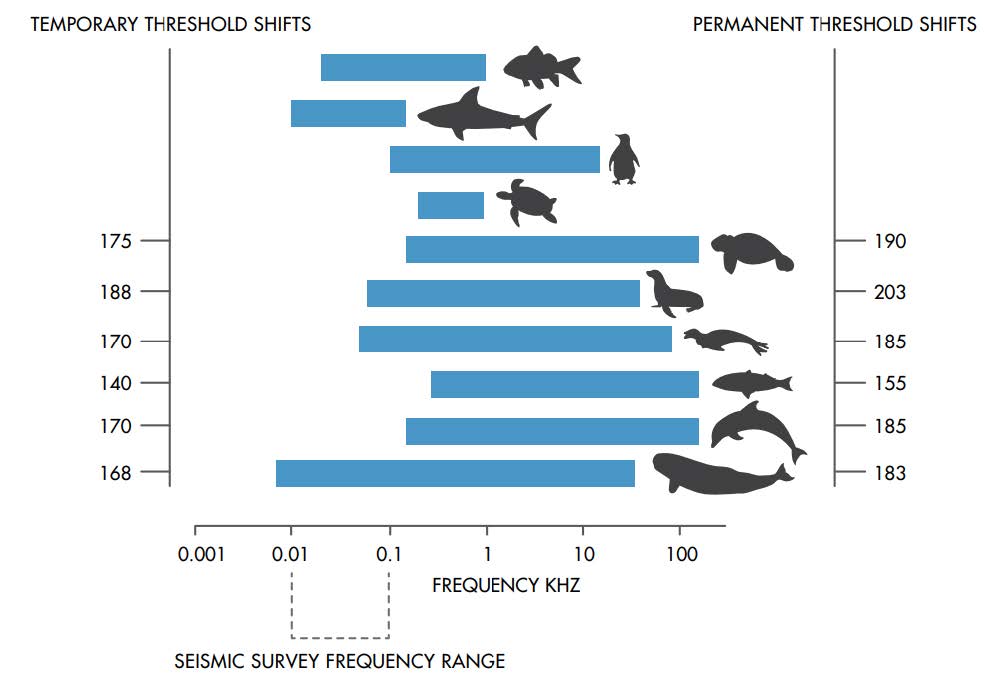
Seismic signals can be heard thousands of kilometres away from the area being surveyed. Moreover, the emitted power is concentrated in the frequency band shared with a broad range of cetaceans, including baleen whales (mysticetes), which furrow the ocean in long migration paths. Seismic survey signals heavily interfere with their orientation, communication and feeding habits (see figure III).
Overall, impacts on marine species depend on the extent of water sound propagation, noise frequency, noise duration and distribution over the habitat, species sensitivity and spectral hearing. Zooplankton species, mostly copepods, exhibit decreased abundance and significant mortality under air gun signal Ref 21. In the case of fish and cephalopods, behavioural responses have been observed up to 5 km away from the seismic survey, expressed as changes in depth distribution, schooling behaviour and startle responses to high-level sounds. Fishers experience these impacts as reduced catch rates (40-80%) and decreased abundance in the vicinity of seismic surveys. Seismic surveys may also affect marine fish eggs and larvae, causing decreased egg viability, increased embryonic mortality or decreased larval growth. Prolonged stress and displacement from habitats have been seen in seals, sea lions and walrus populations. As the noise footprint of seismic surveys is relatively large in deep waters, marine mammals, mostly cetaceans, are highly affected Ref 20. Impacts include stress increase, behavioural changes, hearing loss and even death by drowning or stranding.
Figure III
Temporary and permanent impacts of seismic surveys on marine fauna (after Purdon, 2018).
As a result of the documented impacts of seismic surveys on marine fauna, several countries have taken steps to minimize such impacts. The United Kingdom of Great Britain and Northern Ireland introduced regulations formulated by the Joint Nature Conservation Committee, which gave rise to mitigation methods such as the use of the lowest practicable volume throughout the survey, the reduction of high- frequency output, the delineation of exclusion zones, the adoption of "soft-start" principles in sound emission, and the visual and passive acoustic monitoring of marine mammals during the survey.
Impacts of offshore installation disasters
Oil spills occur frequently in the marine environment, sometimes with devastating socioenvironmental consequences. Marine oil spills are the result of shipping-related accidents or accidents in offshore fixed installations. Spills from fixed infrastructure can involve "live" crude oil, presenting distinct challenges in terms of environmental impact and response strategies. The Ixtoc I and the Deepwater Horizon oil well blowouts in the Gulf of Mexico in 1979 and 2010, respectively, were two of the largest spills of oil in the history of marine oil drilling operations, having released 3.5 million and 4.9 million barrels of oil, respectively, before being contained.
The Deepwater Horizon spill was unique in that it was the first ever significant deepwater well blowout with live oil (i.e. a mixture of dissolved natural gas and oil) Ref 49. Leaking at a depth of 1,500 m below sea level, the Deepwater Horizon well blowout showed that remote and largely unknown deep-sea ecosystems are susceptible to the impacts of offshore drilling accidents. Damage to offshore infrastructure, such as platforms or pipelines, that result in accidental oil leaks may also be caused by extreme weather events, mudslides and seafloor erosion.
In 2004, Hurricane Ivan caused a massive mudslide on the Gulf of Mexico seafloor that sank an entire drilling platform. The site had been leaking an average of 9-108 barrels of oil per day for 15 years until an underwater containment system was installed in 2019 (Mason, Taylor and MacDonald, 2019). In the wake of Hurricane Ida in 2021, one of the largest reported spills (located off Port Fourchon, Louisiana, United States) was attributed to oil leaking from decommissioned pipelines that had been left on the seafloor Ref 33. Assessing the environmental damage and the recovery of ecosystems after the spill has been problematic due to a lack of baseline (pre-spill) data and delays in deploying - or a complete absence of - scientific surveys. Deepwater Horizon is the best studied oil spill in history due to extensive research efforts initiated during the spill, including the 10-year Gulf of Mexico Research Initiative. The Initiative terminated its active research in June 2020, having produced an unprecedented understanding of the impact of the Deepwater Horizon oil spill on the environment and public health in the Gulf of Mexico.
Recent breakthroughs in drilling technology are propelling the growth of deepwater and ultra-deepwater exploration and production, which currently dominate the offshore drilling market. Technological advancements in subsea robotics, real-time monitoring and sensors, and the use of blowout preventers have increased operational safety, even if the risks associated with deepwater drilling cannot be eliminated entirely. In 2023, the oil and gas reserves discovered in deep and ultra-deep waters accounted for 62% of the total offshore oil and gas reserves Ref 60. These reserves are mainly located in deepwater basins in the Atlantic Ocean (including in the Gulf of Mexico and off the coast of Brazil, Norway and West Africa), the East African continental margin, the western Pacific Ocean (including in the South China Sea and off the coast of South-East Asia), the North West Shelf of Australia, the Eastern Mediterranean Sea and the Arctic (including in the Barents Sea). The current world record water depth for an oil and gas well is held by the Ondjaba-1 well off the coast of Angola, reaching a depth of 3,628 m in 2021 Ref 35. The deepwater and ultra-deepwater drilling market is expected to grow significantly in the coming years due to the increasing global demand for oil and natural gas. It follows that the risk in the future of an oil spill in deep waters akin to the Deepwater Horizon spill is also increasing.
Persistence of hydrocarbons in the marine environment
The severity of the impact of an oil spill depends on a variety of factors, including the physicochemical properties of the oil itself, the quantity of oil spilled, external conditions such as the prevailing climatic and sea conditions, and the types of habitat affected. Oil spill residues persist for decades in certain low- energy and often hypoxic environments, such as coastal mangrove forests, salt marshes and deep-sea sediments. Partially weathered oil and high molecular weight polycyclic aromatic hydrocarbons from the Ixtoc I oil spill in 1979 are still present in mangrove forests and sediments underlying more than 500 m of water in the southern Gulf of Mexico, 40 years after the incident (Radovic and others, 2020; Lincoln and others, 2020). Similarly, recalcitrant oil residues from the Deepwater Horizon spill in 2010 were still detected eight years after the spill in deep Ref 37 and coastal marsh sediments of the northern Gulf of Mexico Ref 58. In the Arctic, where oil degradation is limited by low temperatures and the short duration of Arctic summers, residual oil is still present in beach sediments 40 years after an experimental oil spill Ref 54. To compare, in the warm and aerated
sandy beaches of the Gulf of Mexico, stranded oil from the Deepwater Horizon spill was degraded within a year Ref 39. Coastal wetlands and deep benthic environments can be considered chronic "reservoirs" of oil residues and a continued source of toxicants to living organisms for decades Ref 47 Ref 58. This may result from the resuspension of contaminated sediments by physical processes (e.g. bottom currents, storms), burrowing behaviour of certain taxa or feeding on benthic infauna. In contrast, weathering processes (e.g. photo-oxidation, spreading, dispersion, dissolution, evaporation, biodegradation) acting on oil in open waters lead to the removal of hydrocarbons from the water column within a relatively short period of time - in the case of Deepwater Horizon, as short as a few weeks after the spill was contained Ref 43 Ref 59. The role of biodegradation is crucial in deep waters as it is the only way to remove oil from these environments Ref 55. Microbial hydrocarbon oxidation data under high hydrostatic pressure conditions are lacking owing to methodological challenges and the difficulty of obtaining samples Ref 44 Ref 48 Ref 32. These data are urgently needed to improve understanding of the interplay between temperature and hydrostatic pressure on biodegradation in view of the rapid expansion of oil and gas drilling into deeper waters Ref 41.
Fish in their early developmental stages have been shown to be particularly vulnerable to crude oil exposure. Several studies have demonstrated that such exposure is toxic to the development of the heart, causing cardiotoxicity and oedema in fish embryos.
Exposure to oil and concentrations of total polyaromatic hydrocarbon as low as 0.1 ug per litre have been shown to cause developmental toxicity in haddock (Melanogrammus aeglefinus) Ref 31.
The effects on juvenile haddock were demonstrated after exposure to different polycyclic aromatic hydrocarbon types extracted from produced water and crude oil (dominated by three-ring polycyclic aromatic hydrocarbons). DNA adducts, the most sensitive biomarker, were detected in tissue using 32P postlabelling analysis, but it was not possible to distinguish between the DNA adducts from the different sources Ref 29.
Impact of oil spills
All biological systems, including those in environments where oil is not retained for a long time, show prolonged impacts due to cascading effects that influence functional connections within and between communities Ref 38. For example, toxicants derived from the Deepwater Horizon oil spill (polycyclic aromatic hydrocarbons) were present in eggs of mesopelagic fish at levels above those known to cause sublethal effects six years after the spill Ref 53 as a result of food web incorporation and maternal transfer. Prolonged exposure to polycyclic aromatic hydrocarbons has been associated with negative health effects, including decreased body condition, decreased energy reserves and susceptibility to diseases, that may have serious consequences for long-term population viability Ref 56. Fish species affected by the Deepwater Horizon spill, such as tilefish, groupers and red snapper, showed elevated polycyclic aromatic hydrocarbon concentrations in their tissues, external skin lesions and other morphological and histopathological symptoms consistent with continued chronic exposures Ref 51. The chronic effects from lingering oil in sea otters and harlequin ducks persisted for at least two decades after the
Exxon Valdez oil spill in Alaska and had a larger influence on population dynamics over the long term than the acute effects of the spill Ref 36. Upper trophic levels exhibit considerable delayed impacts and slower rates of recovery due to smaller population sizes, longer generation times and bioaccumulation of toxicants in their tissues. Killer whale pods that were affected by the Exxon Valdez spill have not yet recovered, but this is more likely due to demographic factors rather than long-term toxicity effects Ref 36. Another characteristic example is the population of bottlenose dolphins living within the footprint of the Deepwater Horizon oil spill. This population experienced high mortality rates and impaired reproduction rates in surviving individuals from 2011 onward Ref 40 Ref 46. In contrast, lower trophic levels, such as zooplankton, show increased resilience because of shorter generation times and high fecundity that allow faster adaptation to altered environmental conditions Ref 38 Ref 50. Deep-sea and mesopelagic environments show less resilience than shallow-water environments. This is because deep- sea organisms generally exhibit a slower pace of life than their shallower-water counterparts owing to the low temperatures and low energy supply in the deep benthic and pelagic realms Ref 34. Extensive and persistent declines in abundance of both mesopelagic and bathypelagic fishes and macrocrustaceans appear to be ongoing in the Gulf of Mexico a decade after the Deepwater Horizon spill (Sutton and others, 2022).
Disruption of ecosystems
Oil spills have major impacts on the marine environment and ecosystem, mostly affecting fisheries, wildlife and coastal and marine habitats (Sayed and others, 2021). The ecological impacts appear directly related to the dynamics of the spill, including oil characteristics, spill volume, release rate, trajectories and response action Ref 16. Impacts also depend on the vulnerability of affected ecosystems and individual species, and can affect species' natural mortality and predators (Zhang and others, 2019). Ambient temperature affects oil viscosity, which controls oil spreading and degradation rates, while incident solar radiation affects the phototoxicity of organisms. The environmental impacts are directly related to oil persistence. Oil may remain in the water column for as long as half a year, but is usually diluted and sedimented to background levels much more rapidly (Teal and Howarth, 1984). The physical characteristics of oil and its toxic chemical constituents can cause major effects on marine life, affecting critical processes such as feeding, breathing and thermoregulation, and can eventually lead to physical suffocation. The absorption of chemical components into organs, tissues and cells may result in poisoning. Acute toxic effects from the ingestion or inhalation of oil, as well as smothering, drowning and hypothermia affect the mortality of marine invertebrates, mammals and seabirds (Peterson and others, 2003). However, even marine organisms far away from the spillage may also be affected, either directly through exposure to oil or indirectly through the trophic web (i.e. by ingesting affected prey (Olsen and others, 2019). In the pelagic ecosystem, planktonic copepods exposed to oil may experience immediate death, acute toxicity, decreased feeding, delayed egg production, sluggish hatching rates, decreased swimming speeds and reproductive abnormalities. However, as plankton are plentiful and naturally experience extremely high mortality rates, plankton deaths occurring after a spill rarely have long-term effects (International Tanker Owners Pollution Federation Handbook (ITOPF), 2023/24). Heavier oils and worn residues may affect the benthic ecosystem. Although they are not always lethal, they can have short- term consequences such as narcosis and tissue tainting.
Studies have shown that although individual marine organisms can suffer significant harm due to coating and oil ingestion, populations tend to be resilient Ref 47. Ecosystems may recover between 2 and 10 years after the incident, even when facing significant disturbances and mortality.
Impact on reproduction and development
Adult fish typically have greater resistance to oil effects than eggs and larvae, which may be more vulnerable (Singh and others, 2020). Fish are able to sense unfavorable water conditions and swim away, resulting in declining fish stocks in offshore and coastal waters after oil spills. In shallow or confined waters, very high, localized concentrations of dispersed oil may cause mass mortalities. Adult fish exposed to high oil concentrations experience acute cardiotoxicity, heart failure, decreased swimming speeds and breathing rate reduction.
Sublethal effects
Numerous investigations have demonstrated the sublethal effects of polycyclic aromatic hydrocarbons on fish, including decreased rates of growth and feeding, genetic damage, mortality of fish eggs and larvae, increased susceptibility to starvation and incapacity to flee predators (Langangen and others, 2017). The sublethal effects of oil exposure on marine organisms, including marine mammals, can include enhanced or suppressed cell proliferation, decreased phagocytosis and induced cell apoptosis, eventually resulting in disease, decreased resilience, community structure changes, mortality and, ultimately, population declines (Lee and others, 2018). After the Deepwater Horizon oil spill, demersal fish species presented pathological changes in the skin and suffered from increased incidences of bacterial infections, including skin lesions (Murawski and others, 2014). In addition, the body weights, germinal epithelium thickness, oocyte diameters and gonadal somatic indices of killifish at the oil-affected sites were lower than those from non-affected sites Ref 17.
Impacts on fishing
Fisheries and mariculture resources could suffer significantly from oil spills Ref 14. Physical contamination can impede access to fishing sites or foul gear, which affects stocks and business operations. The loss in fishery production resulting from direct mortality, habitat loss or access restriction due to harvesting bans and closures typically affects commercial fisheries and aquaculture enterprises. A decrease in market demand due to concerns about contaminated products also results in losses. To speed up the compensation process, all fishery damage must be recorded and, if feasible, backed up by proof. This frequently calls for exacting scientific sampling and analysis. Accurate estimates of spill-related damages require comparing post-spill recovery against pre-spill fishing (ITOPF, 2023). However, it is frequently challenging to distinguish between the consequences of an oil spill and other elements, such as industrial pollution and overfishing (ITOPF, 2023).
Although the financial impact is typically less severe, oil spills can pose a serious threat to other marine- based industries such as port operations and sea-based transportation, and industries that depend on saltwater for regular operations such as power plants and desalination facilities (Chang and others, 2014; ITOPF, 2023). The aftermath of an oil spill, including clean-up efforts, can cause disruptions to other forms of coastal industry, including shipyards, ports and harbours (ITOPF, 2023). In addition, reduced disposable income and reduced market demand may result in pure economic losses for the larger economy (Taleghani and Tyagi, 2017).
Oil spill from tanker incidents
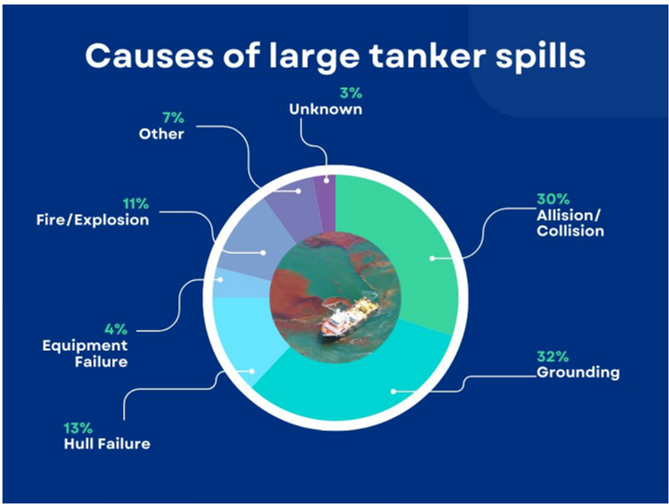
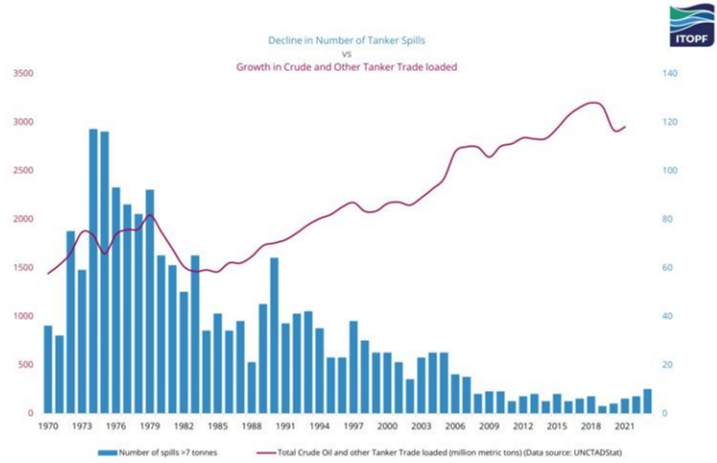
The term "oil spill" refers to the pollution caused by the unintentional release of liquid petroleum hydrocarbons into the maritime environment. Oil spills can result from be caused by human error, fatigue loading or explosions; damages in underwater oil pipelines; or ship collisions, bunkering, groundings and hull failures. According to ITOPF (2023), over the past 50 years, large spills were primarily caused by groundings (32%) and allisions or collisions (30%) (see figure IV). Despite the growth in the volume of the world's oil trade (ITOPF, 2023), there is a downward trend in the number of oil spill incidents and the amount of oil released from tankers worldwide Ref 18.
Figure IV Causes of large tanker spills (>700 tons) in the period from 1970 to 2022
The human factor accounts for at least 80% of tanker accidents worldwide (Wan and Chen, 2018) and is related to overwork, insufficient experience in specific operations, inadequate communication or outdated navigational charts.
A database maintained by ITOPF that includes tank vessels (combined carriers, floating production storage and offloading vessels, and barges) shows that, over the past 50 years, there has been a marked downward trend in the frequency of oil spills larger than 7 tons (see figure V). The average number of spills per year was approximately 79 in the 1970s and has decreased by over 90% to 6.3 in the 2010s and has remained at the same level for the past decade. This trend has accompanied an increase in oil trading over the same period (see figure V).
Figure V Number of spills (>700 ton) from tankers compared with the growth in crude and other tanker trade in the period from 1970 to 2021
3. Socioeconomic considerations
The offshore hydrocarbon industry's operations often intersect with the social and environmental concerns of local communities, leading to conflicts and challenges in securing public acceptance (Sovacool, 2022).
Such conflicts can arise from a range of factors, including the perceived inequitable distribution of economic benefits, environmental degradation and the disruption of traditional livelihoods. One of the primary sources of conflict is the uneven distribution of the economic gains from offshore hydrocarbon activities. While these activities can bring employment opportunities and revenue to the region, the local communities may feel that they are not receiving a fair share of the benefits (Sovacool, 2022). This can lead to resentment and a sense of marginalization, fuelling social unrest and resistance to the industry's presence.
Environmental concerns often clash with the industry's pursuit of economic growth, leading to protests, legal challenges and a general lack of public trust. In response to such challenges, the offshore industry has sought to improve its social and environmental performance through various strategies, such as community engagement programmes, environmental impact assessments and corporate social responsibility initiatives.
However, the success of such efforts has been mixed, and a more comprehensive and collaborative approach is often required to address the underlying social and environmental issues. Fostering public acceptance of offshore hydrocarbon activities requires a delicate balance between economic development, environmental protection and social equity. By prioritizing inclusive and sustainable practices, the industry can work to build trust with local communities and mitigate the potential for conflicts (Sovacool, 2022).
Communities reliant on hydrocarbon activities: economic dependence, infrastructure development, social impact, environmental concerns
A review of literature by Andrews and others (2021) showed varied economic outcomes with regard to communities' reliance on the offshore hydrocarbon industry. Oil discovery usually initially sparks optimistic hopes for economic development and improved livelihoods Ref 14. Generally, there is an increase in public expenditure, which can improve social welfare benefits and often results in infrastructure development, including improved car, bus, and aeroplane access to coastal towns or cities, as well as increased maritime infrastructure and traffic. This further results in greater mass tourism due to access to areas that can sometimes previously have been remote Ref 14. It can also result in job creation on oil rigs and in surrounding industries and in the creation of a cycle of spending that may boost local industries and economies. In addition, oil discoveries provide Governments with the opportunity to impose and reap benefits of additional taxes, such as corporate income tax, which can then be equitably distributed (Stergiou, 2022). Some studies have found that a key factor in determining whether local communities will economically benefit from the hydrocarbon industry is whether government policies mandate the use of local goods and services by the industry. Such policy action has seen improvements in oil sector economies in Angola, the Bolivarian Republic of Venezuela, Ghana, Nigeria and Norway Ref 14.
However, offshore hydrocarbon development can result in a "double deprivation" for coastal communities, as they may be excluded both from utilizing the ocean as a resource to sustain their livelihoods and from employment by the offshore hydrocarbon industry Ref 14. Evidence shows that, where the offshore hydrocarbon industry is predominantly operated by foreign companies, impacts for local communities are less likely. In Ghana, for example, there are few employment opportunities for local people because the industry benefits are offshore and capital- and technology-intensive Ref 14.
The offshore hydrocarbon industry can have significant negative impacts on small-scale fishers. Hydrocarbon infrastructure, pipelines and exclusion zones created around rigs affect the areas that are accessible for fishers from local communities Ref 14. Oil development has resulted in a lack of access to areas that have historically been used for fishing, loss in fishing time, destruction of fishing gear and spatial displacement of small-scale fishers and Indigenous Peoples Ref 14. Evidence from global studies also indicates that hydrocarbon pollutants in the marine environment leads to a reduction in fish populations (Ite and others, 2024). Studies have shown dissatisfaction among fishers in coastal communities in Ghana, Peru and the United Kingdom Ref 14. Protests and conflicts between small-scale fisher communities and the oil industry have been recorded in various places globally, such as Argentina, the Gulf of Mexico and Peru Ref 14.
Some offshore hydrocarbon projects require shore-based processing facilities to be built. Such facilities have impacts on coastal communities that should also be considered. The construction sites provide jobs in local areas. However, because their pay rates are higher than local jobs, this can result in a loss of workers from low-paid but essential local jobs. An increased number of workers from outside the area with higher pay can cause increases in the value of property, land and everyday commodities, negatively affecting existing local economies Ref 27. In addition to posing environmental challenges, these large-scale developments may inhibit access to coastal areas, limit established economic activities such as fishing and tourism, and block access to sites of cultural significance and recreational areas Ref 27.
The cultural identities, value systems and traditions of rural communities may be undermined by oil development. For example, in the Niger Delta, a cultural new year's tradition where women ceremonial bathe in coastal streams has been phased out because of oil spill contamination (Ite and others, 2024). There has been substantial research on environmental injustices caused by the oil industry, which has provided evidence of long-term health-related issues. Oil rigs and pipelines may release toxins for years after their operations have concluded (Bennett and others, 2021).
The initial hope for economic progress that oil discovery brings often goes unrealized, particularly for communities that are situated adjacent to the resource. In the substantial literature reviews conducted by Andrews and others (2021) and Bennett and others (2021), it was reported that oil cities or countries often failed to improve, and sometimes worsened, the lives and economic realities of their populations.
Piracy
Piracy has emerged as a significant threat to the offshore oil and gas industry, posing risks to the safety and security of personnel, as well as the operational and financial stability of the companies involved.
The fact that offshore facilities are remote and often poorly secured makes them vulnerable targets for criminal activities. The Gulf of Guinea is a global hotspot for such incidents.
The presence of offshore hydrocarbon activities can contribute to the marginalization of coastal communities, leading to resentment and a sense of disenfranchisement, which can fuel the rise of piracy and other criminal activities.
In response to this challenge, the United Nations and various regional organizations have implemented a range of strategies to combat piracy in the offshore domain Ref 27. These strategies include enhanced maritime security measures, improved surveillance and intelligence-sharing, and collaborative efforts with local law enforcement agencies.
The social aspects of offshore hydrocarbon activity, particularly in relation to piracy, require a nuanced understanding of the complex interplay between economic, political and cultural factors.
4. Sector-relevant governance
The great advances in the oil and gas industry refer to the use of technology to reduce risks, costs and impacts. Automation and remote operations allow the reduction of personnel on board and consequently of support costs, such as transportation, lodging and meals (International Association of Oil & Gas Producers (IOGP), 2018), and of greenhouse gas emissions. There has been a rise in the use of remote technologies, such as uncrewed surface vessels, drones, robotics, remotely operated vehicles and autonomous underwater vehicles.
While removing personnel from platforms and vessels may reduce risk of personnel accidents and injuries, it prevents the observation of the physical operations, including sight, vibrations, smells and sounds, increasing the reliance on information systems and clues from the digital environment (European Safety and Reliability Conference (ESREL), 2023).
Remote operation may vary from remote control, engineering, maintenance and monitoring to full operation of the site. Implementing remote functions creates additional risks, including information security risks, as well as risks involving the ability to enforce control of work policies, to define the division of functions and responsibilities between remote and local operations and to assure the reliability of remote communications. Along with traditional risk analysis, these new risks shall be considered during the design phase of the operating philosophy (IOGP, 2023).
Another huge challenge imposed on oil and gas exploration and production is to reduce greenhouse gas operations emissions to achieve the world's climate goals. In 2022, oil and gas consumption was responsible for around half of the total energy-related CO2 emissions, equivalent to over 18 GtCO2 (International Energy Agency (IEA), 2024).
Production, transport and processing correspond to just under 15% of total energy-related greenhouse gas emissions. To reduce scope 1 and 2 emissions, the oil and gas industry must eliminate all non-emergency flaring, adopt energy-efficient solutions, electrify upstream facilities with low-emissions electricity, equip oil and gas processes with carbon capture, utilization and storage and, most importantly, reduce methane emissions (IEA, 2024; World Economic Forum (WEF), 2023).
Under the Global Methane Pledge, 158 countries have agreed to reduce methane emission by 30% below 2020 levels Ref 3. With the necessary financial resources and gas market conditions, methane abatement technologies could be implemented without added costs given the value of recovered gas Ref 7. Zero Routine Flaring by 2030, another voluntary initiative, has been endorsed by 36 countries and 58 oil and gas companies (Zero Routine Flaring by 2030 (ZRF), 2024).
To achieve net zero emissions by 2050, the global average emissions intensity of oil and gas production must fall by more than 50% between 2022 and 2030 to a number close to the emissions intensity of the best operators today. However, operational efficiency and new technologies are not enough; to achieve net zero emissions, oil and gas demand must decline by more than 5% each year on average up until 2050 Ref 5.
According to the World Economic Forum, in the five enablers for readiness- technology, infrastructure, demand, policy and capital - the oil and gas industry is the most ready for the energy transition. The industry's technology readiness level is classified as stage 4 out of 5 Ref 7.
5. Sustainability pathways
Mitigation measures and environmental standards are in place in many regions to reduce the impacts of offshore hydrocarbon activities.
References
- International Energy Agency (2024). Oil Market report -14 March.Sovacool, B.K. (2022). Conflicts over offshore hydrocarbon activities: A global review of community resistance and social acceptance, Energy Research & Social Science, 83, p. 102351. doi: 10.1016/j.erss.2021.102351.
- United Nations (2022) United Nations Editorial Reference Guide. New York, NY.
- Global Methane Pledge (GMP) (2024). About the Global Methane Pledge. Available at https://www.globalmethanepledge.org/. Accessed on 17 August 2024.
- ESREL (2023). Proceedings of the 33rd European Safety and Reliability Conference: The Future of Safety in the Reconnected World, 3 - 7 September 2023, University of Southampton, United Kingdom, 2288-2295. 10.3850/978-981-18-8071-1_P271-cd. Accessed on 17 August 2024.
- IEA (International Energy Agency) (2024). The Oil and Gas Industry in Net Zero Transitions. Revised version, December 2023 and February. Available at https://www.iea.org/reports/the-oil-and-gas-industry- in-net-zero-transitions. Accessed on 17 August 2024.
- IOGP (International Oil Association of Oil and Gas Producers) (2018). Selection of system and security architectures for remote control, engineering, maintenance, and monitoring. Report 627. Available at https://www.iogp.org/bookstore/product/iogp-report-627-selection-of-system-and-security-architectures- for-remote-control-engineering-maintenance-and-monitoring/. Accessed on 17 August 2024.
- WEF (World Economic Forum) (2023). The Oil and Gas Industry in Net Zero Transitions World Energy Outlook Special Report https://www.weforum.org/publications/net-zero-industry-tracker-2023/. Accessed on 17 August 2024.
- ZRF (Zero Routine Flaring by 2030 Initiative) (2024). Endorser. Available at ZRF Initiative Endorsers (worldbank.org). Accessed on 17 August 2024.
- Sandra Kloff, and Clive Wicks Gestion environnementale de l'exploitation de petrole offshore et du transport maritime.
- AlSadi, Hamid N., and others (2020). Introduction to the Seismic Exploration, First Edition.
- Saheban, Hamid, and Zoheir Kordrostami (2021). Hydrophones, fundamental features, design considerations, and various structures: a review. Sensors and Actuators A: Physical, vol. 329 (October).
- Vidal, Priscila da Cunha Jácome, and others (2022). Decommissioning of offshore oil and gas platforms: a systematic literature review of factors involved in the process. Ocean Engineering, vol. 255 (July).
- The US Energy Information Administration (2002). 2002 World Petroleum Congress, Brazil.
- Andrews, N., Bennett, N.J., Le Billon, P., Green, S.J., Cisneros-Montemayor, A.M., Amongin, S., Gray, N.J., Sumaila, U.R. (2021). Oil, fisheries and coastal communities: A review of impacts on the environment, livelihoods, space and governance. Energy Research & Social Science, 75, 102009, https://doi.org/10.1016/j.erss.2021.102009.
- Baron, M.G. (2011). Ecological Impacts of the Deepwater Horizon Oil Spill: Implications for Immunotoxicity. Toxicologic Pathology, 40, 2, https://doi.org/10.1177/0192623311428474
- Baron, M.G., Vivian, D.N., Heintz, R.A., Hyuk Yim, U. (2020). Long-Term Ecological Impacts from Oil Spills: Comparison of Exxon Valdez, Hebei Spirit, and Deepwater Horizon. Environmental Science and Technology, 54, 6456-6467.
- Carr, D.L., Smith, E.E., Thiyagarajah, A., Cromie, M., Crumly, C., Davis, A., Dong, M.J., Garcia, C., Heintzman, L., Hopper, T., Kouth, K., Morris, K., Ruehlen, A., Snodgrass, P., Vaughn, K., Carr, J.A. (2018). Assessment of gonadal and thyroid histology in Gulf killifish (Fundulus grandis) from Barataria Bay Louisiana one year after the Deepwater Horizon oil spill. Ecotoxicology and Environmental Safety, 154, 245-254. https://doi.org/10.1016/j.ecoenv.2018.01.013.
- Chen, J., Zhang, W., Wan, Z., Li, S., Huang, T., Fei, Y.(2019). Oil spills from global tankers: Status review and future governance. Journal of cleaner production, 227, 20-32. https://doi.org/10.1016/j.jclepro.2019.04.020
- Carroll, A.G., Przeslawski, R., Duncan, A., Gunning, M., Bruce, B. (2017). A critical review of the potential impacts of marine seismic surveys on fish & invertebrates. Marine Pollution Bulletin, 114 (1), 9-24, https://doi.org/10.1016/j.marpolbul.2016.11.038.
- Kavanagh, A.S., Nykänen, M., Hunt, W., and others (2019). Seismic surveys reduce cetacean sightings across a large marine ecosystem. Sci Rep, 9, 19164, https://doi.org/10.1038/s41598-019-55500-4.
- McCauley, R., Day, R., Swadling, K., and others (2017). Widely used marine seismic survey air gun operations negatively impact zooplankton. Nat Ecol Evol, 1, 0195 (2017). https://doi.org/10.1038/s41559- 017-0195.
- Aniefiok E. Ite, Idaresit A. Ite, Eventus D. Edem, Joseph E. Okon (2024). Nigeria's Oil and Gas Exploration and Production: Socioeconomic Implications, Environmental Impacts, and Mitigation Strategies, Socio Economy and Policy Studies, 4(2), 100-114.
- Juan Pablo Morea (2023). The economic, social and environmental impacts of offshore oil exploration in Argentina: A critical appraisal,' The Extractive Industries and Society, 15, 101295, https://doi.org/10.1016/j.exis.2023.101295.
- Nathan Andrews, Nathan J. Bennett, Philippe Le Billon, Stephanie J. Green, Andres M. Cisneros- Montemayor, Sandra Amongin, Noella J. Gray g, U. Rashid Sumaila (2021). Oil, fisheries and coastal communities: A review of impacts on the environment, livelihoods, space and governance, Energry Research and Social Sciences, 75, 102009. https://doi.org/10.1016/j.erss.2021.102009.
- Nathan James Bennett, Jessica Blythe, Carole Sandrine White, Cecilia Campero (2021). Blue growth and blue justice: Ten risks and solutions for the ocean economy,' Marine Policy, 125, 104387. https://doi.org/10.1016/j.marpol.2020.104387.
- Andreas Stergiou (2022), Socioeconomic and environmental impact of exploitation of hydrocarbons in maritime areas: The case of Greece, Resour Environ Econ, 4(1): 333-342. https://doi.org/10.25082/REE.2022.01.006.
- United Nations Environment Programme Finance Initiative (2022). Harmful Marine Extractives: Understanding the risks & impacts of financing non-renewable extractive industries. Available at https://www.unepfi.org/wordpress/wp-content/uploads/2022/05/Harmful-Marine-Extractives-Deep-Sea- Mining.pdf.
- Beyer, J., Trannum, H.C., Bakke, T., Hodson, P.V., Collier, T.K. (2016). Environmental effects of the Deepwater Horizon oil spill: A review. Marine Pollution Bulletin, 110; 28-51. http://dx.doi.org/10.1016/j.marpolbul.2016.06.027.
- Meier, S., Karlsen, Ø., Le Goff, J., Sørensen, L., Sørhus, E., Pampanin, D.M., Donald, C.E., Fjelldal, P.G., Dunaevskaya, E., Romano, M., Caliani, I., Casini, S., Bogevik, A.S., Olsvik, P.A., Myers, M., Grøsvik, B.E. (2020). DNA damage and health effects in juvenile haddock (Melanogrammus aeglefinus) exposed to PAHs associated with oil-polluted sediment or produced water. PLoS ONE, 15(10): e0240307. https://doi.org/10.1371/journal.pone.0240307.
- OSPAR Commission (2021). Report on impacts of discharges of oil and produced water on the marine environment. Publication number: 804/2021. Pp. 49.
- Sørhus, E., Sørensen, L., Grøsvik, B.E., Le Goff, J., Incardona, J.P., Linbo, T.L., Baldwin, D.H., Karlsen, Ø., Nordtug, T., Hansen, B.H., Thorsen, A., Donald, C.E., van der Meeren, T., Robson, W., Rowland, S.J., Rasinger, J.D., Vikebø, F.B., Meier, S. (2023). Crude oil exposure of early life stages of Atlantic haddock suggests threshold levels for developmental toxicity as low as 0.1 µg total polyaromatic hydrocarbon (TPAH)/L. Marine Pollution Bulletin, 190, 114843. https://doi.org/10.1016/j.marpolbul.2023.114843.
- Antoniou, E., Fragkou, E., Charalampous, G., Marinakis, D., Kalogerakis, N., Gontikaki, E. (2022). Emulating Deep-Sea Bioremediation: Oil Plume Degradation by Undisturbed Deep-Sea Microbial Communities Using a High-Pressure Sampling and Experimentation System. Energies, 15, 4525.
- Arslan, N., Majidi, Nezhad M., Heydari, A., Astiaso Garcia, D., Sylaios, G.A. (2023). Principal Component Analysis Methodology of Oil Spill Detection and Monitoring Using Satellite Remote Sensing Sensors. Remote Sens., 15, 1460.
- Cordes, E.E., Jones, D.O.B., Schlacher, T.A., Amon, D.J., Bernardino, A.F., Brooke, S., Carney, R., DeLeo, D.M., Dunlop, K.M., Escobar-Briones, E.G., Gates, A.R., Génio, L., Gobin, J., Henry, L-A., Herrera, S., Hoyt, S., Joye, M., Kark, S., Mestre, N.C., Metaxas, A., Pfeifer, S., Sink, K., Sweetman, A.K., and Witte, U. (2016). Environmental Impacts of the Deep-Water Oil and Gas Industry: A Review to Guide Management Strategies. Front. Environ. Sci., 4: 58.
- Enverus (2024). https://www.enverus.com/blog/offshore-drilling-keeps-getting- deeper/# :~: text=The%20current%20record%20is%20held,reaching%203%2C628m%20in%202021.
- Esler, D., Ballachey, B.E., Matkin, C., Cushing, D., Kaler, R., Bodkin, J., Monson, D., Esslinger, G., Kloecker, K. (2018). Timelines and mechanisms of wildlife population recovery following the Exxon Valdez oil spill, Deep Sea Res. Part II: Topical Studies in Oceanography, 147, 36-42.
- Diercks, A.R., Romero, I.C., Larson, R.A., Schwing, P., Harris, A., Bosman, S., Chanton, J.P., and Brooks, G. (2021). Resuspension, Redistribution, and Deposition of Oil-Residues to Offshore Depocenters After the Deepwater Horizon Oil Spill. Front. Mar. Sci., 8: 630183.
- Halanych, K.M., Ainsworth, C.H., Cordes, E.E., Dodge, R.E., Huettel, M., Mendelssohn, I.A., Murawski, S.A., Paris-Limouzy, C.B., Schwing, P.T., Shaw, R.F., Sutton, T. (2021). Effects of petroleum by-products and dispersants on ecosystems. Oceanography, 34(1): 153-163.
- Huettel, M., Overholt, W.A., Kostka, J.E., Hagan, C., Kaba, J., Wells, W.B., Dudley, S. (2018). Degradation of Deepwater Horizon oil buried in a Florida beach influenced by tidal pumping. Mar. Poll. Bull., 126: 488-500.
- Kellar, N.M., Speakman, T.R., Smith, C.R., Lane, S.M., Balmer, B.C., Trego, M.L., Catelani, K.N., Robbins, M.N. , Allen, C.D., Wells, R.S., Zolman, E.S., Rowles, T.K., Schwacke, L.H. (2017). Low reproductive success rates of common bottlenose dolphins Tursiops truncatus in the northern Gulf of Mexico following the Deepwater Horizon disaster (2010-2015). Endangered Species Res., 33: 143-158.
- Kostka, J.E., Joye, S.B., Overholt, W., Bubenheim, P., Hackbusch, S., Larter, S.R., Liese, A., Lincoln, S.A., Marietou, A., Móller, R., Noirungsee, N., Oldenburg, T.B.P., Radović, J.R., Viamonte, J. (2020). Biodegradation of Petroleum Hydrocarbons in the Deep Sea. In S.A. Murawski, and others, eds. Deep Oil Spills, Springer Nature Switzerland AG.
- Lincoln, S.A., Radović, J.R., Gracia, A., Jaggi, A., Oldenburg, T.B.P., Larter, S.R., Freeman, K.H. (2019). Molecular Legacy of the 1979 Ixtoc 1 Oil Spill in Deep-Sea Sediments of the Southern Gulf of Mexico. In Murawski, S., and others, Deep Oil Spills. Springer, Cham. https://doi.org/10.1007/978-3-030-11605- 7_19.
- Liu, Z., Liu, J., Gardner, W.S., Shank, G.C., Ostrom, N.E. (2016). The impact of Deepwater Horizon oil spill on petroleum hydrocarbons in surface waters of the northern Gulf of Mexico. Deep Sea Res. II: Topical Studies in Oceanography, 129: 292-300.
- Marietou, A., Chastain, R., Beulig, F., Scoma, A., Hazen, T.C., and Bartlett, D.H. (2018). The Effect of Hydrostatic Pressure on Enrichments of Hydrocarbon Degrading Microbes From the Gulf of Mexico Following the Deepwater Horizon Oil Spill. Front. Microbiol., 9: 808.
- Mason, A.L., Taylor, J.C., and MacDonald, I.R. eds. (2019). An Integrated Assessment of Oil and Gas Release into the Marine Environment at the Former Taylor Energy MC20 Site. NOAA National Ocean Service, National Centers for Coastal Ocean Science. NOAA Technical Memorandum 260. Silver Spring, MD, 147 pp. doi: 10.25923/kykm-sn39.
- Murawski, S.A., Grosell, M., Smith, C., Sutton, T., Halanych, K.M., Shaw, R.F., Wilson, C.A. (2021). Impacts of petroleum, petroleum components, and dispersants on organisms and populations. Oceanography, 34(1): 136-151.
- Murawski, S.A., Schwing, P.T., Patterson, W.F. III, Sutton, T.T., Montagna, P.A., Milligan, R.J., Joye, S.B., Thomas, L., Kilborn, J.P., Paris, C.B., Faillettaz, R., Portnoy, D.S., and Gilbert, S. (2023). Vulnerability and resilience of living marine resources to the Deepwater Horizon oil spill: an overview. Front. Mar. Sci., 10: 1202250.
- Nguyen, U.T., Lincoln, S.A., Valladares Juarez, A.G., Schedler, M., Macalady, J.L., Muller, R., and others (2018). The influence of pressure on crude oil biodegradation in shallow and deep Gulf of Mexico sediments. PLoS ONE, 13(7): e0199784.
- Passow, U., and Overton, E.B. (2021). The complexity of oil spills: the fate of the Deepwater Horizon oil. Annu. Rev.Mar. Sci. 13:109-36.
- Patterson, W.F. III, Robinson, K.L., Barnett, B.K., Campbell, M.D., Chagaris, D.C., Chanton, J.P., Daly, K.L., Hanisko, D.S., Hernandez, F.J. Jr., Murawski, S.A., Pollack, A.G., Portnoy, D.S., and Pulster, E.L. (2023). Evidence of population level impacts and resiliency for Gulf of Mexico shelf taxa following the Deepwater Horizon oil spill. Front. Mar. Sci., 10: 1198163.
- Pulster, E.L., Gracia, A., Armenteros, M., Carr, B.E., Mrowicki, J., Murawski, S.A. (2020). Chronic PAH exposures and associated declines in fish health indices observed for ten grouper species in the Gulf of Mexico. Sci. Total Environ., 703, 135551.
- Radović, J.R., Romero, I.C., Oldenburg, T.B.P., Larter, S.R., Tunnell, J.W. (2020). 40 Years of Weathering of Coastal Oil Residues in the Southern Gulf of Mexico. In Murawski, S., and others, eds. Deep Oil Spills. Springer, Cham. https://doi.org/10.1007/978-3-030-11605-7_20.
- Romero, I.C., Sutton, T.T., Carr, B., Quintana-Rizzo, E., Ross, S.W., Hollander, D.J., Torres, J.J. (2018). Decadal assessment of polycyclic aromatic hydrocarbons in mesopelagic fishes from the Gulf of Mexico reveals exposure to oil-derived sources. Environ. Sci. Technol., 52: 10985-10996.
- Schreiber, L., Hunnie, B., Altshuler, I., Góngora, E., Ellis, M., Maynard, C., Tremblay, J., Wasserscheid, J., Fortin, N., Lee, K., Stern, G., Greer, C.W. (2023). Long-term biodegradation of crude oil in high-arctic backshore sediments: The Baffin Island Oil Spill (BIOS) after nearly four decades. Environ. Res., 233: 116421.
- Scoma, A., Yakimov, M.M., Daffonchio, D., Boon, N. (2017). Self-healing capacity of deep-sea ecosystems affected by petroleum hydrocarbons. EMBO rep, 18: 868-872.
- Snyder, S.M., Pulster, E.L., Murawski, S.A. (2019). Associations Between Chronic Exposure to Polycyclic Aromatic Hydrocarbons and Health Indices in Gulf of Mexico Tilefish (Lopholatilus chamaeleonticeps) Post Deepwater Horizon. Environ. Toxicol. Chem., 38(12): 2659-2671.
- Sutton, T.T., Milligan, R.J., Daly, K., Boswell, K.M., Cook, A.B., Cornic, M., Frank, T., Frasier, K., Hahn, D., Hernandez, F., Hildebrand, J., Hu, C., Johnston, M.W., Joye, S.B., Judkins, H., Moore, J.A., Murawski, S.A., Pruzinsky, N.M., Quinlan, J.A., Remsen, A., Robinson, K.L., Romero, I.C., Rooker, J.R., Vecchione, M., and Wells, R.J.D. (2022). The Open-Ocean Gulf of Mexico After Deepwater Horizon: Synthesis of a Decade of Research. Front. Mar. Sci., 9: 753391.
- Turner, R.E., Rabalais, N.N., Overton, E.B., Meyer, B.M., McClenachan, G., Swenson, E.M., Besonen, M., Parsons, M.L., Zingre, J. (2019). Oiling of the continental shelf and coastal marshes over eight years after the 2010 Deepwater Horizon oil spill, Environ. Poll., 252: 1367-1376.
- Ward, C.P., Sharpless, C.M., Valentine, D.L., French-McCay, D.P., Aeppli, C., and others (2018). Partial photochemical oxidation was a dominant fate of Deepwater Horizon surface oil. Environ. Sci. Technol., 52: 1797-805
- Wen, Z., Wang, J., Wang, Z., He, Z., Song, C., Liu, X., Zhang, N., Ji, T.(2023). Analysis of the world deepwater oil and gas exploration situation. Petrol. Explor. Develop., 50(5): 1060-1076.