
Cephalopods
Writing team: Michael Vecchione (coordinating author), Gregory Barord, Mariana Díaz-Santana-Iturrios, Lisa Hendrickson, Hideaki Kidokoro, Evgenia Lefkaditou, Jennifer Mather, Hassan Moustahfid, Eric Okuku (lead member), K. K. Sajikumar, Warwick H. H. Sauer and Joshua Tuhumwire (co-lead member).
Key points
- As of 2024, there are 861 extant species of cephalopod on the planet.
- Most data regarding cephalopod populations and abundance comes from fisheries.
- Squids represent most cephalopod landings.
- The region with the highest species richness is the South Pacific Ocean, with 27% of extant cephalopod species.
1. Introduction
The present subchapter is an update to "Status of pelagic invertebrates: cephalopods", an addendum to volume 1 of the second World Ocean Assessment. As a result, we concentrate on the variations in knowledge about cephalopods, as well as their estimated abundance, distribution and functional role in the period 2018 to 2024, which straddle the period between the publication of the second and third World Ocean Assessments. However, additional information is included here because the addendum was brief and somewhat idiosyncratic.
Cephalopods are generally free-swimming holopelagic or demersal marine invertebrates with complex nervous systems and behaviour. They range in size from small (total length <1 cm) to huge (>14.5 m) and in distribution and abundance from solitary individuals to very large schools. Most have short lives and fast growth, and species are found from the intertidal zones (and estuaries in exceptional cases) to the hadal depths, including the water column and benthic environments. In addition to being the targets of fisheries, some species can be important predators and prey within ecosystems. Some are model organisms for biomedical and behavioural research.
Other chapters within this assessment and that are relevant to cephalopods include those on fishing, pollution, climate change, marine mammals and other large predators (e.g. tunas and billfishes), and prey (e.g. plankton and marine benthic invertebrates), as well as chapters on the various marine ecosystems in which cephalopods live. For example, the importance of food web connections was highlighted recently in a publication Ref 39 showing that sperm whales abandoned a traditional hunting area in the Gulf of California, probably because of the reduced abundance of Humboldt squid there.
2. Environmental change since the second World Ocean Assessment
Despite a lack of data on most cephalopod species, it is considered that multiple human activities threaten their populations, including overharvesting through both legal and illegal, unreported and unregulated (IUU) fishing, either as targets or as by-catch, and physical disturbance of habitat (Barret and others, 2022). Climatic and environmental shifts also affect habitats, including spawning grounds, and cause direct physiological effects, e.g., on Sepia officinalis (Rosa and others 2013) and Octopus rubescens (Onthank and others 2020). Notably, even when not catching cephalopods, trawl and dredge fisheries can destroy the eggs of bottom spawners, including myopsids, sepiids and most octopods (Food and Agriculture Organization of the United Nations (FAO), 2008).
Changes in overall status
Table 1 summarizes current knowledge of cephalopod diversity on the basis of the World Register of Marine Species (WoRMS, 2024). A total of 861 species are currently recognized, categorized across nine Orders in two subclasses. Of these, 33 (4.3%) were described in the period between 2017 and December 2024 (averaging >4 n. spp., or about 0.5% of the total, per year) (see table 1).
As of October 2024, the International Union for Conservation of Nature (IUCN) Ref 27 Red List of Threatened Species assessed 754 cephalopod species, and the cephalopod listing numbers are essentially unchanged from the second World Ocean Assessment. The five cirrate octopod species noted previously as "critically endangered", "endangered" or "vulnerable" are threatened as by-catch in deep bottom-trawl fisheries. One cuttlefish (Ascarosepion apama), one octopod (Octopus kaharoa) and one nautilid (Nautilus belauensis) are now "near threatened". In total, 324 species are of "least concern", but most species (422) are "data deficient". The latter includes some commercial species, probably due to inadequacies in data collection (Kellerand others, 2015). Because cephalopods exhibit different life histories (Ibáñez and others 2021) and the life cycle of most species is unknown, their distribution, diversity patterns and abundance are uncertain.
At the sixteenth meeting of the Conference of Parties to the Convention on International Trade in Endangered Species of Wild Fauna and Flora (CITES), which came into force in 2017, the family Nautilidae was listed in appendix II of the Convention. The primary problem facing nautilids is overfishing. No other cephalopods have been included yet in Convention listings.
Most information about cephalopod populations and their abundance comes from fisheries, either through fishery-related surveys (for which quantitative data are more rigorous) or, more commonly, landings (see figure I.A). Cephalopod landings are strongly dominated by the oegopsid squid family Ommastrephidae (figure I.B; Arkhipkin and others 2015). However, landing data for cephalopods in general frequently combines various species into one common name (see Arkhipkin and others 2015; Sauer and others 2021). Confident determination of diversity patterns and the causes of their changes (e.g. for poleward shifts in distribution, as in Dosidicus gigas, see Ramos and others 2017) requires large-scale comparability of abundance data rather than data on presence or absence or on fisheries landings, the latter being the current state of knowledge about most species. Accordingly, assessing populations for conservation or fisheries management proves challenging without precise data collection. For many species, efforts to plan for stock sustainability are further complicated by the absence of joint management plans for transboundary populations, a gap that may have hindered progress towards the achievement of target 14.4 of Sustainable Development Goal 14, originally set for 2020. Moreover, the global patterns of species richness in coastal cephalopods are now known from the few independent ecological studies that have targeted cephalopods (see Rosa and others 2019). The most diverse region is the South Pacific Ocean, with 207 species (table 2).
Decapod crustaceans and cephalopods are the first invertebrates for which ethical treatment in handling and experimentation is being addressed Ref 18. They have had protection in regard to research for ethical reasons in Canada and Australia and broader protection in the European Union (pursuant to Directive 2010/63/EU) since 2013 Ref 18 and the United Kingdom of Great Britain and Northern Ireland since 2022. Protection for research in the United States of America, specifically the banning of octopod farming, is being considered by the National Institutes of Health under its Institutional Animal Care and Use Committee mandate and has been implemented in two states in the United States. Few cephalopods are protected in the wild, but in the United States, the Washington Department of Fish and Wildlife has designated eight dive sites in the Seattle region as Octopus Protection Areas.
Issues have been raised concerning the field of cephalopod aquaculture. Difficulties concerning artificial cephalopod diets, the potential for environmental pollution and public concern regarding the crowding of solitary octopods, fuelled by popular media, provide arguments against octopus farming Ref 28 Ref 31. However, cephalopod aquaculture is still experimental globally, which presents the perfect opportunity to establish rigorous ethical standards for the practice, both for commercial and restorative purposes Ref 21.
3. Region-specific changes
Arctic Ocean
Recent studies of the Arctic Ref 23, compared with earlier work by the Soviet Union, have shown distinct shifts in cephalopod distributions that are consistent with the concept of the "Atlantification" of the Arctic, which refers to climatic changes leading to boreal cephalopods spreading into the polar basin by means of its main connection with the North Atlantic. Teuthowenia megalops and Todaropsis eblanae have been found in the Arctic for the first time, 1,000 to 2,500 km from their historical ranges. These shifts are also related to the fluctuation of Todarodes populations in the main part of their North Atlantic range. Meanwhile, the Arctic species Gonatus fabricii has expanded its range to areas where warming is particularly noticeable. This may affect species interactions in vulnerable Arctic ecosystems. This pattern of shifting distributions of Arctic and North Atlantic cephalopods in response to climate change has continued and been further demonstrated with additional long-term data analysed by Golikov and others (2024).
North Atlantic Ocean, Baltic Sea, Black Sea, Mediterranean Sea and North Sea
Cephalopod landings are largely composed of octopods and cuttlefishes Ref 41, and come mainly from bottom-trawl fisheries and traditional small-scale fisheries, either targeted or as by- catch, particularly in the Mediterranean Sea and along the Iberian Peninsula Ref 51. Management of cephalopod stocks in European waters remains limited. Each country implements precautionary measures concerning the number of fishing traps and region-specific closed seasons in small-scale fisheries targeting Octopus vulgaris. Total cephalopod landings from the Noth-East Atlantic have been relatively stable since 1992, but those of cuttlefishes showed high abundance in 2004 and declined in the following years (International Council for the Exploration of the Sea, Working Group on Cephalopod Fisheries and Life History (ICES-WGCEPH), 2023).
The abundance of Octopus vulgaris in north-west Africa, particularly off the coast of Morocco, has declined due to fisheries pressure and environmental impacts Ref 16. A catch of 89,000 tons was reported for this region in 2019, accounting for 32% of total demersal catches Ref 16. Octopus holds substantial economic value, particularly in Mauritania, where it is the top fishery resource by value, which underscores the dependence of local economies on this species. The rising global demand for octopus has caused the number of exporting countries to increase, and Japan, Spain and Italy are the primary importers of octopus from north-west Africa Ref 51. In Morocco, O. vulgaris is harvested by three main types of fishing fleets: industrial freezer trawlers, artisanal wooden boats employing pots and hand jigs, and coastal ice trawlers utilizing various trawl types. While Morocco has implemented management and conservation measures - such as catch limitations, individual quotas, zoning and restrictions on immature subadult captures - these efforts must contend with the cumulative effects of overfishing and environmental changes driven by climate factors. Therefore, while current regulations are aimed at promoting sustainable fisheries, ongoing monitoring and adaptive management strategies are essential for mitigating the abovementioned risks.
Regarding taxonomic aspects, with the recent resurrection of Ommastrephes caroli Ref 17, new studies have been conducted concerning their biology (see Agus and others, 2021; Petrić and others, 2024). This knowledge provides essential information on the species and can be incorporated into future macroevolutionary studies of cephalopods.
South Atlantic Ocean and wider Caribbean
This region hosts 81 coastal cephalopod species Ref 45. Avendaño and others (2020) debunked the presence of O. vulgaris on the western coast and confirmed the distribution of Octopus americanus instead. Similarly, the squid species Ommastrephes cylindraceus was resurrected by Fernández-Álvarez and others (2020), which will contribute to better delimiting its specific distribution range and concomitantly highlight the relevant implications for conservation and resource management. Another taxon with fishery management implications is Thysanoteuthis rhombus, previously considered to be the single species of the family Thysanoteuthidae, which has a global distribution range in tropical and subtropical waters that is now restricted to the North and South Atlantic Ocean and the Mediterranean Sea Ref 12.
Indian Ocean, Arabian Sea, Bay of Bengal, Red Sea, Gulf of Aden and Persian Gulf
Fisheries for cephalopods are expanding around the western Indian Ocean (figure I), particularly for octopods. Management measures in some countries have increased annual landings. Fluctuations in catch may be an indication of climate-change impacts, natural inter- or intra-annual variability, changes in abundance of stocks or changes in availability due to other environmental drivers or ecosystem shifts.
The Indian Ocean sea regions, including the Arabian Sea, the Bay of Bengal and the Southern Indian Ocean, provide a rich and diverse habitat for cephalopods Ref 2 Ref 48. A total of 20 species of commercially important cephalopods have been identified from the Indian coast, which includes 8 species of squids (orders Myopsida and Oegopsida), 6 species of cuttlefishes (order Sepiida) and 6 species of octopus (order Octopoda) Ref 32. The dominant species occurring in commercial catches are Uroteuthis (Photololigo) duvaucelii, Acanthosepion pharaonis, Apocrita aculeata and Amphioctopus neglectus (Mohamed and Venkatesan, 2017), with an annual landing of 212,517 tons (Fishery Resources Assessment, Economics and Extension Division, Central Marine Fisheries Research Institute (FRAEED, CMFRI), 2024).
Cephalopod conservation measures in the mechanized fisheries sector are mainly related to fisheries regulations. The Central Marine Fisheries Research Institute of the Indian Council of Agricultural Research has recommended minimum legal size and corresponding body weight for Uroteuthis duvaucelii (dorsal mantle length=80 mm and 25 g body weight), Acanthosepion pharaonis (dorsal mantle length=115 mm and 150 g body weight) and A. neglectus (dorsal mantle length=45 mm and 15 g body weight) Ref 33 that are legislated and enforced in Kerala, Karnataka and Maharashtra along the south-west coast of India. Cephalopods are targeted mainly by trawlers. The closure of fisheries to all mechanized fishing vessels is applied for 61 days, from 1 June to 31 July, on the west coast (Arabian Sea) and from 15 April to 14 June on the east coast (Bay of Bengal) as a means of reducing fishing effort and to aid the conservation of fishery resources, including cephalopods.
The Ommastrephidae squid Sthenoteuthis oualaniensis occurs in the oceanic waters of all Indian Ocean regions, with high biomass observed in the Arabian Sea Ref 34. The neon flying squid, Ommastrephes cylindraceus, has been studied in the southern Indian Ocean (40°11 S to 47º30 S) Ref 17. The diamond-back squid, Thysanoteuthis rhombus, is also distributed along the seas around India except the southern Indian Ocean Ref 48 Ref 12. Other non-commercial oceanic squids from the region, such as Bathyteuthis bacidifera, Histioteuthis miranda, Abralia andamanica and Nototodarus hawaiiensis, have been studied (Sajikumar and others, 2017, 2018, 2022 and 2023).
North Pacific Ocean
The squid species Todarodes pacificus is among the most abundant cephalopod species in the north-west Pacific Ocean. In recent years, the stock size of T. pacificus in the north-west Pacific Ocean and its marginal seas has declined, and catches by Japan and the Republic of Koreahave declined sharply since 2016 Ref 36. The stock size of T. pacificus is projected to increase due to climate change Ref 29. However, despite the rapid rise in water temperatures in the north-west Pacific in recent years, squid stocks have declined. In a marginal sea in the north-west Pacific Ocean, which is one of the main distribution areas, illegal, unreported and unregulated (IUU) fishing has complicated accurate catch determinations since the 2000s Ref 38. Determining whether the recent drop in stocks of T. pacificus is attributed to fisheries impact or shifts in oceanographic conditions is challenging.
Regarding octopods, in the north-east Pacific Ocean, the species richness of coastal benthic octopuses is higher in the warm temperate region (around 12 species, mainly of Octopus and Paroctopus) compared with the cold temperate region (around 7 species) Ref 22.
South Pacific Ocean
All nautilus (Nautilus and Allonautilus) species inhabit fore-reef slopes across the South Pacific and Indo- Pacific regions to depths of 800 m. Decades of unregulated fishing supporting a worldwide nautilus shell trade (DeAngelis, 2012) led to fishery decline Ref 14 and significantly lower population abundances (Barord and others, 2014). Although the inclusion of nautiluses in appendix II of CITES effectively reduced international trade in them, it is not clear how this regulation will improve the localized management of ongoing fisheries. While population decline and potential local extinction Ref 6 are most closely tied to fishing, little information is available on how larger anthropogenic factors may impact nautiluses and their habitat.
Southern Ocean
The Southern Ocean exhibits high levels of cephalopod endemism Ref 45 Ref 9. Fifty-two cephalopod species are recognized for the Southern Ocean, 15 of which are coastal species Ref 53 Ref 45. Of the squid species, 21 are endemic Ref 9.
4. Key remaining knowledge and capacity gaps
Little is known about the life history/life cycle, abundance and ecology of most species, other than those fished commercially or used for biomedical research. This problem is even worse for species in deep-sea and polar regions. Future development of deep-sea mining raises many questions, currently unanswerable, about the impacts of these operations at the individual, population and species levels. However, sustainable measurements are being planned for this economic activity (see subsect. 5A, chap. 7).
Comprehensive genetic studies of most species are needed to identify sub-species and genetically distinct population structures and connectivity, both for proper management of exploited species and for a better understanding of cephalopod roles in their ecosystems, as well as resilience from potential anthropogenic impacts.
Human impacts on cephalopod populations, such as contaminant loads or the effects of harvesting prey or predators, are poorly understood and may counteract projected increases in cephalopod abundances Ref 13. The global proliferation proposed by Doubleday and others (2016) is based on just a few species. Recent changes in climatic and oceanographic conditions and their likely effects on cephalopod populations (e.g. the effects of increasing acidification on statolith malformation, cuttlebone growth and nautilus shell growth, or of shifts in depth and geographic latitudinal distribution towards warming waters) may also affect future increases.
As with many fields of marine science, discipline-specific capacity (e.g. taxonomic and fisheries management capacity) and research tools vary regionally. Regional differences in understanding cephalopods mirror more significant issues, such as the impacts of climate change. Deliberate educational programmes can alleviate such problems.
Figure I.A Landing totals globally and within major ocean basins
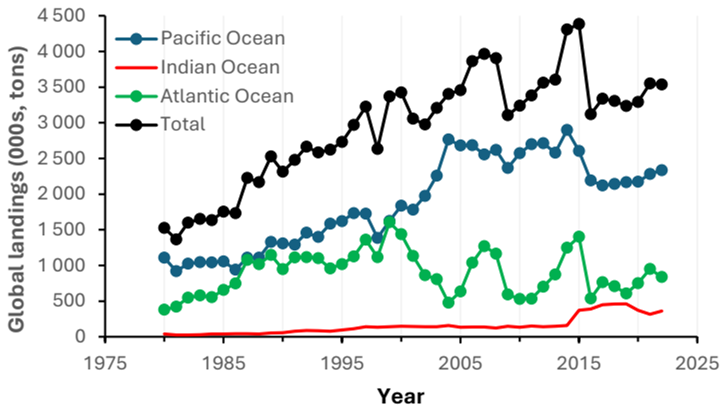
Figure I.B Most heavily fished families, totals
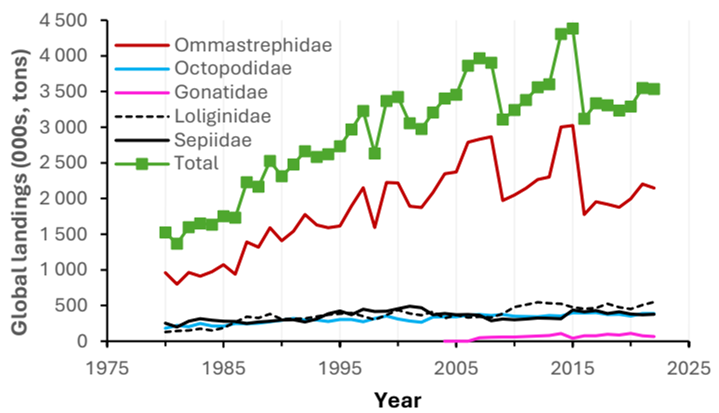
Table 1 Cephalopod diversity as at 14 October 2024
| Family | Genus | Total species | New species described since 2017 | |
|---|---|---|---|---|
| Class Cephalopoda | 47 | 182 | 861 | 33 |
| Subclass Nautiloidea | 1 | 2 | 7 | 3 |
| Order Nautilida | 1 | 2 | 7 | 3 |
| Subclass Coleoidea | 46 | 180 | 754 | 30 |
| Superorder Decapodiformes | 30 | 119 | 444 | 15 |
| Order Bathyteuthida | 2 | 2 | 9 | 3 |
| Order Idiosepida | 1 | 3 | 8 | 1 |
| Order Myopsida | 2 | 11 | 39 | 0 |
| Order Oegopsida | 21 | 65 | 177 | 1 |
| Order Sepiidaª | 3 | 37 | 210 | 10 |
| Order Spirulida | 1 | 1 | 1 | 0 |
| Superorder Octopodiformes | 16 | 61 | 312 | 15 |
| Order Vampyromorphab | 1 | 1 | 2 | 1 |
| Order Octopoda | 15 | 60 | 310 | 14 |
Source: MolluscaBase (available at https://www.molluscabase.org on 2026-01-08. doi:10.14284/448); and WoRMS (available at https://www.marinespecies.org at VLIZ. Accessed 2026-01-08. doi:10.14284/170).
ª Includes sepiolids and their relatives, considered by many cephalopod systematists/taxonomists to comprise a separate order.
b Includes a second species of Vampyroteuthis, a taxonomy which has not yet been accepted as valid by many cephalopod systematists/taxonomists.
Table 2 Coastal cephalopod species richness, by region
| Region | Species richness |
|---|---|
| Arctic Ocean | 10 |
| North Atlantic Ocean, Baltic Sea, Black Sea, Mediterranean Sea and North Sea | 55 |
| South Atlantic Ocean and wider Caribbean | 81 |
| Indian Ocean, Arabian Sea, Bay of Bengal, Red Sea, Gulf of Aden and Persian Gulf | 84 |
| North Pacific Ocean | 125 |
| South Pacific Ocean | 207 |
| Southern Ocean | 15 |
Source: Prepared by the writing team.
References
- Agus, B., and others (2021). Molecular and Biological Analysis on Ommastrephes caroli Findings in the Central Western Mediterranean Sea (Sardinian Waters) Including First Age Investigation Using Eye Lenses and Beaks. Frontiers in Marine Science, vol. 8, art. 683856.
- Aravindakshan, P.N., and Sakthivel M. (1973). The location of cephalopod nurseries in the Indian Ocean. Handbook to the international zooplankton collections, vol. 5, pp. 70-75.
- Arkhipkin, A. I., and others (2015). World squid fisheries. Reviews in Fisheries Science and Aquaculture, vol. 23.
- Avendaño, O., and others (2020). Octopus americanus: a cryptic species of the O. vulgaris species complex redescribed from the Caribbean. Aquatic Ecology, vol. 54.
- Barord, G.J., and others (2017). Comparative population assessments of Nautilus sp. in the Philippines, Australia, Fiji, and American Samoa using baited remote underwater video systems. PLoS One, vol. 9, art. 6.
- Barord, G.J., and others (2022). Survey of Nautilus pompilius Linnaeus, 1758 (Cephalopoda) from Siquijor Island and Dalaguete-Alcoy in the Philippines Using Baited Traps and Baited Remote Underwater Video Systems (BRUVS). Thalassas: An International Journal of Marine Sciences, vol. 38, art. 2.
- Barord, G.J., and others (2023). Three new species of Nautilus Linnaeus, 1758 (Mollusca, Cephalopoda) from the Coral Sea and South Pacific. ZooKeys, vol. 1143, art. 51.
- Barrett, C.J., and others (2022). Cuttlefish conservation: a global review of methods to ameliorate unwanted fishing mortality and other anthropogenic threats to sustainability. ICES Journal of Marine Science, vol. 79, art. 10.
- Cherel, Y.A. (2020). Review of Southern Ocean squids using nets and beaks. Marine Biodiversity, vol. 50, art. 98.
- CITES (2023). CITES Appendices I, II and III. 1974. https://cites.org/eng/app/index.php.
- De Angelis, P. (2012). Assessing the impact of international trade on chambered nautilus. Geobios, vol. 45, art. 1, pp. 5-11.
- Deville, D., and others (2024). Cryptic biodiversity in the commercial diamondback squid Thysanoteuthis rhombus Troschel 1857. Reviews in Fish Biology and Fisheries, vol. 34.
- Doubleday, Z.A., and others (2016). Global proliferation of cephalopods. Current Biology, vol. 26, art. 10.
- Dunstan, A., and others (2010). Nautilus pompilius fishing and population decline in the Philippines: A comparison with an unexploited Australian Nautilus population. Fisheries Research, vol. 106, art. 2.
- FAO (2008). Report of the FAO workshop on vulnerable ecosystems and destructive fishing in deep-sea fisheries. Rome, 26-29 June 2007. FAO Fisheries Report, No. 829.
- FAO (2020). Report of the FAO/CECAF Working Group on the Assessment of Demersal Resources - Subgroup North Nouakchott, Mauritania, 2-10 December 2019 / Rapport du Groupe de travail FAO/COPACE sur l'évaluation des ressources démersales - Sous-groupe Nord Nouakchott, Mauritanie, 2-10 décembre 2019. Rome, CECAF/ECAF 20/83.
- Fernández-Álvarez, F.Á., and others (2020). Global biodiversity of the genus Ommastrephes d'Orbigny, 1834 (Ommastrephidae: Cephalopoda): an allopatric cryptic species complex. Zoological Journal of the Linnean Society, vol. 190.
- Fiorito, G., and others (2015). Guidelines for the care and welfare of cephalopods in research - a consensus based on an initiative by CephRes, FELASA and the boyd group. Laboratory Animals, vol. 49.
- FRAEED, CMFRI (2024). Marine Fish Landings in India - 2023. Technical Report. ICAR-Central Marine Fisheries Research Institute, Kochi.
- Tainah B.N.F., and others (2023). Understanding the interactions between cephalopods and marine litter: A research evaluation with identification of gaps and future perspectives. Marine Pollution Bulletin, vol. 190, art. 114814.
- Gleadall, I.G., and others (2025). A balanced approach to the potential of octopus aquaculture. Marine Policy, vol. 179, art. 106682.
- González-Gómez, R., and others (2024). Biodiversity of octopuses in the Americas. Marine Biology, vol. 171, art. 189.
- Golikov, A.V., and others (2013). Changes in distribution and range structure of Arctic cephalopods due to climatic changes of the last decades. Biodiversity, vol. 14, art. 1.
- Golikov, A.V., and others (2024). Longterm annual trawl data show shifts in cephalopod community in the western Barents sea during 18 years. Frontiers in Marine Science, vol. 11, art. 1392585.
- Ibáñez, C.M., and others (2021). Macroevolutionary Trade-Offs and Trends in Life History Traits of Cephalopods Through a Comparative Phylogenetic Approach. Frontiers in Marine Science, vol. 8, art. 707825.
- ICES-WGCEPH (2023). Working Group on Cephalopod Fisheries and Life History (WGCEPH; Outputs from 2022 meeting). ICES Scientific Reports, vol. 5, art. 01.
- IUCN (2024). IUCN Red list - Cephalopods. https://www.iucnredlist.org/fr/search?query=Cephalopods&searchType=species.
- Jacquet, J., and others (2024). Support US OCTOPUS Act to keep octopuses wild. Science, vol. 385, art. 6710.
- Ji, F., and others (2020). Response of the Japanese flying squid (Todarodes pacificus) in the Japan Sea to future climate warming scenarios. Climatic Change, vol. 159.
- Keller, S., and others (2015). The use of Depletion Methods to assess Mediterranean cephalopod stocks under the current EU Data Collection Framework. Mediterranean Marine Science, vol. 16, art. 3.
- Mather, J. (2022). Why Are Octopuses Going to Be the 'Poster Child' for Invertebrate Welfare? Journal of Applied Animal Welfare Science, vol. 25, art. 1.
- Mohamed, K. S., and Venkatesan V. (2017). Marine molluscan diversity in India - exploitation, conservation. In: Course Manual Summer School on Advanced Methods for Fish Stock Assessment and Fisheries Management. Lecture Note Series No. 2/2017 CMFRI, Kochi.
- Mohamed, Y., and others (2014). Maturation, Fecundity and Seasonality of Reproduction of the Squid Uroteuthis duvauceli (Cephalopoda:Loliginidae) in the Suez Canal. Catrina: The International Journal of Environmental Sciences, vol. 9, art. 1.
- Mohamed, K. S., and others (2018). Relating abundance of purpleback flying squid Sthenoteuthis oualaniensis (Cephalopoda: Ommastrephidae) to environmental parameters using GIS and GAM in south- eastern Arabian Sea. Journal of Natural History, vol. 52, arts. 29-30.
- Onthank, K.L., and others (2022). Impact of Short- and Long-Term Exposure to Elevated Seawater PCO2 on Metabolic Rate and Hypoxia Tolerance in Octopus rubescens. Physiological and Biochemical Zoology, vol. 94, art. 1.
- Okamoto, S., and others (2023). Stock assessment and evaluation for winter-spawning stock of Japanese flying squid (fiscal year 2022). Marine fisheries stock assessment and evaluation for Japanese waters. Japan Fisheries Agency and Japan Fisheries Research and Education Agency, Tokyo.
- Onthank, K.L., and others (2020). Impact of short- and long-term exposure to elevated seawater PCO2 on metabolic rate and hypoxia tolerance in Octopus rubescens. Physiological and Biochemical Zoology, vol. 94, art. 1.
- Park, J., and others (2020). Illuminating dark fishing fleets in North Korea. Science Advances, vol. 6, art. eabb1197.
- Pérez-Puig, H., and others (2024). The departure of sperm whales (Physeter macrocephalus) in response to the declining jumbo squid (Dosidicus gigas) population in the central portion of the Gulf of California. PeerJ, vol. 12, art. 1.
- Petrić, M., and others (2024). Ommastrephes caroli (Cephalopoda: Ommastrephidae) from the Adriatic Sea: Morphometry, Age, and Genetic Characterization. Journal of Marine Science and Engineering, vol. 12, art. 7.
- Pierce, G.J., Allcock, L., Bruno, I., Bustamante, P., González, Á., Guerra, Á., Jereb, P., Lefkaditou E., Malham S., Moreno A., Pereira J., Piatkowski U., Rasero M., Sánchez P., Santos B.M., Santurtún M., Seixas S., Sobrino I., and R. Villanueva, eds. (2010). Cephalopod biology and fisheries in Europe. ICES Cooperative Research Report No. 303.
- Pérez-Puig H., Arias Del Razo A., Ahuatzin Gallardo D., Bolaños J. (2024). The departure of sperm whales (Physeter macrocephalus) in response to the declining jumbo squid (Dosidicus gigas) population in the central portion of the Gulf of California. PeerJ, vol. 12, art. e18117.
- Ramos, J.E., and others (2017). Characterization of the northernmost spawning habitat of Dosidicus gigas with implications for its northwards range extension. Marine Ecology Progress Series, vol. 572.
- Rosa, R., and others (2013). Lower hypoxia thresholds of cuttlefish early life stages living in a warm acidified ocean. Proceedings of the Royal Society B: Biological Sciences, vol. 280, art. 20131695.
- Rosa, R., and others (2019). Global Patterns of Species Richness in Coastal Cephalopods. Frontiers in Marine Science, vol. 6, art. 469.
- Sajikumar, K.K., and others (2017). Range extension of a bathypelagic squid, Bathyteuthis bacidifera (Cephalopoda: Bathyteuthidae), to the south Arabian Sea with special reference to its age and growth pattern. Marine Biodiversity, vol. 48.
- Sajikumar, K.K., and others (2018). Presence of the Wondrous jewel squid Histioteuthis miranda (Cephalopoda: Histioteuthidae) in the eastern Arabian Sea and determination of its age from statoliths. Thalassas, vol. 34.
- Sajikumar, K.K., and others (2020). Distribution, age and growth of the diamondback squid, Thysanoteuthis rhombus (Cephalopoda: Thysanoteuthidae) from the tropical Arabian Sea. Fisheries Research, vol. 2024, art. 105478.
- Sajikumar, K.K., and others (2022). Age, growth and maturation in the mesopelagic squid Abralia andamanica (Cephalopoda: Enoploteuthidae) from the Arabian Sea. Scientia Marina, vol. 86, art. 3.
- Sajikumar, K.K., and others (2023). Hawaiian flying squid Nototodarus hawaiiensis (Cephalopoda: Ommastrephidae) in the Arabian Sea: range extension, age, and growth. Marine Biodiversity, vol. 53, art. 15.
- Sauer, W.H., and others (2021). World octopus fisheries. Reviews in Fisheries Science & Aquaculture, vol. 29, art. 3.
- World Registry of Marine Species (WoRMS) (2024). www.marinespecies.org. Accessed on October 2024.
- Xavier, J.C., and others (2018). A review on the biodiversity, distribution and trophic role of cephalopods in the Arctic and Antarctic marine ecosystems under a changing ocean. Marine Biology, vol. 165, art. 93.