
Small-scale fishing, including subsistence fishing
Writing team: Derek Armitage (coordinating author), Denis Aheto, Donovan Campbell (co-lead member), Beodeul Kang, Tricia Lovell, Melissa Marschke, Ella-Kari Muhl, Prateep Nayak, Ife Okafor-Yarwood, Cristina Pita, Sisir Pradhan, Deborah Prado, Micaela Trimble, Ron Vave, Nobuyuki Yagi and Chang-Ik Zhang (lead member).
Key points
- Small-scale and subsistence fisheries make substantial contributions to national and global economies and are socially and culturally important.
- The cumulative effects of a wide range of drivers, including social, economic, environmental and climate drivers, pose significant threats to the viability and resilience of small-scale and subsistence fisheries globally.
- Sustainable pathways for small-scale and subsistence fisheries must address the cumulative effects of multiple drivers of vulnerability, build on knowledge and experience, and take into consideration equity, human rights and security concerns.
1. Introduction
The Food and Agriculture Organization of the United Nations (FAO) Voluntary Guidelines for Securing Sustainable Small-Scale Fisheries in the Context of Food Security and Poverty Eradication were ratified in 2014 Ref 49, providing a road map aimed at reinforcing sustainable small-scale and subsistence fisheries and their multidimensional contributions (food security and income generation) along the value chain (i.e. the nodes and networks of activity that yield value from pre- and post-harvest processing and marketing activities) Ref 72 Ref 5 Ref 101 Ref 11. The contributions of small-scale fisheries to the 2030 Agenda for Sustainable Development and the Sustainable Development Goals, as well as to the implementation of the Kunming- Montreal Global Biodiversity Framework, have been increasingly recognized Ref 29. However, small-scale fisheries tend to be economically vulnerable and politically marginalized in global policy debates Ref 73.
There is no globally agreed definition of small-scale fisheries, but they can be characterized as place- based and primarily for family consumption (low production), with limited capital or resource inputs, but labour-intensive and based on trips that are spatially and temporally limited (i.e. close to shore or completed within a day) (FAO, 2018). Individual nation States have adopted a wide range of definitions linked to gear type (i.e. type and size of nets), length of boat and means of power, vessel ownership, trip duration and area of fishing activity (e.g. inshore or nearshore) Ref 120 Ref 144, as shown in the table below. Small-scale fisheries undertake pre-harvest activities (e.g. preparing gear or planning), harvesting of fishery resources and post-harvest activities (e.g. marketing or trading). Activities along the value chain are undertaken by both men and women Ref 131 Ref 122 Ref 55.
Table Selected attributes and elements of small-scale fisheries
| Attribute | Related elements | Examples |
|---|---|---|
| Indicative gear | Fishing gear | Labour-intensive gear |
| Passive gear | ||
| Mechanization | No mechanization | |
| Small power winch (hauler powered off engine) | ||
| Vessel | Size of fishing vessel | No vessel |
| Less than 12 m, or 12-24 m | ||
| Motorization | No engine | |
| Engine less than 100 hp, or 100-400 hp | ||
| Operation | Fishing trip duration | Less than 6 hours |
| Day trip | ||
| 1-4 days | ||
| Fishing location and range | Less than 100 m from shore | |
| Up to 10 km offshore | ||
| 10-20 km offshore | ||
| Storage/preservation | Refrigeration/storage | No cold storage |
| Ice box on board | ||
| Ice hold below deck | ||
| Employment/labour | Labour crew | Individual or family |
| Cooperative group | ||
| Small number of employed crew | ||
| Ownership | Owner or owner-operator | |
| Lease arrangement | ||
| Time commitment | Occasional | |
| Full-time seasonal or part-time all year | ||
| Full-time | ||
| Use of catch | Disposal of catch | Household consumption or barter exchange |
| Direct sale at landing site(s) | ||
| Sale to traders (intermediaries) | ||
| Utilization of catch, value addition, preservation | For direct human consumption | |
| Chilled, locally processed, cured/salted/dried | ||
| Frozen (temporarily) | ||
| Integration into economy and/or management system | Informal, non-integrated (no fees) | |
| Integrated (registered, untaxed) | ||
| Formalized (licensed, landing fees) | ||
Source: Adapted from FAO, Duke University and WorldFish, 2023.
There are numerous exceptions to the attributes reflected in the table above Ref 49 Ref 144. Identification of the size, scope and scale of fishery operations is recommended in order to improve policy implementation (e.g. access and tenure, marketing, economic policy, regulation and enforcement) and to enhance evidence-based and comparative assessment. However, definitions of small- scale fisheries do not fall within an immutable category fixed in time and space. Rigid adherence to a specific definition is neither possible nor desirable.
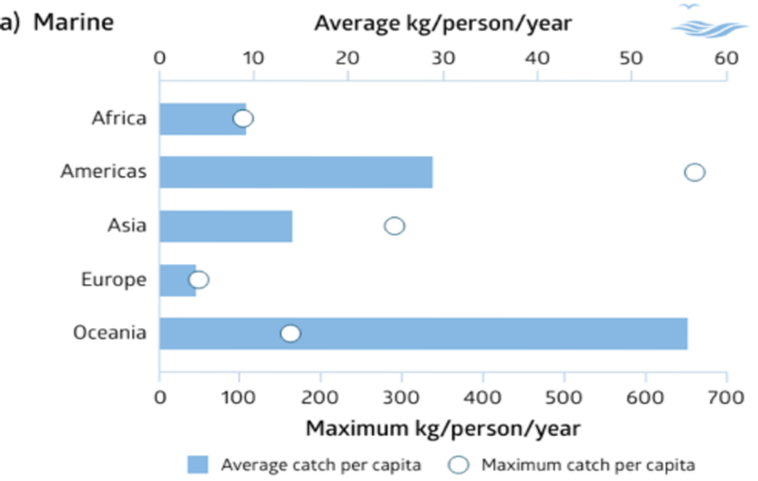
The economic, social and cultural importance of small-scale fisheries is very well established Ref 42 Ref 21. Total landings of all species by marine small-scale fisheries are estimated at 25.1 million tons per year, or approximately 40% of global landings (FAO, 2023), with an estimated annual revenue of approximately $77 billion (FAO, Duke University and WorldFish, 2023). There are significant regional variations in total catch per capita (see figure I). Oceania has the largest average annual marine catch per capita, while Europe has the lowest. However, regional variations in catch per capita do not necessarily indicate relative importance. Despite lower catch per capita levels, small-scale fisheries in Africa and Asia are of crucial importance because of the overall number of fishers in the sector.
Figure I Global estimates of marine small-scale fisheries' catch per capita, by region (average annual values, 2013-2017)
Small-scale fisheries' contributions are different for men and women, highlighting the importance of gender analysis in small-scale fisheries policy Ref 83 Ref 111. Small-scale fisheries contribute to poverty alleviation and viable livelihoods and are linked to cultural identity and stewardship Ref 5 Ref 18 Ref 90. They are also important for food security and nutrition (e.g. vitamin B12, calcium and important fatty acids) and provide an average of 17% of the nutrient supply globally Ref 161 Ref 11.
2. Pressures and impacts
Significant pressures and impacts on small-scale fisheries include: (a) economic growth and coastal development Ref 24; (b) overfishing, environmental impacts and climate change (Ruiz- Díaz and others, 2020); (c) competition with medium- or large-scale fisheries sectors, including illegal, unreported and unregulated (IUU) fisheries and marine security/boundary issues Ref 6 Ref 112; (d) loss of access catalysed by efforts to meet marine conservation targets Ref 19; (e) global trade and competition for market access Ref 139; and (f) policy and governance shifts Ref 147 Ref 21 (see sect. 4, chap. 1). The heterogeneity of small-scale fisheries, non-standardized approaches to data collection and analysis, and a lack of data collection generally across a range of environmental drivers affecting small-scale fisheries limits the fine-grained assessments that are necessary to support targeted policy interventions.
Most Member States with ocean areas within their national jurisdiction have adopted or are adopting strategies or regulatory frameworks related to ocean use and planning in order to catalyse economic growth and coastal development. Investments in marine sectors by financial institutions and other donors in Latin America, for example, expanded considerably between 2012 and 2020 Ref 60. Investment strategies rarely include the participation of small-scale fisheries organizations Ref 140. Evidence that poorly structured coastal and ocean economic development policies have a negative impact on small-scale fisher communities is established but incomplete Ref 19 Ref 45 Ref 73 Ref 109. Ocean "grabbing" (i.e. securing ocean space) by private and/or State actors may create significant injustices through a set of displacement and dispossession processes targeting fisher communities, and may sometimes be in conflict with customary tenure and access rights Ref 45 Ref 151. These social processes exacerbate the effects of sea level rise, including tidal flooding and erosion Ref 63, which already drive displacement and migration decisions. The displacement and/or migration of communities from their fishing territories to different locations creates social challenges given the strong sense of place of most small-scale fishing communities Ref 25 Ref 109 Ref 126.
Plans for new ports, tourist facilities, shipping lanes and security zones, oil rigs, mining areas, wind farms and new aquaculture ponds can also encroach upon geographical, political and economic territorial spaces and have a negative impact on the environment on which small-scale fishers rely. Offshore hydrocarbon operations affect wild-capture fisheries by displacing fish stocks and altering fish biochemistry, and submarine pipelines and cables may also hinder the activity of small-scale fisheries (Jouffray and others, 2020). The growth of offshore sea mining will have significant impact on habitats, including the discharge of sediments and metals into the water column (United Nations Environment Programme (UNEP), 2022), which will have a negative effect on ecosystems and small-scale fisheries. The negative impacts of underwater noise, vibration and electromagnetic waves from large wind farms on fisheries resources have also been identified Ref 108.
The cumulative effects of environmental and climate drivers on the viability of small-scale fisheries is very well established Ref 24 Ref 47 Ref 88. Fish disease, habitat degradation, invasive species and loss of species diversity were identified as important environmental drivers affecting small-scale fishers across 12 focal countries in Asia and Africa Ref 42. The livelihoods of small-scale fishers depend on aquatic and marine environments. The conditions of these ecosystems, such as water quality, temperature and salinity, are crucial for their sustainability. Environmental degradation, such as pollution from domestic, industrial, agricultural and aquaculture waste, and poor watershed management can adversely affect these conditions, threatening the viability of small-scale fisheries Ref 104 Ref 93 Ref 47. Variations in water quality across geographical areas can affect the accessibility and availability of fish.
Macroplastic and microplastic pollution (fragments and fibres) has emerged as a crucial challenge for coasts and fisheries, with human health implications Ref 9 Ref 130 Ref 145. Evidence of the relationship between microplastics and small-scale fisheries is established but incomplete, yet research points to an environmental driver affecting a diverse range of fisheries and ecosystems (e.g. pelagic, demersal and benthic zones), with negative implications for the fisheries. For example, Savoca and others (2021) estimate that plastic ingestion is occurring in 386 species of marine fish globally, while Pellini and others (2018) indicate that about 95% of fish analysed in the Adriatic Sea were observed to contain microplastics. A study in Puerto Morelos, Mexico, in 2024 recorded high levels of microplastics in commercial reef species, many of which make up a significant component of landings for small-scale fisheries in the Mexican Caribbean Ref 128. Regional variations in the impacts of plastic pollution are likely and may disproportionately affect small-scale fisheries, although evidence on this relationship is incomplete.
Small-scale fisheries are overlooked in the climate change literature and in assessments by the Intergovernmental Panel on Climate Change (IPCC) Ref 162. However, the projected effects of climate change (IPCC, 2023) will have a disproportionate impact on small-scale fishing communities, with varying levels of intensity in different regions associated with shifts in sea surface temperature, range shifts and stock composition change, sea level rise, changes in rainfall patterns, shifts in salinity associated with saltwater intrusion from higher levels of freshwater inflow, an increase in extreme weather events and associated coastal erosion, ocean acidification and coral reef bleaching (Bell and others, 2013; Mimura, 1999; Intergovernmental Science-Policy Platform on Biodiversity and Ecosystem Services (IPBES) 2019, 2024). Abnormally warm water temperatures and other climate stressors directly affect the quantity and the quality of small-scale fisheries' catch (FAO, Duke University and WorldFish, 2023), with correlated socioeconomic impacts for thousands of vulnerable households. The total maximum catch potential in the world's exclusive economic zones (EEZs) is likely to decrease by 7 to 12% by 2050 if a "business-as-usual" greenhouse gas emission scenario is followed, strongly driven by changes in plankton productivity Ref 97. The decrease could be up to 40% in some areas of the intertropical zone, largely affecting countries that are most dependent on fisheries as a source of protein Ref 97. Small-scale fisheries are likely to suffer the most significant impacts from these climate-driven changes, compounded by the effects of increasing industrialization, urbanization and the multiple uses of aquatic spaces Ref 21.
Competition with other fisheries sectors, including IUU fishing, generates a range of pressures and impacts. For instance, it is well established that competition and conflicts with industrial fishing boats are a major threat to small-scale fishing livelihoods in some regions Ref 66 Ref 141 (see subsect. 5A, subchap. 1A). Many countries have pursued the expansion of industrial fisheries as a development strategy for decades Ref 6 Ref 139. This has intensified the overexploitation of resources and increased pressure on small-scale fishing, leading to significant levels of inequity and evidence of conflict between small-scale and industrial fisheries Ref 39 Ref 141. Small-scale fisheries frequently compete for market share with products from industrial fisheries, aquaculture and imports Ref 38 Ref 120, posing a range of livelihood challenges. Furthermore, IUU fishing, piracy and unsustainable fishing practices are closely connected to a lack of enforcement and limited public involvement in management Ref 164. IUU fishing is a major threat to marine ecosystems and fishery resources and can lead to the significant loss of local fisheries, with small- scale fisheries in developing countries known to be particularly vulnerable Ref 146 Ref 165. However, assessments of the impacts of IUU on small-scale fisheries are complicated by the various forms and drivers of IUU, the role of small-scale fisheries in IUU, and the lack of consensus on what constitutes IUU in some regions Ref 165. Regional variation complicates the development of guidelines to address IUU and common monitoring indicators (FAO, 2024).
Globally, the impact of maritime safety interventions and security policies, often in tandem with blue economy strategies, is established but incomplete. In West Africa, for example, security zones are being imposed around sensitive maritime areas (e.g. offshore hydrocarbon infrastructure) Ref 2 Ref 22. Artisanal fishers may be detained or harassed if they enter these areas. A ban on fishing within 500 m of oil rigs similarly limits the activities of artisanal fishers in Ghana and Nigeria and reduces access to traditional fishing grounds Ref 110 Ref 16, thus requiring them to go further out to sea, with concomitant safety risks.
Disruptions to sea lines of communication through acts of piracy and armed robbery in strategic regions, such as the Gulf of Aden, the Gulf of Guinea, the South China Sea and the Red Sea, further limit freedom of navigation for small-scale fishers Ref 86 Ref 16 Ref 64. Numerous Security Council resolutions on piracy and armed robbery at sea have been adopted with the aim of mitigating these dangers. At the national level, anti-piracy measures may include prohibitions on small- scale fishers using certain harbours, the imposition of curfews Ref 16 and no-fishing zones. An increased law enforcement presence at sea may reduce piracy and armed robbery, but results in the loss of traditional fishing grounds or restricts access to fishing areas at specific times for fishers, often without compensation Ref 16. In some situations, small-scale fishers are mistaken for pirates and either reported as suspicious (mostly in the Gulf of Guinea) or targeted, as in the Southern Indian Ocean. Many artisanal fishers operate at night Ref 94, leading to further uncertainty and livelihood impacts.
Marine conservation policies and specific interventions, such as marine protected areas (MPAs), can contribute to the sustainability of small-scale fisheries (e.g. spillover effects) and the protection of habitats and species at specific life stages. There is evidence that well-managed MPAs may result in "co-benefits" for fisheries and coastal communities Ref 8 Ref 107 Ref 36. However, increased efforts to achieve the "30 by 30" targets of the Kunming-Montreal Global Biodiversity Framework may exacerbate the challenges faced by small-scale fisheries. More than 190 countries committed to the target of protecting at least 30% of terrestrial and inland water areas and marine and coastal areas by 2030 Ref 44. Contemporary marine conservation efforts can marginalize coastal and small-scale fishing communities Ref 31 Ref 150 through the implementation of fishing bans and no-take zones, enclosure and access constraints, or top-down enforcement of conservation regulations Ref 99 Ref 155 Ref 20 Ref 45. In South Africa, for example, conservation efforts have displaced small-scale fishing communities from historically important fishing areas Ref 117. Such initiatives can further alienate the underresearched, and largely undocumented, cultural fisheries management strategies for funerals or chiefly investiture of Indigenous Peoples and local communities, resulting in further displacement and exclusion Ref 160. Negative impacts include the loss of community harvesting in conservation zones for funerary feasts and the loss of Indigenous Peoples' and local communities' cultural practices, which can affect access rights and identity Ref 160.
3. Social components
Along the fish value chain (i.e. harvest/capture, processing and marketing), small-scale capture fisheries provide full- or part-time employment opportunities for approximately 60.2 million people, or about 90% of the total number of people employed in capture fisheries globally (FAO, Duke University and WorldFish, 2023; FAO, 2024). As of 2016, when the latest projections were available, close to 500 million people were estimated to depend in some way on small-scale fisheries for their livelihood, with an estimated 53 million people directly involved in fishing for subsistence (i.e. primarily for family food needs (FAO, 2024). Notably, FAO technical guidelines for responsible fishing place an emphasis on fish processing, trade and poor-friendly market systems to enhance economic efficiency and welfare gains in developing countries Ref 23 Ref 122.
Key social attributes influence the distribution of economic and livelihood benefits within small-scale fishing communities, including gender and identity Ref 57, displacement and labour precarity Ref 92, security/safety at sea (Guilfoyle, 2014), social protection Ref 50 Ref 149 and well-being Ref 154 Ref 163. Efforts to build socially viable small-scale fisheries must engage more fully with fishers' place-based knowledge Ref 79 Ref 115. A focus on value chains also enables a coherent assessment of equity and the distribution of benefits. There is evidence of traders and processors accessing exclusive market information that facilitates exploitative social relationships and constrains the power of small-scale fishers Ref 52 Ref 122.
The financial viability of small-scale fisheries is influenced by other sectors and actors, including informal finance providers, such as fish buyers or gear suppliers, through high-interest loans and unfavourable repayment structures, including selling catches when market prices are at their lowest Ref 82 Ref 111. Fish buyers provide de facto controls on the amount and price of small-scale fishery catches, serving as a driver for overexploitation Ref 77. There is limited reporting on the specific terms and conditions imposed by such fund providers. Informal financing of small-scale fisheries is common because formal banks are reluctant to lend money to perceived high-risk or unstable borrowers, including small-scale fisheries Ref 75. In many cases, opportunities to upgrade small-scale fisheries are structured by social relationships and local embeddedness Ref 1.
The gender dimensions of small-scale fisheries are significant (see subsect. 5B, chap. 6). An estimated 53 million people are directly involved in fishing for subsistence; 39.6% of those engaged in the small-scale fisheries value chain through direct employment or subsistence fishing are women (FAO, Duke University and WorldFish, 2023). Close to 50% of post-harvest workers are women (FAO, Duke University and WorldFish, 2023). Compared with other industries, small-scale fisheries significantly contribute to gender equality Ref 65 Ref 81. Women and men perform complementary roles: men are primarily involved in marine capture fisheries, while women focus on processing, trade and marketing Ref 116.
Globally, women catch approximately 2.9 million (+/- 835,000) tons of fish and invertebrates annually, with an estimated landed value of $5.6 billion Ref 65. This accounts for 12% of the total landed value of small-scale fishery catches and generates an overall economic impact of $14.8 billion annually (+/- $4 billion) Ref 65.
Women may also have prominent leadership roles in all aspects of a fishery, including management and governance Ref 27 Ref 57. However, women tend to have more unstable positions within fishery value chains despite their roles Ref 46 Ref 27. Women in small-scale fisheries are also subjected to wage inequalities Ref 3, domestic and/or workplace violence Ref 90 and limited acknowledgement of their work, which is often viewed as an extension of their household responsibility (United Nations Entity for Gender Equality and the Empowerment of Women (UN-Women), 2020). Opportunities to enhance environmental and human well-being outcomes require ongoing efforts to address gender inequities across the small-scale fisheries value chain Ref 35.
Small-scale fisheries are increasingly characterized by precarious working conditions, including extreme weather events, and labour relations that can undermine the significant contributions of small-scale fishers Ref 91 Ref 17. Furthermore, in developing countries, small-scale fisheries may lack social protection programmes or receive limited support to mitigate vulnerabilities Ref 149. Small-scale fishers are often forced to fish further from shore for longer periods of time, particularly given general decline in stocks. Workers in small-scale fisheries rarely have contracts, work long hours, are often paid on share of the catch, based on how much fish is caught, and fish seasonally. Depending on the context, boat ownership can be next to impossible in some coastal communities, resulting in some fishers migrating for work elsewhere. For example, former Cambodian small-scale fisher households can be found in Thailand working in pre-processing (women) and as fish workers (men) on crab boats. In Indonesia, small-scale fishers migrate for work, with men separated from their families for years at a time. Investments around labour protection, individual and collective control and decent work are critical for such fisheries Ref 91 Ref 14 Ref 89.
Small-scale fishers, including Indigenous small-scale fishers, are keen stewards of their environments, reflecting patterns of change and seasonal variability Ref 54 (see subsect. 5B, chap. 8). A systems-oriented understanding of their environment emerges from the accumulation of shared knowledge over generations within communities, often transmitted orally Ref 55 Ref 142. The importance of paying greater attention to knowledge systems is reflected in evidence that aquatic food dependence among coastal Indigenous Peoples worldwide is much higher than it is among non-Indigenous peoples Ref 32. This dependence was greatly affected by the coronavirus disease (COVID-19) pandemic and was addressed through barter exchanges for goods such as dried fish Ref 106 (see subsect. 5B, chap. 7). In West Africa, responses to the pandemic highlighted the level of resilience in small-scale fishing communities, where fishers were forced to innovate in light of limited support Ref 110. In other global assessments, there is a reluctance to draw on fisher knowledge and observations Ref 53.
4. Governance
Small-scale fisheries are complex socioecological systems Ref 28 Ref 21, requiring governance approaches that are collaborative, adaptive and multilevel (see sect. 3). Governance of small-scale fisheries also requires transparency, accountability and a focus on equity (see subsect. 5B, chap. 5). Globally, small-scale fishers and partner civil society organizations have a long history of documenting inequities associated with coastal development policies. Policies that have an impact on
small-scale fisheries should seek more inclusive outcomes aligned with the Sustainable Development Goals. The Ocean, Water and Fisher Peoples' Tribunals under the World Forum of Fisher Peoples are an example of forums of justice being established to give voice to testimonies and experiences of human rights abuses faced by fishing communities. In addition, independent people's tribunals on the implications of the blue economy were held in at least six countries around the Indian Ocean and in Brazil Ref 136. Similar initiatives have emerged in Latin America and the Caribbean and elsewhere Ref 59 Ref 58.
At the global level, the Voluntary Guidelines for Securing Sustainable Small-scale Fisheries in the Context of Food Security and Poverty Eradication Ref 49 represent the first international policy instrument entirely dedicated to small-scale fisheries. However, experiences implementing the Guidelines in different jurisdictions have been ad hoc Ref 30 Ref 134. There is established but incomplete evidence that key obstacles to the full implementation of the Guidelines include incoherence with existing national policies and requirements for national Governments to adapt or adjust existing regulatory frameworks Ref 33. Efforts to increase policy coherence with the Guidelines are being supported through the development of national plans of action for small-scale fisheries, with support from FAO.
The implementation of the Voluntary Guidelines is a pathway to achieving the Sustainable Development Goals of the 2030 Agenda. Small-scale fisheries are explicitly addressed in target 14b of Goal 14, on life below water: provide access for small-scale artisanal fishers to marine resources and markets. However, preferential access for small-scale fisheries globally is very low Ref 134. Aligning their policy frameworks at the local, subnational and national levels with the Goals and the Guidelines provides a foundation for multilevel interventions Ref 143. With reference to small-scale fisheries, particularly Indigenous People's fisheries, attention is increasingly being paid to human rights-based approaches Ref 49, including links between small-scale fisheries and rights to food security Ref 49. The basis for a human-rights based approach is expressed in the United Nations Declaration on the Rights of Indigenous Peoples of 2007 and the United Nations Declaration on the Rights of Peasants and Other People Working in Rural Areas of 2018. Other global governance dialogues and multilateral environmental agreements will increasingly affect small-scale fisheries (see sect. 3), as reflected in the findings and evidence provided by IPBES assessments or in the emerging global plastics treaty.
At the national and subnational levels, evidence that the co-management and participatory governance of small-scale fisheries yield more equitable outcomes is well established, although strongly context- dependent Ref 41 Ref 47 Ref 132. Success requires the active involvement of fishers and diverse stakeholders, strong government support, sustainable financial resources and transparent and adaptive decision-making processes Ref 41 Ref 87. The Voluntary Guidelines and several international and national policy instruments already advocate for the increased participation of men and women in decision-making processes. Co-management, involving small-scale fisheries, Governments and other stakeholders, is now widely considered a best practice governance approach Ref 123 Ref 143. The most frequent goal of co-management is to improve fisheries management through increased participation, increased legitimacy and/or compliance with fishing rules, the definition or enforcement of fishing rights and the incorporation of customary management norms into formal management Ref 41. Evidence showing that co-management leads directly to better ecological outcomes is unresolved.
Evidence in support of the co-management and participatory governance of small-scale fisheries is often aligned with recognition of tenure. The Voluntary Guidelines on the Responsible Governance of Tenure of Land, Fisheries and Forests in the Context of National Food Security Ref 51 clearly articulate the importance of tenure in regulating how societies make decisions about who can use which resources, for how long and under what conditions, including rights of decision-making. Effective and equitable governance of tenure is a critical variable in small-scale fishery outcomes, including for biodiversity Ref 35 Ref 152. Groups with secure tenure can advance cost-effective management strategies. Secure tenure also makes it more likely that activities along the small-scale fisheries value chain will be compliant with international protocols and achieve positive environmental outcomes Ref 68. Secure governance of tenure for small-scale fisheries must extend to land for storing boats and gear, as well as post-harvest activities, including space to sort or dry fish, and also allow related economic activities such as marketing and selling (FAO, 2024). Despite a recognition of tenure implications, regional experience shows that the governance of tenure for small-scale fisheries in many jurisdictions is under threat from various forms of development - such as infrastructure and industrial aquaculture - as well as conservation pressures Ref 110 Ref 34. There is evidence of arbitrary evictions and conflict in many small-scale fisheries contexts despite legal and policy frameworks established to limit such situations Ref 49 Ref 37. Secure systems of tenure established through customary law and/or Indigenous systems of governance are particularly vulnerable. Loss of tenure can undermine the sense of place and area-specific knowledge of small-scale fishers Ref 13.
The availability of data and information on diverse small-scale fisheries activities and catch levels remains an ongoing governance issue, amplified further by the wide range of targeted species Ref 119. There are also regional and national variations in how data-poor fisheries are defined, although some basic criteria provide a foundation for the development of monitoring programmes Ref 43. Fishers themselves provide valuable data and information on fisheries stocks, trends, harvest pressures and livelihood/food security implications, which can counter perceptions about data-poor small-scale fisheries Ref 62. To enhance governance of these fisheries, ongoing efforts are required to improve low-cost methodologies that provide access to a wide range of social and ecological knowledge to overcome data-poor situations Ref 119.
Data-poor fisheries are linked in part to compliance and traceability concerns in the small-scale fisheries sector, including IUU fisheries. Compliance at the individual fisher level remains poorly understood (Battista and others, 2018). Perceptions of legitimacy, fairness and equitability of rules play a key role in compliance, and are mediated by social norms and collective obligations. The participation of small-scale fishers in developing and applying rules has a significant effect on compliance (FAO, 2024). The role of technology in improving data collection for marine management is worth acknowledging, while noting the vulnerability of some small-scale fisheries to targeted monitoring. For example, in West and Central Africa, the close proximity of small-scale fishers to the shore and their visibility to law enforcement personnel makes them an easy surveillance and enforcement target (Okafor-Yarwood and others, 2024c; Paes and Okafor-Yarwood 2024), and may restrict their activities compared with the monitoring measures applied in the industrial sector Ref 110.
The value of ecosystem-based fisheries management to support governance is increasingly well established. The implementation of ecosystem approaches, such as the ecosystem approach to fisheries, over the past decade has helped to reorient management objectives and establish new methods that are relevant to data-limited contexts Ref 166 Ref 85 (see chap. 27 of the second World Ocean Assessment). Integrated fisheries risk analysis methods for ecosystem approaches Ref 167 explicitly consider the status of local fish stocks, habitats, biodiversity measures and economic indicators for fisheries (see chap. 25 of the second Assessment). Ecosystem approaches have recently been applied in several small-scale fisheries, such as Egyptian fisheries in the Red Sea Ref 4, local fisheries on the south coast of the Republic of Korea Ref 78 and fisheries in Indonesian waters Ref 153. Efforts to improve traceability and certification are also aimed at increasing transparency in value chain governance and adherence to sustainable harvesting norms. However, global eco-label standards in general remain expensive, struggle to include social sustainability criteria and, most importantly, have not effectively included small-scale fisheries Ref 125 Ref 7. Similar governance mechanisms such as fair trade certification have a stronger emphasis on repositioning and empowering producers by mandating fair pricing standards. A growing number of local and national certification and labelling schemes for small-scale fisheries is emerging (e.g. Abalobi in South Africa and Pesca de Rias in Spain). However, certification processes are not fully developed in small-scale fisheries contexts and are rarely focused on ecological sustainability dimensions Ref 124.
5. Sustainable pathways
The FAO Voluntary Guidelines for Securing Sustainable Small-scale Fisheries in the Context of Food Security and Poverty Eradication outline diverse pathways to help to secure sustainable small-scale fisheries. Efforts to amplify and extend these pathways must be centred on the calls to action from small- scale fishers themselves and the Coalition for Fair Fisheries Arrangements (CFFA) "Rules of conduct for working with small-scale fishers and fishworkers" Ref 26. Indeed, small-scale fisheries are a crucial economic sector, employ millions of people, support food security for millions more and exhibit significant resilience despite numerous challenges Ref 11 Ref 21. Transition pathways for sustainable small-scale fisheries that build on the Guidelines and are aligned with the Oceans 2050 scenario are emerging but incomplete.
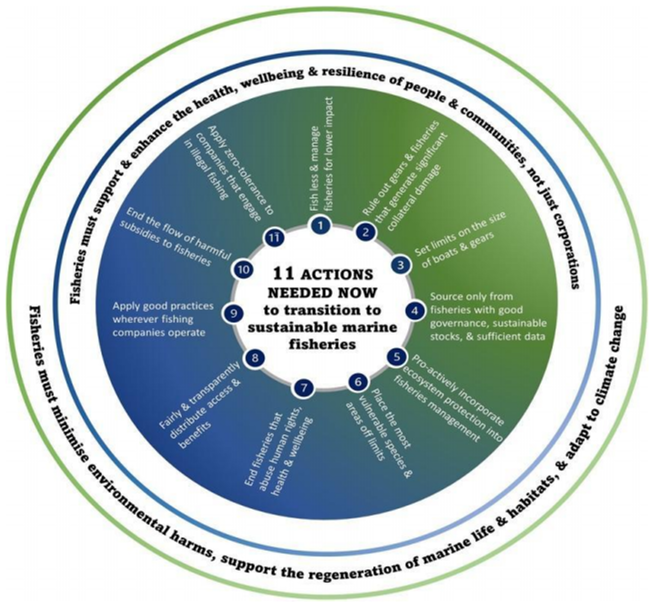
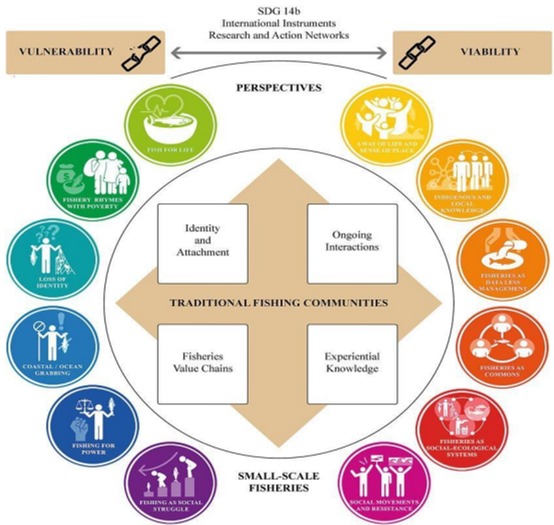
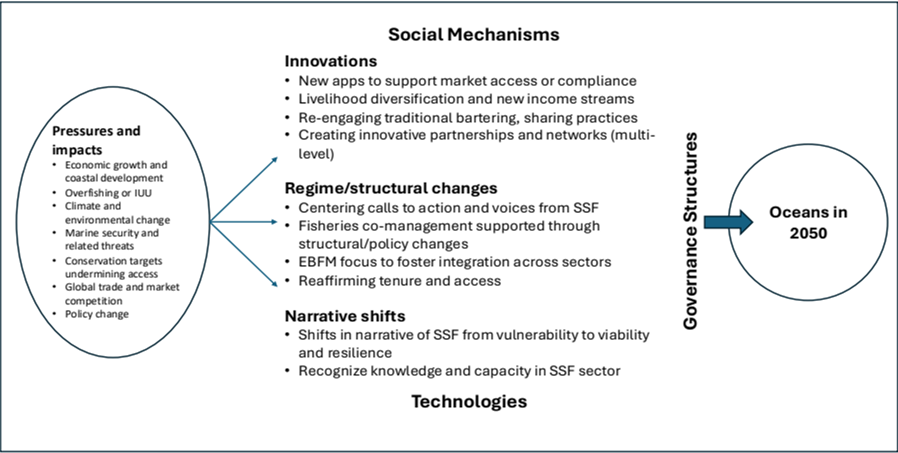
Roberts and others (2024) provide a road map for fisheries reform and 11 actions to transition to sustainable marine fisheries, most of which are of direct relevance to small-scale fisheries (see figure II). The Illuminating Hidden Harvest report (FAO, Duke University and WorldFish, 2023) outlines several pathways to secure the role of small-scale fisheries in sustainable development, including acting on existing policy commitments and improving how fisheries data and information are collected, analysed and used. Nayak and others (2021) outline a variety of domains and perspectives around which the vulnerability, viability and sustainable development transitions of small-scale fisheries can be navigated, with an emphasis on social struggles and contested arrangements of power (see figure III). Muhl and others (forthcoming) document five key transition pathways from vulnerability to viability for small-scale fisheries based on experiences in 12 countries in Africa and Asia, including building governance networks and partnerships, centring small-scale fisheries' tenure and rights, advancing a gender and intersectional perspective on viability pathways, enhancing opportunities for nature-based livelihoods and co-creating or co-producing the knowledge needed for transition pathways. A range of other empirical analyses and policy assessments further articulate elements of transition or transformation pathways for small-scale fisheries Ref 135 Ref 162 Ref 61 Ref 21. The transition pathways outlined in the present subchapter build on existing assessments, but with specific consideration of the Oceans 2050 scenario. Emphasis is placed on the innovations, structural/regime changes and narrative shifts needed to catalyse the technological, governance and socioeconomic dimensions of sustainable pathways (see figure IV).
Figure II Road map and actions to transition to sustainable marine fisheries
Social and economic mechanisms for sustainable pathways to the Oceans 2050 scenario are diverse and will vary across the value chain. Participation, collaboration and mutual support, partnerships and networks of small-scale fisheries are a core feature of any successful transition pathway. Pathways must also reflect a commitment to principles of equity and justice, drawing connections to human rights and security, including labour, safety and security of access Ref 127. The significant knowledge and capacity of small-scale fisheries to lead transitions must be emphasized, along with a commitment to principles and practices of knowledge co-production Ref 95 Ref 100. Furthermore, pathways for sustainable small-scale fisheries must reflect the strong connections within and across sectors (for example, the links between small-scale and industrial fisheries through IUU and trawling practices are significant). More generally, a core principle in considering sustainable pathways is recognition of the deep relationship between small-scale fishery practices, socioeconomic prosperity (e.g. food security and employment) and ecological systems Ref 28.
Providing stronger financial and economic support to small-scale fisheries is necessary to catalyse innovative practices, such as creating new markets, or diversifying or augmenting livelihoods. Several measures, such as savings groups, microfinance or insurance schemes, have been introduced to change the relationship between fishers and informal financial providers (i.e. fish buyers or gear suppliers) Ref 121. These interventions face challenges given the complex, long-standing social relationships in small local communities, but they help to shift the narrative of small-scale fisheries as vulnerable. Savings groups organized by local communities provide innovative pathways for such fisheries in Cambodia, the United Republic of Tanzania and other jurisdictions Ref 84 Ref 102. Advancing local, bottom-up initiatives, assisted by outside resources, is one pathway to disentangle the complex problems associated with informal finance providers, particularly at the harvest and marketing stages of the value chain Ref 122. Furthermore, additional financial support is needed to ensure that individuals and small-scale fisheries organizations can engage with the growth of digitalization and e-commerce in the marketplace. An important social sustainability pathway also includes communities retaining and supporting traditional practices of bartering goods and services in lieu of monetary payments - a process that re-emerged during the COVID-19 pandemic Ref 106. Traditional or customary practices serve as an important safety net since small-scale fishery incomes are typically low, may be the sole income contribution to households and/or support extended multigenerational families.
Figure III Transitions from vulnerability to viability
Governance processes related to small-scale fisheries for an Oceans 2050 scenario must be adaptive, collaborative and multilevel. They must also be transparent and inclusive and support more decentralized and/or bottom-up decision-making processes. The implementation of the 2030 Agenda requires management grounded in a socioecological systems approach in order to achieve the integrated set of global priorities and objectives set out in the Sustainable Development Goals (see chap. 27 of the second World Ocean Assessment), which provide a foundation for the Oceans 2050 scenario. There are still gaps in implementation and incomplete uptake across regions and stakeholders. Common frameworks and criteria for small-scale fisheries governance based on demonstrated best practices are necessary.
Governance changes are aligned with technological tools and opportunities. Advances in technology enable small-scale fisheries to play an active role in fisheries governance and co-management systems - a crucial pathway for sustainability. In Liberia, for example, "Dase App", a smartphone application developed and maintained by the Environmental Justice Foundation, has been used by local fishers as part of the co-management process to collect data on possible IUU fishing infractions by trawlers. The mobile app enables users to capture video or photo evidence of destructive IUU fishing in real time, regardless of their Internet connection. However, its effectiveness is contingent upon the training of fishers on safe use and the willingness of government departments to take appropriate action when possible infractions are reported (see Livingstone and Anthony, 2023).
Pathways to sustainability will require further investments in governance and technological innovations and transfers applied at scale, with the aim of supporting market access, security and management by fishers. Technology uptake in the service of small-scale fisheries requires system-level changes and a shift away from narratives that such fisheries are risk-averse or disconnected from other related sectors. In particular, technology changes are closely linked to issues of access (i.e. access to knowledge, markets, credit and resources/space) that catalyse sustainable pathways.
Figure IV Sustainable pathways for small-scale fisheries under the Oceans 2050 scenario
6. Conclusions
Small-scale fisheries are highly variable and also distinct from other fisheries. They are of significant social, economic, cultural and ecological importance and play a crucial role in fostering food and nutritional security for millions of people Ref 11. Yet they face progressively significant pressures from many stressors, and their viability in many regions is increasingly threatened. Sustainable pathways for small-scale fisheries must be guided by the knowledge of fishers and, among other things, their active participation in decision-making. Their governance should be guided by principles of equity, justice and human rights. Furthermore, sustainable pathways must reflect the deep integration of the small-scale fisheries sector in a range of national and global governance processes, economic development policies and conservation agendas. There is a clear opportunity for Governments to support the knowledge, practices and capacity of small-scale fisheries and to recognize their crucial role in meeting the global Sustainable Development Goals.
References
- Adhuri, Dedi Supriadi, and others (2016). Green market for small people: Markets and opportunities for upgrading in small-scale fisheries in Indonesia. Marine Policy, 63, 198-205.
- Adjei, Moses, and Ragnhild Overå (2019). Opposing discourses on the offshore coexistence of the petroleum industry and small-scale fisheries in Ghana. The Extractive Industries and Society, 6(1), 190- 197.
- Aini, Yulinda Nurul (2022). The Gender Wage Gap in Fisheries Labour Market: The Analysis of Sociodemographic and Work-Related Factors in Indonesia. Sawwa: Jurnal Studi Gender, 17(2), 145-172.
- Alsolami, Lafi, and others (2020). An ecosystem-based fisheries assessment approach and management system for the Red Sea. Fisheries Research, 227, 105551.
- Arthur, Robert. I., and others (2022). Small-scale fisheries and local food systems: Transformations, threats and opportunities. Fish and Fisheries, 23(1), 109-124.
- Ayilu, Raymond K., and others (2023). Blue economy: Industrialisation and coastal fishing livelihoods in Ghana. Reviews in Fish Biology and Fisheries, 33(3), 801-818.
- Bailey, Megan, and others (2016). Fishers, fair trade, and finding middle ground. Fisheries Research, 182, 59-68.
- Ban, N.C., Gurney, G.G., Marshall, N.A., and others (2019). Well-being outcomes of marine protected areas. Nature Sustainability, 2: 524-532.
- Barboza, Luís Gabriel Antão, and others (2018). Marine microplastic debris: An emerging issue for food security, food safety and human health. Marine Pollution Bulletin, 133, 336-348.
- Bassett, Hannah R., and others (2022). A comparative study of small-scale fishery supply chains' vulnerability and resilience to COVID-19. Maritime Studies, 21(2), 173-192.
- Basurto, X., Gutierrez, N.L., Franz, N., and others (2025). Illuminating the multidimensional contributions of small-scale fisheries. Nature. 637: 875-884.
- Battista Willow, and others (2018). Behavior Change Interventions to Reduce Illegal Fishing. Front. Mar. Sci., 5: 403.
- Bavinck, Martin, and Joyeeta Gupta (2014). Legal pluralism in aquatic regimes: a challenge for governance. Current Opinion in Environmental Sustainability, 11: 78-85.
- Bavinck, Martin, and others (2024). Maximum sustainable employment: Adding to the beacons of wild fisheries governance. Fish and Fisheries-Wiley Online Library. Fish and Fisheries.
- Bell, Johann D., and others (2013). Mixed responses of tropical Pacific fisheries and aquaculture to climate change. Nature Climate Change, 3(6), 591-599.
- Bell, Curtis, and others (2021). Pirates of the Gulf of Guinea: A Cost Analysis for Coastal States.
- Belton, Ben, and others (2019). Fisheries development, labour and working conditions on Myanmar's marine resource frontier. Journal of Rural Studies, 69, 204-213.
- Béné, Christophe, and others (2016). Contribution of Fisheries and Aquaculture to Food Security and Poverty Reduction: Assessing the Current Evidence. World Development, 79, 177-196.
- Bennett, Nathan J., and others (2021a). Advancing Social Equity in and Through Marine Conservation. Frontiers in Marine Science, 8.
- Bennett, Nathan J., and others (2021b). Blue growth and blue justice: Ten risks and solutions for the ocean economy. Marine Policy, 125, 104387.
- Berkes, Fikret and Nicole Franz, eds. (2025). Governing for transformation towards sustainable small- scale fisheries. Rome, FAO.
- Beseng, Maurice (2019). Cameroon's choppy waters: The anatomy of fisheries crime in the maritime fisheries sector. Marine Policy, 108, 103669.
- Bjorndal, Trond, and others (2014). Value chain dynamics and the small-scale sector: Policy recommendations for small-scale fisheries and aquaculture trade. FAO.
- Brent, Zoe W., and others (2020). The Blue Fix: What's driving blue growth? Sustainability Science, 15(1), 31-43.
- Cánovas-Molina, Almudena, and others (2022). A review of vulnerabilities in worldwide small-scale fisheries. Fisheries Management and Ecology, 29(5), 491-501.
- CFFA (2023). Rules of conduct for working with small-scale fishers and fishworkers to save our ocean. Coalition for fair fisheries arrangements.
- Chambon, Mouna, and others (2024). A synthesis of women's participation in small-scale fisheries management: Why women's voices matter. Reviews in Fish Biology and Fisheries, 34(1), 43-63.
- Charles, A. (2023). Sustainable fishery systems. John Wiley & Sons.
- Charles, Anthony, and others (2024). Environmental stewardship by small-scale fisheries. FAO.
- Chuenpagdee, Ratana, and others (2017). Small-scale fisheries guidelines: Global implications. The MARE Publication series No.14. Springer.
- Cinti, Ana, and others (2024). Small-scale fisheries in ecologically sensitive areas in Latin America and the Caribbean: Do marine protected areas benefit fisheries governance? Ambio.
- Cisneros-Montemayor, Andrés. M., and others (2016). A Global Estimate of Seafood Consumption by Coastal Indigenous Peoples. PLOS ONE, 11(12).
- Cohen, Philippa J., and others (2017). Policy Coherence with the Small-Scale Fisheries Guidelines: Analysing Across Scales of Governance in Pacific Small-Scale Fisheries. In S. Jentoft, and others, eds., The Small-Scale Fisheries Guidelines: Global Implementation (pp. 57-77). Springer International Publishing.
- Cohen, Philippa. J., and others (2019). Securing a just space for small-scale fisheries in the blue economy. Frontiers in Marine Science, 6, 171.
- Cohen, Philippa J., and others (2024). Marine, Coastal and Shoreline Tenure [Report]. Meridian Institute, USA.
- Costello, M.J. (2024). Evidence of economic benefits from marine protected areas. Sci. Mar., 88(1): e080.
- Courtney, C.A., and Jhaveri, N.J. (2017). Marine Tenure and Small-scale Fisheries: A Sourcebook on Good Practices and Emerging Themes. Washington, D.C .: USAID Tenure and Global Climate Change Program.
- Crona, Beatrice I., and others (2016). Towards a typology of interactions between small-scale fisheries and global seafood trade. Marine Policy, 65, 1-10.
- Crona, Beatrice, and others (2021). Sharing the seas: A review and analysis of ocean sector interactions. Environmental Research Letters, 16(6), 063005.
- Cruz-Del Rosario, Teresita, and Jonathan Rigg (2019). Living in an age of precarity in 21st century Asia. Journal of Contemporary Asia, 49, 517-527.
- D'Armengol, Laia, and others (2018). A systematic review of co-managed small-scale fisheries: Social diversity and adaptive management improve outcomes. Global Environmental Change, 52, 212-225.
- Dias, Ana Carolina E., and others (2023). From vulnerability to viability: A situational analysis of small- scale fisheries in Asia and Africa. Marine Policy, 155, 105731.
- Dowling, N.A., and others (2015). Guidelines for developing formal harvest strategies for data-poor species and fisheries. Fisheries Research, 171: 130-140
- Eckert, Isaac, and others (2023). 30×30 biodiversity gains rely on national coordination. Nature Communications, 14(1), 7113.
- Ertör, Irmak (2023). We are the oceans, we are the people !: Fisher people's struggles for blue justice. The Journal of Peasant Studies, 50(3), 1157-1186.
- EUROSTAT (Statistical Office of the European Union) (2023). Share of women working part-time higher than men. In EUROSTAT News Articles. Luxembourg.
- Evans, Louisa. S., and others (2023). Putting coastal communities at the center of a sustainable blue economy: A review of risks, opportunities, and strategies. Frontiers in Political Science, 4.
- FAO (1999). The code of conduct for responsible fisheries. Rome.
- FAO (2015). Voluntary guidelines for securing sustainable small-scale fisheries in the context of food security and poverty eradication. Rome.
- FAO (2019). Social protection in small-scale fisheries and aquaculture in Latin America and the Caribbean. Santiago de Chile, 48 pp. Rome
- FAO (2022). Voluntary Guidelines on the Responsible Governance of Tenure of Land, Fisheries and Forests in the Context of National Food Security. First revision. Rome.
- Ferrol-Schulte, Daniella, and others (2014). Patron-client relationships, livelihoods and natural resource management in tropical coastal communities. Ocean & Coastal Management, 100, 63-73. 2014.
- Ford, James. D., and others (2016). Including indigenous knowledge and experience in IPCC assessment reports. Nature Climate Change, 6(4), 349-353.
- Galappaththi, Eranga K., and others (2021). Adapting to climate change in small-scale fisheries: Insights from indigenous communities in the global north and south. Environmental Science & Policy, 116, 160- 170.
- Galappaththi, Eranga K., and Anna Schlingmann, A. (2023). The sustainability assessment of Indigenous and local knowledge-based climate adaptation responses in agricultural and aquatic food systems. Current Opinion in Environmental Sustainability, 62, 101276.
- Galappaththi, Madu, and others (2023). Gendered dimensions of social wellbeing within dried fish value chains: Insights from Sri Lanka. Ocean & Coastal Management, 240, 106658.
- Galappaththi, Madu, and others (2022). Women's experiences in influencing and shaping small-scale fisheries governance. Fish and Fisheries, 23(5), 1099-1120.
- García-Lorenzo, Ira, and others (2024). Social and solidarity economy in small-scale fisheries: An international analysis. Ocean & Coastal Management. 253: 107166.
- Gerhardinger, Leopoldo C., and others (2023). Challenging the Blue Economy: Voices from Artisanal Fishing Communities in Latin America and the Caribbean. Development, 66(1-2), 95-104
- Gerhardinger, Leopoldo C., and others (2022). International Collective in Support of Fishworkers (ICSF). Baffling Shades of Blue: Addressing the Impacts of the Blue Economy on Small-Scale Fisheries in Latin America.
- Gianelli, Ignacio, and others (2024). Envisioning desirable futures in small-scale fisheries: a transdisciplinary arts-based co-creation process. Ecology and Society, 29(1).
- Gill, David A., and others (2019). Making the most of data-poor fisheries: Low cost mapping of small island fisheries to inform policy. Marine Policy, 101: 198-207.
- Gonzalez-Mon, Blanca, and others (2021). Spatial diversification as a mechanism to adapt to environmental changes in small-scale fisheries. Environmental Science & Policy, 116, 246-257.
- Guilfoyle, D. (2013). Prosecuting pirates: The contact group on piracy off the coast of Somalia, governance and international law. Global Policy, 4(1), 73-79.
- Harper, Sarah, and others (2020). Valuing invisible catches: Estimating the global contribution by women to small-scale marine capture fisheries production. PloS one, 15(3).
- Horta, Sebastián, and Omar Defeo (2012). The spatial dynamics of the whitemouth croaker artisanal fishery in Uruguay and interdependencies with the industrial fleet. Fisheries Research, 125-126, 121-128.
- IPBES (2019). Summary for policymakers of the global assessment report on biodiversity and ecosystem services of the Intergovernmental Science-Policy Platform on Biodiversity and Ecosystem Services. S. Díaz, J. Settele, E.S. Brondízio, H.T. Ngo, M. Guèze, J. Agard, A. Arneth, P. Balvanera, K.A. Brauman, S.H.M. Butchart, K.M.A. Chan, L.A. Garibaldi, K. Ichii, J. Liu, S. M. Subramanian, G.F. Midgley, P. Miloslavich, Z. Molnár, D. Obura, A. Pfaff, S. Polasky, A. Purvis, J. Razzaque, B. Reyers, R. Roy Chowdhury, Y.J. Shin, I.J. Visseren-Hamakers, K.J. Willis, and C.N. Zayas, eds. IPBES Secretariat, Bonn, Germany.
- IPBES (2022a). Summary for Policymakers of the Methodological Assessment Report on the Diverse Values and Valuation of Nature of the Intergovernmental Science-Policy Platform on Biodiversity and Ecosystem Services. Pascual, U., Balvanera, P., Christie, M., Baptiste, B., González-Jiménez, D., Anderson, C.B., Athayde, S., Barton, D.N., Chaplin-Kramer, R., Jacobs, S., Kelemen, E., Kumar, R., Lazos, E., Martin, A., Mwampamba, T.H., Nakangu, B., O'Farrell, P., Raymond, C.M., Subramanian, S.M., Termansen, M., Van Noordwijk, M., and Vatn, A., eds. IPBES secretariat, Bonn, Germany.
- IPBES (2022b). Thematic Assessment Report on the Sustainable Use of Wild Species of the Intergovernmental Science-Policy Platform on Biodiversity and Ecosystem Services. Fromentin, J.M., Emery, M.R., Donaldson, J., Danner, M.C., Hallosserie, A., and Kieling, D., eds. IPBES Secretariat, Bonn, Germany.
- IPBES (2024). Thematic Assessment Report on the Interlinkages among Biodiversity, Water, Food and Health of the Intergovernmental Science-Policy Platform on Biodiversity and Ecosystem Services. Harrison, P.A., McElwee, P.D., and van Huysen, T.L., eds. IPBES Secretariat, Bonn, Germany.
- Intergovernmental Panel on Climate Change (IPCC) (2023). Climate Change - The Physical Science Basis: Working Group I Contribution to the Sixth Assessment Report of the Intergovernmental Panel on Climate Change (1st ed.). Cambridge University Press.
- Jentoft, Svein, and others, eds. (2017). The Small-Scale Fisheries Guidelines: Global Implementation (vol. 14). Springer International Publishing.
- Jentoft, Svein, and others, eds. (2022). Blue Justice: Small-Scale Fisheries in a Sustainable Ocean Economy. Springer International Publishing.
- Jentoft, Svein (2022). Small-Scale Fisheries in the Blue Economy. In S. Jentoft, and others (Eds.), Blue Justice: Small-Scale Fisheries in a Sustainable Ocean Economy (pp. 3-15). Springer International Publishing.
- Jimenez, Érica. A., and others (2020). Value chain dynamics and the socioeconomic drivers of small-scale fisheries on the amazon coast: A case study in the state of Amapá, Brazil. Marine Policy, 115.
- Jouffray, Jean-Baptiste, and others (2022). The Blue Acceleration: The Trajectory of Human Expansion into the Ocean. One Earth, 2(1), 43-54. 2020.
- Kamiyama, Ryutaro, and others (2015). The impact of distribution change on fisheries in Southeast Asia: A case study in the Batan Estuary, Aklan, Central Philippines. Fisheries Science, 81(2), 401-408.
- Kang, Beodeul, and Chang-Ik Zhang (2023). A semi-quantitative ecosystem-based assessment of the Jukbangryum fishery in the south coast of Korea. The Journal of Fisheries and Marine Sciences Education, vol. 35, No. 1, pp. 63-72.
- Kitolelei, Salanieta, and others (2021). Na Vuku Makawa ni Qoli: Indigenous Fishing Knowledge (IFK) in Fiji and the Pacific. Frontiers in Marine Science, 8.
- Kleiber, D., and others (2015). Gender and small-scale fisheries: A case for counting women and beyond. Fish and Fisheries, 16(4), 547-562.
- Kleiber, Danika, and others (2017). Promoting Gender Equity and Equality Through the Small-Scale Fisheries Guidelines: Experiences from Multiple Case Studies. In Svein Jentoft, and others, eds. The Small-Scale Fisheries Guidelines: Global Implementation (pp. 737-759). Springer International Publishing.
- Kleih, Ulrich, and others (2013). Financial services for small and medium-scale aquaculture and fisheries producers. Marine Policy, 37, 106-114.
- Lawless, Sarah, and others (2021). Gender equality is diluted in commitments made to small-scale fisheries. World Development, 140, 105348.
- Lieng, Sopha, and others (2018). Savings-Group Improvements Contribute to Sustainable Community- Fisheries Management: A Case Study in Cambodia. Sustainability 2018, 10, 2905.
- Link, Jason, and Howard Brown (2017). Operationalizing and implementing ecosystem-based management. ICES Journal of Marine Science, vol. 74, No. 1, pp. 379-381.
- Liss, Carolin (2014). Assessing contemporary maritime piracy in Southeast Asia: Trends, hotspots and responses. Hessische Stiftung Friedens- und Konfliktforschung.
- Livingstone, Olivia, and Brandon P. Anthony (2023). Documenting fisheries co-management in action: Case of the Grand Cape Mount County Co-Management Association, Liberia. Marine Policy, 157, 105844.
- Louey, Philippa (2022). The blue economy's retreat from equity: A decade under global negotiation. Frontiers in Political Science, 4.
- Lozano, Alejandro. J., and others (2022). Decent work in fisheries: Current trends and key considerations for future research and policy. Marine Policy, 136, 104922.
- Mangubhai, Sangeeta, and others (2023). Gender-based violence: Relevance for fisheries practitioners. Fish and fisheries, 24(4), 582-594.
- Marschke, Melissa, and Peter Vandergeest (2016). Slavery scandals: Unpacking labour challenges and policy responses within the off-shore fisheries sector. Marine Policy, 68, 39-46.
- Marschke, Melissa, and others (2019). Precarious livelihoods: Examining the intersection of fish work and ecological change in coastal Jamaica. People and Nature, 2(1), 152-162.
- Martínez-Vázquez, Rosa María and others (2021). Challenges of the Blue Economy: Evidence and research trends. Environmental Sciences Europe, 33(1), 61.
- Mills, Evan, and others (2014). Solar-LED alternatives to fuel-based Lighting for night fishing. Energy for Sustainable Development, 21, 30-41.
- Mills, K., Armitage, D., Eurich, J., Kleisner, K., Pecl, G. and K. Tokunaga (2022). Co-production of knowledge and strategies to support climate resilient fisheries. ICES Journal of Marine Science. 80, 358- 361.
- Mimura, Nobuo (1999). Vulnerability of island countries in the South Pacific to sea level rise and climate change. Climate Research, 12(2/3), 137-143.
- Monnier, Léa, and others (2020). Small scale fisheries in a warming ocean (Doctoral dissertation) International WWF Centre for Marine Conservation, Hamburg.
- Muhl, and others (forthcoming). Transition pathways from vulnerability to viability of small-scale fisheries in Africa and Asia. Submitted to People and Nature.
- Muhl, Ella K., and others (2020). Experiences With Governance in Three Marine Conservation Zoning Initiatives: Parameters for Assessment and Pathways Forward. Frontiers in Marine Science, 7.
- Muhl, Ella K., and others (2023). Transitioning toward "deep" knowledge co-production in coastal and marine systems: examining the interplay among governance, power, and knowledge. Ecology and Society, 28(4).
- Nakamura, Julia., and others (2021). Unpacking legal and policy frameworks: A step ahead for implementing the Small-Scale Fisheries Guidelines. Marine Policy, 129, 104568.
- Nakamura, Julia., and others (2024). Implementation of the Small-Scale Fisheries Guidelines -A Legal and Policy Scan -. Springer Nature, Switzerland, pp. 483.
- Natale, Fabrizio, and others (2015). Defining small-scale fisheries in the EU on the basis of their operational range of activity The Swedish fleet as a case study. Fisheries Research, 164, 286-292.
- Nayak, Prateep, and others (2014). Resource degradation, marginalization, and poverty in small-scale fisheries: Threats to social-ecological resilience in India and Brazil. Ecology and Society, 19(2).
- Nayak, P.K., Dias, A.C.E., Pradhan, S.K. (2021). Traditional Fishing Community and Sustainable Development. In Leal Filho, W., Azul, A.M., Brandli, L., Lange Salvia, A., Wall, T., eds. Life Below Water. Encyclopedia of the UN Sustainable Development Goals. Springer, Cham.
- Nhiwatiwa, Tamuka, and Joshua Matanzima (2023). The Covid-19 Pandemic: Limited Water Access and the Precarity of Women Fishers at Lake Kariba, Zimbabwe. Journal of Asian and African Studies, 58(5).
- Nowakowski, A.J., Canty, S.W.J., Bennett, N.J., and others (2023). Co-benefits of marine protected areas for nature and people. Nature Sustainability, 6: 1210-1218.
- Oh, Hyun-Taik, and others (2021). Review of the marine environmental impact assessment reports regarding offshore wind farm. Fisheries and Aquatic Sciences, 24(11), 341-350
- Okafor-Yarwood, Ifesinachi, and others (2020). The Blue Economy-Cultural Livelihood-Ecosystem Conservation Triangle: The African Experience. Frontiers in Marine Science, 7.
- Okafor-Yarwood, Ifesinachi, and others (2022). Survival of the Richest, not the Fittest: How attempts to improve governance impact African small-scale marine fisheries. Marine Policy, 135, 104847.
- Okafor-Yarwood, Ifesinachi, and others (2024a). Understanding women's roles and trade potential along the fisheries and aquaculture value chains: Case studies from Ghana and Nigeria. FAO; International Trade Centre (ITC).
- Okafor-Yarwood, Ifesinachi, and others (2024b). The fallacy of uti possidetis juris: transboundary fishing in disputed maritime boundaries as a threat to Africa's peace and security. Conflict, Security and Development, 24(5), 451-477
- Okafor-Yarwood, Ifesinachi, and others (2024c). Technology and maritime security in Africa: Opportunities and challenges in Gulf of Guinea. Marine Policy, 160, 105976.
- Paes, Lucas de Oliveira, and Ifesinachi Okafor-Yarwood (2024). Techno-optimism versus techno-reality: an analysis of internationally funded technological solutions against illegal unreported and unregulated (IUU) fishing in Ghana and Guinea-Bissau. Environmental Politics, 1-28.
- Pascua, Pua'ala, and others (2017). Beyond services: A process and framework to incorporate cultural, genealogical, place-based, and indigenous relationships in ecosystem service assessments. Ecosystem Services, 26, 465-475.
- Pedroza-Gutiérrez, Carmen, and Holly M. Hapke (2022). Women's work in small-scale fisheries: A framework for accounting its value. Gender, Place & Culture, 29(12), 1733-1750.
- Peer, Nasreen, and others (2022). Community and Marine Conservation in South Africa: Are We Still Missing the Mark? Frontiers in Marine Science, 9.
- Pellini, Giulio, and others (2018). Characterization of microplastic litter in the gastrointestinal tract of Solea solea from the Adriatic Sea. Environmental Pollution, 234, 943-952.
- Pita, Cristina, and others (2019). Managing small-scale fisheries under data poor scenarios: lessons from around the world. Marine Policy, 101: 154-157.
- Pita, Cristina, and others (2020). Small-Scale Fisheries in Europe: Challenges and Opportunities. In J. J. Pascual-Fernández, C. Pita, and M. Bavinck, eds. Small-Scale Fisheries in Europe: Status, Resilience and Governance (pp. 581-600). Springer International Publishing.
- Pomeroy, Robert, and others (2020). Financial inclusion to build economic resilience in small-scale fisheries. Marine Policy, 118, 103982.
- Pradhan, Sisir K., and others (2022). A social-ecological systems perspective on dried fish value chains. Current Research in Environmental Sustainability, 4, 100128.
- Prado, Deborah S., and others (2022). Catalytic and structural factors behind advancements of co- management in protected areas: Contributions for its evaluation. Journal of Environmental Management, 311, 114825.
- Purcell, Steven. W., and others (2017). Distribution of economic returns in small-scale fisheries for international markets: A value-chain analysis. Marine Policy, 86, 9-16.
- Purcell, Steven. W., and others (2018). Small-scale fishing income and fuel consumption: Fiji's artisanal sea cucumber fishery. ICES Journal of Marine Science, 75(5), 1758-1767.
- Queffelec, Betty, and others (2021). Marine spatial planning and the risk of ocean grabbing in the tropical Atlantic. ICES Journal of Marine Science, 78(4), 1196-1208.
- Reis-Filho, José A., and others (2024). Navigating blue justice: Policy gaps and conflicts in coastal development from small-scale fisher perspectives. One Earth, 7(10), 1786-1802.
- Rivera-Garibay, Omar, and others. Presence of microplastic in target species of small-scale fisheries and possible social implications on the local communities. Marine Biology, 171(4), 78. 2024.
- Roberts, Callum, and others. Rethinking sustainability of marine fisheries for a fast-changing planet npj Ocean Sustainability. 3(41): 1-11. 2024.
- Rochman, Chlesea M., and others (2015). Anthropogenic debris in seafood: Plastic debris and fibers from textiles in fish and bivalves sold for human consumption. Scientific Reports, 5(1), 14340.
- Rosales, Rina Maria, and others (2017). Value chain analysis and small-scale fisheries management. Marine Policy, 83, 11-21.
- Ruano-Chamorro, Cristina, and others (2023). Disparities in the impacts of co-management on fishers' livelihoods. Sustainability Science, 18(6), 2723-2733.
- Ruiz-Díaz, Raquel, and others (2020). Social-ecological vulnerability to climate change in small-scale fisheries managed under spatial property rights systems. Marine Policy, 121, 104192.
- Said, Alicia, and Ratana Chuenpagdee (2019). Aligning the sustainable development goals to the small- scale fisheries guidelines: A case for EU fisheries governance. Marine Policy, 107, 103599.
- Salgueiro-Otero, Diego, and others (2022). Climate adaptation pathways and the role of social-ecological networks in small-scale fisheries. Scientific Reports, 12(1), 15526.
- Satizábal, Paula, and others (2024). Ocean, Water and Fisher Peoples' Tribunals Cutting the nets of capital and weaving nets of solidarity. Transnational Institute.
- Saunders, Fred P., and others (2016). Transformation of small-scale fisheries-critical transdisciplinary challenges and possibilities. Current Opinion in Environmental Sustainability, 20, 26-31.
- Savoca, Matthew S., and others (2021). Plastic ingestion by marine fish is widespread and increasing. Global Change Biology, 27(10), 2188-2199.
- Schuhbauer, Anna, and others (2019). Assessing the economic viability of small-scale fisheries: An example from Mexico. Marine Ecology Progress Series, 617-618, 365-376. Scopus.
- Schuhbauer, Anna, and others (2020). The Global Fisheries Subsidies Divide Between Small- and Large- Scale Fisheries. Frontiers in Marine Science, 7.
- Seto, Katherine L., and others (2023). Evidence of spatial competition, over resource scarcity, as a primary driver of conflicts between small-scale and industrial fishers. Ecology and Society, 28(1).
- Silvano, R.A.M., I.G. Baird, A. Begossi, G. Hallwass, H.P. Huntington, P.F.M. Lopes, B. Parlee, and F. Berkes (2023). Fishers' multidimensional knowledge advances fisheries and aquatic science. Trends in Ecology & Evolution, 38: 8-12.
- Smallhorn-West, Patrick, and others (2022). Linking small-scale fisheries co-management to U.N. Sustainable Development Goals. Conservation Biology, 36, e13977.
- Smith, Hillary, and Xavier Basurto (2019). Defining Small-Scale Fisheries and Examining the Role of Science in Shaping Perceptions of Who and What Counts: A Systematic Review. Frontiers in Marine Science, 6.
- Smith, Hilary, and others (2021). Ecology and the science of small-scale fisheries: A synthetic review of research effort for the Anthropocene. Biological Conservation, 254, 108895.
- Song, Andrew M., and others (2020). Collateral damage? Small-scale fisheries in the global fight against IUU fishing. Fish and Fisheries, 21(4), 831-843.
- Sowman, Merle, and Jackie Sunde (2021). A just transition? Navigating the process of policy implementation in small-scale fisheries in South Africa. Marine Policy, 132, 104683.
- Sowman, Merle, and Jackie Sunde. Social impacts of marine protected areas in South Africa on coastal fishing communities. Ocean & Coastal Management, 157, 168-179.
- Tabe-Ojong, Martin Paul, and others (2025). Social protection and aquatic food systems. Environmental Science & Policy. 168. 104043.
- Tafon, Ralph, and others (2022). Oceans of Conflict: Pathways to an Ocean Sustainability PACT. Planning Practice & Research, 37(2), 213-230.
- The Ocean Defenders Project (2025). Ocean Defenders: Protectors of our ocean environment and human rights. The Peopled Seas Initiative, Vancouver, Canada.
- Tholan, B., and others (2024). Accounting for existing tenure and rights over marine and freshwater systems. npj Ocean Sustain 3, 47. https://doi.org/10.1038/s44183-024-00084-4.
- Tirtadanu, undefined, and others (2024). Assessing risk status for some commercial fisheries in Gunungkidul waters, Indonesia: An ecosystem-based fisheries approach. The Egyptian Journal of Aquatic Research, vol. 50, Issue. 1, pp. 141-147.
- Trimble, Micaela, and Derek Johnson (2013). Artisanal fishing as an undesirable way of life? The implications for governance of fishers' wellbeing aspirations in coastal Uruguay and southeastern Brazil. Marine Policy, 37, 37-44.
- Trimble, Micaela, and others (2014). One party does not tango! Fishers' non-participation as a barrier to co-management in Paraty, Brazil. Ocean & Coastal Management, 92, 9-18.
- UNEP (2022). Harmful marine extractives: Deep-Sea Mining.
- United Nations (2020). United Nations Women, The world for women and girls annual.
- United Nations (2007). UN Declaration on the Rights of Indigenous Peoples.
- United Nations (2018). UN Declaration on the Rights of Peasants and Other People Working in Rural Areas.
- Vave, Ron (2022). Five culturally protected water body practices in Fiji: Current status and contemporary displacement challenges. Ambio.
- Viana, Daniel F., and others (2023). Nutrient supply from marine small-scale fisheries. Scientific Reports, 13(1), 11357.
- Villasante, Sebastián, and others (2022). Resilience and Social Adaptation to Climate Change Impacts in Small-Scale Fisheries. Frontiers in Marine Science, 9.
- Weeratunge, Nireka, and others (2014). Small-scale fisheries through the wellbeing lens. Fish and Fisheries, 15(2), 255-279.
- Widjaja, Sjarief, and others (2023)1. Illegal, Unreported and Unregulated Fishing and Associated Drivers. In J. Lubchenco, and P.M. Haugan, eds. The Blue Compendium: From Knowledge to Action for a Sustainable Ocean Economy (pp. 553-591). Springer International Publishing.
- WIOMSA (2022). Perceptions of IUU Fishing in the Small-Scale Fisheries of the Western Indian Ocean - A Questionnaire-based Index. WIOMSA, Zanzibar, WIOMSA Series (Online) No 2.
- Zhang, Chang Ik, and others (2011). An IFRAME approach for assessing impacts of climate change on fisheries. ICES Journal of Marine Science, vol. 68, No. 6, pp. 1318-1328.
- Zhang, Chang Ik., and others (2009). An ecosystem-based fisheries assessment approach for Korean fisheries. Fisheries Research, 100, pp. 26-41.