
Medium- and large-scale fishing
Writing team: Rashid Sumaila (coordinating author), Farheen Ahmad, Shehu Latunji Akintola, Priyal Bunwaree, Sónia Ribeiro, Heejoong Kang, Christopher Narinder Singh Poonian, Renato Quinones (co- lead member), Victor Raúl Jaramillo Restrepo, Patrícia Rendall Rocha, Jamie Tam, Ron Vave, Sebastian Villasante, Elizabeth Voges, Easton White and Chang-Ik Zhang (lead member).
Key points
- Medium- and large-scale fishing contribute to complex challenges within the marine environment, which underscores the need for tailored and sustainable management approaches.
- While medium-scale fishing plays a vital role in supporting local economies and livelihoods, large- scale fishing operations often present broader environmental and economic impacts.
- The literature emphasizes the importance of ecosystem-based management, transparency, traceability and stakeholder collaboration to mitigate the negative impacts of medium- and large-scale fishing.
- Effective governance structures, such as legal frameworks, co-management arrangements and adaptive management practices, are considered essential to ensuring that the medium- and large-scale fishing sectors contribute positively to sustainable development.
- Prioritizing effective governance structures can help to strike a balance between ecological conservation and economic objectives, fostering a more sustainable approach to the management of medium- and large-scale fisheries and, by extension, fisheries in general.
1. Introduction
Fisheries are the backbone of many coastal economies and communities, providing livelihoods, food security and cultural identity (Srinivasan and others, 2012; Pollnac and others, 2015; first and second World Ocean Assessments). Major concerns about the state of fisheries have been reported, including concerns relating to stressors such as overfishing (Pauly and others, 2002; Food and Agriculture Organization of the United Nations (FAO), 2024); climate change (Intergovernmental Panel on Climate Change (IPCC), 2023) and pollution, including plastics Ref 62. These multiple stressors have driven a concerted effort to strengthen the scientific understanding of the ecosystems, biodiversity, fishes and the economic, social and cultural activities that rely on them (Enevoldsen and others, 2022; Intergovernmental Oceanographic Commission (IOC) and United Nations Educational, Scientific and Cultural Organization (UNESCO), 2024; first and second Assessments), which has culminated in the third Assessment as the latest global synthesis of the state of the global ocean and regional seas.
The fisheries sector is diverse, consisting of a wide range of operations that vary significantly in scale and scope, technology, operational practices, environmental impact, sustainability measures, economic contributions and social dynamics Ref 38 Ref 118 Ref 41 Ref 10. Small-scale or artisanal fishing is discussed in subsection 5A, subchapter 1B. Medium- and large-scale fishing entail different operational approaches, but both play an important role in the global fishing industry (see figure I).
Large-scale fishing is characterized by the use of large, high-capacity vessels, often exceeding 130 m in length, with a hold capacity of more than 2,000 tons Ref 37. Such vessels are equipped with on- board facilities for freezing and processing seafood at sea, which enables them to remain at sea for extended periods and operate across thousands of miles (see figure I). Many vessels used in large-scale fishing are multipurpose, meaning that they are designed to operate two or more types of fishing gear without requiring significant modifications Ref 134. Large-scale fishing operations affect both continental shelf ecosystems and sensitive marine habitats owing to their spatial extent and intensity of activity Ref 56. However, it also means that the ability of management authorities to monitor their activities in parts of the ocean, especially in the waters of some countries of the global South, is limited.
Medium-scale fishing is carried out using medium-sized vessels, often at a regional scale Ref 37. Medium-scale fishing operations serve as a bridge between artisanal, or small-scale fishing operations (see subsect. 5A, subchap. 1B) and large-scale fishing operations, employing a variety of fishing methods and technologies (Halimatussadiah and others, 2023). Medium-scale fishing is carried out using vessels that are smaller than those used in large-scale operations but larger than traditional fishing boats, and the scope of operations is often regional (see subsect. 5A, subchap. 1B). Medium-scale fishing is more closely linked to national ownership of fishing vessels and domestic markets, often associated with relatively lower environmental impacts than large scale fishing while providing a key support to regional and local economies. Although medium- and small-scale fishing are more easily monitored due to their smaller range of operations, they may result in higher intensity fishing in a smaller area, which leads to different environmental impacts that require careful management.
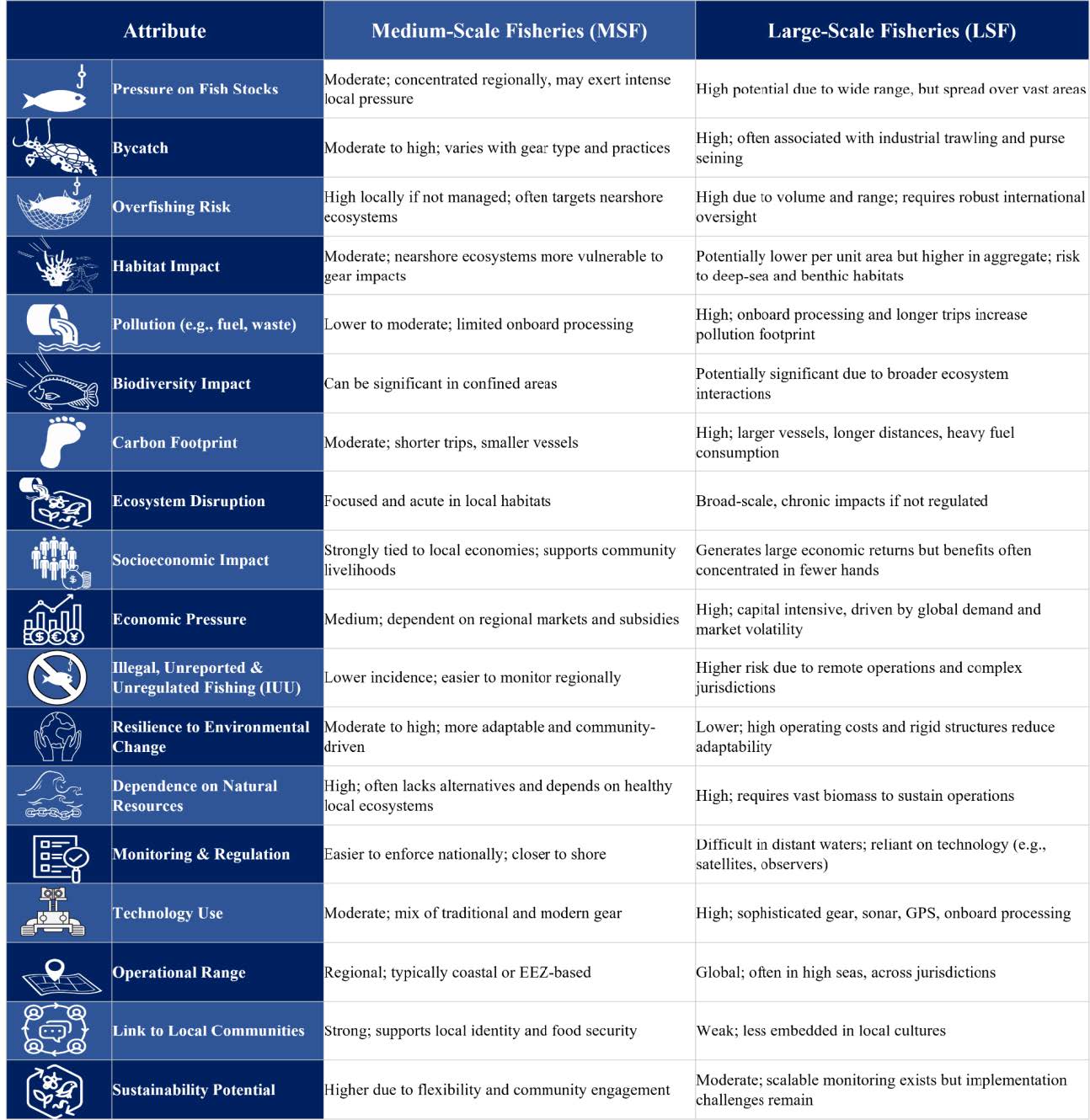
Figure I presents a comparison between medium- and large-scale fishing focused on key attributes that are discussed below.
Figure I Comparison of medium-scale and large-scale fisheries
Source: FAO, 1985. Jennings and Kaiser, 1998; Norse and others, 2012; Pauly and others, 2002; Halimatussadiah and others, 2023; Thermes, and others, 2023.
One key distinction between medium- and large-scale fishing is technological sophistication, as moderately advanced technologies and mid-sized fishing gear are used in medium-scale fishing operations while highly advanced technology and gear are used in large- scale fishing operations (see figure I). Large-scale fishing fleets use advanced technologies that enable operations across wide oceanic areas, extending into remote, less-fished and ecologically sensitive regions Ref 85, whereas vessels used for medium-scale fishing rely on a mix of traditional and modern methods and thus operate closer to shore.
It is worth noting that comparing the environmental impacts of medium- and large-scale fishing is not straightforward. Both have distinct environmental impacts that need to be carefully managed. When managing the environmental impacts of medium-scale fishing operations, focus needs to be placed on preserving local ecosystems. Medium-scale fishing operations are often more willing to adopt sustainable practices, and their closer connection to local communities and ecosystems can be leveraged to promote the implementation of such practices to protect the environment. Meanwhile, with large-scale fishing operations there is a need to mitigate the potential of widespread environmental harm. Onboard observers and satellite tracking can be used to ensure the responsible operation of large-scale fishing operations. In both cases, sustainable fishing practices, stringent monitoring and regulation are vital to minimize the environmental footprint of fishing operations and ensure the long-term health of marine ecosystems Ref 92.
2. Pressures and impacts
The pressures and impacts associated with large-scale fishing operations are greater than those associated with medium-scale fishing operations, which are usually limited to exclusive economic zones (EEZs). Sources of pressures and impacts from medium- and large-scale fishing include overexploitation, by- catch and discards, seafloor disturbances, pollution, unintended policy consequences, illegal activities, climate and global demand for seafood (for complementary discussions of pressures and impacts, see also sect. 3; sect. 4, subchap. 4D; and subsect. 5A, subchap. 1B).
Overexploitation
The environmental impacts of fishing activities can vary significantly between medium- and large-scale fishing operations (see figure I). Large-scale fishing vessels can stay at sea for extended periods, allowing them to fish in remote areas Ref 85. Owing to the high capacity of the vessels involved, large-scale fishing operations continue to raise environmental concerns, including overexploitation of fish stocks, trophic cascades from predator removal, significant by-catch of endangered species, habitat destruction from fishing methods such as trawling, increased greenhouse gas emissions and marine pollution from lost or discarded gear Ref 43. The environmental impact of medium- scale fishing operations is often more localized, affecting the ecosystems where they operate. Nevertheless, their impact on local environments can be significant, particularly if they contribute to overfishing and habitat destruction.
Overfishing of species targeted by medium- and large-scale fishing is a major pressure on marine ecosystems, with overfished stocks increasing from 10% in 1974 to 37% in 2021 Ref 110. While overfishing is often assessed at the species level, it depletes entire ecosystems, making them more vulnerable to climate change impacts Ref 131 Ref 67 Ref 125. Any reduction in the abundance of high-value, high trophic level fish modifies the trophic chain and the flows of energy across ecosystems Ref 93, which generates a social and economic impact on coastal communities.
Direct pressures from medium- and large-scale fishing vary by gear type, which include trawls and dredges, purse seines and longlines, gillnets and traps. The use of fish aggregating devices to enhance the efficiency and effectiveness of fishing gear has increased since the 1990s Ref 79. Fishing operations are profitable but they impose pressures on aquatic ecosystems, including habitant disruption and overfishing, and therefore regulation is essential Ref 99.
Seafloor disturbances
The destruction and disturbance of benthic habitats caused by gear used in medium- and large-scale fishing, including trawls and dredges, can lead to a reduction in, or even the permanent loss of, the abundance and diversity of benthic and demersal organisms, due to changes in habitat structure, sediment displacement and disruption of food webs Ref 58 Ref 80. Disturbance of carbon storage in the seabed can lead to the release of stored carbon dioxide (CO2), potentially altering the nutrient cycle and sediment composition Ref 35.
By-catches and discards
Even though the increased use of by-catch reduction devices that are incorporated into fishing gears has decreased the overall rates of unintended capture of endangered marine life, such as birds, mammals, sharks and sea turtles, by-catch still persists in medium- and large-scale fishing Ref 22 Ref 8 Ref 87. Mitigation measures and by- catch reduction devices, including visual deterrents, fishing net mesh thickness, turtle excluder devices, circular hooks and ropeless fishing systems, have been shown to generally reduce by-catch with little significant effect on target catches Ref 50.
Discards in medium- and large-scale fishing operations are another source of marine ecosystem impacts. Improved monitoring and reporting of discards and increased retention of non-targeted species will contribute to a better understanding of discards and, coupled with the use of more selective fishing gear, help to reduce the associated impacts Ref 68.
Pollution
Ocean pollution, which ranges from plastic litter to oil spills and underwater noise, poses a major challenge to marine life and ecosystem health Ref 121 Ref 1 Ref 62. Underwater noise pollution is known to negatively impact the behaviour and physiology of marine species, including fish, invertebrates, mammals and reptiles Ref 32. Studies have identified that vessel engines and propellers are the main sources of underwater noise, and steps need to be taken to encourage the incorporation of engineering mitigation measures into the design and specification of new vessels for medium- and large-scale fishing operations Ref 18
It is estimated that nearly 2% of all fishing gear, comprising 2,936 km2 of gillnets, 75,049 km2 of purse seine nets, 218 km2 of trawl nets, 79,583 km of longlines and more than 25 million traps and pots, is lost annually in the ocean Ref 103. Abandoned, lost or otherwise discarded fishing gear, also known as ghost gear, is a substantial source of marine pollution and contributes to the entanglement of marine animals Ref 83. Gear loss varies by gear type, but estimates indicate that proportionately more gear is lost from smaller vessels Ref 103. Measures aimed at reducing the impacts of abandoned, lost or otherwise discarded fishing gear in the global oceans include biodegradable fishing gear, ghost gear reduction initiatives and eco-labelling certification programmes Ref 70.
Unintended policy consequences
Medium- and large-scale fishing operations might receive harmful subsidies for capacity enhancement, resulting in overcapacity and overfishing, which lead to social and economic consequences (Sumaila and others, 2024(a)). Since 1950, heavily subsidized fleets have expanded the total fished area from approximately 60% of the world's oceans to more than 90%. Over the same period, the average distance travelled from home ports has doubled, while catches per km travelled have declined to roughly only one third of the historical amount per km travelled Ref 136. A recent study found that 72 to 76% of the world's industrial fishing vessels are not publicly tracked, many of which engage in fishing around South Asia, South-East Asia and Africa Ref 90.
According to the most recent estimates, global fisheries subsidies totalled $35.4 billion in 2018, $22.2 billion of which was allocated specifically for capacity enhancement Ref 124. In June 2022, after over 20 years of negotiations, the World Trade Organization (WTO) adopted an Agreement on Fisheries Subsidies aimed at prohibiting subsidies that contribute to illegal, unreported and unregulated (IUU) fishing, which threatens fish stocks. For the Agreement to take effect, however, two thirds of the 109 members of the Organization must formally ratify it by depositing their instruments of acceptance (Sumaila and others, 2024(a)).
Illegal, unreported and unregulated fishing and other illegal activities
IUU fishing represents a major threat to global fisheries governance, economic equity and marine sustainability. Each year, an estimated 8 million to 14 million metric tons of unreported fish are traded illicitly on global markets, generating gross revenues of $9 billion to $17 billion Ref 125. The broader economic impact is even more staggering, with global losses due to the diversion of fish from legal markets estimated at $26 billion to $50 billion annually, resulting in $2 billion to $4 billion in forgone government tax revenues Ref 125. High-risk areas for IUU fishing and labour abuse include the coasts of South America and Western Africa, the north-western Pacific and the eastern tropical Pacific Ref 109. The least developed countries are disproportionately affected due to systemic constraints, including limited financial resources, weak infrastructure, insufficient data systems and gaps in technical and enforcement capacity. In recognition of these disparities, several funding mechanisms have been developed to support the least developed countries and other developing countries in addressing IUU fishing. Examples include the Assistance Fund under Part IV of the Agreement for the Implementation of the Provisions of the United Nations Convention on the Law of the Sea of 10 December 1982 relating to the Conservation and Management of Straddling Fish Stocks and Highly Migratory Fish Stocks (UNFSA Assistance Fund), the voluntary WTO Fisheries Funding Mechanism Trust Fund (WTO, 2024), regional fisheries management organizations (RFMOs) and directed funds within such organizations, and direct bilateral support between countries. In response to the serious threats posed by IUU fishing, the global community has mobilized a suite of international efforts focused on monitoring, control and surveillance, enforcement, and capacity-building and knowledge-sharing. Central among those efforts is the Agreement on Port State Measures to Prevent, Deter and Eliminate Illegal, Unreported and Unregulated Fishing (the Port State Measures Agreement), adopted under the auspices of FAO, which is aimed at preventing illegally caught fish from entering international markets by strengthening port inspection regimes and promoting information-sharing among States. The Agreement for the Implementation of the Provisions of the United Nations Convention on the Law of the Sea of 10 December 1982 relating to the Conservation and Management of Straddling Fish Stocks and Highly Migratory Fish Stocks (the United Nations Fish Stocks Agreement) and RFMOs also play relevant roles in promoting cooperative enforcement on the high seas. Satellite-based vessel tracking, the Global Fishing Watch platform and observer programmes are increasingly being used to monitor activity in remote and transboundary waters. In addition, consumer-facing traceability initiatives and import regulations in key markets, such as the Catch Certification Scheme in the European Union and the Seafood Import Monitoring Program in the United States, are putting additional pressure on IUU actors by tightening access to markets. The success of such measures ultimately depends, however, on the political will, legal infrastructure and technical capacity of coastal States, especially in developing regions, to enforce compliance and prosecute violators.
Climate change
Medium- and large-scale fishing operations are driven by fossil fuel and thus contribute to global greenhouse emissions (Tyedmers and others, 2005; second World Ocean Assessment). The world's fishing fleets released 37.5 + 7.4 million metric tons of CO2 into the atmosphere between 1950 and 2014 Ref 71. Greer and others (2019) estimated that total CO2 emissions in 2016 amounted to 159 million metric tons, which was much higher than estimates for previous years. When non-fishing activities such as transportation and preservation are included, total emissions associated with fishing operations are even higher.
Ocean warming, acidification and sea level rise are affecting fish stocks and fishers in significant ways, including changes in the productivity and distribution of fish stocks, human migration to and away from coastal areas, stresses on coastal infrastructure for fisheries and challenges to maritime boundaries Ref 73 Ref 42. Climate change has caused substantial damage to and increasingly irreversible losses in fisheries yields. Ocean warming and ocean acidification have adversely affected food production from fisheries, rebuilding overexploited or depleted fish stocks reduces negative climate change impacts on fisheries and supports food security, biodiversity, human health and well-being Ref 55
Global demand for seafood
Expansion of fishing operations and pressures on fish stocks and marine ecosystems cannot be dissociated from the rapid increase in global consumption of aquatic animal foods. Globally, the amount of fish used for human consumption and for non-food use has increased from 28 million tons in 1961 to an estimated 185.4 million tons in 2022 (FAO, 2024). It has been well established that the production of fish meal (approximately 17 million tons per year), a major product used in fish feed in aquaculture, adds significant pressure on fish stocks and marine ecosystems (FAO, 2024).
3. Socioeconomic considerations
The present part contains an analysis of the social components of medium- and large-scale fishing through several global case studies, providing a perspective on employment, traditional knowledge, gender dynamics and the broader social impacts of industrialization and globalization. The social components of medium- and large-scale fishing encompass various aspects related to the individuals, communities and societies involved in or affected by fishing activities.
Employment and livelihoods
Wild fisheries generate significant employment worldwide Ref 59. For example, in West Africa and South-East Asia, medium- and large-scale fishing operations generate significant employment opportunities directly in fishing activities and indirectly in ancillary industries, such as processing and marketing Ref 11 Ref 133. Globally, some 260 million people are employed full- or part-time by fisheries directly or indirectly, and medium- and large- scale fishing operations generate significant employment opportunities in the processing and export sectors in particular Ref 133. However, there are differences in the benefits offered by large-scale industrial fisheries and those offered by small- and medium-scale fisheries, which have a more localized impact. In the case of large-scale fisheries, while their fleets may provide some employment opportunities, profits are often concentrated in corporate sectors, further marginalizing local fishers who rely on marine resources for their livelihoods (Srinivasan and others, 2010). In Indonesia, for example, large-scale fishing has contributed to declining fish stocks, which has resulted in significant job losses in local communities (Halimatussadiah and others, 2023).
The uneven distribution of benefits from large-scale fishing operations can also exacerbate economic inequalities. Profits from large-scale fishing fleets operating in developing countries, such as those in Africa and the Pacific, typically benefit foreign companies, with limited reinvestment in local economies Ref 94. The transnational nature of large-scale fishing, especially in regions such as the Indian Ocean and the South Pacific, often leads to the extraction of resources from developing regions to satisfy the demands of wealthier markets, creating local economic instability (Eriksson and others, 2015).
Cultural heritage and identity
Fishing is rooted in the cultural heritage of coastal and island communities worldwide. In many regions, traditional fishing practices have been passed down through generations, providing not only a source of sustenance but also a strong sense of cultural identity Ref 139 Ref 140. The rise of medium- and large-scale fishing operations, however, has often displaced traditional practices, leading to a loss of marine cultural heritage. This pattern is evident in regions such as West Africa, where the expansion of large-scale fishing has eroded the cultural significance of small-scale fishing practices Ref 11. In addition, traditional knowledge systems, which have long sustained marine ecosystems and fishing communities, are increasingly sidelined by the modern, technology-driven methods used in large-scale fishing Ref 133. In the Pacific Islands, large-scale fishing methods are increasingly used in the place of traditional fishing methods that historically helped to maintain ecological balance and sustainability (Veitayaki, 1997). In parts of the Indian Ocean, the introduction of large-scale fishing has also changed the sociocultural fabric of fishing communities, as younger generations often seek employment in more economically lucrative sectors or leave fishing altogether (Eriksson and others, 2015).
For centuries, seafood has been an important component of Indigenous nutrition and food security Ref 24, and traditional ecological knowledge has been a key component of sustainable fishing practices in many regions. Indigenous Peoples and local communities have developed sophisticated systems for managing fish stocks and maintaining ecological balance through such practices as rotational fishing and closed seasons Ref 33. Traditional ecological knowledge, which is often closely linked to cultural heritage, plays a key role in promoting the social and environmental sustainability of fisheries. However, these traditional knowledge systems have been disrupted by the rise of large-scale fishing. In the Pacific Islands, traditional practices have been supplanted by the more efficient yet ecologically damaging methods employed by large-scale fishing fleets Ref 133 Ref 108. The same dynamic is visible in parts of South- East Asia and Africa, where the expansion of large-scale fishing has marginalized the role of traditional ecological knowledge in fisheries management (Eriksson and others, 2015).
Gender dynamics and equity
Gender plays a central role in the social structure of fisheries worldwide (Harper and others, 2013; first World Ocean Assessment). In many regions, women are heavily involved in post-harvest activities, such as processing and marketing, while men often dominate fishing at sea Ref 65. In West Africa, for example, women constitute a significant portion of the workforce in fish processing and trade. Nevertheless, their contributions are often undervalued in policy frameworks Ref 11, and women frequently face gender-based disparities in employment, income and decision-making roles in fisheries Ref 88.
Gender inequalities have been exacerbated further by large-scale fishing operations because their focus on efficiency and mechanization often leads to the exclusion of women from traditionally female-dominated sectors, such as fish processing Ref 148. In the Pacific Islands, large-scale tuna fishing has led to significant gender disparities in the workforce, particularly in post-harvest sectors. In Fiji, women constitute the majority of the workforce in tuna processing plants but remain concentrated in low-paid, repetitive roles with limited opportunities for career advancement Ref 130. In South-East Asia and the Pacific Islands, the roles traditionally played by women in the fisheries value chain are frequently marginalized, while large-scale operations tend to favour roles traditionally dominated by men, particularly in the management and technical sectors Ref 60. Efforts to promote gender equity in fisheries need to be focused on ensuring that women have access to financial resources, training and leadership positions and on addressing gender-based barriers to employment.
Social impacts of industrialization and globalization
The industrialization and globalization of fisheries have led to significant social impacts, particularly in the developing world where fishing is a major source of livelihoods for millions of people. In large-scale fishing, which is driven by global demand for seafood, export markets are often prioritized, which can lead to the depletion of local fish stocks and threaten food security in developing countries Ref 94. In West Africa, the focus on exporting fish to international markets has reduced the availability of fish for local consumption, exacerbating poverty and malnutrition Ref 11, while increasing income inequality, as profits from industrial fishing are concentrated in the hands of a few multinational corporations Ref 94. Other reported social impacts of industrialization include challenges such as increased migration, changes in local labour dynamics and the erosion of social cohesion in traditional fishing communities Ref 60. The transnational nature of industrial fishing can lead to conflicts over resource use Ref 31, particularly in areas where large-scale fishing operations directly compete with small-scale fishing operations Ref 94.
4. Sector-relevant governance
Effective governance of medium- and large-scale fishing requires robust legal and institutional frameworks supported by science-based management tools, international cooperation and adaptive policies that can be used to respond to environmental variability, market dynamics and technological change Ref 115 Ref 77 Ref 46. Regulation must strike a balance between maximizing economic yield and minimizing ecological harm, including by-catch, habitat degradation and stock depletion. As noted above, regulating medium- and large-scale fishing activities is essential for mitigating adverse environmental and social impacts, particularly in shared or transboundary waters. Governance structures for medium- and large-scale fishing are embedded within international legal instruments, including the United Nations Convention on the Law of the Sea, the United Nations Fish Stocks Agreement and the Port State Measures Agreement, as well as a suite of binding and voluntary frameworks adopted by RFMOs and other global bodies. Those instruments establish the legal foundation for managing straddling and highly migratory stocks, regulating distant water fleets, enforcing compliance and supporting transparency and accountability across jurisdictions.
Overlaps with the second World Ocean Assessment
In the second volume of the second World Ocean Assessment, the significance of the United Nations Convention on the Law of the Sea in advancing an integrated approach to ocean management and setting out the rights and obligations of States for the conservation and management of marine resources is highlighted. Reference is also made to the United Nations Fish Stocks Agreement, which builds upon the provisions of the Convention. With respect to fisheries management in particular, the discussion contained in the second Assessment is focused on the role of RFMOs and FAO guidelines and not on management issues more generally.
International regulation
The international governance of marine fisheries is shaped by a constellation of legal instruments, institutions and policy frameworks that work collectively to manage the sustainable use of marine resources, especially in medium- and large-scale fishing. This governance regime encompasses legally binding agreements, voluntary instruments and their integration into the broader international environmental system.
Fisheries governance is anchored in the United Nations Convention on the Law of the Sea, which defines the rights and responsibilities of States over maritime zones, including territorial waters and EEZs. The Convention requires coastal States to ensure the conservation and sustainable use of fisheries within their EEZs and to cooperate in managing straddling and highly migratory stocks Ref 147 Ref 122. Building on the Convention, the United Nations Fish Stocks Agreement is aimed at ensuring the long-term conservation and sustainable use of straddling and highly migratory fish stocks through effective implementation of the relevant provisions of the Convention. The Agreement promotes an ecosystem-based and precautionary approach to fisheries management Ref 97, and provides for cooperation, including through RFMOs, for setting and enforcing conservation and management measures across the high seas.
Other instruments serve to further strengthen this governance regime, such as the Agreement to Promote Compliance with International Conservation and Management Measures by Fishing Vessels on the High Seas, which is focused on flag State responsibilities, and the Port State Measures Agreement, which helps to prevent fish caught through IUU fishing from entering markets by enhancing port inspections and enforcement Ref 13. These agreements collectively serve to curb IUU fishing and improve accountability in distant-water fishing operations. One major step forward is the WTO Agreement on Fisheries Subsidies, adopted in 2022, which prohibits the granting of subsidies to fleets engaged in IUU fishing, fishing of overfished stocks or fishing in unmanaged high seas areas Ref 3. Meanwhile, the Agreement under the United Nations Convention on the Law of the Sea on the Conservation and Sustainable Use of Marine Biological Diversity of Areas beyond National Jurisdiction (2023), though not a fisheries treaty per se, introduces mechanisms such as area-based management tools and environmental impact assessments that may affect medium- and large-scale fishing operations in areas beyond national jurisdiction.
Beyond binding agreements, the Code of Conduct for Responsible Fisheries adopted by FAO in 1995 is a cornerstone voluntary framework. It encourages science-based stock assessments, selective fishing gear, compliance with international law and measures to protect coastal livelihoods. Under this framework, the Committee on Fisheries and FAO member countries have developed additional voluntary guidelines on such areas as by-catch reduction, small-scale fisheries and catch documentation, which are tailored to the evolving needs of global fisheries governance.
Fisheries governance is also increasingly influenced by global environmental treaties. The Convention on International Trade in Endangered Species of Wild Fauna and Flora (CITES) regulates international trade in the marine species listed in its appendices, including the landing of specimens taken from areas beyond national jurisdiction, to ensure that trade is legal, sustainable and traceable. The Kunming-Montreal Global Biodiversity Framework includes explicit targets for sustainable fisheries, such as target 10. The relevance of climate-smart fisheries management was underscored in the documents transmitted by the secretariat of the United Nations Framework Convention on Climate Change to the General Assembly in 2023, and in the dialogues held at the seventeenth round of informal consultations on the United Nations Fish Stocks Agreement.
Although fisheries are not explicitly addressed as a standalone sector in the Paris Agreement, they are included in the economy-wide mitigation and adaptation commitments made by the Parties. In the outcome of the first global stocktake, emphasis was placed on the need for cross-sectoral emission reductions, including from fisheries-related activities. The alignment between fisheries governance frameworks and broader environmental governance frameworks demonstrates a growing recognition that sustainable fisheries management is crucial to climate resilience and global food security.
Regional and collaborative management
RFMOs play an important role in the management of high seas fisheries because they facilitate cooperation among States for the conservation and management of straddling and highly migratory fish stocks, establishing binding regulations to that end. They regularly adopt conservation and management measures addressing methods used in medium- and large-scale fishing, such as longlining and purse seining activities, and the associated impacts. While Cullis-Suzuki and Pauly (2010) have reported that not all RFMOs have been successful, more recently Sharma and others (2025) have indicated that there have been strong improvements in the management of tuna fisheries under RFMOs.
Co-management and adaptive management are integral approaches to the effective governance of large- scale fishing Ref 57. Co-management involves shared governance, in which responsibilities and authority for managing fisheries are distributed across various stakeholders, including government agencies, local communities and industry representatives Ref 149. For example, salmon fisheries in Alaska, United States, are managed through a co-management approach that includes state and federal agencies, native Alaskan organizations and commercial and sport fishers Ref 98.
Management at the domestic level
Domestic management of marine fisheries is foundational to achieving sustainability because most commercially exploited fish stocks are found within the confines of national jurisdictions. Coastal States have sovereign rights and responsibilities over resources within their EEZs, and flag States maintain primary jurisdiction over vessels flying their flag on the high seas Ref 76. This makes national fisheries regulation essential not only for domestic sustainability, but also for supporting and reinforcing international and regional governance regimes.
National governments deploy a range of management tools, such as licensing programmes, total allowable catch limits, gear and spatial restrictions and enforcement mechanisms, to regulate medium- and large-scale fisheries. In some cases, however, sustainable fisheries management is not prioritized in such policies, which are instead focused only on economic growth, foreign exchange earnings or industrial development. This can result in the marginalization of small-scale fisheries and the degradation of marine ecosystems.
In recent years, reforms of domestic legal frameworks have been increasingly undertaken to address such challenges. For instance, several coastal States, in particular those within the area designated by FAO as Major Fishing Area 51, have updated national fisheries laws to include specific provisions regulating fish aggregating devices in response to concerns over gear proliferation and by-catch Ref 44 Ref 7. National legislation has also played a key role in supporting the establishment and regulation of marine protected areas (MPAs), in alignment with global commitments to protect 30% of the ocean by 2030. Many countries are now strengthening laws that manage the interactions between medium- and large-scale fishing operations and sensitive marine ecosystems.
The effectiveness of domestic fisheries governance increasingly depends on transparency and innovation in monitoring, control and surveillance. Coastal States are adopting technologies such as automatic identification systems and vessel monitoring systems to enhance real-time vessel tracking and compliance monitoring Ref 74 Ref 61. While use of automatic identification systems was initially limited, legal mandates and international cooperation have expanded the uptake of this technology and data-sharing. Under the International Declaration on Transnational Organized Crime in the Global Fishing Industry (the Copenhagen Declaration), coastal States commit to strengthening international cooperation, information-sharing and law enforcement coordination to more effectively address IUU fishing and other forms of transnational fisheries crimeRef 19. Some RFMOs, including the Indian Ocean Tuna Commission (IOTC), take a similar approach to monitoring fishing vessels, for example through the implementation of stock rebuilding plans. Efforts are currently under way within IOTC to establish a quota allocation system based on total allowable catch, which is expected to be adopted in 2027. IOTC has adopted measures to strengthen management of drifting fish aggregating devices through the implementation of more environmentally friendly designs, drifting fish aggregating device registries and tracking systems.
RFMOs sometimes revise their conservation and management measures, which can overwhelm smaller domestic fleets that may lack the capacity to adapt quickly. This highlights the importance of adaptive management, phased implementation and stakeholder consultation at the national level. National-level fisheries management is not only central to safeguarding marine biodiversity and food security, but also to ensuring equity and resilience in the face of growing challenges like climate change and overfishing. Integrating ecological, economic and social objectives, such as the promotion of the rights and participation of small-scale fishers and Indigenous communities, can lead to more effective, inclusive and forward-looking fisheries governance Ref 116 Ref 84.
5. Sustainability pathways
The sustainability of medium- and large-scale fishing is vital for maintaining the long-term health of marine ecosystems, ensuring the livelihoods of the millions of people who depend on these resources (Teh and Sumaila 2013; FAO, 2024), and supporting the economic stability of global fishing communities. Achieving sustainability requires an interdisciplinary approach that integrates ecological, social, and economic considerations Ref 82 Ref 117.
The present part is aimed at articulating possible pathways to achieve the vision of a sustainable ocean in 2050. The information provided will help policymakers and managers to understand the tools available and how such tools could be utilized to move beyond existing systems of human use of the ocean, otherwise known as the business-as-usual scenario, or incremental change to that scenario and towards a transformative reorganization (see figure II).
Figure II Sustainability pathways for medium- and large-scale fisheries.
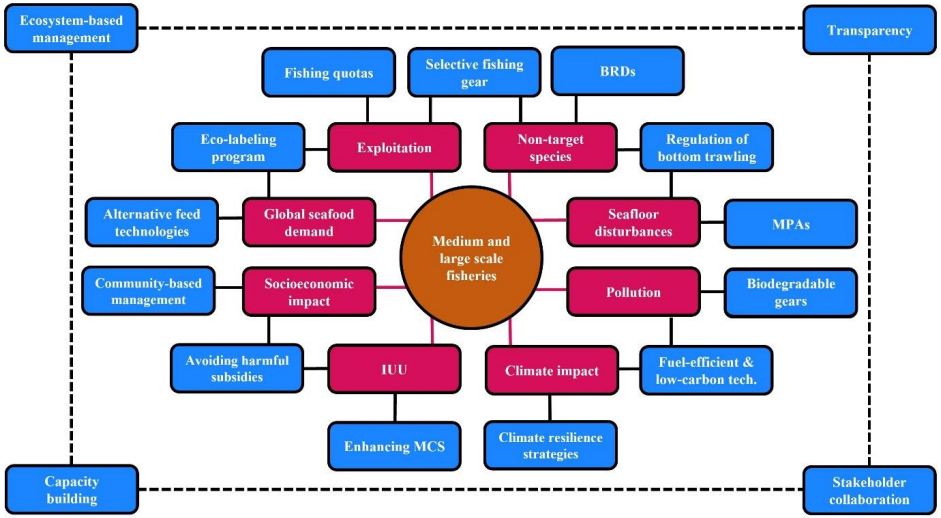
Note: The sustainability pathways, shown in blue, are matched with the pressures and impacts, shown in red.
Abbreviations: BRDs, by-catch reduction devices; IUU, illegal, unreported and unregulated fishing; MCS, monitoring, control and surveillance; MPAs, marine protected areas.
The following parts contain a discussion of what needs to be done to put medium- and large-scale fisheries on the path to real sustainability (Roberts and others 2024; "Vision 2030"; for a discussion of sustainability pathways for small-scale fisheries, see subsect. 5A, subchap. 1B) to achieve the vision of a sustainable ocean by 2050.
Reducing overcapacity and overfishing
Overcapacity, a situation in which fishing fleets are able to catch more fish than ecosystems can sustainably produce, is one of the most persistent drivers of overfishing and the degradation of marine ecosystems Ref 93. The deployment of too many vessels or too much gear in pursuit of limited fish stocks not only results in biological overexploitation but also intensifies competition, diminishes profitability and increases harmful environmental impacts, such as habitat destruction and excessive by-catch. Reducing overcapacity is therefore essential for restoring ecological balance and ensuring the long-term sustainability of fisheries. Policy interventions, such as fleet reduction programmes that may include decommissioning or buy-back schemes, can help align fishing efforts with the productive capacity of marine ecosystems. However, such measures must be carefully designed to avoid rebound effects, such as reinvestment in more efficient vessels. They should also be paired with socially just transition strategies, including retraining programmes, alternative livelihoods and financial support for affected communities Ref 26. This is particularly important in coastal areas where fishing is a cultural mainstay and economic lifeline.
One approach to controlling overfishing that can complement fleet size reduction is the use of effort- based management systems, which include limits on the number of fishing days, gear restrictions, closed seasons and MPAs to enable stocks to replenish Ref 104. These tools are especially valuable in contexts where the data required for implementation of total allowable catch systems are limited or unreliable. Rights-based approaches, such as territorial use rights in fisheries and individual transferable quotas, can also be used to help to align conservation incentives and reduce the race to fish, if designed carefully Ref 123.
To be effective, efforts to reduce overcapacity must be embedded within transparent governance frameworks that include science-based decision-making, monitoring, control and surveillance systems and meaningful participation by small-scale fishers and Indigenous communities. Well-managed overcapacity reduction measures not only help to rebuild fish stocks and protect marine biodiversity but also contribute to more stable livelihoods, better food security and healthier ocean ecosystems.
Subsidy reform and investment in education and capacity-building
Perverse financial incentives, such as harmful subsidies, promote overfishing and environmental degradation Ref 75. Subsidy reform is a critical step towards achieving sustainable fisheries management, aligning economic incentives with that goal and preserving the livelihoods of communities that depend on healthy marine resources (Sumaila and others, 2010, 2024(a); Skerrit and others, 2023; Villasante and others, 2024). Incentivizing compliance with conservation measures and participation in sustainable certification programmes can promote long-term ecological health Ref 104. The subsidy allocation process should be reviewed. Consideration should be given to granting subsidies to operations that use energy-efficient vessels or fishing methods or to individual skippers who prioritize considerations other than the catch or who invest in energy-efficient strategies Ref 9. Nevertheless, subsidies have to be designed carefully or they may backfire Ref 26.
The decarbonization of the fishing sector will require enormous financial resources that the sector alone cannot provide. Investments are needed in education, training, capacity-building and knowledge-sharing, which are crucial for empowering stakeholders to adopt sustainable practices Ref 64. Training programmes on new technologies, sustainable fishing techniques and resource management are necessary to improve fisheries management Ref 15. Empowering women and young people through education can lead to more inclusive and resilient fisheries Ref 114. Capacity- building and knowledge-sharing help communities to adopt new technologies, improve safety at sea and foster innovation, contributing to healthier ecosystems and improved livelihoods Ref 142. By strengthening the skills of those involved in fisheries, education promotes long-term sustainability Ref 69.
Stakeholder collaboration and knowledge co-creation
Collaboration between Governments, industry, non-governmental organizations (NGOs) and local communities is key to sustainable fisheries management Ref 102. Co-management approaches, in which responsibilities for resource management are shared, have been proven effective in many regions. Partnerships between governments, industry, local communities and NGOs facilitate the sharing of best practices and drive innovation in sustainable fishing practices Ref 57. One area of emphasis under the United Nations Decade of Ocean Science for Sustainable Development (2021-2030) is the co-creation of knowledge for the oceans of the future, which entails incorporating the perspectives of fishers and local stakeholders into fisheries governance with a view to achieving better compliance and more effective management strategies Ref 20 Ref 86. Consumers also play a crucial role in fisheries management through their purchasing choices, advocacy and demand for sustainable seafood. A good example of an initiative aimed at mobilizing consumers to promote more sustainable fisheries management is the awareness-raising campaign by the Ocean Literacy initiative of UNESCO.
Indigenous and community-based fisheries management practices, rooted in traditional ecological knowledge, offer valuable insights into sustainable resource management Ref 12. Integrating traditional knowledge into modern fisheries governance enhances sustainability and resilience. There is a need for countries to recognize the cultural importance of local knowledge and stewardship by supporting Indigenous and community-based fisheries management practices through policy and funding. Empowering Indigenous communities fosters stewardship, protects cultural heritage and promotes sustainable livelihoods. Community-based management improves compliance rates and enhances resilience by ensuring that conservation measures are culturally appropriate and effective (Intergovernmental Science-Policy Platform on Biodiversity and Ecosystem Services (IPBES), 2019, 2022, 2024). The best way to support Indigenous and community-based fisheries management is to encourage vessels engaged in medium-scale fishing to operate in open ocean areas that are further from such communities and therefore less frequently fished by them. Based on community consultations in Fiji, fishers occasionally report seeing large vessels fishing outside outer reef boundaries for bait. This can affect local bait availability or potentially increase by-catch rates of community important species, including species used for food, and culturally important species, such as turtles and sharks. A survey of catch from select landing sites in Fiji showed that most reef fish were consumed by fishers, while oceanic species were sold Ref 72.
Technology
Selective fishing gear plays a crucial role in reducing by-catch, the unintentional capture of non-target species, including juveniles and endangered species Ref 28. The use of selective gear, such as circle hooks and turtle excluder devices, enables fishers to target specific species and sizes, minimizing harm to marine ecosystems Ref 27. Selective fishing gear reduces the capture of juvenile fish, allowing populations to reproduce and grow, thereby supporting the recovery of depleted stocks and maintaining biodiversity. Incentives are crucial to encouraging fishers to adopt more selective practices, as discard bans alone may not lead to more sustainable outcomes without adequate motivation Ref 27 Ref 144.
Traceability systems enable the tracking of fish products from catch to consumer, ensuring that the products are sustainably sourced Ref 135. Electronic monitoring, in which cameras, sensors and the Global Positioning System (GPS) are used to record fishing activities, is a cost-effective tool for enhancing compliance, data collection and transparency in fisheries management. Electronic monitoring can improve oversight where onboard observers are limited. Nevertheless, there are barriers to the adoption of such technologies, including high upfront costs, data privacy concerns, lack of technical capacity and resistance by some fishing operators who are wary of increased scrutiny and regulatory burdens. Technologies such as blockchain and electronic catch documentation enhance transparency in the supply chain and help to combat IUU fishing. These technologies also provide consumers with the information needed to make informed choices, driving demand for sustainable seafood. Transparency in fisheries also reduces IUU fishing, which costs the global economy billions and threatens marine ecosystems Ref 125. Digital traceability platforms and certification programmes enhance trust among stakeholders and promote long-term sustainability Ref 14. Artificial intelligence is now being used to help different sectors to implement tools for sustainable practices. Leveraging the power of artificial intelligence, these innovative approaches are aimed at revolutionizing the fishing industry by enhancing efficiency, sustainability and overall productivity Ref 96.
Governance
The governance of marine fisheries is fundamental to ensuring the sustainability of global marine resources, particularly in the context of medium- and large-scale fishing, which account for a significant share of global catch and economic activity Ref 89. Owing to the complex and dynamic nature of marine ecosystems, coupled with the highly mobile behaviour of many target species and the diverse and often conflicting interests of industrial, semi-industrial and artisanal sectors, tailored, multiscale governance approaches are required (Mora and others, 2009; see also sect. 3).
Policy
Ecosystem-based fisheries management entails a comprehensive approach in which consideration is given to the entire ecosystem, including human impacts, instead of managing single species in isolation Ref 132. This strategy addresses interdependencies between species, habitats and human activities, promoting ecological balance. Protecting critical habitats, such as coral reefs and mangroves, is central to the success of ecosystem-based fisheries management, which is aimed at striking a balance between ecological, economic and social objectives. Various practical approaches to ecosystem-based fisheries management have been developed and applied globally as tools to achieve the targets for Sustainable Development Goal 14 Ref 66 Ref 48 Ref 152, but implementation has been slower than expected in many regions Ref 40 Ref 91.
Fishing quotas and catch limits are fundamental tools for sustainable management of fish stocks Ref 146. Grounded in scientific data, they ensure that fish populations can replenish at sustainable rates. Science-based quotas must be flexible and adaptive, reflecting changes in stock health and ecosystem dynamics Ref 49. Monitoring and enforcement mechanisms, such as satellite tracking and on-board observers, are necessary to ensure compliance with quotas and to prevent illegal fishing activities Ref 90.
Clear communication about the trade-offs, uncertainties and risks involved in fisheries management is essential for informed decision-making Ref 16. The involvement of fishers, scientists, policymakers and the public enables a clearer understanding and more effective management of the trade-offs between short-term economic gains and long-term ecological sustainability. Developing risk management strategies that account for uncertainties in fish stock assessments and market fluctuations can mitigate potential negative outcomes Ref 105.
Ecosystem-based fisheries management, implementation of fishing quotas and catch limits, and effective communication of trade-offs, uncertainty and risks contribute to ensuring the sustainability of medium- and large-scale fisheries, as these approaches are intended to work together to preserve marine biodiversity while maintaining global seafood supplies. This goal is achieved by leveraging innovative technologies, integrating adaptive policies, promoting stakeholder collaboration and providing socioeconomic support in the context of a changing climate (Sumaila and others, 2024(b)).
Acknowledgements
The writing team extends their gratitude to the many grantors who supported this work, enabling the team's contribution to the third World Ocean Assessment. The writing team also acknowledges the use of artificial intelligence tools to clarify ideas, enhance readability and improve the language of the text. Artificial intelligence was also used to help to condense the content to meet word limits and to translate certain words and sentences from Portuguese to English. In recognition of the fact that artificial intelligence can generate inaccuracies, the report was thoroughly reviewed and verified by the writing team to ensure its accuracy.
References
- Abbott, Joshua. K., and Ussif R. Sumaila (2019). Reducing marine plastic pollution: policy insights from economics. Review of environmental economics and policy, vol. 13, No. 2, pp. 327-336.
- Agnew, David J., and others (2009). Estimating the worldwide extent of illegal fishing. PloS one, vol. 4, No. 2, art. e4570.
- Alger, Justin, and others (2023). What would Article 5.1 of the 2022 WTO ministerial agreement on fisheries subsidies accomplish? Marine Policy, vol. 153, art. 105641.
- Armitage, Derek R., and others (2009). Adaptive co-management for social-ecological complexity. Frontiers in Ecology and the Environment, vol. 7. No, 2, pp. 95-102.
- Arnason, Ragnar (1996). On the ITQ fisheries management system in Iceland. Reviews in Fish Biology and Fisheries, vol. 6, pp. 63-90.
- Bailey, Megan, and Ussif Rashid Sumaila (2015). Destructive fishing and fisheries enforcement in eastern Indonesia. Marine Ecology Progress Series, 530, 195-211.
- Barston, Ronald (1999). The law of the sea and regional fisheries organisations. The International Journal of Marine and Coastal Law, vol. 14, No. 3, pp 333-352.
- Barz, Fanny (2023). Identifying social practices to inform fisheries management-the case of bycatch practices of marine mammals and seabirds of German gillnet fisheries. ICES Journal of Marine Science, vol. 80, No. 3, pp 458-468.
- Bastardie, Francois and others (2022). Reducing the fuel use intensity of fisheries: through efficient fishing techniques and recovered fisk stocks. Frontiers in Marine Science, vol. 9.
- Basurto, Xavier, and others (2025). Illuminating the multidimensional contributions of small-scale fisheries. Nature.
- Belhabib, Dyhia, and others (2015). Feeding the poor: Contribution of West African fisheries to employment and food security. Ocean & Coastal Management, vol. 111, pp 72-81.
- Berkes, Fikret, and others (2007). Collaborative integrated management in Canada's north: The role of local and traditional knowledge and community-based monitoring. Coastal management, vol. 35, No. 1, pp. 143-162.
- Bethel, Lonna, and others (2021). Implementing the Port State Measures Agreement to combat illegal, unreported and unregulated fishing in the Caribbean. Marine Policy, vol. 132, art. 104643.
- Blaha, Francisco, and others (2023). Guidance document: advancing end-to-end traceability - critical tracking events and key data elements along capture fisheries and aquaculture value chains. Rome, FAO.
- Bradley, Darcy, and others (2019). Opportunities to improve fisheries management through innovative technology and advanced data systems. Fish and fisheries, vol. 20, No. 3, pp. 564-583.
- Booshehrian, Maryam, and others (2012). Vismon: Facilitating analysis of trade-offs, uncertainty, and sensitivity in fisheries management decision making. In Computer Graphics Forum, Oxford, Blackwell Publishing Ltd, vol. 31, No. 3, pp. 1235-1244.
- UK:
- Burella, Giorgio, and Lorenzo Moro (2021). Design solutions to mitigate high noise levels on small fishing vessels. Applied Acoustics, 172.
- Bunwaree, Priyal (2023). The illegality of fishing vessels 'going dark' and methods of deterrence. International and Comparative Law Quarterly, vol. 72, No. 1, 179-211.
- Chambers, Josephine M., and others (2021). Six modes of co-production for sustainability. Nature Sustainability, vol. 4, pp. 983-996.
- Cheung, William W.L., Daniel Pauly, and U. Rashid Sumaila (2024). Hope or Despair Revisited: Assessing Progress and New Challenges in Global Fisheries. Fish and Fisheries.
- Chuenpagdee, Ratana, and others (2003). Shifting gears: Assessing collateral impacts of fishing methods in US waters. Frontiers in Ecology and the Environment, vol. 1, No. 10, 517-524.
- Churchill, Robin (2021). Just a harmless fishing fad - or does the use of FADs contravene international marine pollution law? Ocean Development & International Law, vol. 52, No. 2, 169-192.
- Cisneros-Montemayor, Andres M., and others (2016). A Global Estimate of Seafood Consumption by Coastal Indigenous Peoples. PLOS ONE, vol. 11, No, 12, pp 1-16: art. e0166681.
- Clark, Colin W., and others (2007). Buyback subsidies, the time consistency problem, and the ITQ alternative. Land Economics 83, No. 1: 50-58.
- Clark, Colin W., and others (2005). Subsidies, buybacks, and sustainable fisheries. Journal of Environmental Economics and Management, 50, No. 1: 47-58.
- Condie, Harriet M., and others (2014). Incentivizing selective fishing under a policy to ban discards: Lessons from European and global fisheries. Marine Policy, vol. 45, pp. 287-292.
- Cook, Robin (2003). The magnitude and impact of by-catch mortality by fishing gear. In Responsible Fisheries in the Marine Ecosystem, Michael Sinclair, and Grimur Valdimarsson, eds. CABI Publishing, Cambridge, MA, USA.
- Costello, Christopher, and others (2008). Can catch shares prevent fisheries collapse? Science, vol. 321, No. 5896, pp. 1678-1681.
- Cullis-Suzuki, Sarika, and Daniel Pauly (2010). Failing the high seas: a global evaluation of regional fisheries management organizations. Marine Policy, vol. 34, No. 5, pp. 1036-1042.
- Dahlet, Lol I., and others (2021). Fisheries conflicts as drivers of social transformation. Current Opinion in Environmental Sustainability, vol. 53, pp. 9-19.
- Di Franco, Davide, Katrin Linse, Huw J. Griffiths, Christian Haas, Hanieh Saeedi, and Angelika Brandt (2020). Abundance and distributional patterns of Benthic Peracarid Crustaceans from the Atlantic sector of the Southern Ocean and Weddell Sea. Frontiers in Marine Science, 7.
- Drew, Joshua A. (2005). Use of traditional ecological knowledge in marine conservation. Conservation Biology, vol. 19, No. 4, pp. 1286-1293.
- Enevoldsen, Henrik, and others (2022). State of the ocean report: pilot edition.
- Epstein, Graham, and others (2022). The impact of mobile demersal fishing on carbon storage in seabed sediments. Global Change Biology, vol. 28, No. 9, pp. 2875-2894.
- European Commission (2019). Study on ownership and exclusive rights of fisheries means of production: Final report. Service Contract: EASME/EMFF/2016/1.3.2.1/SI2.766458.
- FAO (1985). Definition and classification of fishery vessel types. Fisheries Technical Paper.
- FAO (1995). Code of Conduct for Responsible Fisheries. Rome, 41 pp.
- FAO (2015). Fisheries operations: Best practices to improve safety at sea in the fisheries sector. FAO Technical Guidelines for Responsible Fisheries.
- Fletcher, Warrick J., and Gabriella Bianchi (2014). The FAO EAF toolbox: Making the ecosystem approach accessible to all fisheries. Ocean & Coastal Management, vol. 90, pp. 20-26.
- Gibson, Darah, and Ussif Rashid Sumaila (2017). Determining the degree of small-scaleness using fisheries in British Columbia as an example. Marine Policy, vol. 86, pp. 121-126.
- Gill, David, and others (2023). Triple exposure: Reducing negative impacts of climate change, blue growth, and conservation on coastal communities. One Earth, vol. 6, No. 2, pp. 118-130.
- Gilman, Eric, and others (2020). Benchmarking global fisheries discards. Scientific Reports, vol. 10, art. 14017.
- Gomez, Guillermo, and others (2020). The IUU nature of FADs: Implications for tuna management and markets. Coastal Management, vol. 48, No. 6, pp 534-558.
- Greer, Krista, and others (2019). Global trends in carbon dioxide emissions from fuel combustion in marine fisheries from 1950 to 2016. Marine Policy, vol. 107, art. 103382.
- Grip, Kjell (2017). International marine environmental governance: A review. Ambio, vol. 46, No. 4, pp. 413-427.
- Harper, Sarah, and others (2013). Women and fisheries: Contribution to food security and local economies. Marine policy, vol. 39, pp. 56-63.
- Hobday, Alistair J., and others (2011). Ecological risk assessment for the effects of fishing. Fisheries Research, vol. 108, Nos. (2-3), pp. 372-384.
- Holsman, Kirsten K., and others (2020). Ecosystem-based fisheries management forestalls climate-driven collapse. Nature Communications, vol. 11, art. 4579.
- Huang, C., and others (2024). Effects of fishery bycatch-mitigation measures on vulnerable marine fauna and target catch. Nature Sustainability, vol. 7, No. 11, pp. 1535-45.
- IOC-UNESCO (2024). State of the Ocean Report. Paris. IOC Technical Series, 190.
- IPBES (2019). Global assessment report on biodiversity and ecosystem services of the Intergovernmental Science-Policy Platform on Biodiversity and Ecosystem Services (pp. 1-1082). Brondizio, E.S., Settele, J., Díaz, S., and Ngo, H.T., eds. IPBES secretariat, Bonn, Germany. DOI: https://doi.org/10.5281/zenodo.3831673.
- IPBES (2024). Thematic Assessment Report on the Underlying Causes of Biodiversity Loss and the Determinants of Transformative Change and Options for Achieving the 2050 Vision for Biodiversity of the Intergovernmental Science-Policy Platform on Biodiversity and Ecosystem Services. O'Brien, K., Garibaldi, L., and Agrawal, A., eds. IPBES secretariat, Bonn, Germany. DOI: https://doi.org/10.5281/zenodo.11382215.
- IPCC (Intergovernmental Panel on Climate change) (2001). Climate change. Impacts, adaptation and vulnerability. Geneva, Switzerland.
- IPCC (Intergovernmental Panel on Climate change) (2023). Summary for Policymakers. In Climate Change 2023: Synthesis Report. Geneva, Switzerland.
- Jennings, Simon, and Michael. J. Kaiser (1998). The effects of fishing on marine ecosystems. Advances in marine biology, vol. 34, pp. 201-352. Academic Press.
- Jentoft, Svein (2005). Fisheries co-management as empowerment. Marine policy, vol. 29, No. 1, pp. 1-7.
- Kaiser, Michael J. (2019). Recent advances in understanding the environmental footprint of trawling on the seabed. Canadian Journal of Zoology, vol. 97, No. 9, pp. 755-762.
- Kelleher, Kieran, and others (2012). Hidden harvest: The global contribution of capture fisheries. World Bank; WorldFish.
- Kleiber, Danika (2015). Gender and small-scale fisheries: A case for counting women and beyond. Fish and Fisheries, vol. 16, No. 4, pp. 547-562.
- Kuemlangan, Blaise, and others (2023). Enforcement approaches against illegal fishing in national fisheries legislation. Marine Policy, vol. 149, art. 105514.
- Lau, Winnie, and others (2020). Evaluating scenarios toward zero plastic pollution. Science, vol. 369, No. 6510, pp. 1455-1461.
- Le Gallic, Bertrand, and Anthony Cox (2006). An economic analysis of illegal, unreported and unregulated (IUU) fishing: Key drivers and possible solutions. Marine Policy, vol. 30, No. 6, pp. 689- 695.
- Lennie, June (2005). An evaluation capacity-building process for sustainable community IT initiatives: Empowering and disempowering impacts. Evaluation, vol. 11, No. 4, pp. 390-414.
- Lentisco, Angela, and Robert U. Lee (2015). A review of women's access to fish in small-scale fisheries. FAO Fisheries and Aquaculture Circular, (C1098), I.
- Link, Jason S., and Anthony R. Marshak (2021). Ecosystem-Based Fisheries Management: Progress, Importance, and Impacts in the United States. Walton Street, Oxford: Oxford University Press.
- Link, Jason S., and Reg A. Watson (2019). Global ecosystem overfishing: Clear delineation within real limits to production. Science Advances, 5, No. 6.
- Lively, Julie A., and Jonathan Mckenzie (2023). Discards and bycatch: A review of wasted fishing. Advances in Marine Biology, vol. 95, pp. 1-26.
- Macfadyen, Graeme, and Tim Huntington (2004). Human capacity development in fisheries.
- McLennan, and others (2023). The new Marine Stewardship Council requirements to improve ghost gear management: Insights from the policy development process. Marine Policy, 157.
- Mariani, Gaël, and others (2020). Let more big fish sink fisheries prevent blue carbon sequestration-half in unprofitable areas. Science Advances, vol. 6.
- Marre, Jean-Baptiste., and A. Hunt (2022). Coastal fisheries and FAD monitoring project in Kadavu, Fiji: An assessment of data collected from 2017-2020.
- Mendenhall, Elizabeth, and others (2020). Climate change increases the risk of fisheries conflict. Marine Policy, vol. 117, art. 103954.
- Merten, Wessley, and others (2016). Global Fishing Watch: Bringing transparency to global commercial fisheries. arXiv preprint arXiv:1609.08756. https://arxiv.org/abs/1609.08756.
- Milazzo, Matteo (1998). Subsidies in world fisheries: a reexamination (vol. 23). World Bank Publications.
- Miller, D.D., and U. Rashid Sumaila (2014). Flag use behavior and IUU activity within the international fishing fleet: Refining definitions and identifying areas of concern. Marine Policy, 44, 204-211.
- Miller, Kathy and others (2013). Governing marine fisheries in a changing climate: A game-theoretic perspective. Canadian Journal of Agricultural Economics/Revue canadienne d'agroeconomie, vol. 61, No. 2, pp. 309-334.
- Mora, Camilo, and others (2009). Management effectiveness of the world's marine fisheries. PLoS biology, vol. 7, No. 6, art. e1000131.
- Moreno, Gala, and others (2016). Fish aggregating devices (FADs) as scientific platforms. Fisheries Research, vol. 178, pp. 122-129.
- Morris, Kate, and others (2023). Adapting the Marine Stewardship Council's risk-based framework to assess the impact of towed bottom fishing gear on blue carbon habitats. PLOS ONE, vol. 18, No. 11, art. e0288484.
- Munro, Gordon. R. (1996). Approaches to the economics of the management of high seas fishery resources: a summary. The Canadian Journal of Economics/Revue canadienne d'Economique, 29, S157- S164.
- Murphy, Brenda L. (2011). From interdisciplinary to inter-epistemological approaches: Confronting the challenges of integrated climate change research. The Canadian Geographer/Le Géographe Canadien, vol. 55, No. 4, pp. 490-509.
- Nama, Suman, and Suchismita Prusty (2021). Ghost gear: the most dangerous marine litter endangering ocean. Food Sci. Rep, 2: 34-38.
- Naylor, Rosaline, and others (2021). Blue food demand across geographic and temporal scales. Nature communications, vol. 12, No. 1, art. 5413.
- Norse, Elliott A., and others (2012). Sustainability of deep-sea fisheries. Marine Policy, vol. 36, No. 2, 307-320.
- Norström, Albert V., and others (2020). Principles for knowledge co-production in sustainability research. Nature Sustainability, vol. 3, No. 3, pp 182-190, 2020.
- O'Keefe, Catherine E., and others (2023). Efficacy of time-area fishing restrictions and gear-switching as solutions for reducing seabird bycatch in gillnet fisheries. Reviews in Fisheries Science & Aquaculture, vol. 31, No. 1, pp 29-46.
- Oloko, Ayodele and others (2024). Making the case for gender-inclusive fisheries governance, policies and climate adaptation. Discover Oceans, vol. 1, No. 1, pp. 1-14.
- Österblom, Henrik, and Carl Folke (2013). Emergence of global adaptive governance for stewardship of regional marine resources. Ecology and Society, vol. 18, No. 2.
- Paolo, Fernando S., and others. Satellite mapping reveals extensive industrial activity at sea. Nature, vol. 625, pp 85-91, 2024.
- Patrick, Wesley. S., and Jason S. Link (2015). Myths that continue to impede progress in ecosystem-based fisheries management. Fisheries, vol. 40, No. 4, pp. 155-160.
- Pauly, Daniel, and others (2002). Towards sustainability in world fisheries. Nature, 418(6898), 689-695.
- Pauly, Daniel, and Villy Christensen (1995). Primary production required to sustain global fisheries. Nature, vol. 374, pp. 255-257.
- Pauly, Daniel, and others (2014). Global fisheries: A brief review. In The Oceans Economy, pp. 15-38. Cambridge University Press.
- Paterson, John (2007). Sustainable development, sustainable decisions and the precautionary principle. Natural hazards, vol. 42, pp. 515-528.
- Pereira, Laura M., and others (2023). The living infinite: Envisioning futures for transformed human- nature relationships on the high seas. Marine Policy, vol. 153, article 105644.
- Pikitch, Ellen K., and others (2004). Ecosystem-based fishery management. Science, vol. 305, No. 5682, pp. 346-347.
- Pinkerton, Evelyn W. (1994). Local fisheries co-management: a review of international experiences and their implications for salmon management in British Columbia. Canadian journal of fisheries and aquatic sciences, vol 51, No. 10, pp. 2363-2378.
- Pittman, Jeremy, and others (2020). Governing offshore fish aggregating devices in the Eastern Caribbean: Exploring trade-offs using a qualitative network model. Ambio, vol. 49, pp. 2038-2051.
- Phillips Richard A., and others (2024). Incidental mortality of seabirds in trawl fisheries: A global review. Biological Conservation. vol. 296, art. 110720.
- Pollnac, Richard B., and others (2015). Aspects of fishery management, job satisfaction, and well-being among commercial fishermen in the northeast region of the United States. Society & Natural Resources, vol. 28, No. 1, pp. 75-92.
- Pomeroy, Robert S. (1995). Community-based and co-management institutions for sustainable coastal fisheries management in Southeast Asia. Ocean & Coastal Management, vol. 27, No. 3, pp. 143-162.
- Richardson, Kelsey, and others (2022). Global estimates of fishing gear lost to the ocean each year. Science Advances, 8, No. 41.
- Roberts, Callum, and others (2024). Rethinking sustainability of marine fisheries for a fast-changing planet. npj Ocean Sustainability, vol. 3, No. 41.
- Roux, Marie-Julie, and others (2022). Consistent risk management in a changing world: Risk equivalence in fisheries and other human activities affecting marine resources and ecosystems. Frontiers in Marine Science, vol. 3.
- San Juan, A. Pérez, and others (2024). Undetected silky sharks (Carcharhinus falciformis) in the wells of the tropical tuna purse seine fleet in the Indian Ocean. Fisheries Research, 278.
- Schatz, Valentin (2024). Assessing Drifting Fish Aggregating Device (dFAD) Abandonment under International Marine Pollution Law. Transnational Environmental Law, vol. 13, No. 2, pp. 243-263.
- Scherrer, Kim J.N., and others (2024). Diminishing returns on labour in the global marine food system. Nature Sustainability, vol. 7, pp. 45-52.
- Selig, Elizabeth R., and others (2022). Revealing global risks of labor abuse and illegal, unreported, and unregulated fishing. Nature Communications, vol. 13, art. 1612.
- Sharma, R., and others, eds. (2025). Review of the state of world marine fishery resources - 2025. FAO Fisheries and Aquaculture Technical Paper, No. 721. Rome. FAO.
- https://openknowledge.fao.org/handle/20.500.14283/cd5538en.
- Skerritt, Daniel J., and others (2023). Mapping the unjust global distribution of harmful fisheries subsidies. Marine Policy, vol. 152, art. 105611.
- Srinivasan, Thara. U., and others (2012). Food security implications of global marine catch losses due to overfishing. Journal of Bioeconomics, vol. 14, No. 3, pp. 183-204.
- Stacey, N., and others (2019). Enhancing coastal livelihoods in Indonesia: an evaluation of recent initiatives on gender, women and sustainable livelihoods in small-scale fisheries. Maritime Studies, vol. 18, pp. 359-371.
- Sumaila, Ussif Rashid (1999). A review of game-theoretic models of fishing. Marine policy, vol. 23, No. 1, pp. 1-10.
- Sumaila, Ussif Rashid (2021). Infinity fish: Economics and the future of fish and fisheries. Academic Press.
- Sumaila, Ussif Rashid (2024). Reflections on breaking down silos in fisheries science. Fisheries 49, No. 5, 207-210.
- Sumaila, Ussif Rashid, and others (2001). Small versus large-scale fishing operations in the North Atlantic. Fisheries Centre Research Report, vol. 9, No. 5, pp. 28-35.
- Sumaila, Ussif Rashid, and others (2006). Global scope and economics of illegal fishing. Marine Policy, vol. 30, No. 6, pp. 696 -703.
- Sumaila, Ussif Rashid, and others (2010). A bottom-up re-estimation of global fisheries subsidies. Journal of Bioeconomics, vol. 12, pp. 201-225.
- Sumaila, Ussif Rashid, and others (2012). Impact of the Deepwater Horizon well blowout on the economics of US Gulf fisheries. Canadian Journal of Fisheries and Aquatic Sciences, vol. 69, No. 3, pp. 499-510.
- Sumaila, Ussif Rashid, and others (2015). Winners and losers in a world where the high seas is closed to fishing. Scientific reports, vol 5, No. 1, art. 8481.
- Sumaila, Ussif Rashid (2018). How to make individual transferable quotas work economically, socially, nd environmentally. In Oxford Research Encyclopedia of Environmental Science.
- Sumaila, Ussif Rashid, and others (2019). Updated estimates and analysis of global fisheries subsidies. Marine Policy, vol. 109, art. 103695.
- Sumaila, Ussif Rashid, and others (2020). Illicit trade in marine fish catch and its effects on ecosystems and people worldwide. Science Advances, vol. 6, No. 9.
- Sumaila, Ussif Rashid, and Travis C. Tai (2020). End overfishing and increase the resilience of the ocean to climate change. Frontiers in Marine Science, 7.
- Sumaila, Ussif Rashid, and others (2024). WTO must complete an ambitious fisheries subsidies agreement. npj Ocean Sustainability, vol. 3, No. 6.
- Sumaila, Ussif Rashid, and others (2024). Sea change: charting a sustainable future for oceans in Canada. University of British Columbia Press.
- Sumaila, Ussif Rashid, and others (2003). How overfishing handicaps resilience of marine resources under climate change. Frontiers in Marine Science, 10, 1250449.
- Syddall, Victoria. M., and others (2022). What does gender have to do with the price of tuna? Social- ecological systems view of women, gender, and governance in Fiji's tuna fishery. Maritime Studies, vol. 21, pp. 447-463.
- Tam, Jamie C., and others (2017). Comparing apples to oranges: common trends and thresholds in anthropogenic and environmental pressures across multiple marine ecosystems. Frontiers in Marine Science, vol. 4, art. 282.
- Tam, Jamie. C., and others (2024). Expanding the scope and roles of social sciences and humanities to support integrated ecosystem assessments and ecosystem-based management. ICES Journal of Marine Science, vol. 81, No. 1, pp. 22-42.
- Teh, Lydia, and Ussif Rashid Sumaila (2013). Contribution of marine fisheries to worldwide employment. Fish and Fisheries, vol. 14, pp. 77-88.
- Thermes, Stefano, and others. Classification and definition of fishing vessel types. Second edition. FAO Fisheries and Aquaculture Technical Paper, No. 267, 2023.
- Thompson, Millar, and others (2005). Seafood traceability in the United States: Current trends, system design, and potential applications. Comprehensive reviews in food science and food safety, vol. 4, No. 1, pp. 1-7.
- Tickler, David, and others (2018). Far from home: distance patterns of global fishing fleets. Science Advances, vol. 4, No. 8.
- Tyedmers, Peter. H., and others (2005). Fueling global fishing fleets. AMBIO: a Journal of the Human Environment, vol. 34, No. 8, pp. 635-638.
- United Nations (2021). Vision 2030: the Ocean Decade's strategic ambition setting process on the road to 2030. https://oceandecade.org/vision-2030/.
- Vave, Ron (2022). Five culturally protected water body practices in Fiji: Current status and contemporary displacement challenges. Ambio, vol. 51, No. 4, pp. 1001-1013.
- Vave, Ron and others (2024). Impacts of commercial and subsistence fishing on marine and cultural ecosystem services important to the wellbeing of an Indigenous community in Hawai'i. Ecosystem Services, vol. 69, art. 101661.
- Veitayaki, Joeli (2015). Traditional marine resource management practices used in the Pacific Islands: an agenda for change. Ocean and Coastal Management, vol. 37, No. 1.
- Vierros, Marjo K., and Harriet Harden-Davies (2020). Capacity building and technology transfer for improving governance of marine areas both beyond and within national jurisdiction. Marine Policy, 122, 104158.
- Villafáfila Mireia, and others (2024). Mitigating the effect of by-catch on endangered marine life. Animal Conservation.
- Villasante, Sebastian, and others (2016). Fishers' perceptions about the EU discards policy and its economic impact on small-scale fisheries in Galicia (North West Spain). Ecological Economics, vol, 130, pp. 130-138.
- Villasante, Sebastian, and others (2024). Strengthening European Union fisheries by removing harmful subsidies. Marine Policy, vol. 136, art. 104884.
- Walters, Carl., and Steve Martell (2002). Stock assessment needs for sustainable fisheries management. Bulletin of Marine Science, vol. 70, No. 2, pp. 629-638.
- White, Crow, and Chris Costello (2014). Close the high seas to fishing? PLoS biology, vol. 12, No. 3, art. e1001826.
- Williams, Meryl, and Victoria Syddall (2022). Women, fisheries technology and development: toward new research approaches. Gender, Technology and Development, vol. 26, No. 3.
- Wilson, Douglas. C., and others, eds. (2003). The fisheries co-management experience: accomplishments, challenges and prospects.
- World Trade Organization (2024). Leveraging Global Partnerships to Implement the WTO Agreement on Fisheries Subsidies for a sustainable and food-secure future.
- https://www.wto.org/english/res_e/publications_e/fishsubsidies624_e.htm.
- Zhang, Chang Ik., and others (2011). An IFRAME approach for assessing impacts of climate change on fisheries. ICES Journal of Marine Science, vol. 68, No. 6, pp. 1318-1328.