
Mangroves
Writing team: Punyasloke Bhadury (coordinating author), Mehdi Ghodrati Shojaei (lead member), Anwesha Ghosh, Alexander Khan, Chew Li Lee, Agnes Muthumbi, Rahil Nozarpour, Krishna Ray and Karenne Tun (co-lead member).
Key points
- Global mangrove coverage of 147,000 km2 spread across 128 countries reflects an increase since the second World Ocean Assessment, in which coverage was reported across 118 countries.
- Mangroves are continuing to decrease globally, with the main driver of change being aquaculture, which has resulted in a 21% loss of mangrove cover.
- Mangroves are increasingly facing threats from rising sea levels and severe human-induced pollution, including nitrogen.
- Conservation efforts, including mangrove plantation, ecological restoration and nature inspired solutions, such as sustainable mangrove fisheries, provide an optimistic view of global mangrove protection.
1. Introduction and context
Mangroves, which are found throughout the world, represent a unique ecotone that bridges land, freshwater, ocean and atmosphere (as discussed in the first World Ocean Assessment). Mangroves harbour rich biological diversity and provide ecosystem services, such as support for livelihoods and protection from floods, with a total economic value of at least $65 billion annually Ref 22. This biotope is integral to the rich cultural heritage of Indigenous and local communities and vital for intergenerational conservation of the Indigenous, traditional owner and local community knowledge of those who live along the world's coastlines Ref 28 Ref 35 Ref 38. Moreover, mangroves protect other coastal biotopes and human settlements against waves, cyclones and flooding Ref 59. Geographically, mangroves are spread across 128 countries and cover a total area of approximately 147,000 km2 Ref 58. Alarmingly, only 40% of the world's remaining mangrove forests are protected, despite being a part of coastal blue carbon ecosystems and sequestering 168 g of carbon per m2 per year (Enevoldsen and others, 2024). The rate of net mangrove loss decreased by 44% over the past two decades, falling from 181.5 km2 per year between 2000 and 2010 to 102.4 km2 per year between 2010 and 2020 (see the second World Ocean Assessment and Leal and Spalding, 2024).
2. Biodiversity of global mangroves
Globally, there have been systematic efforts to document the biodiversity of mangroves, with an emphasis on mangrove plants. According to subchapter 6G of the second World Ocean Assessment, there are 65 "valid" or correct names of mangrove taxa in 14 families, inclusive of five hybrids. As of 2024, 82 mangrove plant taxa have been reported, including hybrids (Duke, 2020; Duke and others, 2023; Leal and Spalding, 2024). Mangrove plants are also covered in subchapter 4H of section 4 of the present Assessment, with their occurrence in estuaries and deltas further detailed in subchapter 5F. Mangroves are key for other biodiversity attributes, such as their rich fisheries Ref 50 and range of benthic invertebrates (see subchap. 4C). As part of the biodiversity pool, the microbiomes present across diverse microniches within mangroves, including the plant rhizosphere, are important players in maintaining overall ecological health, yet less documented globally Ref 24 Ref 3. The impact of mangroves on the carbon budget is discussed extensively in subsection 5B, chapter 1.
3. Environmental changes since the second World Ocean Assessment
There has been a general decline in global mangrove cover since the second World Ocean Assessment, albeit with some exceptions. The trends in changes of mangrove cover, as well as potential threats, have been highlighted under respective oceanic regions in figure I, in which documented changes in mangrove cover are clearly emphasized, along with the drivers of such changes for those regions, as well as for adjacent ecosystems from designated ocean systems for the period between 2018 and 2021. In the past decade, aquaculture contributed to mangrove loss of 21%, which is approximately 10% less than in the previous decade Ref 58. Sea level rise is one of the prominent factors that could affect global mangroves, and it has been projected that 25% of mangroves will be submerged in next five decades.
Figure I Causes of loss of mangrove cover across major oceanic regions
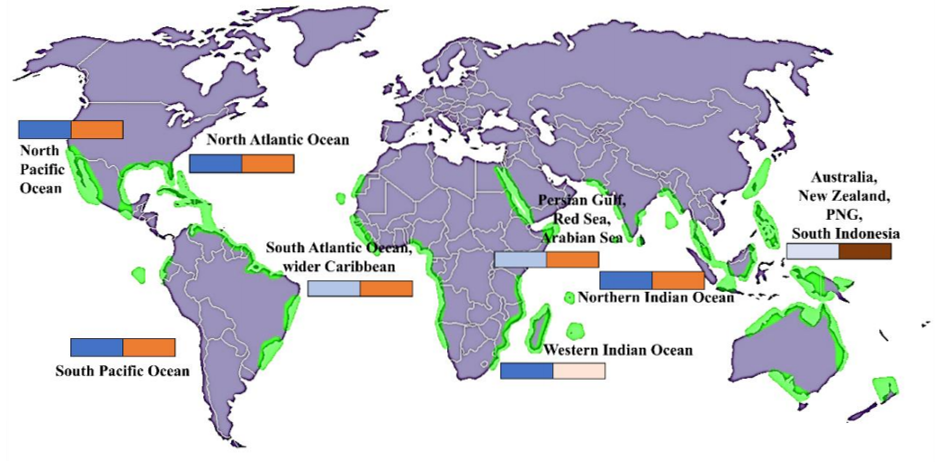
the main driver of mangrove loss; (d) light orange indicates that natural causes are one driver of mangrove loss; and (e) brown indicates that natural causes are the sole drivers of mangrove loss.
4. Region-specific changes
North Atlantic Ocean
Mangroves in the North Atlantic region, encompassing parts of the Caribbean, the Gulf of Mexico and parts of West Africa, experienced both positive and negative changes between 2018 and 2023. In the North-West Atlantic Ocean, mangroves covered an area of approximately 17,408 km2 in 2020, representing 11.8% of global mangrove cover. In the Caribbean Sea and surrounding regions, mangrove cover has shrunk to 7,000 km2 and may disappear within the next few decades Ref 9. Until 2020, Cuba had reported an increase of 115,000 ha of mangroves. The main factors that contributed to the changes observed were rapid coastal urbanization, pollution (mainly from industrial discharge), agricultural run-off and disposal of plastic waste. Climate change impacts, such as sea level rise and increased storm frequency, have resulted in erosion and the submergence of mangrove habitats. Changes in precipitation patterns have affected salinity and resulted in stress for mangroves. Conservation efforts, including the designation of protected areas and community-based initiatives, have helped to stabilize and improve mangrove cover in The Bahamas and Cuba. In the Caribbean, mangroves are central to ecotourism and artisanal practices, and they hold immense cultural significance, in particular for Indigenous Peoples and communities of African descent. It has been observed that 4% of mangroves are showing signs of degradation and this may increase to 12% in next 50 years. By 2060, 75.9% of the mangroves could become submerged.ⓘ
South Atlantic Ocean and wider Caribbean
The mangroves of the South Atlantic Ocean, which encompasses South America and the wider Caribbean, represent around 26% mangroves globally. There has been an average decline of 0.33% per year in mangrove cover in the Caribbean, which was estimated to stand at 6,031.3 km2 in 2020 Ref 7. Satellite data for the three decades to 2018 show that mangroves in Brazil are distributed across 9,000 km2 Ref 12. An estimated sea level rise of 0.4-0.6 cm, an increase in salinity, changes in sediment flow, geomorphic changes and a 20-30% reduction in rainfall have resulted in mangrove loss Ref 51. Major human-induced drivers are shrimp farms and salt production, accounting for between 38% and 50% of mangrove loss Ref 12. Other marine ecosystems in the region, such as Caribbean coral reefs, are also showing signs of bleaching due to an increase in temperature, as well as the loss of mangroves that had acted as a buffer. Overall, there have been changes due to landward migration of mangroves. Net mangrove loss in this region stands at 3.7% and is projected to increase to a net loss of 6.7% over the next 50 years. It is estimated that approximately 10.5% of mangrove cover will be submerged by 2060.ⓘ
Indian Ocean, Arabian Sea, Bay of Bengal, Red Sea, Gulf of Aden and Persian Gulf
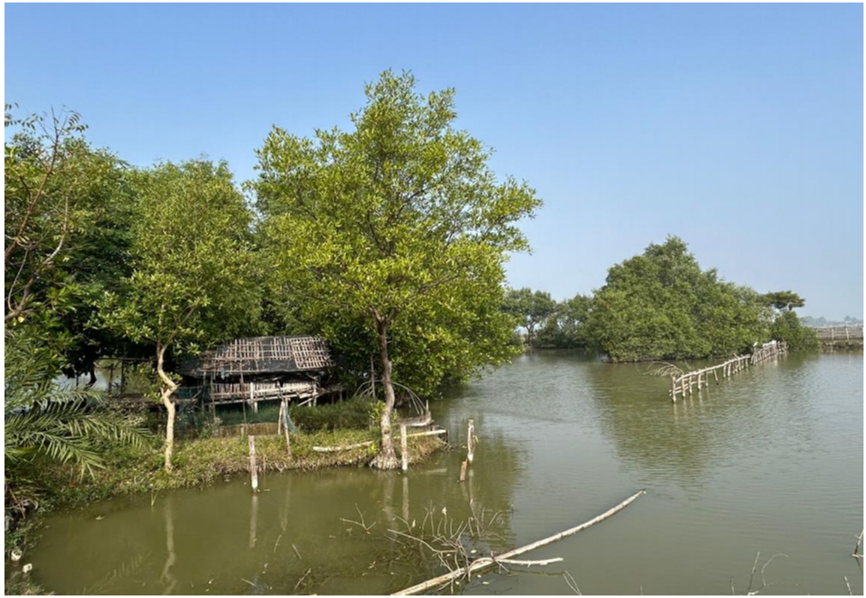
Mangroves cover a broad geographical area in the Indian Ocean, including the Western Indian Ocean and the Northern Indian Ocean in particular. By 2020, overall mangrove forest coverage had fallen to 745,518 ha (from a total of 752,650 ha in 2018 and 7,75,675 ha in 1996), representing a general loss of 7,132 ha (0.95%) between 2018 and 2020 Ref 16. In Kenya and Madagascar, mangroves experienced a slight increase in coverage of 110 ha (0.2%) and 346 ha (0.12%), respectively. Mozambique and the United Republic of Tanzania experienced a loss of 6,825 ha (2.2%) and 755 ha (0.68%) of mangrove cover, respectively Ref 16. The increase in mangrove cover in Madagascar was due to accretion, alluvial deposits and sustained conservation efforts Ref 4. Cyclones have led to the loss of mangroves in Mozambique (Macamo and others, 2016). In the Western Indian Ocean, the loss of mangrove forests is driven by timber and aquaculture activities Ref 43, along with pollution Ref 27. Extreme weather events have led to mangrove degradation, including diebacks Ref 48. Mangroves in the Western Indian Ocean are closely interlinked with seagrass meadows and coral reefs where mangroves tend to face towards land ocean boundaries Ref 43. Mangroves losses in the Western Indian Ocean have affected fish and fisheries products, among others. In the Red Sea and the Gulf of Aden, mangroves cover an area of 189.2 km2 and represent 0.1% of global mangroves. It is interesting to note that mangrove cover in this region has declined by only around 4% over the past decade. Moreover, 1.7% of the region's mangroves are undergoing degradation, although this figure may increase to 5.2% within a 50-year period. Approximately 67.1% of the mangroves in this region may become submerged by 2060. There have been continuous mangrove conservation efforts in the countries bordering the Red Sea and the Gulf of Aden. An ambitious programme to plant 50 million mangroves in the Red Sea by 2030 has been initiated. The carbon sequestration value of Red Sea mangroves has been calculated as 1,034.09 ± 180.53 megagrams of carbon per year and their potential sequestration rate as 2,424.49 ± 423.26 megagrams of carbon per year, demonstrating their potential impact with respect to addressing climate change Ref 6. The Islamic Republic of Iran hosts approximately 240 km2 of mangrove forests along the Persian Gulf and the Gulf of Oman, distributed across 30 distinct habitats. This reflects a gradual increase over past decades, supported by plantation and restoration efforts, as well as the sediment accretion process, which is being increasingly influenced by climate change Ref 42. Notably, over the past few decades, the Islamic Republic of Iran has successfully planted around 30 km2 of mangroves and is planning to plant an additional 10 km2 in the coming years, with a focus on coastal restoration and climate resilience Ref 42. In addition, the country has initiated the development of a national action plan involving a broad range of stakeholders aimed at supporting effective protection, scientifically informed restoration and sustainable management of mangrove ecosystems. The mangroves in the Northern Indian Ocean are spread across South and South-East Asia. The mangroves of the Bay of Bengal in the Northern Indian Ocean are located within Bangladesh, India and Myanmar. Over the past several years, 110 km2 of mangrove forest in the Indian part of the Sundarbans has been lost due to coastal erosion, while 81 km2 has been gained due to plantation, ecological restoration Ref 47 and regeneration Ref 53. Pollution, including anthropogenic nitrogen and microplastics, poses a long-term risk to mangroves in this region Ref 21 Ref 33 Conversions of mangroves for coastal aquaculture or for firewood have increased over the years in Bangladesh and Myanmar. In recent years, sustainable mangrove fisheries, also known as integrated mangrove aquaculture, have been implemented in coastal aquaculture ponds that were historically part of the Indian Sundarbans Ref 13 Ref 58 Ref 63 (see figure II).
Figure II Pond used as a sustainable mangrove fishery (integrated mangrove aquaculture) adjacent to coastal Sundarbans, Bay of Bengal
The increase in erosion along with the frequency of cyclones pose long-term challenges to this region. Cyclone Amphan in 2020 had an impact on 1,200 km2 of mangroves in the Bay of Bengal Ref 5. Overall, there was a net loss in mangrove area of 3% between 1996 and 2020 Ref 7, despite the scarcity of data across geographical scales.
Myanmar has experienced an overall increase in mangrove cover of 0.26%, with the Ayeyarwady Region experiencing a loss of 0.95%. In Thailand, more than 50% of the mangrove forests that had been lost by the 1990s have recovered as a result of conservation efforts, with an increase in total coverage of 277,923 ha Ref 10. Malaysia has lost approximately 3.3% of its mangrove cover, which fell from 650,000 ha in the 1990s to 629,038 ha in 2017 (Omar and others, 2024). Singapore, with a small mangrove forest area, has remained well managed. In the Northern Indian Ocean, aquaculture alone has accounted for 35% of mangrove loss Ref 58. Based on available data as at 2019, approximately 30% of mangrove cover has been lost in Indonesia, equating to 18,209 ha per year Ref 2. According to another estimate, 637,000 ha of mangroves have been lost in Indonesia Ref 44. Deforestation poses a major threat to mangroves across the region. The conversion of mangroves for agriculture and aquaculture has led to decline Ref 17. There have been regional efforts to restore mangroves, such as the National Mangrove Rehabilitation Programme of Indonesia, aimed at restoring 600,000 ha of degraded mangroves by 2024 Ref 52.
Between 2018 and 2023, mangroves in Australia experienced both loss, due to coastal development, and recovery. On the Great Barrier Reef, mangroves have recovered due to sustained restoration efforts. In New Zealand, mangrove cover has remained relatively stable, with some areas experiencing slight expansion due to sedimentation. It has been observed that citizen awareness and adequate protection measures have helped mangrove coverage in New Zealand. By contrast, in Papua New Guinea mangroves are facing continuous threats from logging and mining, while only a fraction have proper protection.
North Pacific Ocean
In Mexico, 44,788 ha of mangroves have been lost over the past two decades Ref 7 Ref 60. The main drivers of those changes have included shrimp farming and urban development. In Costa Rica, significant areas of mangrove cover that had been lost are undergoing positive change due to robust conservation practices, including the implementation of an innovative payment for ecosystem service.
South Pacific Ocean
Although less well studied than the mangroves of North America, South-East Asia and Australia, the mangroves of the South Pacific Ocean cover large areas (approximately 11% of global mangrove cover) and probably represent a larger proportion of the coastline. Over the past three decades, mangrove forest cover has changed in Colombia, with the gradual transformation of dense mangrove vegetation into other vegetation types affecting an area of 38,469 ± 2,829 ha Ref 41. Mangrove cover in Colombia decreased by 48,000 ha in three decades to 2020 Ref 41. In Ecuador, 4.56% of mangroves had been lost in previous decades, but mangroves had recovered by 2.9% by 2018 Ref 40. The major drivers are expanding shrimp farms, agriculture and construction activities. Fiji has lost 1,135 ha of mangroves over recent years (out of 65,243 ha) Ref 8. This is due to the increasing intensity of tropical cyclones. Overall management of mangrove cover in the South Pacific has remained highly complex, with a lack of effective on-the-ground assessments Ref 25.
5. Key remaining knowledge and capacity gaps
Earth observation technologies have improved significantly, but information on reduced or increased mangrove cover remains scarce Ref 58. New technologies, such as environmental DNA and machine learning, can fill in the gaps Ref 37, although further on-site validation is required in such regions as the Bay of Bengal and the South Pacific Ocean. Globally, mangroves also face emerging threats, such as coastal ocean acidification, with unknown consequences for carbon sequestration Ref 62. The relative rise in sea level is expected to vary across oceanic regions Ref 1 and the responses of mangroves may vary. While mangrove loss is occurring globally, as highlighted in the second World Ocean Assessment, almost 50% of mangroves do not fall within the purview of the loss alert system. As countries work towards nationally determined contributions under the Paris Agreement of 2015, among others, natural climate solutions can help to achieve these targets. As part of coastal blue carbon ecosystems and natural climate solutions, mangroves can capture carbon (although this varies by region), store carbon and bring value to carbon credits Ref 19. It should be noted, however, that knowledge gaps and uncertainties exist with respect to carbon credits and biodiversity credits, including in relation to benefit-sharing with Indigenous communities Ref 28 Ref 54. There has been progress on limiting mangrove loss, but human activities, in particular shrimp farming and coastal development, are cumulatively magnifying the trend of reduced global coverage.
References
- Allen, M., Mustafa, B. and Shukla, P. (2018). GLOBAL WARMING OF 1.5 ℃ - an IPCC special report on the impacts of global warming of 1.5 ℃ above pre-industrial levels and related global greenhouse gas emission pathways, in the context of strengthening the global response to the threat of climate change, sustainable development, and efforts to eradicate poverty.
- Arifanti, V.B., Kauffman, J.B., Subarno, Ilman M., Tosiani, A., Novita, N. (2021). Contributions of mangrove conservation and restoration to climate change mitigation in Indonesia. Global Change Biology, 28, 4523-4538.
- Allard, S.M., Costa, M.T., Bulseco, A.N,, Helfer, V., Wilkins, L.G.E., Hassenrück, C., Zengler, K., Zimmer, M., Erazo, N., Mazza Rodrigues, J.L., Duke, N., Melo, V.M.M., Vanwonterghem, I,, Junca, H., Makonde, H.M., Jiménez, D.J., Tavares, T.C.L., Fusi, M., Daffonchio, D., Duarte, C.M., Peixoto, R.S., Rosado, A.S., Gilbert, J.A., Bowman, J. (2020). Introducing the mangrove microbiome initiative: identifying microbial research priorities and approaches to better understand, protect, and rehabilitate mangrove ecosystems. mSystems, 5, e00658-20.
- Bardou, R., Friess, D.A., Gillespie, T.W., Cavanaugh, K.C. (2024). Assessing mangrove cover change in Madagascar (1972-2019): Widespread mangrove deforestation is slowing down. Global Ecology and Conservation, 53, e03022.
- Bhargava, R., Friess, D.A., (2020) Previous shoreline dynamics determine future susceptibility to cyclone impact in the Sundarban mangrove forest. Frontiers in Marine Science, 9, 2022.
- Blanco-Sacristán, J., Johansen, K., Duarte, C.M., Daffonchio, D., Hoteit, I., McCabe, M.F. (2022). Mangrove distribution and afforestation potential in the Red Sea. Science of the Total Environment, 843, 157098.
- Bunting, P., Rosenqvist, A., Hilarides, L., Lucas, R.M., Thomas, N., Tadono, T., Worthington, T.A., Spalding, M., Murray, N.J., Rebelo, L .- M., (2022) Global Mangrove Extent Change 1996-2020: Global Mangrove Watch Version 3.0. Remote Sensing, 14, 3657.
- Cameron, C., Maharaj, A., Kennedy, B., Tuiwawa, S., Goldwater, N., Soapi, K., Lovelock, C.E. (2021). Landcover change in mangroves of Fiji: Implications for climate change mitigation and adaptation in the Pacific. Environmental Challenges, 2, 100018.
- Caribbean Biodiversity Fund (2025). https://caribbeanbiodiversityfund.org/our-priorities/. Accessed on 5 January 2025.
- Chaiklang, P., Karthe, D., Babel, M., Giessen, L., Schusser, C. (2024). Reviewing changes in mangrove land use over the decades in Thailand: Current responses and challenges. Trees, Forests and People, 100630.
- Chua, E.K. (2010). Wetlands in a city: The Sungei Buloh Wetland Reserve. Singapore: Simply.
- Diniz, C., Cortinhas, L., Nerino, G., Rodrigues, J., Sadeck, L., Adami, M., Souza-Filho, P.W.M. (2019). Brazilian mangrove status: Three decades of satellite data analysis. Remote Sensing, 11, 808.
- Dubey, S. (2023) From conflict to co-existence: incorporation of mangrove in aquaculture. In Indian Sundarban at Crossroads: A World Mangrove Day Special Volume, pp. 83-99. Sundarbans Biosphere Reserve.
- Duke, N.C. (2020). A systematic revision of the vulnerable mangrove genus Pelliciera (Tetrameristaceae) in equatorial America. Blumea, 65, 107120.
- Duke, N.C., Virly, S., Tracey. D. (2023). New Caledonian mangroves. A treasure to protect. Currumbin, Queensland Australia, James Cook University & Mangrove Watch Publications, 210 pp.
- Erftemeijer, P., de Boer, M., Hilarides, L. (2022). Status of mangroves in the Western Indian Ocean Region. Wetlands International, 1-67.
- Ferreira, A.C., Borges, R., de Lacerda, L.D. (2022). Can sustainable development save mangroves? Sustainability, 14, 1263.
- Friess, D.A., Yando, E.S., Abuchahla, G.M.O., Adams, J.B., Cannicci, S., Canty, S.W.J, Cavanaugh, K.C., Connolly, R.M., Cormier, N., Dahdouh-Guebas. F., Diele, K., Feller, I.C., Fratini, S., Jennerjahn, T.C., Lee, S.Y., Ogurcak, D.E., Ouyang, X., Rogers, K., Rowntree, J.K., Sharma, S., Sloey, T.M., Wee,A.K.S. (2020). Mangroves give cause for conservation optimism, for now. Current Biology, 30, R153-R154.
- Friess, D.A., Howard, J., Huxham, M., Macreadie, P.I., Ross, F. (2022). Capitalizing on the global financial interest in blue carbon. PLoS Climate, 1, e0000061.
- Ghosh, A., Bhadury, P. (2020). Exploring biogeographic patterns of bacterioplankton communities across global estuaries. MicrobiologyOpen, 8, e00741.
- Ghosh, A., Woodward, E.M.S., Nelson, C.E., Saha, R., and Bhadury, P. (2022). Nitrogen driven niche differentiation in bacterioplankton communities of northeastern coastal Bay of Bengal. Environmental Research Communications, 4, 035006.
- Hagger, V., Worthington, T.A., Lovelock, C.E., Adame, M.F., Amano, T., Brown, B.M., Friess, D.A., Landis, E., Mumby, P.J., Morrison, T.H., O'Brien K.R., Wilson, K.A., Zganjar, C., Saunders, M.I. (2022)
- Drivers of global mangrove loss and gain in social-ecological systems. Nature Communications, 13, 6373.
- Ghosh, A., Bhadury, P. (2018). Exploring biogeographic patterns of bacterioplankton communities across global estuaries. MicrobiologyOpen, 10, e741.
- Gorman, D. (2018). Historical losses of mangrove systems in South America from human-induced and natural impacts. In Threats to Mangrove Forests, Hazards, Vulnerability, and Management, (Makowski, C., Finkl, C.W., eds., Springer, pp. 155-171.
- Goulding, T.C., Dayrat, B. (2023). The Coral Triangle and Strait of Malacca are two distinct hotspots of mangrove biodiversity. Scientific Reports, 13, 15793.
- Hamza, A.J., Esteves, L.S., Cvitanovic, M., Kairo, J. (2020). Past and present utilization of mangrove resources in Eastern Africa and drivers of change. Journal of Coastal Research, 95, 39-44.
- Faridah-Hanum, I., Rawat, G.S., Yahara, T., Abi-Said, M., Corlett, R.T., Courchamp, F., Dai, R., Freitag, H., Haryoko, T., Hewitt, C.L., Hussain, T., Kadoya, T., Maheswaran, G., Miyashita, T., Mohan Kumar, B., Mohapatra, A., Nakashizuka, T., Piggott, J.J., Raghunathan, C., Rawal, R., Sheppard, A., Shirayama, Y., Son, Y., Takamura, N., Thwin, S., Yamakita, T., Febria, C. M., Niamir, A. Chapter 3: Status, trends and future dynamics of biodiversity and ecosystems underpinning nature's contributions to people. In IPBES (2018): The IPBES regional assessment report on biodiversity and ecosystem services for Asia and the Pacific. Karki, M., Senaratna Sellamuttu, S., Okayasu, S., Suzuki, W., eds., Secretariat of the Intergovernmental Science-Policy Platform on Biodiversity and Ecosystem Services, Bonn, Germany, pp.175-264. Zenodo. https://doi.org/10.5281/zenodo.3237374.
- IPCC. (2018). Special report: Global warming of 1.5C. Inter-governmental Panel on Climate Change.
- IPCC (2021). In Masson-Delmotte V, Zhai P, Pirani SL and others, eds., Climate change 2021: the physical science basis. Contribution of working group I to the sixth assessment report of the intergovernmental panel on climate change. Cambridge University Press, Cambridge.
- Jenoh, M.E., Bosire J.O., Cannicci, S., Koedam, N., Dahdouh-Guebas, F. (2024). Mangrove dieback due to massive sedimentation and its impact on associated biodiversity. Kenya Aquatica Journal, 9, 45-59.
- Kairo, J.G., Mangora, M.M., Network, W.I.O.M., Western Indian Ocean Marine Science Association (2020). Guidelines on Mangrove Ecosystem Restoration for the Western Indian Ocean Region-Western Indian Ocean Ecosystem Guidelines and Toolkits.
- Kumar, R., Sinha, R., Rakib, M.R.J., Padha S., Ivy, N., Bhattacharya, S., Dhar, A., Sharma, P. (2022). Microplastics pollution load in Sundarban delta of Bay of Bengal. Journal of Hazardous Materials Advances, 7, 100099.
- Kusmana, C. (2014) Distribution and current status of mangrove forest in Indonesia. In Hanum I.F., Hakeem A.L.K.R., Ozturk M., eds., Mangrove ecosystems of Asia: status, challenges, and management strategies. Springer, New York, pp. 37-60.
- Longépée, E., Ahmed Abdallah, A., Jeanson, M., Golléty, C. (2021). Local ecological knowledge on mangroves in Mayotte Island (Indian Ocean) and influencing factors. Forests, 12, 53.
- Macamo C.C.F., Massuanganhe, E., Nicolau D.K., Bandeira S.O., Adams, J.B. (2016). Mangrove's response to cyclone Eline (2000): What is happening 14 years later. Aquatic Botany, 134, 10-17
- Mandal, A., Ghosh. A., Kumar, G., Bhadury, P. (2025). Dataset of benthic foraminiferal community structure from sediment eDNA of Sundarbans mangrove ecosystem. Data in Brief, 60, 111554.
- Moore, A.C., Hierro, L., Mir, N., Stewart, T. (2022). Mangrove cultural services and values: current status and knowledge gaps. People and Nature, 4, 1083-1097.
- Elinasi, M., Mangora, M.M., Mayunga, J.S. (2024). Mangrove cover change detection in the Rufiji Delta in Tanzania. WIO Journal of Marine Science, 17, 1-10.
- Morocho, R., González, I., Ferreira, T.O., Otero, X.L. (2022). Mangrove forests in Ecuador: A two-decade analysis. Forests, 13, 656.
- Murillo-Sandoval, P.J., Fatoyinbo, L., Simard, M. (2022). Mangroves cover change trajectories 1984- 2020: The gradual decrease of mangroves in Colombia. Frontiers in Marine Science, 9, 892946.
- Naderloo, R., Shahdadi, A., Rahimian, H., Shojaei, M.G., and Nasrolahi, A. (2023). Atlas of Sensitive Marine Ecosystems of the Persian Gulf and Gulf of Oman. Tehran University Press.
- Nyangoko, B.P., Shalli, M.S., Mangora, M.M., Gullström, M., Berg, H. (2022). Socioeconomic determinants of mangrove exploitation and management in the Pangani River Estuary, Tanzania. Ecology and Society, 27.
- Nurbaya, S., Efransjah, Murniningtyas, S., Erwinsyah, Damayanti, E.K., eds. (2020). The State of the World's Forests 2020. Jakarta, Indonesia: Ministry of Environment and Forestry, Republic of Indonesia.
- Omar, H., Misman, M.A., Ismail P. (2020). Status of Mangroves in Malaysia.
- Rahman, Lokollo, F.F., Manuputty, G.D., Hukubun, R.D., Krisye, Maryono, and Wardiatno, Y. (2024). A review on the biodiversity and conservation of mangrove ecosystems in Indonesia. Biodiversity and Conservation, 33, 875-903.
- Ray, K., Basak, S.K., Giri, C.K., Kotal, H.N., Mandal, A., Chatterjee, K., Saha, S., Biswas, B., Mondal, S., Das, I., Ghosh, A., Bhadury, P. (2024) Ecological restoration at pilot-scale employing site-specific rationales for small-patch degraded mangroves in Indian Sundarbans. Scientific Reports, 14, 12952.
- Ramarokoto, S., Raharijaona, L., Ravonjimalala, H.R., Randriamalala, J. (2024). Relative importance of local and regional/global drivers of mangrove degradation and deforestation in Madagascar. Regional Environmental Change, 24(2):1-12. Dol: 10.1007/s10113-024-02247-y.
- Rémi, B., Friess, D.A., Gillespie, T.W., Cavanaugh, K.C. (2024). Assessing mangrove cover change in Madagascar (1972-2019): Widespread mangrove deforestation is slowing down. Global Ecology and Conservation, 53, e03022.
- Reis-Filho, J.A., Harvey, E.S., Giarrizzo, T. (2019). Impacts of small-scale fisheries on mangrove fish assemblages, ICES Journal of Marine Science, 76, 153-164.
- Rull, V. (2022). Responses of Caribbean mangroves to Quaternary climatic, eustatic, and anthropogenic drivers of ecological change: a review. Plants, 11, 3502.
- Sasmito, S.D., Basyuni, M., Kridalaksana, A., Saragi-Sasmito, M.F., Lovelock, C.E., Murdiyarso, D. (2023) Challenges and opportunities for achieving Sustainable Development Goals through restoration of Indonesia's mangroves. Nature Ecology and Evolution, 7, 62-70.
- Samanta, S., Hazra, S., Mondal, P.P., Chanda, A., Giri, S., French, J.R., Nicholls, R.J. (2021). Assessment and attribution of mangrove forest changes in the Indian Sundarbans from 2000 to 2020. Remote Sensing, 13, 4957.
- Stankovic, M., Mishra, A.K., Rahayu, Y.P., Lefcheck, J., Murdiyarso, D., Friess, D.A., Corkalo, M., Vukovic, T., Vanderklift, M.A., Farooq, S.H., Gaitan-Espitia, J.D. (2023). Blue carbon assessments of seagrass and mangrove ecosystems in South and Southeast Asia: Current progress and knowledge gaps. Science of the Total Environment, 904, 166618.
- State of the Ocean Report (2024). Enevoldsen, H., Isensee, K., Jie, L.Y., eds. International Oceanographic Commission Technical Series, 190, 88 pp.
- United Nations Office of Legal Affairs (2016). The First World Ocean Assessment, pp. 570.
- United Nations Office of Legal Affairs (2021) . The Second World Ocean Assessment, pp 1086.
- Leal, M., Spalding, M.D., eds. (2024). The State of the World's Mangroves 2024, Global Mangrove Alliance, pp. 71.
- Trégarot, E., Caillaud, A., Cornet, C.C., Taureau, F., Catry, T., Cragg, S.M., Failler, P. (2021). Mangrove ecological services at the forefront of coastal change in the French overseas territories. Science of the Total Environment, 763, 143004.
- Troche-Souza, C.H., Velázquez-Salazar, S., Cruz-López, M.I., Rodríguez-Zúñiga, M.T., Alcántara-Maya, J.A., Vázquez-Balderas, B., Valderrama-Landeros, L., Villeda-Chávez, E. Ressl, R. (2023). Comments on Acosta-Velázquez et al. changes in mangrove coverage classification criteria could impact the conservation of mangroves in Mexico. Land Use Policy, 134, 106883.
- UN-REDD (2025). https://www.un-redd.org/. Accessed on 10 January 2025.
- Widdicombe, S., Isensee, K., Artioli, Y., Gaitán-Espitia, J. D., Hauri, C., Newton, J. A., Wells, M., and Dupont, S. (2023). Unifying biological field observations to detect and compare ocean acidification impacts across marine species and ecosystems: what to monitor and why, Ocean Sci., 19, 101-119, https://doi.org/10.5194/os-19-101-2023.
- Yash, Ghosh A., Dey, A., Sinha, M., Bera, N., Chakraborty, S. and Bhadury, P. (2026) Dataset on ecological health and microbial communities of coastal aquaculture ponds from surrounding region of Sundarban mangroves. Data in Brief 65:112542.
- Yudha, R.P., Sugito, Y.S., Sillanpää, M. Nurvianto, S. (2021). Impact of logging on the biodiversity and composition of flora and fauna in the mangrove forests of Bintuni Bay, West Papua, Indonesia. Forest Ecology and Management, 488, 119038.
- Zöckler, C., Aung, C. (2019). The mangroves of Myanmar. Sabkha Ecosystems: Volume VI: Asia/Pacific, 253-268.