
Seagrass meadows
Writing team: Zhao Peng (coordinating author), Janine Barbara Adams, Joel Christopher Creed, Mehdi Ghodrati Shojaei (co-lead member), Udhi Eko Hernawan, Emad Koochaknejad, Agnes Mittermayr, Lina Mtwana Nordlund, Shalini Singh and Karenne Tun (lead member).
Key points
- Seagrass meadows are experiencing accelerated degradation due to urbanization, pollution and climate change, leading to a decline in their extent, biodiversity and ecological function.
- Seagrass meadows play a crucial role in carbon storage, habitat provision and water quality improvement, yet their functions are not widely recognized or fully utilized.
- There are insufficient systematic monitoring, protection and restoration technologies for seagrass meadow degradation, with insufficient scientific knowledge and policy support, highlighting the need for enhanced international collaboration and capacity-building.
1. Introduction
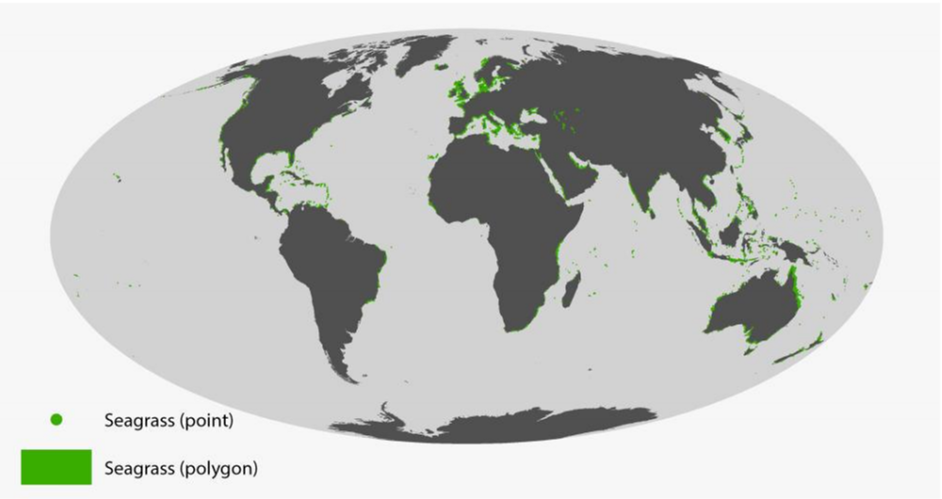
Seagrass meadows are found across all climatic zones except Antarctica (see figure I), providing essential services, such as carbon sequestration, climate regulation, nutrient cycling and habitat for various marine species. Despite their importance, these ecosystems are facing alarming rates of decline, with an estimated 29% of their global extent lost since records began in 1879 Ref 53. The primary causes of this decline include poor water quality, physical disturbances, coastal development and overfishing. These pressures have placed seagrass meadows among the most threatened ecosystems globally, alongside mangroves, coral reefs and tropical rainforests. Urgent and effective management strategies are needed to reverse this loss and preserve the critical role of seagrasses in maintaining coastal biodiversity and resilience. The present subchapter emphasizes ecosystem-level changes in seagrass meadows from 2018 to 2023, covering environmental change, contributing factors, socioeconomic impacts and the knowledge gaps in addressing these changes. It is focused on conditions, trends and responses, rather than taxonomy or species diversity.
Figure I Global distribution of seagrass
2. Environmental changes since the second World Ocean Assessment
Changes in overall status
Estimates of the global seagrass area range between 160,387 km2 and 266,562 km2 Ref 32, though measuring losses remains challenging. Dunic and others (2021) found that individual meadows lose 1-2% of their area annually, with larger meadows (>1,000 ha) declining more slowly. Europe, North America, Japan, China and South-East Asia face the greatest risks. Between 2000 and 2020, 60% of seagrass meadows in South-East Asia (68 sites across nine regions) declined by 10.9% annually, while 20% increased by 8.1% annually Ref 45.
Factors contributing to the changes observed
Seagrass decline is predominantly driven by poor water quality and coastal development Ref 19. Coastal development leads to both direct impacts, such as habitat loss due to port construction, and indirect impacts, such as reduced light availability from sediment plumes caused by dredging activities. Light deprivation caused by nutrient-induced algal growth and sedimentation compromises photosynthesis. Destructive fishing practices, including unsustainable bottom trawling in vulnerable habitats can also cause losses, with heavy equipment damaging seagrass habitats. Other methods, including seining and gleaning, also contribute to losses in some areas Ref 34. Climate change is an increasing threat, with rising temperatures and intensified storms Ref 54 leading to significant seagrass loss. Marine heatwaves and storms have already caused extensive damage Ref 11 Ref 43. In addition, climate change may alter the distribution of herbivores and pathogens, further affecting seagrass health (Wernberg and others, 2024). Overgrazing by herbivores, such as sea urchins and sea turtles, has led to seagrass decline in multiple regions of the Atlantic, Indian and Pacific Oceans. Mitigating these pressures and restoring seagrass meadows is now a pressing conservation challenge. Restoration efforts, combined with efforts to address the root causes of decline, have demonstrated the potential for substantial seagrass recovery in several regions Ref 20 Ref 38.
Impacts of the changes on and interactions with other components of the marine system
Seagrass ecosystems are shaped by interconnected factors, such as herbivory, climate change, habitat connectivity and interspecies interactions. Rising sea temperatures and ocean acidification due to climate change affect species distribution and seagrass productivity Ref 30 Ref 9. Herbivory by sea turtles and fish plays a critical role in regulating seagrass dynamics, with shifts in herbivory patterns observed in the Mediterranean Ref 40. Habitat connectivity supports organism movement and genetic exchange, strengthening ecosystem resilience Ref 14. In addition, seagrass meadows play a crucial role in sediment storage and carbon export, sometimes over hundreds of kilometres Ref 28, highlighting their importance for coastal sustainability and ecosystem health.
Social, economic and cultural aspects of the changes
On the social front, seagrasses support livelihoods, especially in small-scale fisheries, ensuring food security for millions Ref 52. On the economic front, seagrasses protect coastlines, enhance the productivity of fisheries, sequester carbon and stabilize sediment. On the cultural front, they are integral to Indigenous and local traditions, shaping fishing practices, rituals and community identities Ref 36. The degradation of seagrass ecosystems disrupts biodiversity and socioeconomic benefits, with reduced fisheries productivity threatening economic stability and eroding cultural ties, thereby undermining community resilience.
Although public awareness of the importance of seagrasses has increased Ref 13, full recognition of their value among all stakeholders has yet to be achieved (United Nations Environment Programme (UNEP), 2020). Seagrass restoration efforts are becoming more common, however, often involving local communities. This increased focus on seagrasses has also led to their more frequent inclusion in management plans Ref 36. Effective management requires a deeper understanding of seagrass dynamics and reliable baselines. Implementing policies that balance ecological, economic and cultural needs is essential to ensuring the long-term resilience of both ecosystems and the communities that depend on them Ref 52.
In addition, such programmes as the Dugong and Seagrass Conservation Project funded by the Global Environment Facility, the Convention on the Conservation of Migratory Species of Wild Animals, the Memorandum of Understanding on the Conservation and Management of Dugongs (Dugong dugong) and their Habitats throughout their Range and the Seagrass Ecosystem Services Project funded by the International Climate Initiative support conservation projects in countries by promoting coordinated, international action to ensure the long-term survival of dugongs and the associated seagrass habitats they depend on.
Implications for achieving the Sustainable Development Goal targets
Seagrasses contribute to several Sustainable Development Goals, including carbon sequestration and disaster resilience (Goal 13), protection of coastal communities (Goal 11) and food and economic security (Goal 10), while promoting sustainable use (Goal 12), marine conservation (Goal 14) and partnerships (Goal 17) (see General Assembly resolution 70/1). Their value was highlighted in the UNEP report entitled Out of the Blue: the Value of Seagrasses to the Environment and to People Ref 49. Seagrass conservation efforts, including the 2030 Seagrass Breakthrough project announced at the twenty-eighth session of the Conference of the Parties to the United Nations Framework Convention on Climate Change, align with global climate commitments and all 10 targets associated with Goal 14.
3. Region-specific changes
North Atlantic Ocean, Baltic Sea, Black Sea, Mediterranean and North Sea
In the North-Western Atlantic, Zostera marina dominates in the north, while Syringodium filiforme is prevalent in the south, leading to research and restoration efforts shifting along a latitudinal gradient. While S. filiforme populations remain stable, Z. marina has experienced declines due to eutrophication, sedimentation and climate warming. In the North-Eastern Atlantic, including the Baltic, Black, Mediterranean and North Seas, research has focused on dominant species, such as Z. marina and Posidonia oceanica, with effort particularly concentrated in Western Europe and the Mediterranean. Between 1869 and 2016, Europe experienced a net loss of 35,000 ha of seagrass area, though recent trends show slower losses and some gains Ref 15, such as Z. marina recolonizing the Mira Channel in Portugal Ref 25. Restoration efforts, such as the recovery of 40,000 ha of seagrass in the Chesapeake Bay, United States of America, offer hope. In Europe, however, outdated or incomplete spatial data - mainly covering the Natura 2000 network - are hindering accurate tracking of seagrass changes, making it difficult to assess both losses and gains comprehensively Ref 27 Ref 39.
South Atlantic Ocean and wider Caribbean
Understanding of seagrass meadows in the South Atlantic Ocean and the wider Caribbean remains limited. Although the region has historically experienced significant seagrass losses, recent trends indicate a balance, with losses matching gains. Thalassia testudinum forms extensive, dense and stable beds, but when disturbed it is replaced by faster-growing species, such as S. filiforme and Halodule wrightii, all classified as being of least concern. In 2022, a vast seagrass ecosystem, covering between 66,000 and 92,000 km2, was discovered on the Bahamas Banks Ref 23. Of the 18 seagrass species in the region, Halodule bermudensis and Halodule ciliata are critically endangered, with several others near threatened or vulnerable. Seagrass abundance has drastically declined across the Bermuda Platform due to overgrazing by sea turtles Ref 22. In addition, Halophila ovalis and Halophila stipulacea are invasive species expanding in the Caribbean Ref 55. Global climate change is also causing shifts in the distribution of some species, such as H. wrightii and Halophila decipiens, as tropicalization alters habitat conditions.
Indian Ocean, Arabian Sea, Bay of Bengal, Red Sea, Gulf of Aden and Persian Gulf
East Africa, which has 14 recorded seagrass species, faces seagrass decline due primarily to the use of destructive fishing techniques, such as seine fishing, in sensitive areas. The collection of gastropods and crustaceans further disturbs seagrass meadows Ref 10 Ref 7 Ref 34. In Maputo Bay, Mozambique, seagrass cover decreased by 33.4% between 1991 and 2023 due to anthropogenic disturbances Ref 6. In Kenya, Thalassodendron ciliatum has experienced significant decline due to the proliferation of sea urchins Ref 48. In southern Mozambique, Thalassodendron leptocaule is considered near threatened, while Zostera capensis in South African estuaries is endangered Ref 17 Ref 2. In the Persian Gulf and Red Sea, research gaps hinder comprehensive understanding of seagrass ecosystems, though recent studies have recorded Halophila decipiens in Iraqi waters for the first time, expanding known biodiversity (Ibrahim, 2024). The invasion of Halophila stipulacea from the Red Sea to the Mediterranean highlights ecological shifts Ref 35, while unique evolutionary processes in Halophila ovalis populations in the Red Sea underscore the region's distinct biodiversity. In addition, the discovery of Halophila beccarii in the Bangladeshi part of the Bay of Bengal emphasizes the importance of continued marine assessments Ref 26.
North Pacific Ocean
In the North-Eastern Pacific, Z. marina is the dominant seagrass species, ranging from the Arctic to Mexico, where it coexists with Ruppia maritima and the invasive Zostera japonica. A recent genetic split of Zostera pacifica from Z. marina leaves the population status of this species uncertain. Localized seagrass declines in this region are attributed to coastal development and eutrophication. Similarly, since 2000, seagrass beds across South-East Asia and East Asia have experienced significant losses, with over 60% declining at an annual rate of 10.9%, due in large part to human activities and natural factors Ref 45. The widespread degradation of South-East Asian seagrass ecosystems is further exacerbated by significant knowledge gaps with respect to subtidal seagrass meadows, which limit effective conservation strategies and result in a persistent disconnect between scientific research, policy and management implementation Ref 21.
South Pacific Ocean
Seagrass meadows are found in 17 of the 22 Pacific island countries and territories, with the highest species richness in Papua New Guinea, which hosts 13 species. It should be noted, however, that seagrasses remain understudied compared with coral reefs and mangroves. Recent studies from the period 2018-2023 highlight increasing threats to these ecosystems, in particular from coastal development, pollution and climate change. For instance, seagrass cover in parts of Fiji and Solomon Islands has declined due to land-based pollution and destructive fishing practices. There are also emerging threats from habitat loss, with projections suggesting a 5-20% loss in seagrass habitat by 2035 Ref 53. Over 5% of seagrass extent has been lost in Australia since the 1930s, with substantial losses of temperate Posidonia species Ref 42. Posidonia australis in parts of New South Wales is now listed as a threatened ecological community under Australian legislation. Tropical and subtropical seagrass meadows have also been lost, with substantial losses following extreme storm events with very heavy rain, causing run-off and high turbidity. Multiple restoration efforts are now under way around Australia, with the success of efforts steadily improving Ref 41.
4. Key remaining knowledge and capacity gaps and new gaps
Key changes in knowledge and understanding gaps
A key knowledge gap recognized by seagrass scientists and managers today is how to raise societal awareness about the global significance of seagrasses, which remain relatively unknown Ref 52. This is a pressing challenge, as increasing awareness can lead to broader support for seagrass conservation, citizen science, informed decision-making on marine biodiversity, improved funding for research and management, and ultimately a healthier planet Ref 49. Engaging the public through education and collaboration with communication experts is crucial for achieving this. While advances have been made in seagrass mapping and monitoring, in particular with remote sensing technology Ref 46, significant gaps remain with respect to understanding the distribution of seagrasses in the tropical Atlantic, Pacific, Indian and Southern Oceans, especially in deep or turbid waters. Knowledge of seagrass ecosystem services has improved in some regions, but remains incomplete in many others Ref 12. In addition, economic assessments are limited and often undervalue seagrass systems. Better models linking ecological and economic factors are needed for a more integrated approach. Identifying local drivers and stressors continues to be a challenge in relation to targeted management efforts, and there is still limited understanding of how seagrasses will adapt to climate change, particularly under the combined pressures of human activities and environmental shifts.
Key changes in capacity gaps
In addition to knowledge gaps, significant capacity gaps exist in the management of seagrass ecosystems, especially as regards habitat mapping, centralized data repositories, restoration and management frameworks.
(a) Habitat mapping and monitoring. Accurate and up-to-date information on seagrass distribution is essential for effective conservation. The current global seagrass map is outdated, and reports of habitat loss Ref 19 Ref 45 Ref 3 highlight the need for improvement. New tools, such as drones, artificial intelligence and cloud-based platforms, are enhancing seagrass mapping capacity, especially on the regional and local scales Ref 31.
(b) Centralized data repositories. As seagrass research expands, the volume of data grows significantly Ref 44. However, cross-platform incompatibility continues to hinder efficient data exchange. Establishing a centralized repository with a standardized framework would streamline integration and improve access to seagrass data across various platforms.
(c) Restoration. Seagrass restoration is a key nature-based solution for climate change mitigation, but projects often fail due to challenges in relation to site selection, seed germination and maintenance Ref 51. Scaling up restoration efforts requires practical, simple methods and a better understanding of the interactions among the diverse components of seagrass ecosystems to improve success rates Ref 37.
(d) Management framework. Effective management of seagrass ecosystems requires strong legal, policy and planning frameworks. These vary widely across countries, from well-developed systems, such as those of Canada Ref 33, to ineffective or non-existent policies, as seen in Belize and India Ref 1 Ref 24. Robust frameworks are necessary in order to allocate resources (including funding, personnel and law enforcement) to seagrass conservation.
Remaining gaps
While significant progress has been made in understanding seagrass biology and ecology Ref 37, several knowledge gaps remain. These relate to such areas as developing cost-effective technologies for habitat mapping and monitoring with improved spatial-temporal accuracy, as well as innovations in seagrass restoration techniques, from site selection to habitat maintenance. The impacts of climate change on seagrasses, particularly in temperate and tropical regions, and the role of seagrasses in carbon sequestration and emissions are still not fully understood .. Furthermore, there is a lack of coordination and transparency in global seagrass observations, which limits collective understanding of seagrass ecosystems and the drivers of change. Making seagrass data more accessible, standardized and easily shareable across platforms would greatly enhance efforts to better understand and conserve seagrass habitats worldwide.
References
- Acharyya, T., Raulo, S., Singh, S., Sudatta, B.P., Srichandan, S., Baliarsingh, S.K., Samal, R.N., and Sahoo, C.K. (2023). Status and Conservation Challenges of the Second-Largest Seagrass Bed in India: Chilika Lagoon. Environmental Science and Pollution Research, 30(45), 100265-100281.
- Adams, J., and van der Colff, D. (2018). Zostera capensis Setch. National Assessment: Red List of South African Plants. South African National Biodiversity Institute (SANBI), Pretoria. https://redlist.sanbi.org/species.php?species=4111-1.
- Adi, N., Marpaung, K., Haris, and Nur, R. (2024). Remote Sensing Applications in Seagrass Mapping in Southeast Asia. Environmental Monitoring, 102, 34-47.
- Adi, W., Hartoko, A., Purnomo, P.W., Supratman, O., Pringgenies, D., and Hernawan, U.E. (2024). Ecological Condition of Seagrass Meadows around Sea-Based Tin Mining Activities in the Waters of Bangka Belitung Islands, Indonesia. Marine Pollution Bulletin, 209, 117151.
- Al-Mansoori, N., and Das, H.S. (2024). Seagrasses of the United Arab Emirates. In J.A. Burt, ed. A Natural History of the Emirates (pp. 267-285). Springer Nature Switzerland.
- Amone-Mabuto, M., Bandeira, S., Hollander, J., Hume, D., Campira, J., and Adams, J.B. (2024). Monitoring Seagrass Meadows in Maputo Bay Using Integrated Remote Sensing Techniques and Machine Learning. Regional Studies in Marine Science, 79.
- Amone-Mabuto, M., Mubai, M., Bandeira, S., Shalli, M., Adams, J.B., Lugendo, B., and Hollander, J. (2023). Coastal Communities' Perception on the Role of Seagrass Ecosystems for Coastal Protection and Implications for Management. Ocean and Coastal Management, 244, 106811.
- Bai, J., Li, Y., Chen, S., Du, J., and Wang, D. (2023). Long-time Monitoring of Seagrass Beds on the East Coast of Hainan Island Based on Remote Sensing Images. Ecological Indicators, 157.
- Beca-Carretero, P., Azcárate-García, T., Teichberg, M., Patra, P., Feroze, F., González, M.J., and Winters, G. (2022). Predicted Warming Intensifies the Negative Effects of Nutrient Increase on Tropical Seagrass: A Physiological and Fatty Acid Approach. Ecological Indicators, 142.
- Chitará-Nhandimo, S., Chissico, A., Mubai, M., Cabral, A., Guissamulo, A., and Bandeira, S. (2022). Seagrass Invertebrate Fisheries, Their Value Chains and the Role of LMMAs in Sustainability of the Coastal Communities - Case of Southern Mozambique. Diversity, 14(2), 170.
- Correia, K.M., and Smee, D.L. (2022). A Meta-analysis of Tropical Cyclone Effects on Seagrass Meadows. Wetlands, 42(8).
- Creed, J.C., Aranda, L.S., de Sousa, J.G., Brito do Bem, B.C., Dutra, B.S., de Sousa, V.E., Lanari, M., Magalhães, K.M., Magris, R.A., and Vivanco-Bercovich, M. (2023). A Synthesis of Provision and Impact in Seagrass Ecosystem Services in the Brazilian Southwest Atlantic. Sustainability, 15.
- Cullen-Unsworth, L.C., and Unsworth, R. (2018). A call for seagrass protection. Science, 361(6401), 446-448.
- De Fouw, J., van Der Heide, T., van Belzen, J., Govers, L.L., Sidi Cheikh, M.A., Olff, H., van De Koppel, J., and van Gils, J.A. (2018). A Facultative Mutualistic Feedback Enhances the Stability of Tropical Intertidal Seagrass Beds. Scientific Reports, 8(1).
- De los Santos, C.B., Krause-Jensen, D., Alcoverro, T., Marbà, N., Duarte, C.M., Van Katwijk, M.M., and Santos, R. (2019). Recent trend reversal for declining European seagrass meadows. Nature communications, 10(1), 3356.
- Dong, J .- Y., Guo, M., Wang, X., Yang, X., Zhang, Y .- H., and Zhang, P .- D. (2023). Dramatic Loss of Seagrass Zostera Marina L. Suitable Habitat Under Projected Climate Change in Coastal Areas of the Bohai Sea and Shandong Peninsula, China. Journal of Experimental Marine Biology and Ecology, 565.
- Duarte, M.C., Bandeira, S., and Romeiras, M.M. (2012). Systematics and Ecology of a New Species of Seagrass (Thalassodendron, Cymodoceaceae) from Southeast African Coasts. Novon: A Journal for Botanical Nomenclature, 22(1), 16-24.
- Du, J., Chen, B., Nagelkerken, I., Chen, S., and Hu, W. (2023). Protect Seagrass Meadows in China's Waters. Science, 379, 447.
- Dunic, J.C., Brown, C.J., Connolly, R.M., Turschwell, M.P., and Côté, I.M. (2021). Long-term Declines and Recovery of Meadow Area across the World's Seagrass Bioregions. Global Change Biology, 27(17), 4096-4109. https://doi.org/10.1111/gcb.15684.
- Fernandes, M.B., Hennessy, A., Law, W.B., Daly, R., Gaylard, S., Lewis, M., and Clarke, K. (2022). Landsat Historical Records Reveal Large-scale Dynamics and Enduring Recovery of Seagrasses in an Impacted Seascape. Science of The Total Environment, 813.
- Fortes, M.D., Ooi, J.L.S., Tan, Y.M., Prathep, A., Bujang, J.S., and Yaakub, S.M. (2018). Seagrass in Southeast Asia: A review of status and knowledge gaps, and a road map for conservation. Botanica Marina, 61(3), 269-288.
- Fourqurean, J.W., Manuel, S.A., Coates, K.A., Massey, S.C., and Kenworthy, W.J. (2019). Decadal monitoring in Bermuda shows a widespread loss of seagrasses attributable to overgrazing by the green sea turtle Chelonia mydas. Estuaries and Coasts, 42, 1524-1540.
- Gallagher, A.J., Brownscombe, J.W., Alsudairy, N.A., and others (2022). Tiger sharks support the characterization of the world's largest seagrass ecosystem. Nature Communications, 13, Article 6328.
- Grimm, K.E., Archibald, J.L., Bonilla-Anariba, S.E., Bood, N., and Canty, S.W.J. (2023). Framework for Fostering Just and Equitable Seagrass Policy, Management, and Social-Ecological Outcomes: Lessons Learned from Belizean Marine Resource Managers. Marine Policy, 152, 105606. https://doi.org/10.1016/j.marpol.2023.105606.
- Guerrero-Meseguer, L., Veiga, P., Sampaio, L., and Rubal, M. (2021). Resurgence of Zostera marina in the Ria de Aveiro lagoon, Portugal. Aquatic Botany, 169, 103338.
- Haque, M.A., Ullah, M.R., Hasan, M.M., Bosu, A., Yasmin, F., Islam, M.A., and Mahmud, Y. (2024). First Report of Seagrass (Halophila beccarii) from the Mid-Southern Coast of Bangladesh, Bay of Bengal. Aquatic Botany, 190, 103727.
- Huber, S., Nielsen, L.T., Auluck, M., Daniel, P., Malathounis, C., Radulescu, A.S., and Hansen, L.B. (2024). Mapping and Monitoring of Blue Ecosystems at Scale with Copernicus Sentinel-2 Imagery-a Tropical System Application. In IGARSS 2024-2024 IEEE International Geoscience and Remote Sensing Symposium (pp. 1438-1442). IEEE.
- Huxham, M., Whitlock, D., Githaiga, M., and Dencer-Brown, A. (2018). Carbon in the Coastal Seascape: How Interactions Between Mangrove Forests, Seagrass Meadows and Tidal Marshes Influence Carbon Storage. Current Forestry Reports, 4(2).
- Ibrahim, F.H. (2021). Mapping the Distribution and Occurrence of Four Newly Recorded Species of Seagrasses in the North-West Persian Gulf. Mesopotamian Journal of Marine Sciences, 33(1).
- James, R.K., Keyzer, L.M., Van De Velde, S.J., Herman, P.M.J., Van Katwijk, M.M., and Bouma, T.J. (2023). Climate Change Mitigation by Coral Reefs and Seagrass Beds at Risk: How Global Change Compromises Coastal Ecosystem Services. Science of The Total Environment, 857.
- Malerba, M.E., Costa, M.D.P., Friess, D.A., Schuster, L., Young, M.A., Lagomasino, D., Serrano, O., and others (2023). Remote Sensing for Cost-Effective Blue Carbon Accounting. Earth-Science Reviews, 238, 104337. https://doi.org/10.1016/j.earscirev.2023.104337.
- Mckenzie, L.J., Nordlund, L.M., Jones, B.L., Cullen-Unsworth, L.C., Roelfsema, C., and Unsworth, R.K. (2020). The global distribution of seagrass meadows. Environmental Research Letters, 15(7), 074041.
- Murphy, G.E., Dunic, J.C., Adamczyk, E.M., Bittick, S.J., Côté, I.M., Cristiani, J., and Wong, M.C. (2021). From coast to coast to coast: ecology and management of seagrass ecosystems across Canada. Facets, 6(1), 139-179.
- Mwikamba, E.M., Githaiga, M.N., Briers, R.A., and Huxham, M. (2024). A Review of Seagrass Cover, Status and Trends in Africa. Estuaries and Coasts, 47(4).
- Nguyen, X .- V., Kletschkus, E., Rupp-Schröder, S.I., El Shaffai, A., and Papenbrock, J. (2018). rDNA Analysis of the Red Sea Seagrass, Halophila, Reveals Vicariant Evolutionary Diversification. Systematics and Biodiversity, 16(7).
- Nordlund, L.M., Koch, E.W., Barbier, E.B., and Creed, J.C. (2016). Seagrass ecosystem services and their variability across genera and geographical regions. Plos one, 11(10), e0163091.
- Orth, R.J., and Heck, K.L. (2023). The Dynamics of Seagrass Ecosystems: History, Past Accomplishments, and Future Prospects. Estuaries and Coasts, 46(7), 1653-1676.
- Orth, R.J., Lefcheck, J.S., McGlathery, K.S., Aoki, L., Luckenbach, M.W., Moore, K.A., Oreska, M.P.J., Snyder, R., Wilcox, D.J., and Lusk, B. (2020). Restoration of Seagrass Habitat Leads to Rapid Recovery of Coastal Ecosystem Services. Science Advances, 6(41).
- Poursanidis, D., Mylonakis, K., Christofilakos, S., and Barnias, A. (2023). Mind the gap in data poor Natura 2000 sites and how to tackle them using earth observation and scientific diving surveys. Marine Pollution Bulletin, 188, 114595.
- Santana-Garcon, J., Bennett, S., Marbà, N., Vergés, A., Arthur, R., and Alcoverro, T. (2023). Tropicalization Shifts Herbivore Pressure from Seagrass to Rocky Reef Communities. Proceedings of the Royal Society B: Biological Sciences, 290.
- Sinclair, E.A., Sherman, C.D.H., Statton, J., Copeland, C., Matthews, A., Waycott, M., van Dijk, K .- J., Vergés, A., Kajlich, L., McLeod, I., and Kendrick, G.A. (2021). Advances in approaches to seagrass restoration in Australia. Ecological Management and Restoration, 22, 10-21.
- Statton, J., Dixon, K.W., Irving, A.D., Jackson, E.L., Kendrick, G.A., Orth, R.J., and others (2018). Decline and restoration ecology of Australian Seagrasses. In A.W.D. Larkum, G.A. Kendrick, and P.J. Ralph, eds., Seagrasses of Australia: Structure, Ecology and Conservation (pp. 665-704). Springer International Publishing.
- Strydom, S., Murray, K., Wilson, S., Huntley, B., Rule, M., Heithaus, M., Bessey, C., Kendrick, G.A., Burkholder, D., Fraser, M.W., and Zdunic, K. (2020). Too Hot to Handle: Unprecedented Seagrass Death Driven by Marine Heatwave in a World Heritage Area. Global Change Biology, 26(6).
- Strydom, S., McCallum, R., Lafratta, A., Webster, C.L., O'Dea, C.M., Said, N.E., Dunham, N., and others (2023). Global Dataset on Seagrass Meadow Structure, Biomass and Production. Earth System Science Data, 15(1), 511-519.
- Sudo, K., Quiros, T.E.A.L., Prathep, A., Luong, C.V., Lin, H .- J., Bujang, J.S., Ooi, J.L.S., Fortes, M.D., Zakaria, M.H., Yaakub, S.M., Tan, Y.M., Huang, X., and Nakaoka, M. (2021). Distribution, Temporal Change, and Conservation Status of Tropical Seagrass Beds in Southeast Asia: 2000-2020. Frontiers in Marine Science, 8, 637722.
- Traganos, D., Lee, C.B., Blume, A., Poursanidis, D., Čižmek, H., Deter, J., and Reinartz, P. (2022). Spatially explicit seagrass extent mapping across the entire mediterranean. Frontiers in marine science, 9, 871799.
- Turschwell, M.P., Connolly, R.M., Dunic, J.C., Sievers, M., Buelow, C.A., Pearson, R.M., Tulloch, V.J.D., Côté, I.M., Unsworth, R.K.F., Collier, C.J., and Brown, C.J. (2021). Anthropogenic Pressures and Life History Predict Trajectories of Seagrass Meadow Extent at a Global Scale. Proceedings of the National Academy of Sciences, 118(45), e2110802118.
- Uku, J., Daudi, L., Muthama, C., Alati, V., Kimathi, A., and Ndirangu, S. (2021). Seagrass Restoration Trials in Tropical Seagrass Meadows of Kenya. Western Indian Ocean Journal of Marine Science, 22(1), 1-14.
- UNEP. (2020). Out of the Blue: The Value of Seagrasses to the Environment and to People. United Nations Environment Programme, Nairobi. https://wedocs.unep.org/handle/20.500.11822/32636.
- UNEP-WCMC, and Short, F.T. (2021). Global distribution of seagrasses (version 7.1). Seventh update to the data layer used in Green and Short (2003). Cambridge (UK): UN Environment World Conservation Monitoring Centre.
- Unsworth, R.K.F., Bertelli, C.M., Coals, L., Cullen-Unsworth, L.C., Den Haan, S., Jones, B.L.H., Rees, S.R., Thomsen, E., Wookey, A., and Walter, B. (2023). Bottlenecks to Seed-Based Seagrass Restoration Reveal Opportunities for Improvement. Global Ecology and Conservation, 48, e02736. https://doi.org/10.1016/j.gecco.2023.e02736.
- Unsworth, R.K.F., Mckenzie, L.J., Collier, C.J., Cullen-Unsworth, L.C., Duarte, C.M., Eklöf, J.S., Jarvis, J.C., Jones, B.L., and Nordlund, L.M. (2019). Global Challenges for Seagrass Conservation. Ambio, 48.
- Waycott, M., Duarte, C.M., Carruthers, T.J., Orth, R.J., Dennison, W.C., Olyarnik, S., and Williams, S.L. (2009). Accelerating loss of seagrasses across the globe threatens coastal ecosystems. Proceedings of the National Academy of Sciences, 106(30), 12377-12381.
- Wernberg, T., Thomsen, M.S., Baum, J.K., Bishop, M.J., Bruno, J.F., Coleman, M.A., Filbee-Dexter, K., Gagnon, K., He, Q., Murdiyarso, D., Rogers, K., Silliman, B.R., Smale, D.A., Starko, S., and Vanderklift, M.A. (2024). Impacts of Climate Change on Marine Foundation Species. Annual Review of Marine Science, 16, 247-282.
- Winters, G., Beer, S., Willette, D.A., Viana, I.G., Chiquillo, K.L., Beca-Carretero, P., and Rilov, G. (2020). The tropical seagrass Halophila stipulacea: Reviewing what we know from its native and invasive habitats, alongside identifying knowledge gaps. Frontiers in Marine Science, 7, 300.