
Shipping
Writing team: Ida-Maja Hassellöv (coordinating author), K. M. Azam Chowdhury, Bjørn Einar Grøsvik, Monica Lundh, Scott Mackinnon, Felicia Mogo (lead member), Intan Suci Nurhati, Magnus Chidi Onuoha, Sindhura Polepalli, Mariana Graciosa Pereira, Fani Sakellariadou, Vasily Smolyanitsky (co-lead member), Zhen Sun, Momchil Terziev and James J. Winebrake.
Key points
- Maritime shipping is vital to the global economy, handling over 80% of global trade by volume. Developing economies, particularly in Asia, play a significant role in this sector. The industry's economic expansion has led to substantial environmental impacts, reinforcing the urgency of sustainable solutions.
- Shipping is a major source of environmental pollution, including chemical, biological, and energy-related contamination, as well as greenhouse gas emissions. In addition to these ship- generated pressures, port activities also negatively affect marine ecosystems and coastal communities, intensifying issues such as eutrophication and habitat disturbance, and has an adverse impact on human rights.
- Decarbonization of the shipping sector is crucial, as greenhouse gas emissions from ships contribute about 3% of global emissions. Strategies such as zero and near-zero fuels (e.g. liquefied natural gas, methanol or hydrogen), improved ship designs and policy frameworks, are aimed at reducing emissions, but the associated costs, expansion of infrastructure and fuel cycle emissions remain significantly challenging.
- Shipping affects human health through emissions that, for example, affect coastal communities. In addition, the maritime sector faces issues such as crew safety, occupational health and gender equity. Regulatory frameworks (e.g. low-sulfur fuel standards) are aimed at reducing human health risks, although unintended environmental trade-offs exist.
- Global regulations, primarily developed by the International Maritime Organization (IMO), are central to governing shipping's environmental impact. Conventions such as the International Convention for the Prevention of Pollution from Ships, 1973, as modified by the Protocol of 1978 relating thereto, and as further amended by the Protocol of 1997 (MARPOL) and the International Convention for the Control and Management of Ships' Ballast Water and Sediments 2004 set standards to reduce pollution and invasive species spread. Continued updates and enforcement are essential for sustainable ocean management and climate goals.
1. Introduction
Maritime shipping refers to the transportation of goods and passengers via sea. This sector, which includes both vessels and landside support infrastructure (i.e. seaports), plays a dominant role in the ocean economy's contribution to global gross domestic product (GDP), and its importance in advancing the sustainable development agenda cannot be understated (United Nations Trade and Development (UNCTAD), 2023). The present chapter contains a discussion of environmental pressures resulting from a growing number of vessels active on the world's oceans, as well as potential pathways and policies that can lead towards a more sustainable shipping sector. Furthermore, the human dimensions of shipping, such as safety, occupational health and human rights, are addressed.
International shipping activities reflect global economic and geopolitical situations. The impacts of the 2008-2011 financial crisis, followed by the 2020-2023 coronavirus disease (COVID-19), pandemic, marked the first and second World Ocean Assessments respectively (see subsect. 5B, chap. 7). As the global economy recovers from the pandemic, international shipping has rebounded, albeit with several dampening effects as a result of geopolitical events, in the period 2022-2025, thereby demonstrating the impact of geopolitical events on shipping and the marine environment (see sect. 4, chap. 1).
Globally, shipping accounts for over 80% of the international trade volume, making it an important part of every nation's economic growth Ref 126. Maritime transport, ports and warehouses, together with other ocean economic activities, have been growing globally for the past 25 years, often outpacing the growth of the global economy (Organisation for Economic Cooperation and Development (OECD), 2024).
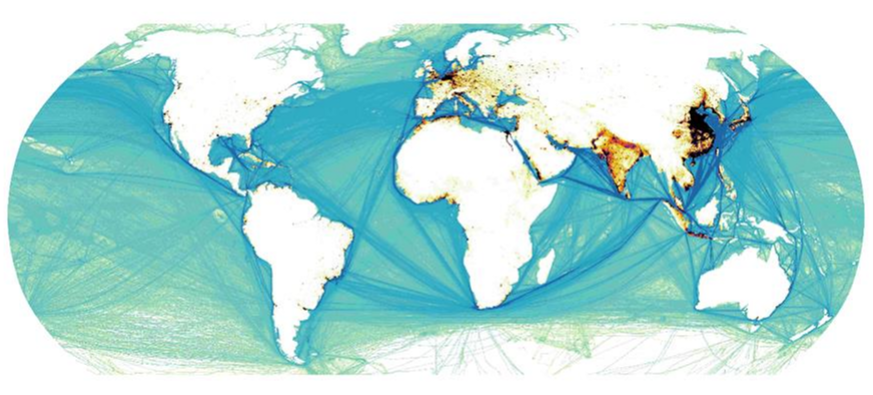
The annual amount of goods loaded has doubled over the past three decades, with over 11 billion metric tons moved by over 105,000 ships. Of that growth, 92% is attributed to dry cargo (carried by bulk carriers, container ships and general cargo ships) (UNCTAD 2024; see also figure I below). This shipping activity occurs across the world's oceans (figure II) and through a complex network of seaports and routes with over 4.6 million port calls in 2023. Those seaport activities accounted for 13% of the global value added of ocean industries and are projected to increase to 16% (exceeding $3 trillion) by 2030 Ref 125. Developing economies dominate international shipping, with Asian seaports accounting for 50% and 30% of goods discharged and loaded, respectively Ref 125.
Figure I Upward trend in the development of international maritime trade as annual goods loaded worldwide (billions of tons) and the world shipping fleet by vessel type (millions of deadweight tons)
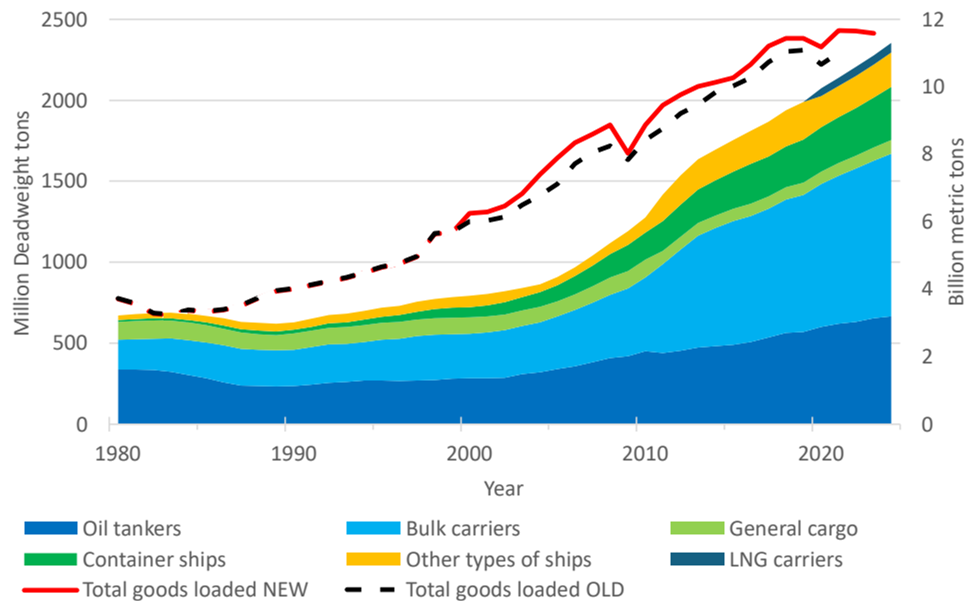
Figure II Emissions over water from world shipping routes and the related human health impacts on land
Environmental pressures from shipping and related port activities include chemical, biological and energy pollution and physical disturbance from anchoring and dredging. Climate change introduces additional pressures by shifting marine habitats at times into shipping lanes and by making possible the opening of new shipping routes in the Arctic. In the second World Ocean Assessment (subsect. 5A, subchap. 3B), it was reported that, while shipping activities continued to increase, there had been fewer shipping accidents leading to reduced oil pollution into seas; in addition, more stringent global or regional regulations to reduce sulfur oxides and nitrogen oxides have led to decreased air pollution in the atmosphere.
In the current Assessment, a comprehensive framework is used to assess the environmental pressures and impacts of shipping and their relevant international regulations (figure III). Besides impacts to natural ecosystems, shipping emissions also impact human health (Sofiev and others, 2018; see also subsect. 5B, chap. 2).
Since the publication of the second World Ocean Assessment in 2021, efforts have continued to enhance the sustainability of the shipping sector. They include the development of international and regional regulations and the advancement of technological solutions such as emissions abatement Ref 58, hybrid sources of renewable energy (e.g. solar, wind, fuel cells), zero and near-zero fuels (e.g. liquefied natural gas, methanol) (Pan, and others, 2021), hull and engine design and life-cycle cost management. Advances have also been made in shipbuilding, an area in which recycling and the promotion of a "circular economy" has taken hold. The Blue Ports Initiative establishes a strategy for seaports to integrate economic efficiency with social responsibility and environmentally friendly practices into port activities, operations and management. Assessments on how the shipping sector may contribute to the sustainable development agenda are presented in the paragraph on Sustainability pathways below.
Regional and international shipping regulations adopted since the publication of the second World Ocean Assessment are presented in part 2 below on Sector-relevant governance.
2. Environmental pressures and the impacts of shipping activities
The positive impacts of shipping are well-known and include economic growth, job creation and new investments in research and development. However, ships have an array of subsystems (see columns in figure III) that exert pressures on the marine environment (see rows in figure III) Ref 60 Ref 117 Ref 136. The present part of the chapter contains a discussion of these pressures in four primary categories: chemical pollution, biological pollution, greenhouse gas emissions and energy pollution (including hydrodynamics, noise and light). Although the focus is on impacts from vessels in the present chapter, it is recognized that additional impacts from seaports are important to consider when it comes to the degradation of coastal areas and soil pollution.
Figure III Pressures from ship activities on the marine environment
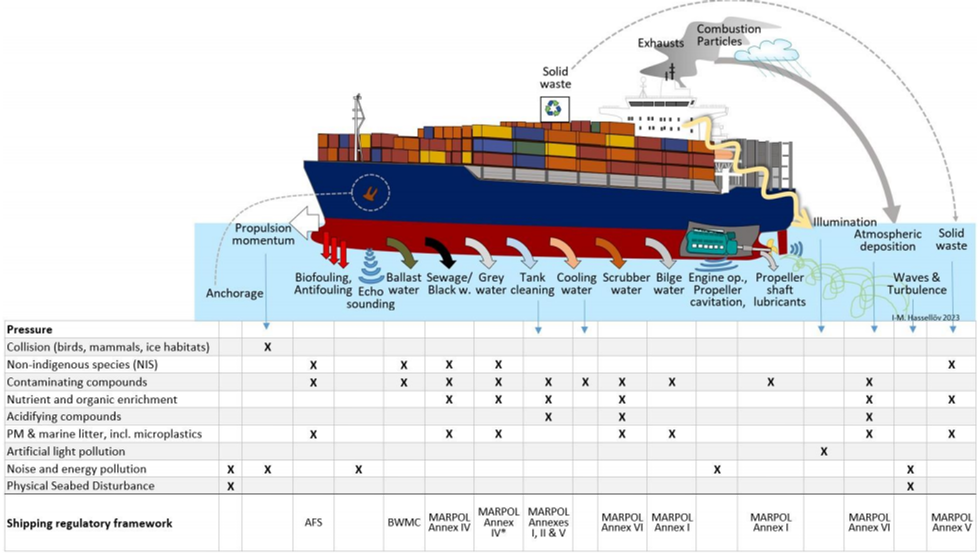
Source: Modified from Jalkanen and others, 2021.
Abbreviations: AFS: International Convention on the Control of Harmful Anti-fouling Systems in Ships; BWMC: International Convention for the Control and Management of Ships' Ballast Water and Sediments, 2004.
; PM, particulate matter.
Note: Grey water is often mixed with sewage, implying that Annex IV, indicated by * in the table, will indirectly apply.
Chemical pollution
Ships continue to emit large amounts of sulfur and nitrogen oxides into the environment, which cause acidification and human health impacts. This has been mitigated in recent years with the use of low-sulfur fuels and pollution-control technologies, although these reductions often come with climate change trade- offs Ref 121 Ref 138. In the case of exhaust gas cleaning systems (scrubbers), another trade-off is increased contaminant load into the marine environment Ref 73. Currently, the approximately 5,000 ships equipped with scrubbers, which allow for the continued use of cheap heavy fuel oil, account for 25% of the global marine bunker fuel consumption and a major share of metals and organic contaminants from shipping Ref 72, in addition to particulate matter entering the marine environment Ref 3 Ref 34.
Ships also leach metals and other chemicals into the marine environment through anti-fouling paint and cooling water where sacrificial anodes are used. Indeed, these are the largest sources of copper and zinc from ships Ref 2. Organotin compounds and cybutryne in ship anti-fouling paints have been prohibited since 2008 and 2023, respectively, by the International Convention on the Control of Harmful Anti-fouling Systems on Ships (Marine Environment Protection Committee (MEPC) 2021c). Tributyltin, despite being banned in 2008 due to slow degradation and previous high pollution levels, is still found at very high levels in many harbours and hot spots throughout Europe, Asia and North and South America Ref 9. Metals and organic contaminants also occur in treated and untreated bilge water and propeller shaft lubricants. For example, in the Baltic Sea, maritime shipping is estimated to be a major contributor of copper (almost 40% of total load when compared to all other sources, such as riverine run-off, atmospheric deposition and point sources on land), vanadium (12%), phenanthrene (9%) and anthracene (8%) Ref 136. Studies have indicated that shipping can be a significant contributor of contaminants in other estuarine and coastal areas with intense ship traffic and limited water exchange Ref 1 Ref 13.
Nitrogen oxides in ship exhausts deposited on the sea surface will, together with nitrogen and phosphorus in ship-generated food waste, untreated sewage and grey water, contribute to eutrophication Ref 111. The resulting excess biomass, together with directly discharged organic matter from food waste and sewage sludge, is deposited on the sea floor, where it can cause oxygen depletion Ref 26 Ref 131.
Plastic litter is recognized as a major environmental problem. Even though dumping of plastic material as waste has been prohibited by the Convention on the Prevention of Marine Pollution by Dumping of Wastes and Other Matter and the 1996 Protocol to the Convention and even though discharge of plastic as garbage is regulated by annex V to MARPOL, shipping and fisheries industries are still recognized as marine sources of plastic litter. Further work to increase the availability and adequacy of port reception facilities for the collection of plastics are vital for tackling this issue; as a result, IMO adopted a marine litter strategy in 2021. There is emerging but inconclusive evidence that anti-fouling paints may be an important source of microplastics in the sea Ref 27. In summary, shipping contributes to cumulative pressure from contaminants, eutrophying and acidifying substances to the marine environment (see sect. 4, chap. 6). Chemical pollution due to shipping also threatens a broad range of human rights, including the rights to a clean, healthy and sustainable environment, life, health, food, water and sanitation, and safe and healthy working conditions (see A/79/163).
Biological pollution
Ships are the primary vector spreading non-indigenous marine species on hulls, in niche areas or in the ballast water of ships (Bailey and others, 2020; see also sect. 4, chap. 6). Ballast water treatment systems use mechanical, physical, chemical, biological or combined treatments Ref 115 and have been regulated by the Ballast Water Management Convention Ref 42 since 2017. Hull biofouling also increases the surface roughness of a ship's hull (i.e. its frictional resistance, shear stress and weight), thereby increasing fuel consumption and, as a result, emissions to maintain the speed profile. Shipping is suggested to have a more pronounced effect on marine invasions than climate-driven environmental changes Ref 114.
Greenhouse gas emissions
Shipping accounts for about 3% of global greenhouse gas emissions, with a projected increase between 90 and 130% of 2008 levels by 2050, following increased maritime trade under a business-as-usual scenario Ref 48. These emissions are considered to contribute significantly to global warming and climate change, causing significant impacts on the environment. A number of technical and economic approaches are being taken to address these emissions, such as the development of a goal-based marine fuel standard regulating the phased reduction of the marine fuel's greenhouse gas intensity and a pricing mechanism for maritime greenhouse gas emissions Ref 91.
One major impact of global warming is the reduction of Arctic sea-ice extent and thickness, which reduces ice albedo and leads to even more global warming and concomitant ice reduction (Intergovernmental Panel on Climate Change (IPCC), 2022). With reduced ice, more ships are expected to travel to the Arctic during certain months of the year Ref 20. Ships navigating in Arctic waters are required to comply with the International Code for Ships Operating in Polar Waters (Polar Code) and related regulations relating to the safety of navigation, the protection of the marine environment and manning and training for seafarers Ref 77. By 2050, polar class 6 and non-ice- class vessels will likely have access to more route options through the North-west passage, the Northern Sea Route and the Transpolar Sea Route Ref 120 Ref 76 Ref 123. The use of Arctic shipping routes will reduce travel time and the consumption of fossil fuels and the associated carbon dioxide (CO2) and other emissions; for example, using the North-West Passage can reduce CO2 emissions by 49% to 78% compared with conventional shipping routes Ref 116. However, other ship emissions, such as black carbon, may create near-term environmental and climate concerns as these Arctic routes are opened Ref 132. Shipping activities in Arctic waters should be carefully managed to protect the Arctic's sensitive marine ecosystem and consider the interests of Indigenous Peoples.
Energy pollution
Energy from ship propulsion can physically affect the marine environment. Depending on water depth, vessel speed and the distance from the ship's course (Huang, and others, 2023), ship-generated waves can account for large portions of the total wave energy in confined waterways and coastal areas, where ships also produce a localized depression in the water that can drive strong currents Ref 22. The waves can cause morphological changes in nearby coastal slopes, damage infrastructures (Grue, 2017; see also sect. 4, chap. 6) and disturb the biodiversity of marine habitats Ref 31. Propeller action is the main source of turbulence, which can extend over considerable distances and contribute to oceanic mixing (Nylundand others, and others, 2023). In methane-rich coastal environments, ship passages can trigger substantial methane emissions from the bottom water to the atmosphere. For example, fluxes of 11.1 mmol per m2 per day or 20 times higher than the surrounding background flux, were reported from the Neva Bay shipping lane Ref 101. Due to the significant impact of the propeller on ship efficiency, extensive research is focused on its optimization.
Ship-generated underwater noise, primarily from the hulls, engines and propellers of ships may interfere with the ability of marine animals (such as whales, sea turtles or fishes) to navigate to preferred habitats to find food and mates, to communicate with each other or to avoid predators Ref 62. While it has been suggested that airborne noise pollution from ships could be reduced by the use of electric motors, which would also improve fuel efficiency, a recent study shows that underwater noise is not reduced from a fully electric ship Ref 4.
Light pollution from ships, an established but incompletely described type of pressure, can lead to the fragmentation or loss of ecosystems and a decline in biodiversity. Artificial light affects species orientation, recruitment and reproduction, predation and communication. It mainly affects the functioning of nocturnal species. Symptoms include confusion and attraction or aversion to light sources Ref 21. In addition, seabirds attracted to artificial light can lose their way, crash into buildings, run out of food, become exhausted or be caught by predators Ref 98. Predicting how fish will react to artificial light is difficult, as their ability to perceive light underwater depends on several variables, including the positioning of the light source in water or above and variation in species-specific response (Marangoni, Davies and others, 2022).
3. Sustainability pathways
Despite the significant environmental impacts of maritime shipping on the global environment discussed above, there are opportunities to find a more sustainable pathway moving forward that is in line with the 2030 Agenda for Sustainable Development. New technologies (such as sewage treatment systems) and operational changes (such as slow steaming and e-navigation) can reduce the amount of contaminants ships emit into the environment. New engine and hull designs can reduce noise pollution, and new advances in ballast water treatment can reduce the likelihood of invasive species transport. However, because of the critical importance of addressing climate change, the present part of the chapter is focused on sustainable pathways related to the decarbonization of the maritime shipping sector.
Decarbonization pathways
Greenhouse gas emissions from ships represent approximately 3% of global anthropogenic greenhouse gas emissions Ref 48, and policymakers and industry are focusing attention on reducing greenhouse gas emissions from international shipping Ref 125. IMO and its member States have taken significant steps in this regard, implementing new policies to reduce greenhouse gas emissions from ships Ref 91. While the long-term effectiveness of these measures is uncertain, member States have adopted an ambitious greenhouse gas strategy that is aimed at reaching net-zero emissions from international shipping by or around 2050. The strategy includes reductions of at least 40% in the carbon intensity of international shipping, that is, the CO2 emissions per transport work Ref 48, by 2030 compared with 2008 Ref 89. These goals are aligned with Sustainable Development Goal 13 on climate change.
The decarbonization of international shipping will require the implementation of a variety of technical, operational, and behavioural changes in the international shipping sector Ref 132 Ref 48 Ref 65. These changes will need to be induced through policy instruments that range from command-and-control directives (such as emissions standards and design indices) to market-based approaches (such as emissions fees or market-based credit systems). Existing policy instruments are focused on the technical and operational aspects of reducing emissions, such as mandating energy efficiency and carbon intensity standards Ref 89. The draft amendments to annex VI MARPOL, the "IMO net-zero framework", is awaiting adoption. Moreover, new technologies are being developed that have the potential to capture and store carbon from ships' exhaust Ref 66. Another key to guiding decarbonization is the transparent measurement, reporting and verification of ship fuel consumption Ref 118 Ref 113. In 2016, IMO launched its data collection system for this purpose Ref 78.
Finally, while the 2006 Stern Review on the Economics of Climate Change estimated that the cost of global inaction on climate change significantly outweighs the expected cost of coordinated global action, the cost of reducing greenhouse gas emissions from the international shipping sector is expected to be substantial and bears a risk of disproportional negative impacts, especially on developing countries, in particular small island developing States and least developed countries. UNCTAD (2023) reports that estimates show that decarbonizing the world's fleet by 2050 could require $8 billion to $28 billion annually" and that "the infrastructure for 100% carbon-neutral fuels could need an even heftier $28 billion to $90 billion each year". If achieved, full decarbonization could double yearly fuel costs, driving the shipping industry to seek finance frameworks to achieve economic, environmental and social sustainability Ref 37. The present part of the chapter is focused on some of the more prominent decarbonization strategies being explored by the sector and contains a discussion of the opportunities and challenges of each strategy, with emphasis on the marine environment.
Zero and near-zero fuels and propulsion technologies
Many promising options exist for the use of zero and near-zero fuels as bunker fuel for ships. These fuels have a lower carbon intensity compared with conventional heavy fuel oil or other diesel-based marine fuels, and therefore could have a lower climate impact when used. The variety of fuels being considered includes methanol, ammonia, hydrogen, electricity and biofuels. The assessment of future fuel mixes is a complex task Ref 66. However, the majority of existing life-cycle assessment studies of marine fuels lack transparent disclosure of the methodological choices and assumptions and lack an uncertainty analysis, which suggests that they cannot provide clear guidance on the potential environmental impacts of marine fuels Ref 112.
Two primary challenges associated with introducing these "clean" fuels into the global shipping sector are cost and access. With respect to cost, as many of these zero and near-zero fuels are priced considerably higher than conventional fuel oils, ship operators must be properly incentivized to spend more for them, either through policy mandates or economic incentives. With respect to access, many of these fuels, including hydrogen and ammonia, have immature landside supply-chain and bunkering infrastructure that may also require extra safety measures. Moreover, it will be challenging to switch vessels to these fuels if there is no guarantee that refuelling options exist across the complex maritime transportation network used by them.
In addition, although many of the zero and near-zero fuels, such as ammonia, show significant promise in terms of reducing greenhouse gas emissions from vessels, there may be considerable greenhouse gas emissions that occur during the extraction, production and transportation of these fuels to bunkering outlets, as well as from unburned hydrocarbons, such as methane, that are emitted when used on board a vessel ("methane slip"). In addition, ammonia is known to be toxic to marine invertebrates, with growth inhibition, oxidative stress and immunological responses being the top three types of acute responses and growth inhibition, nervous system injury and metabolic disorder dominating the chronic responses (Zhang, Li and others, 2023). However, under moderate ammonia stress, ecosystem complexity dampens effects, consistent with previously observed scale-dependent toxicity of ammonia on aquatic organisms Ref 70. Ammonia as a nutrient pollutant is well-known, and any spill in areas sensitive to eutrophication will be detrimental (see sect. 4, chap. 6). Accounting for all these emissions as part of a total fuel-cycle analysis is important Ref 65. Greenhouse gas emissions from fuel extraction (or electricity production) through to end use are called "well-to-wake" emissions, and studies have shown that it is critically important to consider well-to-wake emissions when comparing fuels Ref 134 Ref 97 Ref 112.
Nevertheless, opportunities exist for a variety of zero and near-zero fuels when considering the full well- to-wake greenhouse gas life cycle Ref 15. Most promising are fuels that can be produced sustainably (i.e. through renewable means), as well as those that do not need massive infrastructure investment to be operationalized. Indeed, the order book for new vessels operating on zero and near-zero fuels shows over 400 ocean-going vessels investing in methanol, ammonia and battery-assistance, although it should be noted that these orders represent only a small fraction of the total number of vessels on order (ibid.). Continued assessment is needed to demonstrate how these fuels can be produced sustainably and operate effectively in the maritime sector.
In addition, it is imperative to address the safety issues related to alternative fuels as well as to ensure the necessary training of seafarers.
Operations and logistics
Another set of options for reducing the carbon-intensity of the shipping sector is through modifications in operations and logistics, or how ships are deployed and used in global transport. Three opportunities that are particularly noteworthy are slow steaming, just-in-time arrival and e-navigation systems.
Slow steaming is when vessel speed on the water is adjusted as it moves goods from origin to destination. Since a vessel's fuel usage is exponentially proportional to its speed, slowing vessel speeds can have a dramatic impact on fuel use and emissions. Reducing speeds by 50% can lead to a 70% reduction in fuel use Ref 19. Although slow steaming is promising, it faces challenges as a long-term solution to decarbonization. For example, slow steaming leads to slower delivery times, which needs to be balanced against the general customer tolerance for longer transit times Ref 128; it may even be unacceptable for certain commodities, such as fresh food Ref 23. Slower deliveries without loss of service implies that vessels must be added to the global shipping fleet, which may offset the emissions reductions gains from slow steaming in the first place. In addition, APEC (2019) has highlighted that the complexity of analysis of impacts of slow steaming for the economies of remote islands necessitates further studies to ensure that small island developing States are not negatively affected by, for example, global strategies for slow steaming. Nevertheless, for certain commodities that do not have a best-before date, slow steaming is a viable option for reducing greenhouse gas emissions.
Another existing option for reducing emissions from ships is the concept of "just-in-time arrival". This operational strategy addresses a common problem in the shipping sector, whereby vessels arrive at port but are unable to dock due to congestion, availability or other factors. When faced with such a situation, vessels anchor outside of port, burning fuel - sometimes for days -while they wait for an opportunity to dock. During this period, the on-board subsystems impact the marine environment Ref 6. Just-in-time arrival is designed to address this problem by providing real-time data to vessels under voyage so that they can adjust their routes or speeds according to their ability to dock at a destination port. While economic incentives exist that encourage the use of just-in-time docking, data exchange systems or port community systems must be made more robust for the practice to be taken up more holistically in the shipping sector, especially in small island developing States (World Bank, 2024). However, certain operational and market dynamics can work against just-in-time practices, such as when ships remain at sea to await higher cargo prices or when liquefied natural gas feeder vessels spend substantial time at sea simply to burn off gas to manage tank pressure, without performing any actual transport work Ref 40.
Lastly, an important tool for making informed decisions regarding the safety and efficiency of ship operations is marine weather data, which comes from various sources, such as satellites, buoys, ships and ground stations Ref 99. The maritime industry is undergoing a digital transformation. E-navigation is a key component of smart shipping, as it integrates human engagement with navigational advancements and leverages technological achievements to improve safety and security at sea, enhance berth-to-berth navigation and protect the marine environment.
Ship design and retrofitting
Another approach to decarbonizing global shipping is through ship design and retrofitting. Since the early 2000s, IMO has been working with the shipping industry to improve the efficiency of ship operations. These initiatives have been focused on three primary areas: (a) the Energy Efficiency Design Index, which is an increasingly stringent energy efficiency metric per capacity mile (e.g. per ton-mile) on the basis of ship classification; (b) the Ship Energy Efficiency Management Plan, which is a mechanism for achieving greater efficiency in on-board energy management and includes tools to help to monitor energy use Ref 85; and (c) the Energy Efficiency Existing Ship Index and the carbon intensity indicator rating, which went into force in 2022 and 2023, respectively, with the goal of providing a metric for energy efficiency and carbon emissions for existing ships that must be improved annually.
All three approaches are tools to help shipbuilders and operators find ways to reduce greenhouse gas emissions. These approaches are technology-neutral and do not dictate which energy-efficiency measures or other technologies are required on board a vessel. Instead, they provide guidance and targets to the sector that can be met in a variety of ways. Energy-saving devices, such as wind-assisted propulsion systems, air lubrication systems, waste heat recovery devices and photovoltaic power generation, are all options that ship operators may explore Ref 81.
The costs and benefits of these options are vessel-dependent and sometimes require sophisticated analysis that includes significant uncertainty and validation difficulty due to a lack of full-scale data. For example, recent evidence suggests that modelling uncertainties remain higher than the maximum net benefit typically offered by many energy-saving devices Ref 108 Ref 5 Ref 122. Given the risks involved, ship operators may be reluctant to implement some of these technologies without additional data validation and operational experience at full scale.
Circular economy ship recycling
Another consideration for sustainable pathways beyond decarbonization is how the sector deals with ships at the end of their operational life, in line with the concept of "cradle to grave". By recovering steel, various metals and a wide range of used materials, the need for further extraction of natural resources is minimized. For steel, in particular, which accounts for up to 95% of a ship's weight, recovery through ship recycling can lead to a 70-90% reduction in the ecological footprint and environmental impact, in comparison with the production of ships from iron ores Ref 109. However, as many current recycled ships were built in an era with weaker environmental regulations, they can also contain a variety of hazardous and toxic substances, including asbestos, metals, polychlorinated biphenyls (PCBs), polycyclic aromatic hydrocarbons (PAHs), glass wool and biocide antifouling coatings such as tributyltin. Unsustainable ship recycling operations and waste disposal poses environmental and health risks Ref 25. The sustainability challenges in ship recycling are multidimensional and include corruption to circumvent environmental laws, for example when flags of convenience are used to allow obsolete ships to berth in ship recycling facilities in countries that have not ratified the relevant international conventions. In the global trade fleet, 61% of ships sport such flags, which allows developing countries with less stringent labour and environmental protection legislation to offer scuttling of obsolete ships or to offer long-term low-cost scrapping areasRef 24. Currently, the focus is on the sustainable recycling of ships, minimizing environmental impact and maximizing material recovery (Hiremath and others, 2015; Zhou and others, 2021; see also sect. 3). By taking a holistic approach to the life cycle of a ship, appropriate decisions during the design and construction of a ship (the "design for recycling" concept) and throughout its life cycle can contribute to reducing the environmental impact during the scrapping stage. This is the aim of the Hong Kong International Convention for the Safe and Environmentally Sound Recycling of Ships, 2009, which entered into force at the global level on 26 June 2025.
Ocean observation and monitoring
Effective and resource-efficient monitoring and ecosystem-based management strategies are essential for the conservation of marine ecosystems. Fixed-wing or mobile rotary-wing unmanned aerial vehicle remote sensing platforms can be used to collect multidimensional marine data. These vehicles have been effectively used to monitor the marine environment for tasks such as oil spill detection, marine debris identification, algal bloom observation, carbon stock estimation, dissolved organic carbon (DOC) content detection and total suspended sediment assessment. Data on marine physics, chemistry and biology can be coordinated and collected by underwater gliders equipped with a variety of sensors. Unmanned surface vehicles reach various offshore destinations from the nearest shore. Numerous sensors are carried by them for important monitoring of atmospheric and marine environmental variables Ref 137. With the right sensors, maritime autonomous surface ships can operate autonomously or remotely to continuously measure ocean parameters. Satellite remote sensing platforms can provide physical oceanography-related monitoring, detect oil spills and contribute to the monitoring of biological patterns. FerryBoxes, which are automated surface water monitoring systems that are fitted to ships' through-flow systems and equipped with various sensors, can collect data on physical, chemical and biological ocean parameters (Intergovernmental Ocean Commission (IOC) and the United Nations Educational, Scientific and Cultural Organization (UNESCO), 2024). The Voluntary Observing Ship (VOS) programme (see e.g. https://vos.noaa.gov/) depends on the volunteer participation of crew members and gathers information on weather observations that are valuable for climatologists. Lastly, automatic identification system (AIS) data, originally developed for enhanced navigational safety, are currently essential both for the assessment of environmental pressures with respect to shipping and for relating sensor data collected by ships Ref 12 Ref 99.
4. Social components
With respect to addressing the social elements of sustainable development, two areas are considered below: (a) the conditions of seafarers (including issues of gender and equity) and the broader impacts of the shipping sector on the people who work in it; and (b) the social and human impacts of the shipping sector.
Seafarers
The shipping industry as a whole is facing challenges with respect to the recruitment and retention of seafarers Ref 11. As the shipping industry is predicted to grow, the increasing shortage of seafarers will pose even more challenges in the future Ref 29. It is recognized that shipping is a high-risk occupation with a high incidence of accidents, morbidity and mortality (Slišković, 2015). Despite the fact that mariners' relationship with the sea is important for their identity Ref 32, the physical work environment is also demanding Ref 105. Furthermore, the often harsh operational environments are unpredictable and add more challenges to the work (Ventikos and others, 2018; see also subsect. 5B, chap. 7). Elements of the psychosocial aspects of work have been given more attention through identification of challenges such as isolation, extended time away from family and friends, bullying, sexism, stress and fatigue, all of which have a negative impact on the on-board work environment Ref 61 Ref 63 Ref 141 Ref 124. These are important issues to address to make shipping a more attractive career choice.
There is evidence that seafarers can be treated unfairly. One such example is when seafarers serve on vessels under flags of convenience. The International Transport Workers' Federation (ITF) has found that such crews experience substandard working conditions and low wages and are forced to work under poor safety conditions (Christodoulou-Varotsi, 2012; ITF, 2024; see also subsect. 5B, chap. 5). Over the years, various initiatives have been taken to secure social sustainability in the shipping industry to improve conditions for seafarers. The Maritime Labour Convention, 2006 was thus adopted with the aim of ensuring that seafarers have decent working conditions and job security Ref 41. In addition, IMO and the European Maritime Safety Agency have recognized the challenges that seafarers face, and regard the human element, that is, the complex interplay between people and the systems they work within, as a key element in addressing the social, equity and equality issues related to employment within the industry (IMO, 2006; European Maritime Safety Agency (EMSA), 2023). The Special Rapporteur on the implications for human rights of the environmentally sound management and disposal of hazardous substances and wastes has called for a human rights-based approach to this sector by States and businesses (see A/79/163).
Other interested organizations have identified the importance of well-being and psychological safety of crew on board. The Oil Companies International Marine Forum performs inspections on board tanker vessels to address concerns about substandard operational practices (Oil Companies International Marine Forum (OCIMF), 2024). As of 2024, Forum inspections have included not only technologies but also human factors and various aspects of the work environment of the crew Ref 102.
The shipping industry is facing technological developments that will prove to be disruptive, causing changes to the sociotechnical system. As digitalization and automation are introduced, the way work is done and will be done will further change Ref 74. In preparation for a future with highly automated and autonomous operation of ships, IMO has conducted regulatory scoping exercises relating to ships with various levels of automation Ref 52. New concepts of operations will require significant modifications to the International Convention for the Safety of Life at Sea, 1974 Ref 51 and the International Convention on the Standards of Training, Certification and Watchkeeping for Seafarers Ref 47, and will need to address safe work practices and identify the future competencies required by mariners. Current maritime education and training has been scrutinized for such gaps in the knowledge needed to adequately prepare future navigational officers and marine engineers for roles on automated and remotely controlled vessels Ref 64 Ref 130 Ref 71. Fortunately, the disruptions arising from increased levels of automation should create new opportunities for recruitment and retention of newly trained operators and mariners and should address social inequities in employment in a traditionally male-dominated industry.
Human rights, gender and equity
The maritime sector traditionally has been characterized as male-dominated. Women represent only 1.28% of the worldwide number of seafarers certified under the International Convention on Standards of Training, Certification and Watchkeeping for Seafarers to work as captains, deck officers, chief engineers, engine officers or radio officers (Baltic and International Maritime Council (BIMCO) and International Chamber of Shipping (ICS), 2021; see also subsect. 5B, chap. 6). The majority of women seafarers work in non-technical and non-operational sections such as catering and hotel sections on cruise ships and ferries, to which they are stereotypically considered to be more suited Ref 67. The same trend is observed among women working in ports and shore-based maritime industries, although there are significant variation across countries and regions and between public or private ownership structures (World Maritime University (WMU), 2019; IMO and Women's International Shipping and Trading Association (WISTA), 2021; Kitada, 2022; UNCTAD, 2023).
Impacts on human health
Atmospheric ship emissions such as sulfur and nitrogen oxides, despite occurring over water, undergo chemical changes in the atmosphere and are transported over land (see figure II), where they can have deleterious effects on human health Ref 18 Ref 133. The social impacts of these effects range from work and school days missed to loss of life due to respiratory ailments or other negative health impacts. In addition, as emissions from port activities tend to occur in areas that are heavily populated, often with lower-income populations, issues of environmental justice and equity are also a concern.
Due to the human health and environmental concerns related to sulfur emissions, IMO implemented new low-sulfur fuel standards in 2020 Ref 49. These standards limit the sulfur content of fuels to 0.5% outside of emission control areas and to 0.1% within emission control areas. New low-sulfur fuels and scrubbers are now being used to achieve these low-sulfur emissions goals. The new regulations are expected to have significant beneficial impacts on human health Ref 121; however, unintended trade-offs also exist. By reducing sulfur particles in the atmosphere, the use of low-sulfur fuels indirectly increases global warming (compared with high-sulfur fuels) due to radiative forcing effects Ref 138. Moreover, scrubber technology involves the discharge of effluent into the marine environment that includes toxic contaminants Ref 36.
Sector-relevant governance
The United Nations Convention on the Law of the Sea serves as a constitutive legal framework that addresses all issues relating to the ocean Ref 68, as complemented by previously existing and subsequently developed legal instruments and customary international law, as well as a wide range of non-legally binding instruments (see sect. 3). The development and implementation of laws and regulations on international shipping within this framework are also influenced by laws and regulations on the marine environment, fisheries, biological diversity, climate change, human rights, marine science and technology and global political initiatives including the Sustainable Development Goals. In addressing the triple planetary crisis, shipping laws and regulations will evolve alongside other legal instruments, such as the United Nations Framework Convention on Climate Change (1994) and the Paris Agreement (2015), the Convention on Biological Diversity (and the Kunming-Montreal Global Biodiversity Framework (2022)) and the Agreement under the United Nations Convention on the Law of the Sea on the Conservation and Sustainable Use of Marine Biological Diversity of Areas beyond National Jurisdiction Ref 127.
IMO is the specialized agency within the United Nations system with the global mandate to establish rules and standards for international shipping on the safety, security and protection of the marine environment Ref 46. Special rules and standards have also been adopted by States and regional organizations for certain types of ships and specific regions. Under the auspices of IMO, States have adopted 59 legally binding conventions and nearly 1,000 non-mandatory codes, guidelines and recommendations that they have carefully implemented (Status of IMO Treaties, 2025). There are eight major conventions with protocols and amendments that directly address the issue of marine pollution from ships. The present part of the chapter provides an overview of major developments at IMO regarding environmental regulations on shipping between 2019 and 2024.
MARPOL is the main international convention covering the prevention of pollution by ships from operational and accidental causes. It contains six annexes, targeting pollution from oil, noxious liquid substances in bulk, harmful substances carried in packaged form, sewage, garbage and air pollution, respectively (see part 2 above). Recent amendments have been focused on reducing sulfur content in fuel oil to 0.50% m/m (mass by mass) globally (Marine Environment Protection Committee (MEPC), 2018b), prohibiting the use and carriage of heavy fuel oil for use as fuel by ships in Arctic waters Ref 82 and permitting the establishment of regional reception facilities within Arctic waters (MEPC, 2022b and 2022c). In addition, new emission control areas, covering nitrogen oxides, sulfur oxides and particulate matter, have been designated for the Mediterranean Sea Ref 88, the Canadian Arctic and the Norwegian Sea Ref 93.
To combat greenhouse gas emissions, annex VI of MARPOL has been updated with goal-based technical and operational measures such as the Energy Efficiency Design Index, the Energy Efficiency Existing Ship Index, the Ship Energy Efficiency Management Plan, the data collection system and the carbon intensity indicator rating for ships Ref 50. In 2023, IMO adopted an updated greenhouse gas strategy Ref 91 with new indicative checkpoints for reaching net-zero greenhouse gas emissions by or around 2050. They are targeted for entry into force by 2027, and discussions are continuing regarding the potential adoption of a basket of mid-term measures comprising both a technical element (a goal-based marine fuel standard regulating the phased reduction of the marine fuel's greenhouse gas intensity) and an economic element (based on a maritime greenhouse gas emissions pricing mechanism) following a comprehensive impact assessment process (MEPC, 2023d; MEPC, 2024b (and related document in the introduction of the report); MEPC, 2024c). Further developments include the adoption of guidelines on the life-cycle greenhouse gas intensity of marine fuels and discussions on the development of an IMO life cycle assessment framework and the terms for conducting the fifth IMO greenhouse gas study Ref 95.
The International Convention for the Control and Management of Ships' Ballast Water and Sediments, 2004 entered into force in 2017. It is supplemented by the Code for Approval of Ballast Water Management Systems and amendments relating to the official forms for the International Ballast Water Management Certificate and the Ballast Water Record Book and the use of electronic record books. Under the Convention, there are over 70 type-approved ballast water management systems to prevent harmful organisms from spreading through ballast water Ref 79. To further address the issue of invasive aquatic species, IMO adopted Guidelines for the Control and Management of Ships' Biofouling to minimize their transfer into new marine environments Ref 92. Concerning the prohibition of the use of harmful anti-fouling coatings on ships, IMO has continued to develop and update guidelines under the International Convention on the Control of Harmful Anti-fouling Systems on Ships, including controls on cybutryne Ref 83.
The Hong Kong International Convention for the Safe and Environmentally Sound Recycling of Ships (Hong Kong Convention), which entered into force at the global level on 26 June 2025, regulates all issues around ship recycling, including the handling of environmentally hazardous substances such as asbestos, heavy metals, hydrocarbons, ozone-depleting substances and others. It also addresses concerns about working and environmental conditions in ship recycling facilities.
IMO has adopted and implemented strategies to reduce plastic litter from ships Ref 84 and has approved recommendations for the carriage of plastic pellets by sea in freight containers Ref 96, which address packaging, transport information and stowage of plastic pellets. The topic of plastic litter has also been under consideration by States in the context of the Convention on the Prevention of Marine Pollution by Dumping of Wastes and Other Matter and the 1996 Protocol thereto concerning marine litter and microplastics, and the end-of-life management of fibre-reinforced plastic vessels and alternatives to at-sea disposal .
In order to address underwater noise, IMO adopted the revised Guidelines for the Reduction of Underwater Radiated Noise from Shipping to Address Adverse Impacts on Marine Life Ref 90 and approved an action plan for the reduction of underwater noise from commercial shipping and guidance on the experience-building phase to address barriers to the uptake and implementation of the revised Guidelines Ref 95.
Between 2019 and 2024, all major IMO environmental conventions gained additional ratifications. The largest increase in Parties was to the Ballast Water Management Convention (18), followed by the Anti-fouling Systems Convention (17), the Hong Kong Convention (17) and annex VI to MARPOL (16). The effectiveness of international shipping regulations depends on the ability of States to fulfil their obligations as required by the instruments to which they are Parties. The current legal framework relies heavily on flag State implementation, supplemented by port State control and limited coastal State enforcement measures. IMO has adopted unified procedures to guide port State control inspections Ref 55 and collaborates with 10 port State control regimes operating globally Ref 55. In addition, IMO has developed various mechanisms to assist IMO member States to improve their capabilities and overall performance to fully comply with IMO instruments, including, since 2016, a mandatory IMO member State audit scheme (IMO 2013a and 2013b). As of October 2024, 92 of 176 IMO member States and 3 associate members have been audited Ref 54, and an annual report has been issued summarizing best practices to enhance implementation Ref 51. Between 2016 and 2022, the IMO secretariat issued five anonymous consolidated audit summary reports on a periodic basis containing lessons learned from the audits. The analysis and lessons contained in the consolidated audit summary reports are reviewed by the relevant committees and fed back into the regulatory process of IMO to help to make measurable improvements in the effectiveness of the international regulatory framework for shipping.
References
- Aghito, M., Majamäki, E., Hänninen, R., Lunde Hermansson, A., Hassellöv, I .- M., Ytreberg, E., Kolovoyiannis, V., Zervakis, V., Granberg, M., Moldanová, J., Dagestad, K .- F., Breivik, Ø., Hole, L. R. and Jalkanen, J .- P. (2025). Marine Pollution Bulletin, Projected changes of the emission and transport of organic pollutants and metals from shipping in European seas 2018-2050. 211: 117351. DOI: 10.1016/j.marpolbul.2024.117351.
- Amara, I., W. Miled, R.B. Slama, and N. Ladhari (2018). Antifouling processes and toxicity effects of antifouling paints on marine environment. A review. Environmental Toxicology and Pharmacology, 57: 115-130.
- Anders, L., M. Bauer, S. Jeong, M. Schmidt, H. Hakkim, A. Kalamašņikovs, E.I. Rosewig, J. Schade, R. Irsig, S. Ehlert, J. Bendl, M.R. Saraji-Bozorgzad, B. Giocastro, U. Käfer, U. Etzien, B. Buchholz, T. Adam, M. Sklorz, T. Streibel, H. Czech, J. Passig, and R. Zimmermann (2025). Limited efficiency of wet scrubbers in reducing the environmental impact of ship-emitted particles. Environmental Chemistry Letters, 23(4): 923-929.
- Andersson, C., A.T. Johansson, A. Genell, and J. Winroth (2024). Fully electric ship propulsion reduces airborne noise but not underwater noise. Ocean Engineering, 302: 117616.
- Andersson, J., A. A. Shiri, R. E. Bensow, J. Yixing, W. Chengsheng, Q. Gengyao, G. Deng, P. Queutey, Y. Xing-Kaeding, P. Horn, T. Lücke, H. Kobayashi, K. Ohashi, N. Sakamoto, F. Yang, Y. Gao, B. Windén, M. G. Meyerson, K. J. Maki, S. Turnock, D. Hudson, J. Banks, M. Terziev, T. Tezdogan, F. Vesting, T. Hino and S. Werner (2022). Ship-scale CFD benchmark study of a pre-swirl duct on KVLCC2. Applied Ocean Research, 123: 103134.
- Argüello, G., N. Krabbe, D. Langlet, I .- M. Hassellöv, C. Martinson and A. Helmstad (2022). Regulation of ships at anchor: Safety and environmental implications. Marine Policy, 140: 105052.
- Asia-Pacific Economic Cooperation (APEC) (2019). Analysis of the Impacts of Slow Steaming for Distant Economies. APEC Transportation Working Group. 165 pp. Available at https://www.apec.org/docs/default-source/Publications/2019/12/Analysis-of-the-Impacts-of-Slow- Steaming-for-Distant-Economies/219_TPT_Analysis-of-the-Impacts-of-Slow-Steaming-for-Distant- Economies.pdf.
- Bailey, S.A., L. Brown, M.L. Campbell, J. Canning-Clode, J.T. Carlton, N. Castro, P. Chainho, F.T. Chan, J.C. Creed, A. Curd, J. Darling, P. Fofonoff, B.S. Galil, C.L. Hewitt, G.J. Inglis, I. Keith, N.E. Mandrak, A. Marchini, C.H. Mckenzie, A. Occhipinti-Ambrogi, H. Ojaveer, L.M. Pires-Teixeira, T.B. Robinson, G.M. Ruiz, K. Seaward, E. Schwindt, M.O. Son, T.W. Therriault, and A.B. Zhan (2020). Trends in the detection of aquatic non-indigenous species across global marine, estuarine and freshwater ecosystems: A 50-year perspective. Diversity and Distributions, 26(12): 1780-1797.
- Beyer, J., Y. Song, K.E. Tollefsen, J.A. Berge, L. Tveiten, A. Helland, S. Øxnevad, and M. Schøyen (2022). The ecotoxicology of marine tributyltin (TBT) hotspots: A review. Marine Environmental Research, 179: 105689.
- BIMCO and ICS (2021). Seafarer workforce report: The global supply and demand for seafarers in 2021. The Baltic and International Maritime Council, and the International Chamber of Shipping, 106.
- Caesar, L.D. (2024). Emerging Dynamics of Training, Recruiting and Retaining a Sustainable Maritime Workforce: A Skill Resilience Framework. Sustainability, 16(1): 239.
- Calewaert, J .- B., Sierra-Correa, P.C., de Boer, G., Crosman, K., Kågesten, G., Taconet, M., Busumprah, P.T., Alvarez-Fanjul, E., Shepherd, I., Schaap, D., Hall, S., Zinkann, A .- C., Haddad, T., Jegat, V., Smit, M., Sun, M., Suzuki, T., Visbeck, M., Xingyuan, R., and McMeel, O. (2024). Ocean Decade Vision 2030 White Papers - Challenge 8: Create a Digital Representation of the Ocean. Paris, UNESCO-IOC. (The Ocean Decade Series, 51.8.), 1-58 pp.
- Calgaro, L., Cecchetto, M., Giubilato, E., Jalkanen, J .- P., Majamäki, E., Ytreberg, E., Hassellöv, I .- M., Fridell, E., Semenzin, E., and Marcomini, A. (2025). "The contribution of shipping to the emission of water and air pollutants in the northern Adriatic Sea - current and future scenarios". Marine Pollution Bulletin, Available at 212, 117573. https://doi.org/10.1016/j.marpolbul.2025.117573.
- Carić, H., and P. Mackelworth (2014). Cruise tourism environmental impacts - The perspective from the Adriatic Sea. Ocean & Coastal Management, 102: 350-363.
- Carr, E.W., J.J. Winebrake, S.J. McCabe, M. Elling, and E.H. Green (2024). Ocean-Going Vessel Decarbonization Technology Assessment. Report for Pacific Environment, May. 148 pp.
- Christodoulou-Varotsi, I. (2012). Flag of convenience or not? Challenging the Flag of Convenience Status of EU Registration States: An Introductory Contribution to a Controversial Debate. https://hal.science/hal-03818065v1/document. Neptunus, 18(2): 1-12.
- Corbett, J.J., D.A. Lack, J.J. Winebrake, S. Harder, J.A. Silberman, and M. Gold (2010a). Arctic shipping emissions inventories and future scenarios. Atmos. Chem. Phys., 10(19): 9689-9704.
- Corbett, J.J., C. Wang, J.J. Winebrake, and E. Green (2007). Allocation and forecasting of global ship emissions. Prepared for the Clean Air Task Force and Friends of the Earth International: Boston, MA, USA, 1-27.
- Corbett, J.J., H. Wang, and J.J. Winebrake (2009). The effectiveness and costs of speed reductions on emissions from international shipping. Transportation Research Part D: Transport and Environment, 14(8): 593-598.
- Corbett, J.J., J.J. Winebrake, and E.H. Green (2010). An assessment of technologies for reducing regional short-lived climate forcers emitted by ships with implications for Arctic shipping. Carbon Management, 1(2): 207-225.
- Davies, T.W., J.P. Duffy, J. Bennie, and K.J. Gaston (2014). The nature, extent, and ecological implications of marine light pollution. Frontiers in Ecology and the Environment 12(6): 347-355.
- Dempwolff, L .- C., G. Melling, C. Windt, O. Lojek, T. Martin, I. Holzwarth, H. Bihs, and N. Goseberg (2022). Loads and effects of ship-generated, drawdown waves in confined waterways - A review of current knowledge and methods. Journal of Coastal and Hydraulic Structures, 2: 46.
- Dere, C., B. Zincir, O.B. Inal, and C. Deniz (2022). Investigation of the adverse effects of slow steaming operations for ships. Proceedings of the Institution of Mechanical Engineers, Part M: Journal of Engineering for the Maritime Environment, 236(4): 1069-1081.
- Devault, D.A., B. Beilvert, and P. Winterton (2017). Ship breaking or scuttling? A review of environmental, economic and forensic issues for decision support. Environmental Science and Pollution Research, 24(33): 25741-25774.
- Dey, A., O.A. Ejohwomu, and P.W. Chan (2021). Sustainability challenges and enablers in resource recovery industries: A systematic review of the ship-recycling studies and future directions. Journal of Cleaner Production, 329: 129787.
- Diaz, R.J., and R. Rosenberg (2008). Spreading dead zones and consequences for marine ecosystems. Science, 321(5891): 926-929.
- Dibke, C., M. Fischer, and B.M. Scholz-Böttcher (2021). Microplastic Mass Concentrations and Distribution in German Bight Waters by Pyrolysis-Gas Chromatography-Mass
- Spectrometry/Thermochemolysis Reveal Potential Impact of Marine Coatings: Do Ships Leave Skid Marks? Environmental Science & Technology, 55(4): 2285-2295.
- Drewry (2024). Manning annual review & forecast 2024/25. R. Harris, ed. Publisher; Ferenc Pasztor., 1- 108.
- EMSA (2023). European Maritime Safety Agency. Facts and figures 2023.
- Gabel, F., S. Lorenz, and S. Stoll (2017). Effects of ship-induced waves on aquatic ecosystems. Science of The Total Environment, 601-602: 926-939.
- Glithero, L.D., Bridge, N., Hart, N., Mann-Lang, J., McPhie, R., Paul, K., Peebler, A., Wiener, C., Yen, C., Kelly, R., McRuer, J., Hodgins, D., and Curtin, F. (2024). Ocean Decade Vision 2030 White Papers -
- Challenge 10: Restoring Society's Relationship with the Ocean. Paris, UNESCO-IOC. (The Ocean Decade Series, 51.10.), 1-41 pp.
- Gondikas, A., K. Mattsson, and M. Hassellöv (2025). A new form of hazardous microparticulate contamination to the marine environment from ships using heavy fuel oil with exhaust gas scrubbers - Characterization and implications for fate, transport and ecotoxicity. Science of The Total Environment, 959: 178263.
- Grue, J. (2017). Ship generated mini-tsunamis. Journal of Fluid Mechanics, 816: 142-166.
- Hassellöv, I .- M., M. Koski, K. Broeg, O. Marin-Enriquez, J. Tronczynski, V. Dulière, C. Murray, S. Bailey, J. Redfern, K. de Jong, E. Ponzevera, Maria J. Belzunce-Segarra, C. Mason, Josephine C. Iacarella, B. Lyons, Josean A. Fernandes, and K. Parmentier (2020). ICES Viewpoint background document: Impact from exhaust gas cleaning systems (scrubbers) on the marine environment (Ad hoc). ICES Scientific Reports, 40.
- Haugan, P., Rhodes, A., Hollaway, L., James, P., Abdul Rahman, M., Appiott, J., DeBeauville-Scott, S., Gelcich, S., Gericksky, E., Gonzales-Quiros, R., Harms, E., Heaps, L., Hospes, E., Jeremie, M .- M., Jumbe, A. S., Kostka, W. N., Mokenye, J., Noonan-Birch, R., Park, G., Solis Rivera, V., and Thiele, T. (2024). Ocean Decade Vision 2030 White Papers - Challenge 4: Develop a Sustainable and Equitable Ocean Economy. Paris, UNESCO-IOC. (The Ocean Decade Series, 51.4.), 1-29 pp.
- Hiremath, A.M., A.K. Tilwankar, and S.R. Asolekar (2015). Significant steps in ship recycling vis-a-vis wastes generated in a cluster of yards in Alang: a case study. Journal of Cleaner Production, 87: 520-532.
- Huang, W., S. Li, Y. Lu, R. Zhang, and H. Wang (2023). A new method for predicting the maximum wave height of ship-generated onshore slopes in restricted channel. Frontiers in Marine Science, 10.
- Hörteborn, A., and I .- M. Hassellöv (2023). Economic incentives and technological limitations govern environmental impact of LNG feeder vessels. Journal of Cleaner Production, 429: 139461.
- ILO (2006). International Labour Organization. Maritime Labour Convention,as amended (MLC 2006). Entry into force: 20 August 2013.
- IMO (2004). International Convention for the Control and Management of Ships' Ballast Water and Sediments (BWMC). I. M. Organization. London: 1-43.
- IMO (2006). MSC-MEPC.7/Circ.2 22 May 2006. Strengthening of human element input to the work of IMO, 1 p.
- IMO (2013a). Resolution A.1067(28) Framework and Procedures for the IMO Member State Audit Scheme. Assembly 33th session, Agenda item 9, adopted on 4 December 2013. Pp. 1-45.
- IMO (2013b). Resolution A.1070(28) IMO Instruments Implementation Code (III Code). Adopted on 4 December 2013. Pp. 1-15.
- IMO (2014). Implications of the United Nations Convention on the Law of the Sea for the International Maritime Organization. Study by the Secretariat of the International Maritime Organization (IMO). LEG/MISC.8, 30 January 2014. Pp 1-139. London, International Maritime Organization: 524.
- IMO (2017). International Convention on Standards of Training, Certification and Watchkeeping for Seafarers (STCW) including Manilla Amendments, 2017 Edition.
- IMO (2020a). Fourth IMO GHG Study 2020. Full Report. London, International Maritime Organization: 524.
- IMO (2020b). Sulphur 2020 - cutting sulphur oxide emissions. Retrieved October 30th, 2024, fromhttp://www.imo.org/en/MediaCentre/HotTopics/Pages/Sulphur-2020.aspx.
- IMO. (2024a). Improving the energy efficiency of ships. Accessed 1 October 2024, from https://www.imo.org/en/OurWork/Environment/Pages/Improving%20the%20energy%20efficiency%20of %20ships.aspx.
- IMO (2024b). International Convention for the Safety of Life at Sea (SOLAS) Consolidated edition.
- IMO (2024c). International Maritime Organization. Media Centre. Hot Topics. Autonomous shipping. Retrieved November 18th 2024, from
- https://www.imo.org/en/MediaCentre/HotTopics/Pages/Autonomous-shipping.aspx.
- IMO (2024d). Member State Audit Scheme. Accessed on 1 October 2024, from https://www.imo.org/en/OurWork/MSAS/Pages/Default.aspx.
- IMO (2024e). Resolution A.1185 (33) Procedures for Port State Control. Assembly 33th session, Agenda item 11 and 13, adopted on 6 December 2023.
- IMO (2024f). Status of IMO Treaties. Comprehensive information on the status of multilateral Conventions and instruments in respect of which the International Maritime Organization or its Secretary- General performs depositary or other functions. 592 pp.
- IMO, and WISTA (2021). Women in Maritime Survey 2021. A study of maritime companies and IMO Member States' maritime authorities. International Maritime Organization and Women's International Shipping and Trading Association.
- Inal, O.B., J .- F. Charpentier, and C. Deniz (2022). Hybrid power and propulsion systems for ships: Current status and future challenges. Renewable and Sustainable Energy Reviews, 156: 111965.
- ITF (2024). International Transport Workers' Federation. Flags of convenience. The scourge of maritime. Retrieved November 18th 2024, from https://www.itfglobal.org/en/sector/seafarers/flags-convenience.
- Jalkanen, J.P., L. Johansson, M. Wilewska-Bien, L. Granhag, E. Ytreberg, K.M. Eriksson, D. Yngsell, I .- M. Hassellöv, K. Magnusson, U. Raudsepp, I. Maljutenko, H. Winnes, and J. Moldanova (2021). Modelling of discharges from Baltic Sea shipping. Ocean Science, 17(3): 699-728.
- Jepsen, J.R., Z. Zhao, C. Pekcan, M. Barnett, and W.M.A. van Leeuwen (2017). Risk Factors for Fatigue in Shipping, the Consequences for Seafarers' Health and Options for Preventive Intervention. Maritime Psychology: Research in Organizational & Health Behavior at Sea. M. MacLachlan. Cham, Springer International Publishing, 127-150.
- Jones, N. (2019). Ocean uproar: saving marine life from a barrage of noise. Nature, 568(7751): 158-161.
- Jonglertmontree, W., O. Kaewboonchoo, I. Morioka, and P. Boonyamalik (2022). Mental health problems and their related factors among seafarers: a scoping review. BMC Public Health, 22(1): 282.
- Jurdzinski, M. (2020). "The Need to Update the Navigation Curriculum as a Consequence of Adoption the e-Navigation Model." Transnav-International Journal on Marine Navigation and Safety of Sea Transportation 14(3): 541-544.
- Kanchiralla, F.M., S. Brynolf, E. Malmgren, J. Hansson, and M. Grahn (2022). Life-Cycle Assessment and Costing of Fuels and Propulsion Systems in Future Fossil-Free Shipping. Environmental Science & Technology, 56(17): 12517-12531.
- Kanchiralla, F.M., S. Brynolf, and A. Mjelde (2024). Role of biofuels, electro-fuels, and blue fuels for shipping: environmental and economic life cycle considerations. Energy & Environmental Science, 17(17): 6393-6418.
- Kitada, M. (2022). Gender and Work within the Maritime Sector. Women, Work and Transport. T. Wright, L. Budd and S. Ison, Emerald Publishing Limited. 16: 229-248.
- Koh, T.T.B. (1982). A Constitution for the Oceans, Statements by President Koh at the final session of the Conference at Montego Bay, pp. 1-5.
- LC (2024). LC 45/15. Report of the forty-fifth consultative meeting of contracting parties to the London Conventions & eigtheenth meeting of contracting parties to the London Protocol. Agenda item 17. 2-6 October 2023. IMO, 79 pp.
- Liu, M., Y. Li, H .- Z. Wang, H .- J. Wang, R .- T. Qiao, and E. Jeppesen (2022). Ecosystem complexity explains the scale-dependence of ammonia toxicity on macroinvertebrates. Water Research, 226: 119266.
- Lokuketagoda, G., T. Miwa, S. Jayasinghe Arachchillage, and S. Ranmuthugala (2023). Training engineers for remotely operated ships of the future, University of Tasmania.
- Lunde Hermansson, A., I .- M. Hassellöv, T. Grönholm, J .- P. Jalkanen, E. Fridell, R. Parsmo, J. Hassellöv, and E. Ytreberg (2024). Strong economic incentives of ship scrubbers promoting pollution. Nature Sustainability.
- Lunde Hermansson, A., I .- M. Hassellöv, J. Moldanová, and E. Ytreberg (2021). Comparing emissions of polyaromatic hydrocarbons and metals from marine fuels and scrubbers. Transportation Research Part D: Transport and Environment, 97: 102912.
- Mallam, S.C., S. Nazir, and A. Sharma (2020). The human element in future Maritime Operations - perceived impact of autonomous shipping. Ergonomics, 63(3): 334-345.
- Marangoni, L.F.B., T. Davies, T. Smyth, A. Rodríguez, M. Hamann, C. Duarte, K. Pendoley, J. Berge, E. Maggi, and O. Levy (2022). Impacts of artificial light at night in marine ecosystems-A review. Global Change Biology, 28(18): 5346-5367.
- Melia, N., K. Haines, and E. Hawkins (2016). Sea ice decline and 21st century trans-Arctic shipping routes. Geophysical Research Letters, 43(18): 9720-9728.
- MEPC (2015). MEPC 68/21/Add.1 Annex 10, p 1-55. Resolution MEPC.264(68) (adopted on 15 May 2015) International code for ships operating in polar waters (Polar Code). IMO.
- MEPC (2016). MEPC 70/18/Add.1 Annex 3, p 1-7. Resolution MEPC.278(70) (adopted on 28 October 2016) Amendments to the Annex of the Protocol of 1997 to amend the International Convention for the Prevention of Pollution from Ships, 1973, as modified by the protocol of 1978 relating thereto Amendments to MARPOL Annex VI (Data collection system for fuel oil consumption of ships), IMO.
- MEPC (2018a). Resolution MEPC.300(72). Code for approval of Ballast Water Management Systems (BWMS Code). MEPC 72/17/Add.1 Annex 5. Adopted on 13 April 2018, pp. 1-39. IMO.
- MEPC (2018b). Resolution MEPC.305(73). Amendments to the Annex of the Protocol of 1997 to amend the International Convention for the Prevention of Pollution from Ships, 1973, as modified by the Protocol of 1978 relating thereto Amendments to MARPOL Annex VI (Prohibition on the carriage of non-compliant fuel oil for combustion purposes for propulsion or operation on board a ship). Adopted on 26 October 2018, pp. 1-3. IMO.
- MEPC (2021a). 2021 Guidance on Treatment of Innovative Energy Efficiency Technologies for Calculation and Verification of the Attained EEDI and EEXI. International Maritime Organization. MEPC.1/Circ.896, 31 pp.
- MEPC (2021b). Resolution MEPC.329(76). Amendments to the Annex of the Protocol of 1997 to amend the International Convention for the Prevention of Pollution from Ships, 1973, as modified by the Protocol of 1978 relating thereto Amendments to MARPOL Annex I (Prohibition on the use and carriage for use as fuel of heavy fuel oil by ships in Arctic waters). Adopted on 17 June 2021, pp. 1-2. IMO.
- MEPC (2021c). Resolution MEPC.331(76). Amendments to the International Convention on the control of harmful anti-fouling systems on ships, 2001. Amendments to Annexes 1 and 4. (Controls on cybutryne and form of the International Anti-fouling System Certificate). Adopted on 17 June 2021, pp. 1-4. IMO.
- MEPC (2021d). Resolution MEPC.341(77). Strategy to address marine plastic litter from ships. Adopted on 26 November 2021, pp. 1-9. IMO.
- MEPC (2022a). MEPC 78/17/Add.1 Annex 8, p 1-34. Resolution MEPC.346(78) (adopted on 10 June 2022) 2022 Guidelines for the Development of a Ship Energy Efficiency Management Plan (SEEMP), IMO.
- MEPC (2022b). Resolution MEPC.359(79). Amendments to the Annex of the Protocol of 1997 to amend the International Convention for the Prevention of Pollution from Ships, 1973, as modified by the Protocol of 1978 relating thereto Amendments to MARPOL Annexes I, II and IV (Regional reception facilities within Arctic waters and Form of IOPP Certificate and Supplements). Adopted on 16 December 2022, pp. 1-4. IMO.
- MEPC (2022c). Resolution MEPC.360(79). Amendments to the Annex of the Protocol of 1997 to amend the International Convention for the Prevention of Pollution from Ships, 1973, as modified by the Protocol of 1978 relating thereto Amendments to MARPOL Annexes V (Regional reception facilities within Arctic waters and Garbage Record Book). Adopted on 16 December 2022, pp. 1-2. IMO.
- MEPC (2023a). MEPC 79/15. Report of the Marine Environment Protection Committe on its seventy- ninth session. Agenda item 15. 8 February 2023. Secretariat., IMO, 85 pp.
- MEPC (2023b). MEPC 80/17/Add.1 Annex 15, p 1-17. Resolution MEPC.377(80) (adopted on 7 July 2023) 2023 IMO strategy on reduction of GHG emissions from ships, IMO.
- MEPC (2023c). MEPC.1/Circ.906. Revised Guidelines for the reduction of underwater radiated noise from shipping to address adverse impacts of marine life. 22 August 2023, pp. 1-21. IMO.
- MEPC (2023d). Resolution MEPC.377(80). 2023 IMO Strategy of reduction of GHG emissions from ships. MEPC 80/WP.12. Annex 1. Adopted on 7 July 2023, pp. 1-17. IMO.
- MEPC (2023e). Resolution MEPC.378(80). 2023 Guidelines for the control and management of ships' biofouling to minimize the transfer of invasive aquatic species. MEPC 80/17/Add.1 Annex 17. Adopted on 7 July 2023, pp. 1-62. IMO.
- MEPC (2024a). MEPC 81/16. Report of the Marine Environment Protection Committe on its eigthy-firsth session. Agenda item 16. 8 April 2024. Secretariat., IMO, 82 pp.
- MEPC (2024b). MEPC 82/7/4 Reduction of GHG emissions from ships. Report of the Steering Committee on the comprehensive impact assessment of the basket of candidate GHG reduction mid-term measures (including the outcome of the tenth and eleventh meetings) Note by the Secretariat., IMO.
- MEPC (2024c). MEPC 82/17. Report of the Marine Environment Protection Committe on its eigthy- second session. Agenda item 17. 4 October 2024. Secretariat., IMO, 85 pp.
- MEPC (2024d). MEPC.1/Circ.909. Recommendations for the carriage of plastic pellets by sea in freight containers. 19 April 2024, 1 p., IMO, 82 pp.
- MEPC (2024e). Resolution MEPC.391(81). 2024 Guidelines on Life Cycle GHG intensity of marine fuels (2024 LCA Guidelines) MEPC 81/16/Add.1 Annex 10. Adopted on 22 March 2024, pp. 1-67. IMO.
- Merkel, F.R., and K.L. Johansen (2011). Light-induced bird strikes on vessels in Southwest Greenland. Marine Pollution Bulletin 62(11): 2330-2336.
- Miloslavich, P., O'Callaghan, J., Heslop, E., McConnell, T., Heupel, M., Satterthwaite, E., Lorenzoni, L., Schloss, I., Belbeoch, M., Rome, N., Widdicombe, S., Olalekan Elegbede, I., and Fontela, M. (2024). Ocean Decade Vision 2030 White Papers - Challenge 7: Sustainably Expand the Global Ocean Observing System. Paris, UNESCO-IOC. (The Ocean Decade Series, 51.7.), 1-26 pp.
- Nylund, A.T., I .- M. Hassellöv, A. Tengberg, R. Bensow, G. Broström, M. Hassellöv, and L. Arneborg (2023). Hydrographical implications of ship-induced turbulence in stratified waters, studied through field observations and CFD modelling. Frontiers in Marine Science, 10(1273616): 1-20.
- Nylund, A.T., J. Mellqvist, V. Conde, K. Salo, R. Bensow, L. Arneborg, J .- P. Jalkanen, A. Tengberg, and I .- M. Hassellöv (2025). Coastal methane emissions triggered by ship passages. Communications Earth & Environment, 6(1): 380.
- OCIMF (2021). Oil Companies International Marine Forum. SIRE 2.0 Human Factors Update. Enhanced Human Factors Focus Through SIRE 2.0. Retrieved November 18th 2024, from https://www.ocimf.org/news-and-events/news/bulletins/sire-2-0-human-factors-update.
- OCIMF (2024). Oil Companies International Marine Forum. Ship Inspection Report Programme (SIRE) 2.0. Launched Sept 2nd 2024, from https://www.ocimf.org/programmes/sire-2-0.
- OECD (2025), The Ocean Economy to 2050, OECD Publishing, Paris, Available at https://doi.org/10.1787/a9096fb1-en.
- Oldenburg, M., X. Baur, and C. Schlaich (2010). Occupational Risks and Challenges of Seafaring. Journal of Occupational Health, 52(5): 249-256.
- Ollivier, Pascal; Sahu, Satya Prasad; Saragiotis, Periklis (2024). Port Community Systems : Lessons from Global Experience (English). Washington, D.C .: World Bank Group. Available at http://documents.worldbank.org/curated/en/09909262415203856.
- Pan, P., Y. Sun, C. Yuan, X. Yan, and X. Tang (2021). Research progress on ship power systems integrated with new energy sources: A review." Renewable and Sustainable Energy Reviews, 144: 111048.
- Ponkratov, D. (2017). Proceedings: 2016 Workshop on Ship Scale Hydrodynamic Computer Simulations. Lloyd's Register, Southampton, United Kingdom.
- Rahman, S.M.M., and J. Kim (2020). Circular economy, proximity, and shipbreaking: A material flow and environmental impact analysis.s Journal of Cleaner Production, 259: 120681.
- Rako-Gospić, N., and M. Picciulin (2019). Chapter 20 - Underwater Noise: Sources and Effects on Marine Life. World Seas: An Environmental Evaluation (Second Edition). C. Sheppard, Academic Press: 367-389.
- Raudsepp, U., I. Maljutenko, M. Kouts, L. Granhag, M. Wilewska-Bien, I .- M. Hassellöv, K.M. Eriksson, L. Johansson, J .- P. Jalkanen, M. Karl, V. Matthias, and J. Moldanova (2019). Shipborne nutrient dynamics and impact on the eutrophication in the Baltic Sea. Science of the Total Environment, 671: 189-207.
- Roux, M., C. Lodato, A. Laurent, and T.F. Astrup (2024). A review of life cycle assessment studies of maritime fuels: Critical insights, gaps, and recommendations. Sustainable Production and Consumption 50: 69-86.
- Sabine, C., Robinson, C., Isensee, K., Bastian, L., Batten, S., Bellerby, R., Blasiak., R., Laarissa, S., Lira Loarca, A., McGeachy, C., Mckinley, G., Melbourne Thomas, J., Ortega Cisneros, K., Qiao, F., Samanta, D., Sanders, R., and Sarma, V.V.S.S. (2024). Ocean Decade Vision 2030 White Papers - Challenge 5: Unlock Ocean-Based Solutions to Climate Change. Paris, UNESCO-IOC. (The Ocean Decade Series, 51.5.). 1-28 pp.
- Sardain, A., E. Sardain, and B. Leung (2019). Global forecasts of shipping traffic and biological invasions to 2050. Nature Sustainability 2(4): 274-282.
- Sayinli, B., Y. Dong, Y. Park, A. Bhatnagar, and M. Sillanpää (2022). Recent progress and challenges facing ballast water treatment - A review. Chemosphere, 291: 132776.
- Schøyen, H., and S. Bråthen (2011). The Northern Sea Route versus the Suez Canal: cases from bulk shipping. Journal of Transport Geography, 19(4): 977-983.
- Shu, Y., X. Wang, Z. Huang, L. Song, Z. Fei, L. Gan, Y. Xu, and J. Yin (2022). Estimating spatiotemporal distribution of wastewater generated by ships in coastal areas. Ocean & Coastal Management, 222: 106133.
- Singh, N., J. Finnegan, and K. Levin (2016). MRV 101: Understanding Measurement, Reporting, and Verification of Climate Change Mitigation. Working Paper. Washington D.C .: World Resources Institute.
- Slišković, A.M., and Z. Penezić (2015). Occupational stressors, risks and health in the seafaring population. Annual Review of Psychology, 22: 29-40.
- Smith, L.C., and S.R. Stephenson (2013). New Trans-Arctic shipping routes navigable by midcentury. Proceedings of the National Academy of Sciences of the United States of America, 110(13): E1191- E1195.
- Sofiev, M., J.J. Winebrake, L. Johansson, E.W. Carr, M. Prank, J. Soares, J. Vira, R. Kouznetsov, J .- P. Jalkanen, and J.J. Corbett (2018). Cleaner fuels for ships provide public health benefits with climate tradeoffs. Nature Communications, 9(1): 406.
- Terziev, M., T. Tezdogan, and A. Incecik (2022). Scale effects and full-scale ship hydrodynamics: A review. Ocean Engineering, 245: 110496.
- Theocharis, D., S. Pettit, V.S. Rodrigues, and J. Haider (2018). Arctic shipping: A systematic literature review of comparative studies. Journal of Transport Geography, 69: 112-128.
- Toygar, A., S. Nart, and U. Yıldırım (2023). Work-family conflict and work alienation among seafarers: The mediating role of emotional exhaustion. Marine Policy, 155: 105759.
- UNCTAD (2023). Review of Maritime Transport 2023. Towards a green and just transition. UNCTAD/RMT/2023. New York, United Nations Publications: 157 pp.
- UNCTAD (2024). Review of Maritime Transport 2023. Navigating maritime chokepoints. UNCTAD/RMT/2024. New York, United Nations Publications: 166 pp.
- United Nations (2023). 10. Agreement under the United Nations Convention on the Law of the Sea on the Conservation and Sustainable Use of Marine Biological Diversity of Areas beyond National Jurisdiction. In Chapter XXI Law of the Sea. Adopted 19 June 2023, New York, pp. 1-4.
- Vakili, S., Ballini, F., Schönborn, A., Christodoulou, A., Dalaklis, D., and Ölçer, A. I. (2023). "Assessing the macroeconomic and social impacts of slow steaming in shipping: a literature review on small island developing states and least developed countries". Journal of Shipping and Trade, 8(1), 2. Available at https://doi.org/10.1186/s41072-023-00131-2.
- Ventikos, N.P., A.D. Papanikolaou, K. Louzis, and A. Koimtzoglou (2018). Statistical analysis and critical review of navigational accidents in adverse weather conditions. Ocean Engineering, 163: 502- 517.
- Wang, D., D. Wu, C. Huang, and C. Wu (2020). Marine Autonomous Surface Ship - A Great Challenge to Maritime Education and Training. American Journal of Water Science and Engineering, 6(1): 10-16.
- Wilewska-Bien, M., L. Granhag, and K. Andersson (2016). The nutrient load from food waste generated onboard ships in the Baltic Sea. Marine Pollution Bulletin, 105(1): 359-366.
- Winebrake, J.J., and J.J. Corbett (2010). Improving the Energy Efficiency and Environmental Performance of Goods Movement. Climate and Transportation Solutions: Findings from the 2009 Asilomar Conference on Transportation and Energy Policy. D. Sperling and J. S. Cannon, Institute of Transportation StudiesUniversity of California, Davis: 145-154.
- Winebrake, J.J., J.J. Corbett, E.H. Green, A. Lauer, and V. Eyring (2009). Mitigating the Health Impacts of Pollution from Oceangoing Shipping: An Assessment of Low-Sulfur Fuel Mandates. Environmental Science & Technology, 43(13): 4776-4782.
- Winebrake, J.J., J.J. Corbett, F. Umar, and D. Yuska (2019). Pollution Tradeoffs for Conventional and Natural Gas-Based Marine Fuels. Sustainability, 11(8): 2235.
- WMU (2019). Conference report: Third WMU international women's conference on empowering women in the maritime community. World Maritime University.
- Ytreberg, E., K. Hansson, A.L. Hermansson, R. Parsmo, M. Lagerström, J .- P. Jalkanen, and I .- M. Hassellöv (2022). Metal and PAH loads from ships and boats, relative other sources, in the Baltic Sea. Marine Pollution Bulletin, 182: 113904.
- Yuan, S., Y. Li, F. Bao, H. Xu, Y. Yang, Q. Yan, S. Zhong, H. Yin, J. Xu, Z. Huang, and J. Lin (2023). Marine environmental monitoring with unmanned vehicle platforms: Present applications and future prospects. Science of The Total Environment, 858: 159741.
- Yuan, T., H. Song, L. Oreopoulos, R. Wood, H. Bian, K. Breen, M. Chin, H. Yu, D. Barahona, K. Meyer, and S. Platnick (2024). Abrupt reduction in shipping emission as an inadvertent geoengineering termination shock produces substantial radiative warming. Communications Earth & Environment, 5(1): 281.
- Zhang, T .- X., M .- R. Li, C. Liu, S .- P. Wang, and Z .- G. Yan (2023). A review of the toxic effects of ammonia on invertebrates in aquatic environments. Environmental Pollution, 336: 122374.
- Zhou, Q., Z. Du, J. Liu, J. Liang, and Y. Jiao (2021). Factors influencing green ship recycling: A conceptual framework and modeling. Journal of Cleaner Production, 322: 129155.
- Österman, C., and M. Boström (2022). Workplace bullying and harassment at sea: A structured literature review. Marine Policy, 136: 104910.