
Seamounts and pinnacles
Writing team: Pavanee Annasawmy (coordinating author), Amy R. Baco, Malcom R. Clark, Réka Domokos, Dannielle Eager, Jason M. Hall-Spencer, Astrid Leitner, Ariadna Mecho, Yutaka Michida (lead member), Telmo Morato, Jose Angel Alvarez Perez, Roberto de Pinho (co-lead member), Yeqiang Shu and Junlong Zhang.
Key points
- Increase in:
- Seamount studies using novel and integrated approaches such as environmental DNA, camera systems, human-occupied or remotely operated vehicles, baited remote underwater videos and machine learning.
- Seamount pressures and impacts, including fishing, mining interests, ocean acidification and climate change effects.
- Protection legislation
- While most studies in the global ocean report a seamount effect on the physical oceanographic environment and biological processes, a few found conflicting results when seamounts are studied on a case-by-case basis.
- Despite significant improvements, the understanding of abyssal seamounts, those found within areas beyond national jurisdictions and connectivity of seamount fauna remains limited.
1. Introduction
Seamounts are underwater topographic features that rise at least 1,000 m from the seabed, with small pillar-like features termed pinnacles Ref 44. The number of predicted seamount locations has increased due to heightened interest and technical advances (see figure I; Ref 89 Ref 37).
Figure I Seamount predictions

The present subchapter reviews a non-exhaustive list of advancements in understanding seamount distributions, related physical processes, ecological patterns and pressures, highlighting region-specific changes (supplementary tables 1 through 8 accessible here: https://doi.org/10.13140/RG.2.2.35490.08647). The subchapter does not include detailed scientific definitions or explanations.
2. Description of changes in knowledge since the first World Ocean Assessment
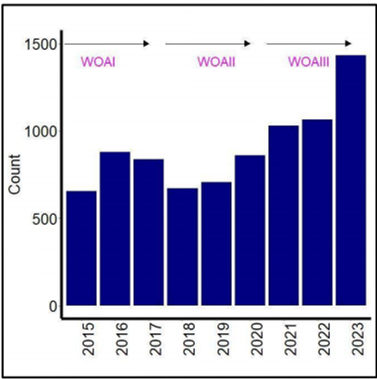
Since the publication of the first World Ocean Assessment, there has been an increase in seamount publications following re-analysis of archived data and recent multi-disciplinary surveys (see figure II), likely driven by increasing interest in exploration, species distribution and ecology for sustainable fisheries and conservation, human impacts and the role of seamounts in the global carbon pump and sink Ref 76.
Figure II Increase in seamount literature since the publication of the first World Ocean Assessment
The following key differences are noted between the second and third World Ocean Assessment (see table).
Table Brief advances in seamount knowledge since the second World Ocean Assessment
| Knowledge baseline (second World Ocean Assessment) | Progress in knowledge (third World Ocean Assessment) |
| Limited seamount sampling | Enhanced sampling via multidisciplinary cruises, novel approaches, autonomous platforms and improved seamount detection algorithms |
| Generalized seamount "ecological paradigms" | Paradigms questioned through case-by-case studies |
| Few region-specific studies noted, especially in the Arctic, Southern and Indian Oceans | Increased research in these regions |
| Climate change effects limited to oxygen concentration decline | Additional effects on trophic connections and species distributions |
| Few working groups limited to the global North on seamount conservation and management | Seamount working group established in the Indian Ocean |
| Limited seamount legislation | Expanding seamount legislation |
3. Region-specific changes
Global studies provided high-resolution habitat suitability models for deep-sea reef-forming hard corals, few soft coral species and thorn/black corals Ref 90 Ref 24 Ref 77.
Region-specific changes are summarized below and described in detail in the supplementary tables.
Arctic
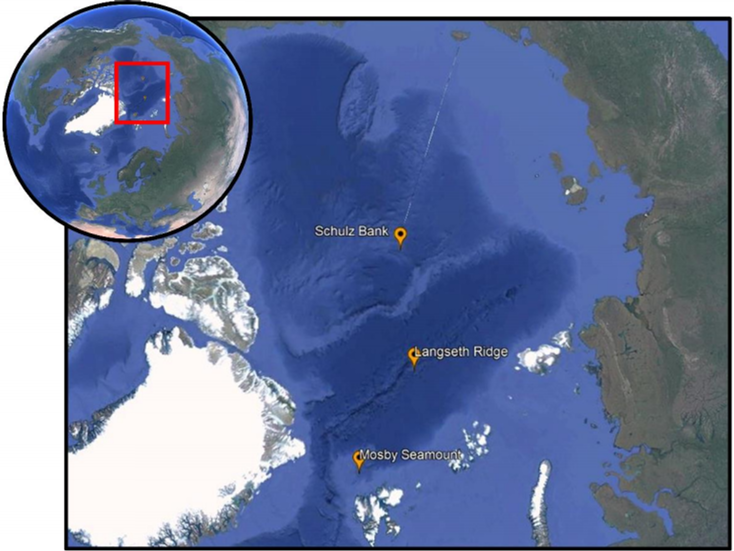
Similar to the reporting period for the second World Ocean Assessment, recent research on Arctic seamounts (see figure III and supplementary table 1) focused on sediments and sponge communities, yielding the following key findings: sponge-dominated communities on the Schulz Bank vary by depth and the type of substrata Ref 53; the sedimentary cover on Mosby seamount dates from the middle Miocene or younger Ref 36; on Langseth Ridge, sponge life is associated with extinct seep life Ref 80 and sponges play a role in pelagic-benthic coupling of microbial communities Ref 56; megafaunal densities and assemblage composition vary between seamounts of the Langseth Ridge Ref 74.
Figure III Location of few Arctic seamounts
South Atlantic and the wider Caribbean
Vulnerable marine ecosystems are groups of species, communities or habitats that may be vulnerable to impacts from fishing activities Ref 34. Areas hosting certain categories of organisms that may be classified as indicator species, such as seamounts, may be considered vulnerable marine ecosystems with subsequent management measures such as designations of marine protected areas (MPAs) to conserve those ecosystem attributes Ref 85 Ref 79. Deep-sea corals and sponges act as indicator species for vulnerable marine ecosystems Ref 86.
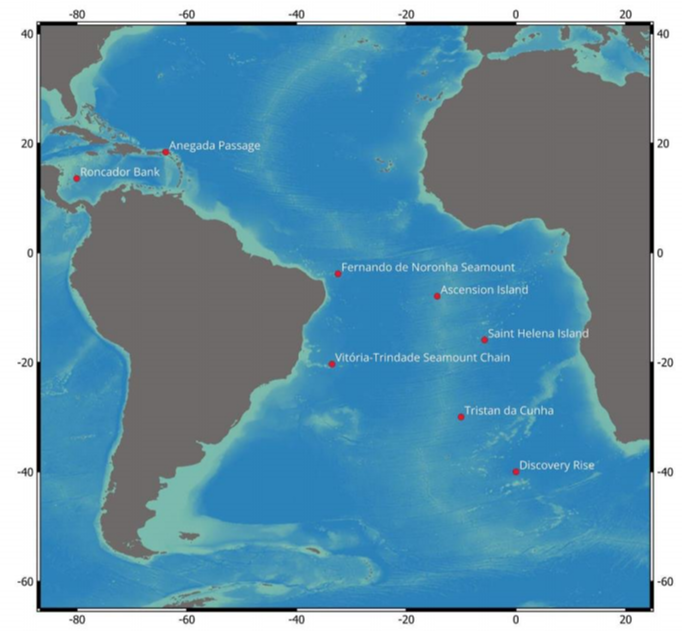
Seamounts of the Discovery rise were explored by an international effort to map vulnerable marine ecosystems (see figure IV and supplementary table 2). Cold-water coral communities (scleractinians and gorgonians), 36 fish morphotypes (Laemonema sp., Guttigadus sp.) and 13 cephalopod flank/summit residents, classified in five morphotypes (Moreteuthopsid ingens, Histioteuthis cf. atlantica, Opisthoteuthis cf. agassizii) were uncovered. These records supported the maintenance of fishing closure areas within the South East Atlantic Fisheries Organisation Convention Area Ref 61.
Genetic connectivity of seamount populations of Bluenose Warehou (Hyperoglyphe antarctica) was reported between 4 seamounts within the Tristan da Cunha exclusive economic zone (EEZ) Ref 40. Latitude and depth were drivers of benthic assemblage composition, differentiating the 13 tropical and temperate seamounts and oceanic islands of Ascension, Saint Helena and Tristan da Cunha Ref 16. Seamounts were hotspots for fishes living below 200 m depth and micronekton (crustaceans, fishes and cephalopods of 2 to 20 cm in size) over summits less than 200 m Ref 17. Vulnerable marine ecosystems were described and protected within the boundaries of MPAs established in the Tristan da Cunha EEZ.
The Fernando de Noronha and the Vitória-Trindade seamount chains and underlying currents drive the genetic diversity of Octopus insularis Ref 49.
Further research showed species connectivity between seamounts of the Fernando de Noronha Ridge Ref 78, seismic activities at Roncador bank Ref 42 and factors influencing coral assemblage and communities at Anegada passage Ref 62 Ref 9.
Figure IV Location of South Atlantic seamounts, islands and other features
North Atlantic
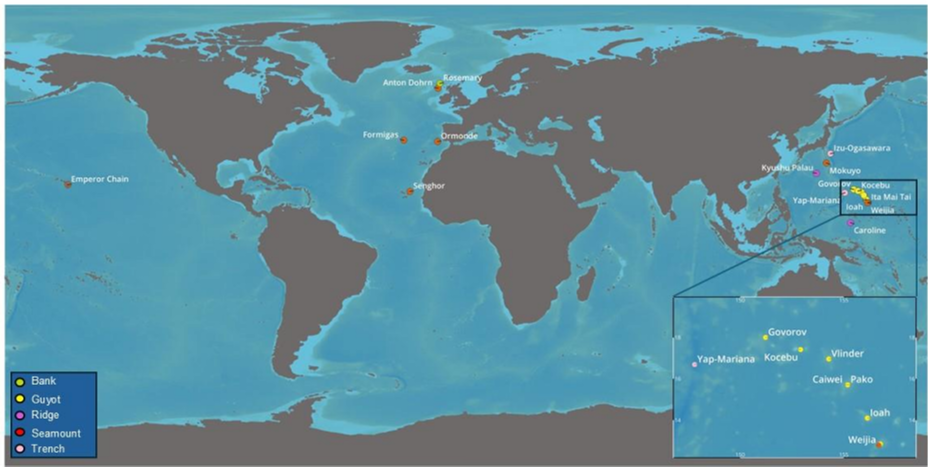
North Atlantic seamounts (see figure V and supplementary table 3) were investigated during recent expeditions by Germany and the United States of America and. A science-based and participatory process shepherded by the regional government led to the creation of the largest MPA network (Azores Marine Protected Area Network; 287 000 km2) in Europe, 15% designated as fully protected and 15% as highly protected. Positive effects of the Azores MPA archipelago were observed on resident, large-bodied fishes and higher fish abundance in deeper habitats Ref 2. The dynamic interactions between hydrology and seamount topography support enhanced food supply and presence of vulnerable marine ecosystems taxa at Cabo Verde seamounts Ref 79. Internal waves influenced local hydrology, potentially driving food and nutrient supply and contributing to larval fish aggregations and higher trophic level predators at Senghor seamount Ref 27 Ref 54, coral larvae dispersal at Rosemary seamount Ref 73 and supported benthic communities at Ormonde and Formigas seamount Ref 57.
Figure V Location of North Atlantic and Pacific bathymetric features
North Pacific
North West, Central and North East Pacific seamounts and pinnacles (see figure V) remain the most studied ones in the world's ocean. Recent studies by Canada, China, the Russian Federation and the United States of America and the use of autonomous and mobile technologies (useful for providing longer time series, allowing the mapping of seafloor habitats, greater sampling collection and refined observations through real-time video footage), as well as machine learning (enhancing data processing and analyses), have enhanced the understanding of the formation and evolution, biodiversity and taxonomy, biogeochemistry, seamount effect on the physical oceanographic environment (e.g. presence of anticyclonic caps, Taylor columns, internal waves) impacting all trophic levels, from microbes to megafauna and ecosystem research and management of these seamounts Ref 14 Ref 11 Ref 30 Ref 52 Ref 51 Ref 44 Ref 45 Ref 46 Ref 72 Ref 82 (supplementary table 4). Time-series of the Mokuyo, Izu-Ogasawara Arc have shown shifts in vent communities Ref 19.
Ecologically or biologically significant marine areas are areas that hold special importance in terms of their ecological and biological characteristics (e.g. by providing essential habitats, food sources or breeding grounds for particular species). Seamounts of the northwest Pacific in areas beyond national jurisdictions qualify as ecologically or biologically significant marine areas amid existing or anticipated pressures linked to potential seabed mining and climate change Ref 31.
The 2024 Seamount Science Summit - Ecological Insights Workshop gathered 26 experts who provided key recommendations for managing seamounts as vulnerable marine ecosystems under United Nations General Assembly resolution 59/25. To date, only the Northwest Atlantic Fisheries Organization has fully implemented these recommendations, designating all seamounts within its regulatory area as vulnerable marine ecosystems and prohibiting bottom-contact fishing Ref 58.
South East and West Pacific
Underexplored seamounts in the South-East Pacific basin (see figure VI) are concentrated along three major ridges: the Salas y Gómez, Nazca and Juan Fernández, hosting more than 144 seamounts, 51 of which lie within the EEZ of Chile, with summits ranging from 0 to 2000 m deep.
Figure VI South-East Pacific basin
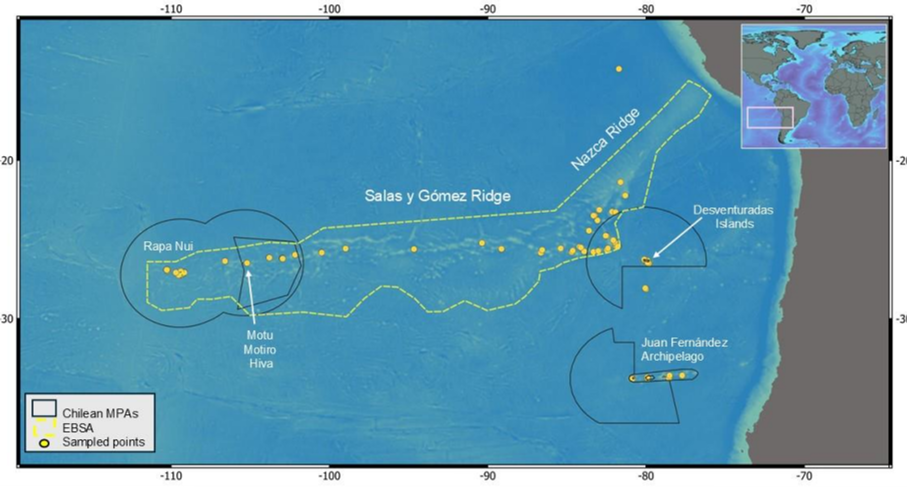
Recent expeditions by the Schmidt Ocean Institute (SOI, USA), the Japan Agency for Marine-Earth Science and Technology and the Center for Ecology and Sustainable Management of Oceanic Islands (ESMOI, Chile) surveyed 32 seamounts and discovered more than 34 uncharted ones. Southeast Pacific seamounts are recognized as biodiversity hotspots, featuring 150 new species from the SOI 2024 cruises, including habitat-forming, endemic species and pristine ecosystems, earning recognition as ecologically or biologically significant marine areas. High ecological connectivity prevails in the region, supporting the resilience of marine populations across the Pacific.
Chile has established large-scale MPAs, covering the Rapa Nui and Desventuradas ecoregions. Peru has created a MPA located in the eastern Nazca Ridge. Over 73% of the ridges and associated seamounts still lie in areas beyond national jurisdictions, vulnerable to human activities (i.e. fishing, potential deep-sea mining, floating plastic debris and microplastics). International stakeholders are working to establish the first "blue corridor" to protect and ensure the long-term health of biodiversity Ref 81 Ref 26 Ref 15 Ref 18 Ref 35.
In the South-West Pacific Ocean, recent research efforts shed light on benthic communities, megafauna and biophysical coupling on seamounts off New Caledonia (supplementary table 5). In New Zealand, an updated database now includes nearly 3000 features.
Indian Ocean
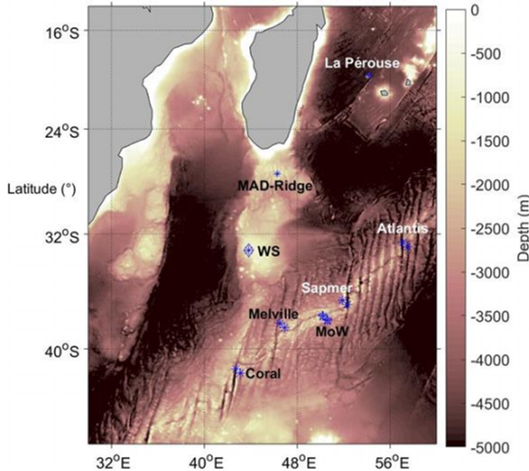
The pelagic diversity, taxonomy, distribution, migration, ecotoxicology, trophic and biophysical interactions, connectivity and observations of physical phenomena along the South-West Indian Ridge, Sandes, La Pérouse, MAD-Ridge and Walters Shoal seamounts have been investigated since 2016 with French, German, British and Norwegian research efforts (see figures VII and VIII; Ref 6 Ref 4 Ref 43 Ref 48 Ref 63 Ref 69 Ref 7 Ref 7 Ref 41 Ref 47 Ref 5 Ref 20 Ref 39 Ref 50 Ref 59 Ref 64 Ref 66 Ref 89 Ref 28 Ref 28 Ref 75 Ref 91 Ref 32 Ref 60 Ref 65) (supplementary table 6).
Figure VII Indian Ocean seamounts and marine protected areas
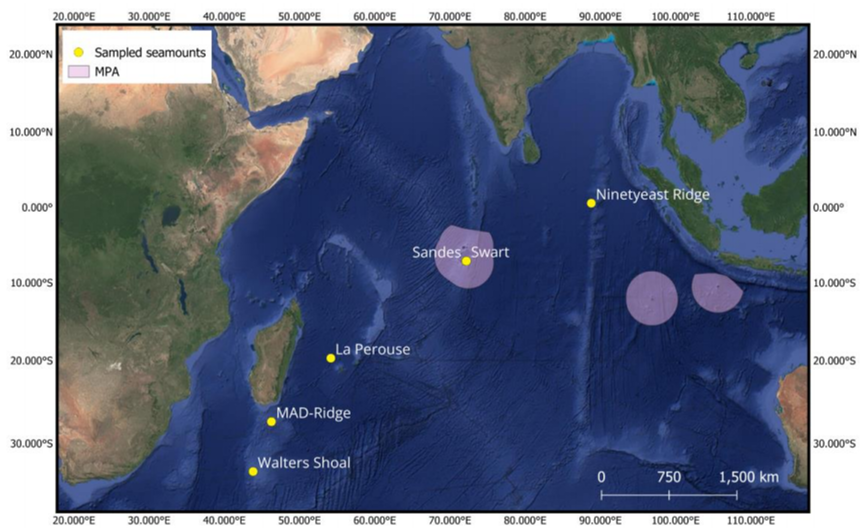
Figure VIII South-West Indian Ocean seamounts
Several seamount paradigms were questioned:
(a) The seamount oasis effect was observed on some South-West Indian Ridge seamounts and for specific taxa but was not widespread across Indian Ocean seamounts.
(b) Lack of Taylor cap formation (trapped/enclosed circulations over seamount summits) under intense mesoscale eddies (rotating cyclonic or anticyclonic water masses) and over shallow seamounts.
(c) Seamounts are not hotspots of micronekton diversity and densities Ref 5 Ref 7 Ref 50.
The lanternfish Diaphus suborbitalis, which is a key trophic link between plankton and top predators and which contributes to the biological carbon pump by transporting carbon from the surface to deeper waters through diel vertical migration, has been observed exclusively at seamounts to date and not in open ocean waters Ref 4 Ref 3 Ref 7 Ref 20. Seamounts are distinct topographic barriers in the ocean, affecting the trophic connections between micronekton, which feed on zooplankton and which migrate from deeper waters to the top 200 m at night and those which do not migrate Ref 4.
The habitat preferences of key marine organisms at seamounts of the Indian Ocean are significant in the context of ecosystem health and potential conservation measures in the face of anthropogenic threats such as fishing and plastic pollution Ref 7. In 2022, the Western Indian Ocean National or International Seamounts, banks, submarine structures network was launched, gathering regional researchers, students, policy makers and institutions interested in marine ecosystems' functioning, their exploitation, conservation and governance associated with seamounts and shallow topographic structures in national waters, continental shelves as well as in the high seas of the Western Indian Ocean.
Southern Ocean
A number of seamounts and ridges of the Southern Ocean have been sampled in recent years (supplementary table 7). The interaction of the Antarctic Circumpolar Current (ocean current flowing from west to east around Antarctica) with seamounts generates upward movements, facilitating iron injection, hence fuelling productivity which attracts megafauna Ref 71. Significant research has been made on sedimentary cover at Jiawang seamount, contributing to understanding the formation process of seafloor deposits Ref 25. The first observation of thermophilic and hyperthermophilic microorganisms, important for biogeochemical processes such as iron oxide deposition Ref 33, were made at Orca seamount Ref 67. Seamounts and ridges of the Ross Sea have also been surveyed.
4. Pressures
Seamounts of the global ocean are under intensive fishing pressures (Ref 13 Ref 12 Ref 10; Morgan and Baco, 2021), plastic contamination affecting marine life and ocean acidification (see supplementary table 8 for seamount locations). Mining exploration contracts are increasingly being issued in the global ocean which coincides with vulnerable marine ecosystems and conservation priority areas Ref 68.
Potential mining of cobalt-rich crusts represents an important pressure facing seamounts in the coming years. Habitat removal and sediment plume effects are the top risk sources likely to affect community structure, biodiversity, reproductive capacity, trophic ecology, behaviour and population connectivity of seamount benthic, benthopelagic and pelagic communities. Seamount communities are highly vulnerable with possible impacts across ecological scales, from species to the entire community. Recovery times are estimated to be over 100 years and the scale of impact is estimated between 1 km2 and 10,000 km2 Ref 83. The one existing study to date of impacts from a seamount mining test has found significant, sustained decreases in the density of mobile epifauna and highly mobile swimmers that persisted both one month and one year after the disturbance in addition to dead and damaged sessile benthic megafauna that were crushed or removed by the excavator Ref 84.
The first comprehensive study of Indian Ocean seamounts has demonstrated the effects of a warmer ocean causing lower productivity levels, lower trophic values of pelagic organisms and potential shifts in food web structure Ref 4. A decrease of 28% to 100% in suitable habitats, including seamounts, for cold-water coral species of the North Atlantic has been forecasted due to climate change Ref 55.
Time series surveys off New Zealand and Tasmania highlighted the role of untrawled patches and unfished seamounts in post-fishing recruitment, with observations on Graveyard Knoll indicating the first signs of stony coral recovery 15 to 20 years after fishing ceased Ref 87 Ref 23 Ref 21. A 2022 survey by the National Institute of Water and Atmospheric Research following the Hunga Tonga-Hunga Ha'apai volcanic eruption in Tonga revealed benthic devastation from pyroclastic flows, except where the seamount features provided shelter for communities which were unaffected Ref 70.
5. Key remaining knowledge and capacity gaps and new gaps
Despite significant progress, key knowledge and geographical gaps remain about seamount ecology, bathyal ecosystems, seamount functioning, recruitment and connectivity within and between seamount communities, anthropogenic pressures (linked to pollution, fishing, ocean warming, expansion of oxygen minimum zones) and management in areas beyond national jurisdiction and seamounts of the Arctic, Southern and Indian Oceans. Lack of global time series data introduces uncertainties in seamount observations, assumptions and conclusions. The knowledge gaps on seamount crusts are substantial and the lack of experimental data makes assessing the environmental risks of potential deep-sea mining of seamounts challenging. The effect of multiple stressors on seamount disturbance and effectiveness of management actions still remain to be assessed. Although data and observations are increasingly findable, accessible, interoperable and reusable, several years of embargo are generally placed on collected data, thereby reducing scientific progress and collaborations. Local, traditional and Indigenous knowledge is still not taken into account in seamount research from many regions of the world's ocean.
6. Outlook
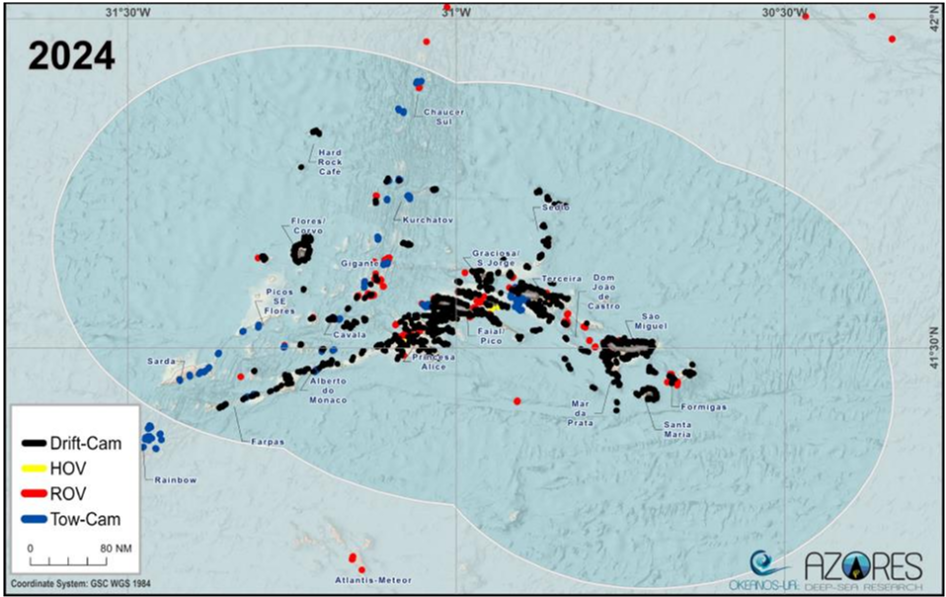
Individual seamounts exhibit unique characteristics that influence biophysical processes and seamounts are interconnected to each other. Seamounts are facing significant and increasing anthropogenic pressures, making further study of these complex ecosystems a high priority. Integrating artificial intelligence into advanced technologies that monitor deep-sea seamount ecosystems on longer time scales is crucial, as limited research on seamount fauna hinders understanding their biogeography. Further exploration and data collection are needed for seamount detection, assessment and protection. Initiatives such as the scientist ashore programme implemented during the 2024 NA161-169 expeditions of North Pacific seamounts by the National Oceanic and Atmospheric Administration ocean exploration via the Ocean Exploration Cooperative Institute with more than 800 ship-to-shore participants, over 55,000 live stream views, over 1 million social medial views, with full data access, facilitate global collaboration and will significantly build scientific and management capacity. While it is premature to fully assess the impacts of such initiatives, they are expected to enhance seamount research by accelerating discoveries, refining habitat models, increasing public engagement and providing insights into seamount ecosystems that may inform future management strategies. Cost-effective deep-sea research enhances large spatial-scale biodiversity data observation at seamounts (see figure IX; Ref 3). A more holistic view of seamount ecosystems, local, traditional and Indigenous knowledge must be taken into account.
Figure IX Seamount observations in the Azores (North Atlantic) using cost-effective technologies (drift-cameras and tow-cameras, human-operated vehicles, remotely-operated vehicles
References
- Adrianov, A.V., and Maiorova, A.S. (2024). The first Mud Dragons (Kinorhyncha) from the Emperor Seamount Chain (Northwestern Pacific) with notes on their biogeography and distribution patterns in the Pacific Deep-Sea. Deep Sea Research Part II: Topical Studies in Oceanography, 105430. https://doi.org/10.1016/j.dsr2.2024.105430.
- Afonso, P., Schmiing, M., Fontes, J., Tempera, F., Morato, T., and Santos, R.S. (2018). Effects of marine protected areas on coastal fishes across the Azores archipelago, mid-North Atlantic. Journal of Sea Research, 138, 34-47.
- Annasawmy, P., G. Chandelier, and T. Le Mézo (2025). Unraveling major questions in micronekton ecology and their role in the biological carbon pump through integrative approaches and autonomous monitoring. In Frontiers in Ocean Observing: Marine Protected Areas, Western Boundary Currents, and the Deep Sea. E.S. Kappel, V. Cullen, G. Coward, I.C.A. da Silveira, C. Edwards, P. Heimbach, T. Morris, H. Pillar, M. Roughan, and J. Wilkin, eds. Oceanography 38(Supplement 1). https://doi.org/10.5670/oceanog.2025e118.
- Annasawmy, P., Ménard, F., Marsac, F., Ternon, J-F., Cherel, Y., Romanov, E., Le Loc'h, F. (2024). Environmental variability shapes trophic and resource partitioning between epipelagic and mesopelagic biomes in oceanic provinces: Implications in a globally changing ocean, Progress in Oceanography, 229: 103339. https://doi.org/10.1016/j.pocean.2024.103339.
- Annasawmy, P., Ternon, J-F., Lebourges-Dhaussy, A., Roudaut, G., Herbette, S., Ménard, F., Cotel., P., Marsac, F. (2020a). Micronekton distribution as influenced by mesoscale eddies, Madagascar shelf and shallow seamounts in the south-western Indian Ocean: an acoustic approach. Deep-Sea Res. II. https://doi.org/10.1016/j.dsr2.2020.104812.
- Annasawmy, P., Cherel, Y., Romanov, E.V., Le Loch, F., Ménard, F., Ternon, J-F., Marsac, F. (2020b). Stable isotope patterns of micronekton at two shallow seamounts of the south-western Indian Ocean. Deep-Sea Res. II. https://doi.org/10.1016/j.dsr2.2020.104804.
- Annasawmy, P., Ternon, J-F., Cotel, P., Demarcq, H., Cherel, Y, Romanov, E.V., Roudaut, G., Lebourges- Dhaussy, A., Ménard, F., Marsac, F. (2019). Micronekton distribution and assemblages at two shallow seamounts in the south-western Indian Ocean: Insights from acoustics and mesopelagic trawl data. Prog. Oceanogr. 178: 102161. https://doi.org/10.1016/j.pocean.2019.102161.
- Annasawmy, P. (2019). Patterns among micronekton communities in relation to the environmental conditions at two shalow seamounts in the south-western Indian Ocean. Thesis. University of Cape Town (South Africa) and Université de Montpellier. Available at https://theses.fr/2019MONTG087.
- Auscavitch, S.R., Lunden, J.J., Barkman, A., Quattrini, A.M., Demopoulos, A.W., and Cordes, E.E. (2020). Distribution of deep-water scleractinian and stylasterid corals across abiotic environmental gradients on three seamounts in the Anegada Passage. PeerJ, 8, e9523. https://doi.org/10.7717/peerj.9523.
- Baco, A.R., Morgan, N.B., Roark, E.B., Biede, V. (2023a). Bottom contact fisheries disturbance and signs of recovery of precious corals in the Northwestern Hawaiian Islands and Emperor Seamount Chain. Ecological Indicators. 148: 110010. https://doi.org/10.1016/j.ecolind.2023.110010.
- Baco, A.R., Parrish, F.A., Auscavitch, S. (2023b). Deep-Sea Corals of the North and Central Pacific Seamounts. In: Cordes, E., Mienis, F., eds., Cold-Water Coral Reefs of the World. Coral Reefs of the World, 19. Springer, Cham. https://doi.org/10.1007/978-3-031-40897-7-10.
- Baco, A.R., Morgan, N. B., and E. B. Roark (2020). Observations of Vulnerable Marine Ecosystems and Significant Adverse Impacts on High Seas Seamounts of the Northwestern Hawaiian Islands and Emperor Seamount Chain. Marine Policy. 115: 103834. https://doi.org/10.1016/j.marpol.2020.103834.
- Baco, A.R., E. B Roark, Morgan. N.B. (2019). Amid Fields of Rubble, Scars, and Lost Gear, Signs of Recovery Observed on Seamounts on 30-40 year Time Scales. Science Advances. 5: eaaw4513. DOI: 10.1126/sciadv.aaw4513.
- Baco, A.R., N.B. Morgan, E.B. Roark, M. Silva, K. Shamberger, K. Miller (2017). Defying dissolution, discovery of deep-sea scleractinian coral reefs in the North Pacific. Scientific Reports. 7: 5436. DOI:10.1038/s41598-017-05492-w.
- Boteler, Ben, and others (2022). Borderless conservation: Integrating connectivity into high seas conservation efforts for the Salas y Gómez and Nazca ridges. Frontiers in Marine Science, 9: 915983. https://doi.org/10.3389/fmars.2022.915983.
- Bridges, A.E.H., Barnes, D.K.A., Bell, J.B., and others (2021). Benthic Assemblage Composition of South Atlantic Seamounts. Frontiers in Marine Science, 8, 660648. https://doi.org/10.3389/fmars.2021.660648.
- Campanella, F., Collins, M.A., Young, E.F., Laptikhovsky, V., Whomersley, P., and van der Kooij, J. (2021). First Insight of Mesoand Bentho-Pelagic Fish Dynamics Around Remote Seamounts in the South Atlantic Ocean. Front. Mar. Sci., 8:663278. doi: 10.3389/fmars.2021.663278.
- Chavez-Molina, Vasco, and others (2023). Protecting the Salas y Gomez and Nazca Ridges: A review of policy pathways for creating conservation measures in the international waters of the Southeast Pacific. Marine Policy, 152: 105594. https://doi.org/10.1016/j.marpol.2023.105594.
- Chen, C., Methou, P., Yamamoto, D., Kayamori, M., Nomaki, H. (2024). There and there again: Hydrothermal vent communities at Mokuyo Seamount, 30 years apart. Ecological Research. https://doi.org/10.1111/1440-1703.12528.
- Cherel, Y., Romanov, E.V., Annasawmy, P., Thibault, D., Ménard, F. (2020). Micronektonic fish species over three seamounts in the southwestern Indian Ocean. Deep-Sea Res. II. https://doi.org/10.1016/j.dsr2.2020.104777.
- Clark, M.R., Bowden, D.A., Stewart, R., Rowden, A.A., Goode, S. (2022a). Seamount recovery: analysis of 20 years of time series seafloor image data from the Graveyard Knolls, Chatham Rise, New Zealand. New Zealand Aquatic Environment and Biodiversity Report No. 292. 25 p.
- Clark, M.R., Wood, B., Mackay, K., Anderson, O.F., Hart, A., Rickard, G., Rowden, A.A. (2022b). Underwater Topographic Features in the New Zealand region: development of an updated 'SEAMOUNT' database and information on the extent and intensity of deep-sea trawl fisheries on them. New Zealand Aquatic Environment and Biodiversity Report No. 291. 28 p.
- Clark, M.R., Bowden, D.A., Stewart, R., Schnabel, K., Quinn, W., Lennard, B., Goode, S.L., Davis, A. (2021). Seamount Recovery: factual voyage report of a survey of seamounts on the Northwest and Southeast Chatham Rise (TAN2009). New Zealand Aquatic Environment and Biodiversity Report No. 262. 117 р.
- Cordes, E., Mienis, F., Gasbarro, R., Davies, A., Baco, A.R., Bernardino, A.F., Clark, M., Freiwald, A., Hennige, S., Huvenne, V., Buhl-Mortensen, P., Orejas, C., Quattrini, A.M., Tracey, D., Wheeler, A.J., Wienberg, C. (2023). Ch. 1. A Global View of the Cold-Water Coral Reefs of the World. Invited Book Chapter In: Cold-Water Corals Reefs of the World., E. Cordes, and F. Mienis, eds. Springer. 19. https://doi.org/10.1007/978-3-031-40897-7_1.
- Cui, Y., Wang, Q., Fang, X., Li, X., Liu, K., Liu, C., and Du, D. (2023). Ferromanganese precipitates from the Jiawang Seamount, Bransfield Strait, Antarctica. Ore Geology Reviews, 157, 105425. https://doi.org/10.1016/j.oregeorev.2023.105425.
- Delgado, James P., and others (2022). The hidden landscape: maritime cultural heritage of the Salas y Gómez and Nazca ridges with implications for conservation on the high seas. Marine Policy, 136 (2022): 104877. https://doi.org/10.1016/j.marpol.2021.104877.
- Denda, A., Mohn, C., Wehrmann, H., and Christiansen, B. (2017). Microzooplankton and meroplanktonic larvae at two seamounts in the subtropical and tropical NE Atlantic. Journal of the Marine Biological Association of the United Kingdom, 97(1), 1-27. DOI: https://doi.org/10.1017/S0025315415002192.
- Diaz, C., Foster, N.L., Attrill, M.J., and others (2023). Mesophotic coral bleaching associated with changes in thermocline depth. Nat Commun, 14, 6528. https://doi.org/10.1038/s41467-023-42279-2.
- Diaz, C. (2023) Investigating the diversity and distribution of Mesophotic Coral Ecosystems in the Chagos Archipelago. Thesis. University of Plymouth. Available at https://doi.org/10.24382/5123.
- Domokos, R. (2022). Seamount effects on micronekton at a subtropical central Pacific seamount. Deep Sea Research Part I: Oceanographic Research Papers, 186, 103829. https://doi.org/10.1016/j.dsr.2022.103829.
- Du Preez, C., D. Amon, A.R. Baco, M. Best, G. Clyde, A. Colaço, H. Gartner, R.M. Lauer, B.N. Orcutt, A. Metaxas, V. Tunnicliffe (2023). Identification of Ecologically or Biologically Significant Marine Areas (EBSAs) in Areas Beyond National Jurisdiction (ABNJ): the Northwest Pacific Seamounts. Canadian Technical Report of Fisheries and Aquatic Sciences 3571: vi + 21 p.
- Eager, D.S. (2024) Identifying and quantifying pelagic organisms around seamounts, atolls, and islands in the Chagos Archipelago in relation to local oceanographic processes. Thesis. University of Plymouth. Available at https://doi.org/10.24382/5186.
- Emerson, D., and Moyer, C. L. (2002). Neutrophilic Fe-oxidizing bacteria are abundant at the Loihi Seamount hydrothermal vents and play a major role in Fe oxide deposition. Applied and environmental microbiology, 68(6), 3085-3093.
- Food and Agriculture Organization of the United Nations, 2025. Background- About VMEs. https://www.fao.org/in-action/vulnerable-marine-ecosystems/background/en/. Accessed on 19 March 2025.
- Gaymer C.F., D. Wagner, R. Alvarez-Varas, B. Boteler, L. Bravo, C.M. Brooks, V. Chavez-Molina, D. Currie, J. Delgado, B. Dewitte, E.E. Easton, A.M. Friedlander, M.A. Gallardo, M. Gianni, K. Gjerde, M. Gorny, S. Hormazabal, R. Hucke-Gaete, G. Luna-Jorquera, A. Mecho, N. Morales-Serrano, L. Morgan, P. Nuñez, M. Ramos, J. Rapu, C. Rodrigo, J. Sellanes, E. Soto, M. Thiel, L. Van der Meer, D. Veliz (2025). Research advances and conservation needs for an effective protection of the Salas y Gómez and Nazca ridges: a natural and cultural heritage hotspot in the southeastern Pacific Ocean. Marine Policy, 171. https://doi.org/10.1016/j.marpol.2024.106453.
- Geissler, W.H., Estrada, S., Riefstahl, F., O'Connor, J.M., Spiegel, C., Van den Boogard, P., and Klügel, A. (2019). Middle Miocene magmatic activity in the Sophia Basin, Arctic Ocean - evidence from dredged basalt at the flanks of Mosby Seamount. arktos, 5, 31-48. https://link.springer.com/article/10.1007/s41063-019-00066-8.
- Gevorgian, J., Sandwell, D.T., Yu, Y., Kim, S.S., and Wessel, P. (2023). Global distribution and morphology of small seamounts. Earth and Space Science, 10(4), e2022EA002331. https://doi.org/10.1029/2022EA002331.
- Guduff, S., Rochette, J., Simard, F., Spadone, A., Wright, G. (2018). Laying the foundations for management of a seamount beyond national jurisdiction. IUCN Report, pp 1-40. Available at https://www.iddri.org/sites/default/files/PDF/Publications/Hors%20catalogue%20Iddri/201806-rapport%20walters%20shoalEN.pdf.
- Harris, S.A., Noyon, M., Marsac, F., Vianello, P., and Roberts, M.J. (2020). Ichthyoplankton assemblages at three shallow seamounts in the South West Indian Ocean. Deep Sea Research Part II: Topical Studies in Oceanography, 176, 104809. https://doi.org/10.1016/j.dsr2.2020.104809.
- Heyworth, S.M., Bell, J.B., Wade, C.M., Cavalcante, G., Robinson, N., Young, E., Glass, J., Feary, D.A. (2021). Genetic connectivity of seamount populations of bluenose warehou (Hyperoglyphe antarctica). Frontiers in Marine Science, 8, 640504.
- Hosegood, P.J., Nimmo-Smith, W.A.M., Proud, R., Adams, K., and Brierley, A.S. (2019). Internal lee waves and baroclinic bores over a tropical seamount shark 'hot-spot'. Progress in Oceanography, 0(0). Advance online publication. https://doi.org/10.1016/j.pocean.2019.01.010.
- Idárraga-García, J., and León, H. (2019). Unraveling the underwater morphological features of Roncador bank, archipelago of San Andrés, Providencia and Santa Catalina (Colombian Caribbean). Frontiers in Marine Science, 6, 77. https://doi.org/10.3389/fmars.2019.00077.
- Laptikhovsky, V., Boersch-Supan, P., Bolstad, K., Kemp, K., Letessier, T., and Rogers, A.D. (2017). Cephalopods of the Southwest Indian OceanRidge: a hotspot of biological diversity and absence of endemism. Deep Sea Research Part II: Topical Studies in Oceanography, 136, 98-107. https://doi.org/10.1016/j.dsr2.2015.07.002.
- Leitner, A.B., Friedrich, T., Kelley, C.D., Travis, S., Partridge, D., Powell, B., and Drazen, J.C. (2021a). Biogeophysical influence of large-scale bathymetric habitat types on mesophotic and upper bathyal demersal fish assemblages: a Hawaiian case study. Marine Ecology Progress Series, 659, 219-236. https://doi.org/10.3354/meps13581.
- Leitner, A.B., Durden, J.M., Smith, C.R., Klingberg, E.D., and Drazen, J.C. (2021b). Synaphobranchid eel swarms on abyssal seamounts: Largest aggregation of fishes ever observed at abyssal depths. Deep Sea Research Part I: Oceanographic Research Papers, 167, 103423. https://doi.org/10.1016/j.dsr.2020.103423.
- Leitner, A.B., Drazen, J.C., and Smith, C.R. (2021c). Testing the Seamount Refuge Hypothesis for Predators and Scavengers in the Western Clarion-Clipperton Zone. Frontiers in Marine Science, 8, 636305. https://doi.org/10.3389/fmars.2021.636305.
- Letessier, T.B., Mouillot, D., Bouchet, P.J., Vigliola, L., Fernandes, M.C., Thompson, C., and Meeuwig, J.J. (2019). Remote reefs and seamounts are the last refuges for marine predators across the Indo-Pacific. PLoS Biology, 17(8), e3000366. https://doi.org/10.1371/journal.pbio.3000366.
- Letessier, T.B., De Grave, S., Boersch-Supan, P.H., Kemp, K.M., Brierley, A.S., and Rogers, A.D. (2017). Seamount influences on mid-water shrimps (Decapoda) and gnathophausiids (Lophogastridea) of the South-West Indian Ridge. Deep Sea Research Part II: Topical Studies in Oceanography, 136, 85-97. https://doi.org/10.1016/j.dsr2.2015.05.009.
- Lima, F.D., Leite, T.S., and Lima, S.M. (2022). Seamounts and oceanic currents drive the population structure of Octopus insularis in the Southwest Tropical Atlantic. Aquatic Ecology, 56(4), 1143-1155. DOI: 10.1007/s10452-022-09955-9.
- Marsac, F., Annasawmy, P., Noyon, M., Demarcq, H., Soria, M., Rabearisoa, N., Bach, P., Cherel, Y., Grelet, J., Romanov, E. (2020). Seamount effect on circulation and distribution of ocean taxa in the vicinity of La Pérouse, a shallow seamount in the southwestern Indian Ocean. Deep-Sea Res. II. https://doi.org/10.1016/j.dsr2.2020.104806.
- Mejia-Mercado, B., and A.R. Baco (2023). Patterns of distribution of deep-sea fish assemblages on three seamounts located in Papahānaumokuākea Marine National Monument. Deep-Sea Research I, 195, 104003. https://doi.org/10.1016/j.dsr.2023.104003.
- Mejia-Mercado, B., and A.R. Baco (2022). Characterization and spatial variation of the deep-sea fish assemblages on Pioneer Bank, Northwestern Hawaiian Islands. Marine Ecology Progress Series, 692: 99- 118. https://doi.org/10.3354/meps14071.
- Meyer, H.K., Davies, A.J., Roberts, E.M., Xavier, J.R., Ribeiro, P.A., Glenner, H., and Rapp, H.T. (2023). Beyond the tip of the seamount: Distinct megabenthic communities found beyond the charismatic summit sponge ground on an arctic seamount (Schulz Bank, Arctic Mid-Ocean Ridge). Deep Sea Research Part I: Oceanographic Research Papers, 191, 103920. https://doi.org/10.1016/j.dsr.2022.103920.
- Mohn, C., M. White, A. Denda, S. Erofeeva, B. Springer, R. Turnewitsch, and B. Christiansen (2021). Dynamics of currents and biological scattering layers around Senghor Seamount, a shallow seamount inside a tropical Northeast Atlantic eddy corridor, Deep Sea Research Part I: Oceanographic Research Papers, 171, 103497. doi:10.1016/j.dsr.2021.103497.
- Morato, T., González-Irusta, J.M., Dominguez-Carrió, C., Wei, C.L., Davies, A., Sweetman, A.K., and others, (2020). Climate-induced changes in the suitable habitat of cold-water corals and commercially important deep-sea fishes in the North Atlantic. Global Change Biology, 26(4), 2181-2202.
- Morganti, T.M., Slaby, B.M., de Kluijver, A., Busch, K., Hentschel, U., Middelburg, J.J., and Boetius, A. (2022). Giant sponge grounds of Central Arctic seamounts are associated with extinct seep life. Nature communications, 13(1), 638. DOI: 10.1038/s41467-022-28129-7.
- Mosquera Giménez, Á., and others (2019) Ocean circulation over North Atlantic underwater features in the path of the Mediterranean Outflow Water: The Ormonde and Formigas Seamounts, and the Gazul Mud Volcano, Frontiers in Marine Science, 6(702). doi:10.3389/fmars.2019.00702.
- North Pacific Fisheries Commission (NPFC), The Deep Sea Conservation Coalition and the Pew Charitable Trusts (2024). Ecosystem-Based Management of Seamounts in the NPFC Convention Area: Recommendations from the Seamount Science Summit - Ecological Insights Workshop. October 23-25, 2024. University of Hawai'i Mānoa (Honolulu, Hawai'i). https://www.npfc.int/ecosystem-based-management-seamounts-npfc-convention-area-recommendations-seamount-science-summit. Accessed on 21 March 2025.
- Noyon, M., Rasoloarijao, Z., Huggett, J., Ternon, J.F., and Roberts, M. (2020). Comparison of mesozooplankton communities at three shallow seamounts in the South West Indian Ocean. Deep Sea Research Part II: Topical Studies in Oceanography, 176, 104759. https://doi.org/10.1016/j.dsr2.2020.104759.
- O'Hara, T. D. (2024). Geomorphology and oceanography of central-eastern Indian Ocean seamounts. Deep Sea Research Part II: Topical Studies in Oceanography, 218, 105415. https://doi.org/10.1016/j.dsr2.2024.105415.
- Perez, J.A.A., Vizuete, R.S., Rami, S., Castillo, S. (2022) Fish, cephalopods and associated habitats of the Discovery rise seamounts, Southeast Atlantic. Deep-Sea Research I, 188, 103849. https://doi.org/10.1016/j.dsr.2022.103849.
- Quattrini, A.M., Demopoulos, A.W., Singer, R., Roa-Varon, A., and Chaytor, J.D. (2017). Demersal fish assemblages on seamounts and other rugged features in the northeastern Caribbean. Deep Sea Research Part I: Oceanographic Research Papers, 123, 90-104. https://doi.org/10.1016/j.dsr.2017.03.009.
- Read, J., and Pollard, R. (2017). An introduction to the physical oceanography of six seamounts in the southwest Indian Ocean. Deep Sea Research Part II: Topical Studies in Oceanography, 136, 44-58. https://doi.org/10.1016/j.dsr2.2015.06.022.
- Roberts, M., Ternon, J-F. (2020). The MADRidge project - Biophysical coupling around three shallow seamounts in the South-western Indian Ocean, with regional comparisons based on modelling, remote sensing and observational studies. Deep Sea Research Part II special issue: Topical Studies in Oceanography, 176 (No. 3):104817. https://doi.org/10.1016/j.dsr2.2020.104817.
- Robinson, E., Hosegood, P., and Bolton, A. (2024). Modulation of the internal wave regime over a tropical seamount ecosystem by basin-scale oceanographic processes. Progress in Oceanography, 228, 103323. https://doi.org/10.1016/j.pocean.2024.103323.
- Rocke, E., Noyon, M., and Roberts, M. (2020). Picoplankton and nanoplankton composition on and around a seamount, affected by an eddy dipole south of Madagascar. Deep Sea Research Part II: Topical Studies in Oceanography, 176, 104744. https://doi.org/10.1016/j.dsr2.2020.104744.
- Rodrigo, C., Blamey, J.M., Huhn, O., and Provost, C. (2018). Is there an active hydrothermal flux from the Orca seamount in the Bransfield Strait, Antarctica? Andean geology, 45(3), 344. doi: 10.5027/andgeoV45n3-3086.
- Rogers, A.D. (2019). Threats to seamount ecosystems and their management. In World seas: an environmental evaluation (pp. 427-451). Academic Press.
- Rogers, A.D. (2018). The biology of seamounts: 25 years on. Advances in marine biology, 79, 137-224. https://doi.org/10.1016/bs.amb.2018.06.001.
- Seabrook, S., Mackay, K., Watson, S., Clare, M., Hunt, J., Yeo, I., Lane, E., Clark, M., Wysoczanski, R., Rowden, A., Hoffmann, L., Armstrong, E., Williams, M. (2023). Pyroclastic density currents explain far-reaching and diverse seafloor impacts of the 2022 Hunga Tonga Hunga Ha'apai eruption. Nature Communications. https://doi.org/10.1038/s41467-023-43607-2.
- Sergi, S., Baudena, A., Cotté, C., Ardyna, M., Blain, S., and d'Ovidio, F. (2020). Interaction of the antarctic circumpolar current with seamounts fuels moderate blooms but vast foraging grounds for multiple marine predators. Frontiers in Marine Science, 7, 416. https://doi.org/10.3389/fmars.2020.00416.
- Shu, Y., J. Wang, H. Xue, R.-X. Huang, J. Chen, D. Wang, Q. Wang, Q. Xie, W. Wang (2022). Deep-current intraseasonal variability interpreted as topographic Rossby waves and deep eddies in the Xisha Islands of the South China Sea. J. Phys. Oceanogr., 52, 1415-1430. doi: 10.1175/JPO-D-21-0147.1.
- Stashchuk, N., and V. Vlasenko (2021). Internal wave dynamics over isolated seamount and its influence on coral larvae dispersion, Frontiers in Marine Science, 8(1289). doi:10.3389/fmars.2021.735358.
- Stratmann, T., Simon-Lledó, E., Morganti, T.M., de Kluijver, A., Vedenin, A., and Purser, A. (2022). Habitat types and megabenthos composition from three sponge-dominated high-Arctic seamounts. Scientific Reports, 12(1), 20610. DOI: 10.1038/s41598-022-25240-z.
- Swanborn, D.J.B., Huvenne, V.A.I., Pittman, S.J., and others (2023). Mapping, quantifying and comparing seascape heterogeneity of Southwest Indian Ridge seamounts. Landscape Ecology, 38(1), 185-203. https://doi.org/10.1007/s10980-022-01541-6.
- Tao, Z., Xian, H., Luan, Z., Nan, F., Wang, Y., and Sun, S. (2022). The diel vertical distribution and carbon biomass of the zooplankton community in the Caroline Seamount area of the western tropical Pacific Ocean. Scientific Reports, 12(1), 18908. doi: 10.1038/s41598-022-23522-0.
- Tong, R., Davies, A.J., Yesson, C., Yu, J., Luo, Y., Zhang, L., and Burgos, J.M. (2023). Environmental drivers and the distribution of cold-water corals in the global ocean. Frontiers in Marine Science, 10, 1217851.
- Tosetto, E.G., Lett, C., Neumann-Leitão, S., Koch-Larrouy, A., Barrier, N., da Silva, A.C., and Bertrand, A. (2024). Diel vertical migration and seamount stepping stones promote species connectivity from coastal to offshore insular systems in the Tropical Southwestern Atlantic. Limnology and Oceanography, 69(9), 2071-2084. https://doi.org/10.1002/lno.12648.
- Vinha, B., Murillo, F.J., Schumacher, M., Hansteen, T.H., Schwarzkopf, F.U., Biastoch, A., and Huvenne, V.A. (2024). Ensemble modelling to predict the distribution of vulnerable marine ecosystems indicator taxa on data-limited seamounts of Cabo Verde (NW Africa). Diversity and Distributions, 30(8), e13896. https://doi.org/10.1111/ddi.13896.
- Von Jackowski, A., Walter, M., Spiegel, T., Buttigieg, P.L., and Molari, M. (2023). Drivers of pelagic and benthic microbial communities on Central Arctic seamounts. Frontiers in Marine Science, 10, 1216442. https://doi.org/10.3389/fmars.2023.1216442.
- Wagner, Daniel, and others (2021). The Salas y Gómez and Nazca ridges: a review of the importance, opportunities and challenges for protecting a global diversity hotspot on the high seas. Marine Policy, 126: 104377. https://doi.org/10.1016/j.marpol.2020.104377.
- Wang, X., Li, H., Zhang, J., Chen, J., Xie, X., Xie, W., and Kao, S.J. (2024). Seamounts generate efficient active transport loops to nourish the twilight ecosystem. Science Advances, 10(26), eadk6833. doi: 10.1126/sciadv.adk6833.
- Washburn, T.W., Turner, P.J., Durden, J.M., Jones, D.O., Weaver, P., and Van Dover, C.L. (2019). Ecological risk assessment for deep-sea mining. Ocean & coastal management, 176, 24-39.
- Washburn, T.W., Simon-Lledó, E., Soong, G.Y., and Suzuki, A. (2023). Seamount mining test provides evidence of ecological impacts beyond deposition. Current Biology, 33(14), 3065-3071.
- Watling, L., and Auster, P.J. (2021). Vulnerable marine ecosystems, communities, and indicator species: confusing concepts for conservation of seamounts. Frontiers in Marine Science, 8, 622586.
- Watling, L., Auster, P.J. (2020). Seamounts, VMEs and Spatial management. 8th Meet of the Scientific Committee, New Zealand. Accessible at https://www.researchgate.net/publication/344290011_Seamounts_VMEs_and_Spatial_management.
- Williams, A., Althaus, F., Maguire, K., Green, M., Untiedt, C., Alderslade, P., Clark, M.R., Bax, N., Schlacher, T.A. (2020). The Fate of Deep-Sea Coral Reefs on Seamounts in a Fishery-Seascape: What Are the Impacts, What Remains, and What Is Protected? Frontiers in Marine Science, 7(798). http://dx.doi.org/10.3389/fmars.2020.567002.
- Woodall, L.C., Robinson, L.F., Rogers, A.D., Narayanaswamy, B.E., Paterson, G.L.J. (2015). Deep-sea litter: a comparison of seamounts, banks and a ridge in the Atlantic and Indian Oceans reveals both environmental and anthropogenic factors impact accumulation and composition. Front. Mar. Sci., 2(3). https://doi.org/10.3389/fmars.2015.00003.
- Yesson, C., Letessier, T.B., Nimmo-Smith, A., and others (2021). Improved bathymetry leads to >4000 new seamount predictions in the global ocean - but beware of phantom seamounts! UCL Open Environment, 4. https://doi.org/10.14324/111.444/ucloe.000030.
- Yesson, C., Bedford, F., Rogers, A.D., and Taylor, M.L. (2017). The global distribution of deep-water Antipatharia habitat. Deep Sea Research Part II: Topical Studies in Oceanography, 145, 79-86. https://doi.org/10.1016/j.dsr2.2015.12.004.
Yutsis, V., Levchenko, O., Ivanenko, A., Veklich, I., Turko, N., and Marinova, Y. (2023). New Insights into the Seamount Structure of the Northern Part of the Ninetyeast Ridge (Indian Ocean) through the Integrated Analysis of Geophysical Data. Journal of Marine Science and Engineering, 11(5), 924. https://doi.org/10.3390/jmse11050924.
Morgan, N. B., & Baco, A. R. (2021). Recent fishing footprint of the high-seas bottom trawl fisheries on the Northwestern Hawaiian Ridge and Emperor Seamount Chain: A finer-scale approach to a large-scale issue. Ecological Indicators, 121, 107051.