
Estuaries and deltas
Writing team: Feng Zhou (coordinating author), Pablo Muniz Maciel, Qicheng Meng, Ricardo J. Torres, Juying Wang (co-lead member), Wenxia Zhang and Tymon Zielinski (lead member).
Key points
- Intensified human activities, combined with stronger winds and increasingly frequent extreme events associated with climate warming, have caused complex changes in estuaries and deltas Ref 62.
- Coastal sediment suspension and river plumes increasingly reflect global trends; nevertheless, these changes are highly region-diverse Ref 30.
- Changing estuarine and deltaic environments have significantly altered sediment dynamics Ref 55, water quality and ecosystem structures Ref 25, exacerbating ecological risks, such as hypoxia and acidification, as well as socioeconomic losses Ref 72 Ref 42 Ref 38.
- Governance efforts in estuaries and deltas have resulted in some progress. Local improvements include reduced hypoxia in the Black Sea and Long Island Sound and less eutrophication in the Yangtze River estuary. Ecosystem responses remain slow compared with management intensity, however, reflecting the complexity of multifactorial risks and delays in restoration Ref 61 Ref 50.
- Ongoing efforts are essential for the sustainability of estuarine and deltaic ecosystems. Such efforts should emphasize monitoring, risk forecasting and integrated socioeconomic assessments.
1. Introduction
Estuaries and deltas are highly complex ecosystems, with diverse hydrodynamic and biogeomorphological profiles, facing considerable ecological and socioeconomic challenges Ref 30. These ecosystems provide numerous significant ecological functions and are particularly biologically productive. Coastal wetlands and other ecosystems offer vital ecosystem services, such as safeguarding coastal populations and infrastructure from erosion, flooding and storms, filtering pollutants and toxins from coastal waters, and supporting fisheries by serving as significant spawning grounds. These systems are among the most affected by human activities, such as land reclamation Ref 55, eutrophication, invasive species Ref 25 and climate change, the impacts of which include sea level rise, storm surges, delta subsidence, waves and river flooding Ref 37 Ref 65.
In addition, such processes as storm surges, waves, high tides, coastal river inundation, groundwater inundation and sea level rise can lead to significant disasters when several processes occur simultaneously. Many of the world's coastlines are eroding and therefore retreating. The marine ecosystem in estuaries and deltas is also affected significantly by compound weather and climate extremes, which can lead to severe ecological disasters, such as enhanced summertime hypoxia due to heavy precipitation in the Changjiang watershed Ref 42 Ref 38 Ref 68.
The present subchapter provides an update to the second World Ocean Assessment and serves to highlight the significant challenges faced by estuaries and deltas due to both human activities and weather and climate extremes. Such ecosystems are affected by multiscale oceanic and atmospheric processes in addition to human disturbances, which make their governance more challenging than before.
2. Environmental changes since the second World Ocean Assessment
Since the previous assessment, estuaries and deltas worldwide have undergone significant shifts in both physical and ecological states. Anthropogenic impacts on river run-off and suspended sediment flux exhibit strong spatial heterogeneity. In the Northern Hemisphere, extensive dam construction has reduced riverine sediment loads to about 49% of pre-dam levels, whereas in the Southern Hemisphere, intensified land-use changes have boosted suspended sediment concentrations by 41 ± 7% compared with the 1980s average Ref 13. As a result, the global riverine sediment supply to the ocean is being rapidly restructured, with the primary source shifting from Asia to South America.
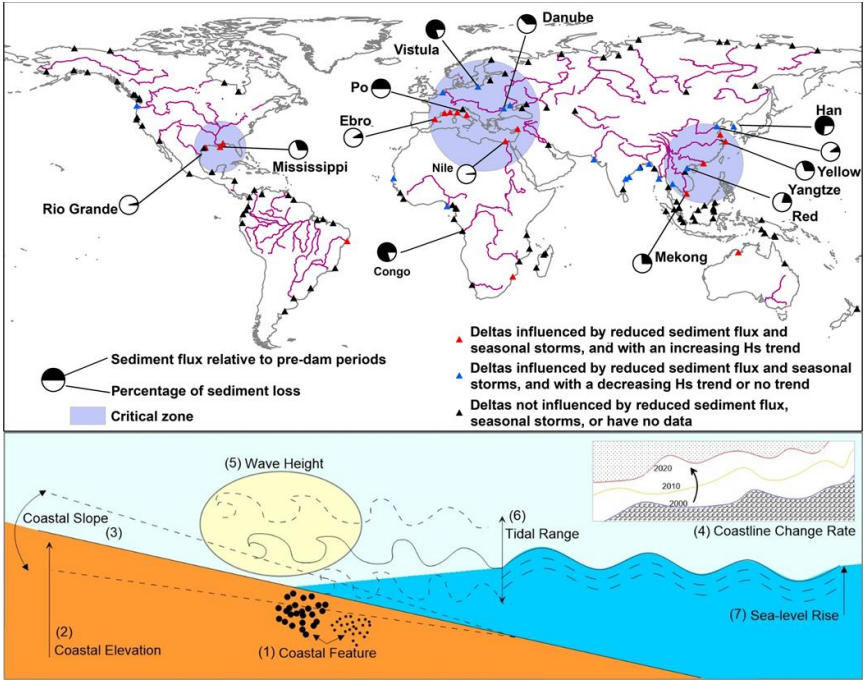
Declining sediment supply poses a serious challenge to many deltas that rely on continuous accretion to offset relative sea level rise and subsidence (see figure I). Widespread groundwater abstraction, urban development and natural compaction are exacerbating these pressures, accelerating subsidence in large river deltas Ref 17 Ref 28. Where geological instability intersects with ongoing sea level rise, the net effect often leads to heightened flood risk and coastal retreat Ref 74. In parallel, anthropogenic changes to river discharge - both reductions and occasional increases - can alter estuarine and deltaic circulation patterns, modifying nutrient delivery and affecting biological productivity in nearshore waters.
Figure I Global distribution of deltas influenced by both reduced sediment flux and seasonal storms and seven factors affecting coastal vulnerability
Climate change adds further stress by intensifying extreme weather and climate events, such as heavy precipitation, droughts, marine heatwaves and tropical cyclones Ref 23 Ref 58 Ref 34 Ref 69. These events disrupt salinity regimes, shift sediment transport pathways and exacerbate erosion, undermining the stability of deltaic shorelines. There is growing evidence linking climate change to an upsurge in infectious diseases Ref 60 and to shifts in marine species distribution Ref 14 Ref 22. Ocean warming, marine heatwaves, eutrophication, acidification and low-oxygen extremes continue to pose significant threats to estuarine and deltaic ecosystems Ref 15 Ref 26 Ref 33 Ref 54. In some estuarian areas, severe hypoxia episodes have led to ecological disasters that affect fisheries, benthic habitats and broader food webs Ref 38. To mitigate these impacts, local stakeholders are endeavouring to alleviate ecological stresses through engineering interventions and management measures Ref 41.
Estuaries across the globe have experienced nutrient loading from urban, agricultural and aquaculture sources, prompting eutrophication, harmful algal blooms Ref 5 and bottom-water hypoxia Ref 7 Ref 18 Ref 29 Ref 67 Ref 59 Ref 71. While improved wastewater treatment has mitigated problems in some developed regions Ref 32, the situation in many populous coastal zones continues to deteriorate. Coordinated nutrient management and integrated coastal planning remain key to long-term eutrophication control.
Invasive species represent another serious concern for estuarine and deltaic environments Ref 20 Ref 53. Maritime traffic and trade facilitate introductions, while warming waters expand the suitable habitat range for non-native organisms Ref 46. Effective control hinges on targeted removal strategies and understanding complex ecological interactions Ref 10 Ref 35.
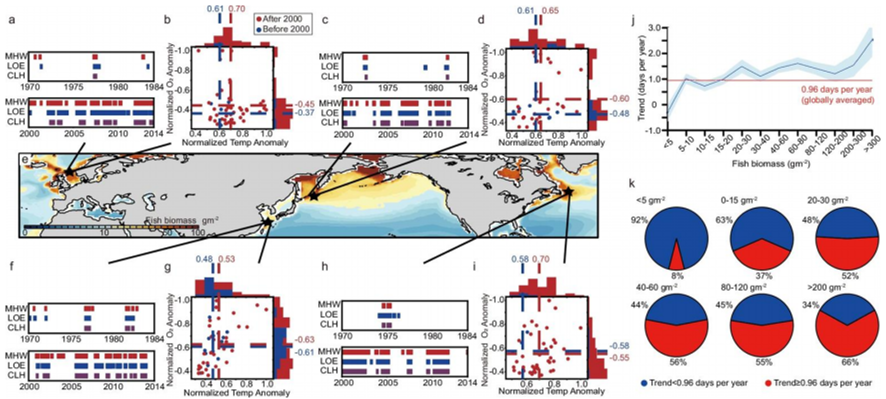
Figure II Compound low-oxygen extreme and heatwave events in relation to marine fish biomass
In addition to ecological shifts, geomorphological and hydrological changes require high-resolution monitoring. Accurate bathymetric and shoreline data are vital for understanding erosion, deposition and coastal flooding patterns, yet an estimated 70-80% of the global coastal zone lacks reliable bathymetric coverage Ref 40. This gap impedes the ability to develop marine planning strategies, forecast coastal hazards, manage navigation channels and design adaptive measures for aquaculture or infrastructure protection Ref 16. In locations with pronounced sediment deficits, even small errors in bathymetric data can lead to the underestimation of erosion rates and thus exacerbate vulnerabilities to storm surges or sea level rise.
Overall, the global picture since the second World Ocean Assessment is one of mounting pressures on estuaries and deltas from multiple sources. Anthropogenic activities (including dam construction, intensive groundwater pumping, sediment extraction and land-use changes) have reshaped sediment fluxes and accelerated subsidence in many heavily populated deltas. Pollution problems are prevalent in those systems with high population density. Inadequate investment in pollution control exacerbates these issues, particularly in underdeveloped areas. These problems often coexist, demonstrating the interconnectedness of hydrogeomorphic processes, ecological processes and economic development.
Concurrently, a warming climate has amplified extreme events, contributing to erosion, salinity regime alterations and more frequent low-oxygen conditions and marine heatwaves. Meanwhile, emerging challenges, such as invasive species, underscore the delicate balance of these interconnected ecosystems. As these trends intensify, the combination of physical alterations, biogeochemical perturbations and shifting species distributions will continue to transform estuarine and deltaic environments worldwide.
3. Region-specific changes
Arctic Ocean
Over 387 deltas, including the Lena Delta in the Russian Federation and the Mackenzie Delta in Canada, filter sediment and carbon fluxes from the Arctic landscape to the ocean Ref 39. Compared with lower-latitude deltas, Arctic deltas have subdued morphodynamics due to ice cover. The warming climate has led to an expansion of the open-water season in Arctic deltas, however, which has caused increased wave influence and unknown changes in sediment transport and carbon cycling Ref 47. Nevertheless, Greenlandic deltas experience weak wave impacts because of the enclosed topography of their locations. The elongated open-water season is potentially inducing increased sediment loading Ref 3, leading to a mean progradation rate of 0.011 km2/year for the 75 Greenlandic deltas Ref 47.
North Atlantic Ocean, Baltic Sea, Black Sea, Mediterranean and North Sea
Several deltas are experiencing significant changes due to subsidence, erosion and human interventions. Subsidence rates have reached 16 mm/year in the Mississippi Delta Ref 17 and 12-20 mm/year in the Nile Delta Ref 52. Erosion is worsened by extreme weather, especially in the Mississippi and Elbe Deltas Ref 73 Ref 61. Dam construction and river modifications have reduced sediment delivery, slowing delta growth in the Rhône and Danube Deltas Ref 44 Ref 9. Saltwater intrusion affects the Rhône and Nile Deltas, while ecological degradation is evident in the Dnieper Delta Ref 45. Effective management is critical for restoration Ref 61 Ref 50.
South Atlantic Ocean and wider Caribbean
The ecosystem of the Amazon Delta is largely intact, supporting diverse species and transporting between 2.3 billion and 3.1 billion tons of sediment annually, aiding coastline growth without significant subsidence. It should be noted, however, that population growth and sea level rise will require improved management Ref 1.
The River Plate estuary, one of the largest estuarine systems in South America, is experiencing continuous but moderate sea level rise and has suffered an extraordinary increase in the flow of the main tributaries since the early 1970s. The frequency of extreme events, mainly wind-induced storm surges, has risen over the past three decades. At present, anthropogenic eutrophication (caused by nutrient inputs linked to human activities) is one of the most important environmental impacts on the ecosystem's health and services. Massive cyanobacteria blooms promoted by nutrient enrichment associated with hydrological, oceanographic and meteorological factors have been reported more frequently in recent years, generating a loss of water quality, cultural ecosystem services and tourism revenues Ref 62.
The Niger Delta has seen significant coastline retreat, in particular during the periods 1950-1987 and 2007-2012, linked to run-off changes and human activities Ref 11. The Congo River basin faces future drought and food scarcity risks, necessitating adaptive measures Ref 27.
Indian Ocean, Arabian Sea, Bay of Bengal, Red Sea, Gulf of Aden and Persian Gulf
The Ganges-Brahmaputra-Meghna Delta faces risks from climate change, extreme hazards and human activities, including a subsidence rate of 5.6 mm/year. Riverbank erosion displaces 300,000 people annually, damaging land and infrastructure Ref 49. While sediment supply generally offsets sea level rise, dams and water diversions threaten this balance, making upstream sediment management crucial Ref 51. The Indus Delta has seen a decline in organic carbon fluxes due to damming and reduced river discharge, worsened by coastal erosion and changing monsoon patterns Ref 2. Human activities, such as sediment mining, have caused erosion in the west and accretion in the east Ref 7. The Ganges-Brahmaputra-Meghna Delta also faces severe subsidence (20 ± 10 mm/year), increasing the risk of sea level rise Ref 57.
North Pacific Ocean
Dams and sediment mining have reduced suspended sediment in Asian estuaries, worsening coastal ecosystem degradation Ref 66. The Mekong Delta faces subsidence (17-44 mm/year) due to over 130 dams and groundwater extraction Ref 19. The expanding coastline of the Yangtze Delta shows declining sediment concentrations and worsening hypoxia Ref 38. The Pearl River estuary suffers severe subsidence (~87.3 mm/year, Ref 35), while the Yellow River Delta faces erosion from reduced sediment supply Ref 73. In Osaka Bay, warming has caused a shift in fish distributions Ref 24. Overall, human activities, such as dams, sediment extraction and land reclamation, are key drivers of these environmental changes.
South Pacific Ocean
Sediment transport from the deltas to the ocean has generally increased in the South Pacific Ocean, especially in Australia Ref 21. For example, despite dam-building upstream of the Burdekin River, located in the dry tropics of north-east Australia, coarse sediments downstream of the dam have reached the river delta. The riverbed of the Burdekin River Delta has risen measurably in the past few decades, which has caused an increase in flood levels of approximately 1 m Ref 64. The trapping of sediment in the delta has induced erosion of the offshore Cape Bowling Green Peninsula, which has fundamental ecological impacts on the coastal ecosystem.
Southern Ocean
The surfaces of ice shelves in Antarctica melt during the austral summer; for instance, the meltwater volume reached as high as 0.83×10⁹ m3 in the summer of 2016/2017 on Amery Ice Shelf Ref 56. The meltwater forms surface lakes on the sea ice, which play essential roles in the surface energy balance of sea ice Ref 12. Increased surface meltwater on ice shelves associated with climate warming may trigger the development of estuaries in Antarctica, which could lead to accelerated ice loss and sea level rise Ref 4.
4. Key remaining knowledge and capacity gaps and new gaps
Intensified human activities, coupled with climate change, have exposed estuaries and deltas to severe hydrological and ecological threats. Human activities (such as dam-building and groundwater extraction), natural subsidence of deltas and climate-associated sea level rise are gradually squeezing the inland space of coastal zones. Inland flooding, compounded by astronomical high tides, may cause substantial losses to coastal zones and surrounding megacities. In addition to inland flooding, extreme estuarine upstream droughts compounded by astronomical high tides cause serious saltwater intrusion that threatens drinking water safety by affecting the drinking water reservoirs of megacities in coastal zones. Global warming has caused extreme atmospheric and oceanic events to occur with higher frequency. Populations are increasingly concentrated in coastal areas, which may put stressed ecosystems and local environments at higher risk, entailing greater complexity and uncertainty.
Socioeconomic structures directly influence human activities, which have significant impacts on the sustainability and resilience of estuarine and deltaic systems. In return, estuarine and deltaic environments influence the societies and economies of coastal zones in multiple and complex ways, which could potentially require restructuring. It is difficult to project how societies and economies in coastal zones will change in the future. It would be even more difficult to forecast the effects of feedback from local marine ecosystems, as well as estuarine and deltaic environments, to coastal societies and economies. Integrated monitoring systems and scientific investigations can effectively advance a comprehensive understanding of inland areas and estuary or delta systems as a continuum. Science-based cooperation, planning and strategy are required to build sustainable and resilient estuarine and deltaic systems.
Both short- and long-term strategies are urgently needed for the sustainable development and use of both inland and coastal zones. Existing modelling cannot provide timely early warnings of extreme events or accurate long-term predictions of their occurrence in coastal zones. Although theories regarding two-way feedback between upstream activities and estuarine or deltaic environments are improving, integrated monitoring systems and engineered protections can also be beneficial, especially during short-term emergency response and mitigation. Integrated planning of emergency responses to extreme events by coastal megacities is required in order to reduce losses effectively. Public science education can help people to utilize resources sustainably and respond effectively to extreme events, such as storm surges and flooding. Long-term integrated investigations are crucial for sustaining estuarine and deltaic environments and the ecosystem services they provide for human well-being. A comprehensive database and improved modelling, offering reliable tools for short-term predictions and long-term projections, are essential for the sustainability and resilience of estuarine and deltaic services.
References
- Anthony, E.J., Brondizio, E.S., dos Santos, V.F., Gardel, A., and Besset, M. (2021). Sustainable management, conservation, and restoration of the Amazon River Delta and Amazon-influenced Guianas coast: a review. Water, 13(10), 1371. doi: 10.3390/w13101371.
- Ahmed, W., Wu, Y., Kidwai, S., Li, X., Mahmood, T., Zhang, J. (2021). Do Indus Delta mangroves and Indus River contribute to organic carbon in deltaic creeks and coastal waters (Northwest Indian Ocean, Pakistan)? Continental Shelf Research, 231, 104601, doi:10.1016/j.csr.2021.104601.
- Bendixen, M., Overeem, I., Rosing, M.T., Bjørk, A.A., Kjær, K.H., Kroon, A., Zeitz, G., Iversen, L.L. (2019). Promises and perils of sand exploitation in Greenland. Nature Sustainability, 2 (2), 98-104, doi:10.1038/s41893-018-0218-6.
- Boghosian A.L., Pitcher L.H., Smith L.C., Kosh E., Alexander P.M., Tedesco M., Bell R.E. (2021). Development of ice-shelf estuaries promotes fractures and calving. Nature Geoscience, 14 (12), 899-905, doi:10.1038/s41561-021-00837-7.
- Brown, Andrew Ross, Martin Lilley, Jamie Shutler, Chris Lowe, Yuri Artioli, Ricardo Torres, Elisa Berdalet, and Charles R. Tyler. (2020). Assessing Risks and Mitigating Impacts of Harmful Algal Blooms on Mariculture and Marine Fisheries. Reviews in Aquaculture, 12 (3), 1663-1688, doi:10.1111/raq.12403.
- Bussi, G., Darby, S. E., Whitehead, P. G., Jin, L., Dadson, S. J., Voepel, H. E., and others (2021). Impact of dams and climate change on suspended sediment flux to the Mekong delta. Science of The Total Environment, 755, 142468. doi: 10.1016/j.scitotenv.2020.142468.
- Chen, J., Li, D., Jin, H., Jiang, Z., Wang, B., Wu, B., Hao, Q., and Sun, X. (2020). Changing nutrients, oxygen and phytoplankton in the East China Sea. In: Chen C A, Guo X, eds. Changing Asia-Pacific Marginal Seas. Springer Singapore, Singapore, 155-178.
- Chen, Z., Yu, L., and Hu, J. (2024). Disentangling the contributions of anthropogenic nutrient input and physical forcing to long-term deoxygenation off the Pearl River Estuary, China. Water Research, 265, 122258. doi: 10.1016/j.watres.2024.122258.
- Constantinescu, A.M., Tyler, A.N., Stanica, A., Spyrakos, E., Hunter, P.D., Catianis, I., and Panin, N. (2023). A century of human interventions on sediment flux variations in the Danube-Black Sea transition zone. Frontiers in Marine Science, 10, 1068065. doi: 10.3389/fmars.2023.1068065.
- Creed, J.C., Casares, F.A., Oigman-Pszczol, S.S., Masi, B.P. (2021). Multi-site experiments demonstrate that control of invasive corals (Tubastraea spp.) by manual removal is effective. Ocean & Coastal Management, 207, 105616, doi:10.1016/j.ocecoaman.2021.105616.
- Dada, O.A., Li, G., Qiao, L., Asiwaju-Bello, Y.A., and Anifowose, A.Y.B. (2018). Recent Niger Delta shoreline response to Niger River hydrology: Conflict between forces of Nature and Humans. Journal of African Earth Sciences, 139, 222-231. doi:10.1016/j.jafrearsci.2017.12.023.
- Dell, R.L., Willis, I.C., Arnold, N.S., Banwell, A.F., de Roda Husman, S. (2024). Substantial contribution of slush to meltwater area across Antarctic ice shelves. Nature Geoscience, 17 (7), 624-630, doi:10.1038/s41561-024-01466-6.
- Dethier, E.N., Renshaw, C.E., and Magilligan, F.J. (2022). Rapid changes to global river suspended sediment flux by humans. Science, 376(6600), 1447-1452. doi: 10.1126/science.abn7980.
- Duffy, K., Gouhier, T.C., and Ganguly, A.R. (2022). Climate-mediated shifts in temperature fluctuations promote extinction risk. Nature Climate Change, 12(11), 1037-1044. doi: 10.1038/s41558-022-01490-7.
- Guo, X., Gao, Y., Zhang, S., Wu, L., Chang, P., Cai, W., Zscheischler, J., Leung, L.R., Small, J., Danabasoglu, G., Thompson, L., and Gao, H. (2022). Threat by marine heatwaves to adaptive large marine ecosystems in an eddy-resolving model. Nat Clim Chang, 12(2), 179-186. doi: 10.1038/s41558-021-01266-5.
- Han H., Zhou F. (2025). Fusion method for water depth data from multiple sources based on image recognition. Journal of Oceanology and Limnology. doi:10.1007/s00343-024-4009-9.
- Harris, J.B., Joyner, T.A., Rohli, R.V., Friedland, C.J., and Tollefson, W.C. (2020). It's all Downhill from Here: A forecast of subsidence rates in the lower Mississippi River industrial corridor. Applied Geography, 114, 102123. doi: 10.1016/j.apgeog.2019.102123.
- He, D., and others (2022). Eutrophication and watershed characteristics shape changes in dissolved organic matter chemistry along two river-estuarine transects. Water Research, 214, 118196. doi:10.1016/j.watres.2022.118196.
- Hecht, J.S., Lacombe, G., Arias, M.E., Dang, T.D., and Piman, T. (2019). Hydropower dams of the Mekong River basin: A review of their hydrological impacts. Journal of Hydrology, 568, 285-300. doi:10.1016/j.jhydrol.2018.10.045.
- Hensel, M.J.S., Silliman, B.R., Van De Koppel, J., Hensel, E., Sharp, S.J., Crotty, S.M., Byrnes, J.E.K. (2021). A large invasive consumer reduces coastal ecosystem resilience by disabling positive species interactions. Nature Communications, 12, 6290. doi:10.1038/s41467-021-26504-4.
- Hou, X., Xie, D., Feng, L., Shen, F., and Nienhuis, J.H. (2024). Sustained increase in suspended sediments near global river deltas over the past two decades. Nature Communications, 15(1), 3319. doi: 10.1038/s41467-024-47598-6.
- Hutchins, D.A., and Capone, D.G. (2022). The marine nitrogen cycle: new developments and global change. Nature Reviews Microbiology, 20(7), 401-414. doi: 10.1038/s41579-022-00687-z.
- Iles, C.E., Samset, B.H., Sandstad, M., Schuhen, N., Wilcox, L.J., Lund, M.T. (2024). Strong regional trends in extreme weather over the next two decades under high- and low-emissions pathways. Nature Geoscience, 17, 845-850. doi:10.1038/s41561-024-01511-4.
- Itsukushima, R. (2023). Effects of climate change-induced water temperature changes on the distribution of tidal river fish fauna in the Japanese archipelago. Regional Environmental Change, 23(3), 100. doi:10.1007/s10113-023-02098-z.
- Joice Silva de Souza, Ana Clara Sampaio Franco, Marcela Rosa Tavares, Taís de Fátima Ramos Guimarães, Luciano Neves dos Santos (2024). Shipping traffic, salinity and temperature shape non-native fish richness in estuaries worldwide, Science of The Total Environment, 908, 168218. doi:10.1016/j.scitotenv.2023.168218.
- Johnson, G.C., and Lyman, J.M. (2020). Warming trends increasingly dominate global ocean. Nature Climate Change, 10(8), 757-761. doi: 10.1038/s41558-020-0822-0.
- Karam, S., Zango, B .- S., Seidou, O., Perera, D., Nagabhatla, N., and Tshimanga, R.M. (2023). Impacts of Climate Change on Hydrological Regimes in the Congo River Basin. Sustainability, 15(7), 6066. doi:10.3390/su15076066.
- Karlsrud, K., Tunbridge, L., Quoc Khanh, N., and Quoc Dinh, N. (2020). Preliminary results of land subsidence monitoring in the Ca Mau Province. Proceedings of the International Association of Hydrological Sciences, 382, 111-115. doi: 10.5194/piahs-382-111-2020.
- Ke, S., Zhang, P., Ou, S., Zhang, J., Chen, J., Zhang, J. (2022). Spatiotemporal nutrient patterns, composition, and implications for eutrophication mitigation in the Pearl River Estuary, China. Estuarine, Coastal and Shelf Science, 266, 107749. doi:10.1016/j.ecss.2022.107749.
- Laignel, B., Vignudelli, S., Almar, R., Becker, M., Bentamy, A., Benveniste, J., Birol, F., Frappart, F., Idier, D., Salameh, E., Passaro, M., Menende, M., Simard, M., Turki, E.I., and Verpoorter, C. (2023). Observation of the Coastal Areas, Estuaries and Deltas from Space. Surveys in Geophysics, 44 (5), 1309- 1356, doi:10.1007/s10712-022-09757-6.
- Lei, S., Bu, D., Guo, X., Xu, Y., Yang, Y., An, S., Li, Y., Pang, J., Zhou, K. (2024). Mitigation of hypoxia and ocean acidification on the inner East China Sea shelf impacted by the 2023 summer drought. Marine Pollution Bulletin, 207, 116830. doi:10.1016/j.marpolbul.2024.116830.
- Lenstra, W.K., Hermans, M., Séguret, M.J.M., Witbaard, R., Severmann, S., Behrends, T., Slomp, C.P. (2020). Coastal hypoxia and eutrophication as key controls on benthic release and water column dynamics of iron and manganese. Limnology and Oceanography, 9999, 1-20. doi:10.1002/lno.11644.
- Li, C., Huang, J., Liu, X., Ding, L., He, Y., and Xie, Y. (2024a). The ocean losing its breath under the heatwaves. Nature Communications, 15(1), 6840. doi: 10.1038/s41467-024-51323-8.
- Li, D., Chen, J., Wang, B., Jin, H., Shou, L., Lin, H., Miao, Y., Sun, Q., Jiang, Z., Meng, Q., Zeng, J., Zhou, F., Cai, W.J. (2024b). Hypoxia Triggered by Expanding River Plume on the East China Sea Inner Shelf During Flood Years. Journal of Geophysical Research: Oceans, 129 (8), doi:10.1029/2024JC021299.
- Liu, Z., Ng, A.H .- M., Wang, H., Chen, J., Du, Z., Ge, L. (2023). Land subsidence modeling and assessment in the West Pearl River Delta from combined InSAR time series, land use and geological data. International Journal of Applied Earth Observation and Geoinformation, 118, 103228. doi: 10.1016/j.jag.2023.103228.
- Luo, W., Shen, F., He, Q., Cao, F., Zhao, H., and Li, M. (2022). Changes in suspended sediments in the Yangtze River Estuary from 1984 to 2020: Responses to basin and estuarine engineering constructions. Science of The Total Environment, 805, 150381. doi: 10.1016/j.scitotenv.2021.150381.
- Ma, H., Nittrouer, J.A., Fu, X., Parker, G., Zhang, Y., Wang, Y., Wang, Y., Lamb, M.P., Cisneros, J., Best, J., Parsons, D.R., Wu, B. (2022). Amplification of downstream flood stage due to damming of fine- grained rivers. Nature Communications, 13 (1), 3054. doi:10.1038/s41467-022-30730-9.
- Ma, X., Meng, Q., Li, D., Zhu, Y., Ni, X., Zeng, D., Di, T., Huang, T., Jiang, Z., Jin, H., and Zhou, F. (2024). Coastal hypoxia response to the coupling of catastrophic flood, extreme marine heatwave and typhoon: a case study off the Changjiang Estuary in summer 2020. Acta Oceanologica Sinica, 43 (6), 1- 12. doi:10.1007/s13131-024-2311-1.
- Mann, P.J., Strauss, J., Palmtag, J., Dowdy, K., Ogneva, O., Fuchs, M., Bedington, M., Torres, R., Polimene, L., Overduin, P., Mollenhauer, G., Grosse, G., Rachold, V., Sobczak, W.V., Spencer, R.G.M., Juhls, B. (2022). Degrading permafrost river catchments and their impact on Arctic Ocean nearshore processes. Ambio, 51 (2), 439-455, doi:10.1007/s13280-021-01666-z.
- McCarthy, M.J., Otis, D.B., Hughes, D., and Muller-Karger, F.E. (2022). Automated high-resolution satellite-derived coastal bathymetry mapping. International Journal of Applied Earth Observation and Geoinformation, 107, 102693. doi:10.1016/j.jag.2022.102693.
- Meng, Q., Pan, Y., Xuan, J., Zhou, F., Fan, W., Di, Y., Jiang, Z-P., Xiao, C., Zhang, W., Daewel, U., Chen, J., Huang, D., and Chen, Y. (2024). Leveraging Artificial Oxygenation Efficacy for Coastal Hypoxia by Taking Advantage of Local Hydrodynamics. Environmental Science & Technology, 58(49), 21629- 21640. doi: 10.1021/acs.est.4c07386.
- Meng, Q., Zhou, F., Ma, X., Xuan, J., Zhang, H., Wang, S., Ni, X., Zhang, W., Wang, B., Li, D., Tian, D., Li, J., Zeng, J., Chen, J., and Huang, D. (2022). Response process of coastal hypoxia to a passing typhoon in the East China Sea. Frontiers in Marine Science, 9, 892797, doi: 10.3389/fmars.2022.892797.
- Michael S. Steckler, Bar Oryan, Carol A. Wilson, Céline Grall, Scott L. Nooner, Dhiman R. Mondal, S. Humayun Akhter, Scott De Wolf, Steve L. Goodbred (2022). Synthesis of the distribution of subsidence of the lower Ganges-Brahmaputra Delta, Bangladesh, Earth-Science Reviews, 224, 103887. doi:10.1016/j.earscirev.2021.103887.
- Mikhailova, M.V., and Isupova, M.V. (2006). Hydrological regime of the Rhône Delta and dynamics of its coastline. Water Resources, 33, 595-607. https://doi.org/10.1134/S0097807806060017.
- Minaieva, H., and Korzhov, Y. (2024). Chapter 16: Forecast of changes in algocenoses richness of the Dnieper floodplain after the Kakhovka HEPS dam destruction in the context of food security in southern Ukraine. The European Union and Ukraine: relevant regulatory, economic, technological and socio- humanitarian aspects of interaction on the way to Ukraine's membership. Izdevniecība “Baltija Publishing", Rīga, pp. 389-408.
- Norton, B.B., and Norton, S.A. (2021). Lionfish envenomation in Caribbean and Atlantic waters: Climate change and invasive species. International Journal of Women's Dermatology, 7(1), 120-123. https://doi.org/10.1016/j.ijwd.2020.05.016.
- Overeem, I., Nienhuis, J.H., Piliouras, A. (2022). Ice-dominated Arctic deltas. Nature Reviews Earth & Environment, 3 (4), 225-240, doi:10.1038/s43017-022-00268-x.
- Pang, T., Wang, X., Nawaz, R.A., Keefe, G., and Adekanmbi, T. (2023). Coastal erosion and climate change: A review on coastal-change process and modeling. Ambio, 52(12), 2034-2052. doi: 10.1007/s13280-023-01901-9.
- Paszkowski, A., Goodbred, S., Borgomeo, E., Khan, M.S.A., and Hall, J.W. (2021). Geomorphic change in the Ganges-Brahmaputra-Meghna delta. Nature Reviews Earth & Environment, 2(11), 763-780. doi:10.1038/s43017-021-00213-4.
- Pein, J., Staneva, J., Mayer, B., Palmer, M.D., and Schrum, C. (2023). A framework for estuarine future sea-level scenarios: Response of the industrialised Elbe estuary to projected mean sea level rise and internal variability. Frontiers in Marine Science, 10, 1102485. doi: 10.3389/fmars.2023.1102485.
- Raff, J.L., Goodbred, S.L., Pickering, J.L., Sincavage, R.S., Ayers, J.C., Hossain, M.S., Wilson, C.A., Paola, C., Steckler, M.S., Mondal, D.R., Grimaud, J., Grall, C.J., Rogers, K.G., Ahmed, K.M., Akhter, S.H., Carlson, B.N., Chamberlain, E.L., Dejter, M., Gilligan, J.M., Hale, R.P., Khan, M.R., Muktadir, M.G., Rahman, M.M., Williams, L.A. (2023). Sediment delivery to sustain the Ganges-Brahmaputra delta under climate change and anthropogenic impacts. Nature Communications, 14 (1), 2429, doi:10.1038/s41467-023-38057-9.
- Rateb, A., and Abotalib, A.Z. (2020). Inferencing the land subsidence in the Nile Delta using Sentinel-1 satellites and GPS between 2015 and 2019. Science of the Total Environment, 729, 138868. doi: 10.1016/j.scitotenv.2020.138868.
- Ren, J., Chen, J., Xu Changlin, Van De Koppel, J., Thomsen, M.S., Qiu, S., Cheng, F., Song, W., Liu, Q- X., Xu Chi, Bai J., Zhang, Y, Cui, B, Bertness, M.D., Silliman, B.R., Li, B., He, Q. (2021). An invasive species erodes the performance of coastal wetland protected areas. Science Advances, 7, eabi8943. doi:10.1126/sciadv.abi8943.
- Sampaio, E., Santos, C., Rosa, I.C., Ferreira, V., Pörtner, H-O., Duarte, C.M., Levin, L.A., and Rosa, R. (2021). Impacts of hypoxic events surpass those of future ocean warming and acidification. Nature Ecology & Evolution, 5(3), 311-321. doi:10.1038/s41559-020-01370-3.
- Sengupta, D., Choi, Y.R., Tian, B., Brown, S., Meadows, M., Hackney, C.R., and others (2023). Mapping 21st century global coastal land reclamation. Earth's Future, 11, e2022EF002927. doi:10.1029/2022EF002927.
- Spergel, J.J., Kingslake, J., Creyts, T., van Wessem, M., Fricker, H.A. (2021). Surface meltwater drainage and ponding on Amery Ice Shelf, East Antarctica, 1973-2019. Journal of Glaciology, 67(266), 985-998. doi:10.1017/jog.2021.46.
- Steckler, M.S., Jaman, M.H., Grall, C.J., Goodbred, S.L., Wilson, C.A., and Oryan, B. (2024). Contribution of campaign GNSS toward parsing subsidence rates by time and depth in coastal Bangladesh. Frontiers in Earth Science, 12, 1-15. doi: 10.3389/feart.2024.1354686.
- Studholme, J., Fedorov, A.V., Gulev, S.K., Emanuel, K., Hodges, K. (2022). Poleward expansion of tropical cyclone latitudes in warming climates. Nature Geoscience, 15, 14-28. doi:10.1038/s41561-021- 00859-1.
- Sudradjat A., Muntalif B.S., Marasabessy N., Mulyadi F., Firdaus M.I. (2024). Relationship between chlorophyll-a, rainfall, and climate phenomena in tropical archipelagic estuarine waters. Heliyon, 10 (4), e25812, doi:10.1016/j.heliyon.2024.e25812.
- Tsui, J.L.H., Pena, R.E., Moir, M., Inward, R.P.D., Wilkinson, E., San, J.E., Poongavanan, J., Bajaj, S., Gutierrez, B., Dasgupta, A., de Oliveira, T., Kraemer, M.U.G., Tegally, H., and Sambaturu, P. (2024). Impacts of climate change-related human migration on infectious diseases. Nature Climate Change, 14(8), 793-802. doi: 10.1038/s41558-024-02078-z.
- Uber, M., Rössler, O., Astor, B., Hoffmann, T., Van Oost, K., and Hillebrand, G. (2022). Climate change impacts on soil erosion and sediment delivery to German federal waterways: A case study of the Elbe Basin. Atmosphere, 13(11), 1752. doi:10.3390/atmos13111752.
- Venturini, N. and others. (2024). Río de la Plata Estuary. Zhang, W., Vriend, H. de (eds), Delta Sustainability. Springer, Singapore. https://doi.org/10.1007/978-981-97-7259-9_15.
- Wang, J., Tong, Y., Feng, L., Zhao, D., Zheng, C., and Tang, J. (2021). Satellite-Observed Decreases in Water Turbidity in the Pearl River Estuary: Potential Linkage With Sea-Level Rise. Journal of Geophysical Research: Oceans, 126(4), e2020JC016842. doi: 10.1029/2020JC016842.
- Wolanski, E., Hopper, C. (2022). Dams and climate change accelerate channel avulsion and coastal erosion and threaten Ramsar-listed wetlands in the largest Great Barrier Reef watershed. Ecohydrology & Hydrobiology, 22(2), 197-212, doi:10.1016/j.ecohyd.2022.01.001.
- Xuan J., Ding R., Zhou F. (2021). Storm surge risk under various strengths and translation speeds of landfalling tropical cyclones. Environmental Research Letters, 16, 124055. doi:10.1088/1748- 9326/ac3b78.
- Yunus, A.P., Masago, Y., Boulange, J., and Hijioka, Y. (2022). Natural and anthropogenic forces on suspended sediment dynamics in Asian estuaries. Science of The Total Environment, 836, 155569. doi: 10.1016/j.scitotenv.2022.155569.
- Zamora-López, A., Guerrero-Gómez, A., Torralva, M., Zamora-Marín, J.M., Guillén-Beltrán, A., Oliva- Paterna, F.J. (2023). Shallow waters as critical habitats for fish assemblages under eutrophication- mediated events in a coastal lagoon. Estuarine, Coastal and Shelf Science, 291, 108447. doi:10.1016/j.ecss.2023.108447.
- Zhang, W., Pan, S., Yu, L., Zhang, H., Chen, F., Song, G., Hu, J., Wei, Q., Zhao, H., Chen, J., Zhou, F. (2025). Dissolved oxygen depletion in Chinese coastal waters. Water Research, 272, 123004. doi:10.1016/j.watres.2024.123004.
- Zhao, H., Zhao, K., Klotzbach, P.J., Chand, S.S., Camargo, S.J., Cao, J., Wu, L. (2024). Decreasing global tropical cyclone frequency in CMIP6 historical simulations. Science Advances, 10, eadl2142. doi:10.1126/sciadv.adl2142.
- Zhao, G., Jiang, W., Wang, T., Chen, S., and Bian, C. (2022). Decadal Variation and Regulation Mechanisms of the Suspended Sediment Concentration in the Bohai Sea, China. Journal of Geophysical Research: Oceans, 127(3), e2021JC017699. doi: 10.1029/2021JC017699.
- Zhou, F., Chai, F., Huang, D., Wells, M., Ma, X., Meng, Q., Xue, H., Xuan, J., Wang, P., Ni, X., Zhao, Q., Liu, C., Su, J., and Li, H. (2020). Coupling and decoupling of high biomass phytoplankton production and hypoxia in a highly dynamic coastal system: The Changjiang (Yangtze River) estuary. Frontiers in Marine Science, 7 (259), doi:10.3389/fmars.2020.00259.
- Zhou, F., Chai, F., Huang, D., Xue, H., Chen, J., Xiu, P., Xuan, J., Li, J., Zeng, D., Ni, X., Wang, K. (2017). Investigation of hypoxia off the Changjiang Estuary using a coupled model of ROMS-CoSiNE. Progress in Oceanography, 159, 237–254. doi:10.1016/j.pocean.2017.10.008.
- Zhu, Q., Xing, F., Wang, Y.P., Syvitski, J., Overeem, I., Guo, J., Li, Y., Tang, J., Yu, Q., Gao, J., Gao, S. (2024). Hidden delta degradation due to fluvial sediment decline and intensified marine storms. Science Advances, 10, eadk1698. doi:10.1126/sciadv.adk1698.
- Zhu, B., Chu, Z., Shen, F., Tang, W., Wang, B., Wang, X. (2019). Land subsidence (2004-2013) in Changzhou in Central Yangtze River delta revealed by MT-InSAR. Natural Hazards, 97,(1), 379-394. doi: 10.1007/s11069-019-03650-z.