
Seafood processing
ⓘ
Writing team: Ahmed Khan (coordinating author), Kate Barclay, Donovan Campbell (lead member), Ibukun Adewumi, Mararida DosSantos Correia, Eshete Dejen Dresilign, Hamady Diop, Mohamed Diop, Nicole Franz, Bernedette Fregene, Kelly Harrel, Motseki Hlatshwayo, Ibrahim Issifu, Katrina Hilundwa, Kenneth Johnson, Ulrich Franklin Kouassi, Yajie Liu, Kristen Lowitt, Josephus Mammie, Bernice Mclean, Cristina Pita, Omar Penarubia, Eshete Dejen, Akintola Shehu Latunji, Helguile Shep, Amadou Tall, Louise Teh, Shakuntala H. Thilsted Colette Wabnitz, Weiwei Wang and Tymon Zielinski (co-lead member).
Key points
- Seafood processing, marketing and trade are crucial dimensions of the global fishing sector, with an estimated value of about $195 billion in 2022, providing more than 3 billion people with animal protein as a primary source (Food and Agriculture Organization of the United Nations (FAO), 2024). Seafood broadly accounts for aquatic foods (fish, invertebrates and seaweeds), sometimes also referred to as blue foods, sourced from or cultured in oceans, lakes, rivers and seas.
- Due to the high perishability of fish and fishery products and their importance in nutrition security and global trade, effective and efficient processing techniques are imperative to extend shelf life, reduce post-harvest losses, improve revenues and enhance nutritional value Ref 34. The present subchapter is focused predominantly on wild capture fisheries and the post-harvest stages, i.e. processing, marketing, trade and consumption. It builds on the second World Ocean Assessment in prioritizing seafood and aquatic food systems within the United Nations Decade of Ocean Science for Sustainable Development as well as the Sustainable Development Goals.
- By minimizing loss and waste through best management practices and ensuring the availability of high-quality seafood, the post-harvest sector directly contributes to Goals 2 (zero hunger) 3 (good health and well-being), 8 (decent work and economic growth), 10 (reduced inequalities) and 12 (responsible consumption and production). It gives the processing industry an opportunity to remain lucrative in global seafood markets as well as support Goal 14 (life below water).
- However, increased mechanization and globalization have also led to challenges such as loss of employment, reduced access to local fish products, food insecurity and the corporate takeover of smaller local businesses. In effect, post-harvest utilization and the value chain approach have supported management measures aligned with the Goals and other multilateral commitments such as the African Development Bank (AfDB) Feed Africa strategy Ref 4, FAO blue transformation initiatives and the United Nations Industrial Development Organization (UNIDO) blue industry and value chain approach.
- The present subchapter assesses the social drivers and impacts along the fish supply chain, suggests pathways for sustainable processing and defines governance mechanisms that promote policy harmonization and supply chain coordination. It concludes with key takeaways and future recommendations for the sustainability of the seafood processing sector. It is aligned with many international governing instruments, including the Voluntary Guidelines for Securing Sustainable Small-Scale Fisheries in the Context of Food Security and Poverty Eradication (FAO, 2015).
1. Introduction and background
Fish production chain
Seafood processing is part of the fish production chain, which spans from oceans to plates. The fish production chain consists of three main interconnected stages: pre-harvest (aquatic ecosystems), harvest (capture or culture activities) and post-harvest (processing and marketing), as defined by Kooiman and others Ref 66. The latter stage is focused on processing, marketing, trade, including retail and wholesale, transportation, distribution and consumption. The subchapter emphasizes the importance of post-harvest and processing techniques, especially in small-scale fishing communities where community-based solutions are increasingly important to ensure food and nutrition security Ref 73 Ref 98. By implementing effective processing techniques such as chilling, freezing, canning, smoking, drying and other value-added methods, fish value chains can be transformed to support food and nutrition security, job creation and export earnings (FAO, 2024). Appropriate infrastructure, including landing sites, cold rooms or access to ice, improved or modern processing facilities, fish marketing outlets and efficient distribution channels can minimize post-harvest losses Ref 30 Ref 11 Ref 101.
Post-harvest losses are often caused by spoilage due to improper handling or inadequate infrastructure, reduce the overall yield and result in economic losses Ref 112. In the case of sub-Saharan Africa, where essential infrastructure is limited, the majority of post-harvest losses occur at the production level (39%), followed by handling (36%), transportation and distribution (13%), processing (7%) and consumption (5%) Ref 1. This amounts to one third of total production and financial losses of between $2 billion and $5 billion Ref 1. Modern technology and appropriate infrastructure not only enhance food safety and security but also help to maximize economic benefits, contributing to the achievement of the Sustainable Development Goals. Attention to the composition of the labour force and corporate ownership models is therefore important. Moreover, ensuring equity and social inclusion in the seafood industry determines whether local fishing communities can fully reap the benefits of their resources and these advancements Ref 28.
Figure I Fish production chain
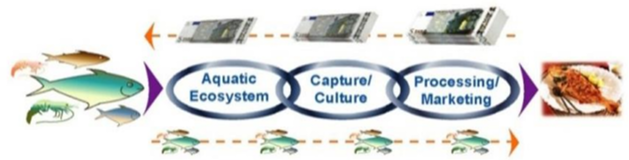
Source: Bavinck and others, 2005.
Although a fish production chain approach is applied by focusing on supply and raw material flows and an ecosystem approach Ref 112, the value chain concept is complementary as a development paradigm to increase efficiency and reduce post-harvest loss Ref 35. It is focused on improving quality and price and provides better opportunities for employment and nutritional security Ref 54.
Processing and value addition
Processing, and the corresponding value addition, is the most important stage in the fish production chain. Various stakeholders transform harvested or cultured raw seafood into high-value products with a longer and more stable shelf-life, catering to diverse consumer preferences and boosting economic value Ref 103 Ref 96. Processing methods and product differentiation strategies vary across communities, regions and continents. These variations are influenced by factors such as local preferences, cultural traditions, availability of resources, technology, income levels, infrastructure, and labour and market dynamics. Socially, processing and the product differentiation stage offer numerous benefits, such as extended operational periods for processing plants and a reduction in repetitive strain injuries for workers, and allow for a greater diversity of fishery products, including repurposing of by-catch, benefiting both fishers and consumers. However, the growing reliance on migrant and forced labour on fishing vessels and processing plants, coupled with an increase in corporate mergers, raises human rights concerns as well as the fact that many of the potential benefits might not be fully realized by local fishing communities.
Fish as superfoods
Seafood is a major source of animal-based protein, nourishing about 3.2 billion across the globe (FAO, 2024). It contributes directly to ending hunger (Goal 2) and responsible consumption and production (Goal 12) and enhances human well-being (Goal 5). The significance of processing and extending the shelf life of fish is very important, given that fishery products are highly perishable and susceptible to disease and infection. As seafood is processed into various product types, its high demand and consumer buying power make it the most traded food commodity globally Ref 12. Fish is considered a superfood, essential for overall well-being and rich in essential and highly bioavailable nutrients, including omega-3 fatty acids, vitamins (A, D and B12) and minerals, making them a critical component of a healthy diet Ref 116 Ref 45. Access to adequate infrastructure and proper processing techniques such as freezing and canning not only extend the shelf life of fish but also help to preserve nutritional value, ensuring that health benefits remain accessible to a broader population even during pandemics Ref 54.
Circular economy and seafood processing
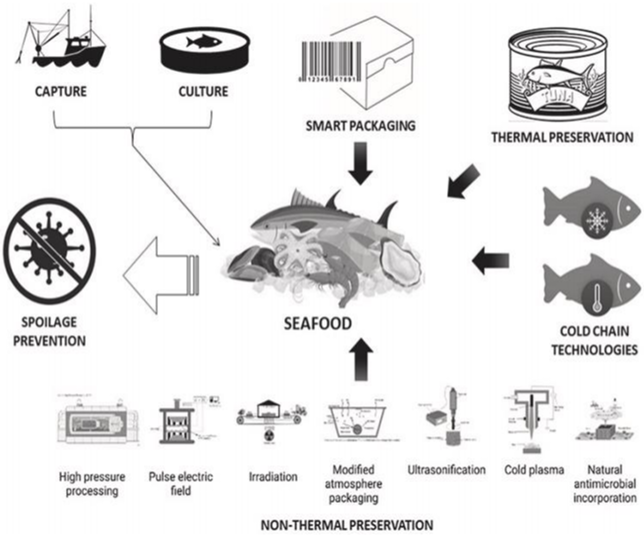
Applying circular economy principles to seafood processing brings additional benefits by maximizing resource efficiency and including multi-species management plans, energy use and decarbonization Ref 23. Modern, improved traditional processing techniques increasingly seek to integrate economic efficiency, reduced fuel use and environmental conservation, demonstrating the multifaceted benefits of these practices Ref 40 Ref 101. Recently, much of the discarded food waste has been developed into affordable and nutritious products owing to their nutritional value Ref 94, incorporating added nutrients such as iron, calcium and other micronutrients that can address deficiencies in human health Ref 117. While advanced processing may enhance economic value through reduced losses as well as product differentiation, it may also support sustainability goals by reducing fishing pressure with higher revenues and focusing on socioeconomic benefits (see figure II).
Figure II Seafood processing infrastructure and techniques
Fish processing is often mandated under State laws and through fisheries management policies, bureaux of standards or competent agencies tasked with labelling, packaging, branding and exporting to ensure alignment and global standards Ref 68 Ref 118. To gain a competitive advantage across the value chain, seafood processors and stakeholders adopt strategies to differentiate and label their products according to sustainability criteria. Eco-labels such as the Marine Stewardship Council and ECOMARK and traceability tools including ThisFish and Vericatch play a key role in appealing to consumer awareness. These tools and labels often help to uphold chain of custody rules, enhance product competitiveness, extend shelf life, promote food security and support conservation.
However, they have proven complex and at times controversial, compromising integrity and intended principles Ref 17 Ref 83.
Processing methods and product differentiation
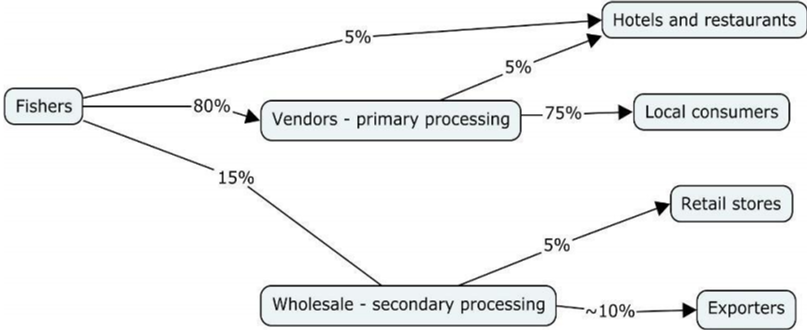
Processing and product differentiation are important for two reasons: (a) to increase the profit margin by catering primarily to various markets in middle- and high-income countries; and (b) to extend shelf life, especially in low-income countries lacking improved cold chain infrastructure and purchasing power, but with high demand for nutritious and affordable seafood. Three processing methods are therefore used globally: primary processing (in fresh or cured form without change in texture or taste), secondary processing (with some changes to taste and form) and tertiary processing (with changes in form and taste and an increase in shelf life). Fish value chains can be quite short, with fresh products distributed directly to local markets and consumers, or can be processed and traded through local vendors, wholesalers and international buyers with export licences (see figure III).
Figure III Product flows and market share as evident in the Caribbean
The seafood processing industry employs diverse techniques to extend shelf life and cater to local and regional preferences. For instance, freezing is known to preserve nutritional quality and is widely used in regions with advanced cold chains, such as Europe and North America, while canning ensures long-term preservation and is common in Asia and South America. Traditional smoking, prevalent in Northern Europe, sub-Saharan Africa and parts of North America, imparts flavour and enhances preservation Ref 29 but is associated with deforestation concerns. Smoking also risks contaminating fish with carcinogenic polycyclic aromatic hydrocarbons and other toxins Ref 18. While Scandinavia excels in smoked salmon and pickled herring, the Mediterranean offers traditional salted and dried fish (e.g. bacalao) in Italy and Portugal, which is a staple ingredient in many traditional dishes such as brandade de morue, a creamy fish spread made with salt cod, as well as cured and canned fish. Traditional drying and salting methods are common in South-East Asia and sub-Saharan Africa due to their accessibility and cultural taste, as well as their nutritional value Ref 51. This practice is also linked to the lack of cold room infrastructure and ice to preserve fresh fish Ref 10.
Regional diversity and length of value chains
In regions where tertiary processing is common, seafood can be made into snacks and condiments. For instance, South-East Asia is known for producing shrimp paste and dried fish, while Japan is renowned for sashimi-grade fish. In the Caribbean region, as shown in figure III, where fresh fish is invaluable to the tourism and hospitality industry, such as in hotels, the fish value chain can be short for some commercial species such as live lobsters and longer for species such as groundfish, depending on processing requirements, consumer markets and price premiums. In Western Africa, small-scale tuna canning and large-scale trans-shipment contribute to national economies in coastal ports such as Tema and Abidjan (see box 1), as these processing enterprises provide processed fish for export, especially to regional landlocked countries, as well as for local nutritional needs Ref 7.
Box 1
Tuna processing and trans-shipment in West AfricaAbidjan is the leading commercial fishing port for tuna trans-shipment and the small-scale canning industry in West Africa. The fishing port, part of the wider Autonomous Port of Abidjan economic zone, is a State-owned enterprise with capital of about $170 million in 2022. It handles close to 1 million tons of seafood per year, 35% of which is tuna. Tuna fishing is dominated by three main species: yellowfin (Thunnus albacares), skipjack (Katsuwonus pelamis) and bigeye (Thunnus obesus). These tuna stocks are mainly caught by vessels flying Spanish and French flags and the national Ivorian fleet and trans-shipped to local canneries. In 2023, around 70 vessels trans-shipped to three local canneries operating in Côte d'Ivoire, which produce about 60,000 tons of canned seafood per year, creating more than 3,000 jobs, the majority of which are held by women. About 15 local companies also operate at the port to facilitate a cold room seafood network with up to 70,000 tons of storage capacity to address seasonality and price fluctuations. The tuna industry also supports local consumption of the popular Ivorian dish garba, which contains cured and deep-fried tuna fillets. |
2. Pressures and impacts
Demand-driven fish chains
Various pressures and drivers influence the production and productivity of aquatic foods and fish value chains. It has been argued that in regions where there is high demand for fish, in combination with sequential exploitation and mismanagement, raw material supply can be a challenge for processing as plants close and processing jobs are lost Ref 15. The earlier collapse of some stocks of orange roughy (Hoplostethus atlanticus) in Australia and New Zealand, cod stocks on the Grand Banks (Gadus morhua) and some groundfish stocks in New England all indicate human-induced drivers of change, with processing jobs at risk Ref 74 Ref 58. Effective governance strategies are essential to address these multifaceted challenges to ensure sustainable fisheries while safeguarding ecosystems in the face of environmental changes Ref 28 Ref 50. Collaborative approaches that involve local communities, policymakers and scientists can foster resilience and promote long-term sustainability in fisheries resources Ref 89.
Technological innovation
Technological innovation has had a profound impact on fishing efficiency, also influencing the supply of raw materials, fish processing measures and product development. Recent research underscores the necessity for the implementation of policies that encourage responsible innovation, thereby ensuring that technological advancements contribute to the sustainability of fisheries and the development of premium seafood products Ref 101. While economic incentives such as subsidies can facilitate technological advancement and enhance fishing capacity (with offshore processing infrastructure and higher revenues), they can also result in overcapacity and unsustainable practices if not properly regulated Ref 105 Ref 22. For example, subsidies that promote fuel consumption may provide an incentive for increasing fishing efforts, which can undermine the health of fish stocks, especially in deep-sea environments Ref 31 Ref 109. Recent estimates of global fishery subsidies suggest that subsidies provided in the preceding decades may have halted, but the bulk of harmful "capacity-enhancing" subsidies, particularly those for fossil fuels, have increased as a proportion of total subsidies (Sumaila and others, 2019). Although discussed in the second World Ocean Assessment, the matter remains pertinent to the present Assessment given the evolving policy climate such as the World Trade Organization (WTO) Agreement on Fisheries Subsidies of 2022 and recent additional provisions during the WTO thirteenth Ministerial Conference in Abu Dhabi in March 2024. Additional provisions on overcapacity and overfishing subsidies are still being proposed and debated without consensus Ref 47. Moreover, subsidy research is still topical and relevant, indicating the need for better policy and practice for resource sustainability and value chain benefits Ref 102 Ref 97.
Given the observed increase in fishers' incomes, a notable surge in demand for fish and seafood is expected, with considerable pressure being exerted on supply chains and ecosystems already operating under considerable strain Ref 13. As populations expand and urbanization accelerates, the demand for accessible and affordable seafood options intensifies, resulting in a complex interplay between supply constraints and consumer expectations Ref 28. This growing demand presents a dilemma for fisheries management, as stakeholders must reconcile the imperative for economic returns with the need for sustainable fishing practices (see box 2). According to FAO (2024), maintaining the current consumption levels of aquatic animal foods until 2050 will require a huge reduction in catch and improved post-harvest utilization.
Sustainable fishing practices, bolstered by cutting-edge technologies such as mobile applications and digital platforms, are providing fishers with real-time market data, thereby enhancing supply chain efficiency and traceability benefits Ref 13. It is of paramount importance for policymakers to establish a regulatory framework that fosters sustainable post-harvest practices and technological advancements in a manner that safeguards the environment and benefits fishing communities through chain of custody, certification and price premiums.
Box 2
Response by Norway to pressures with integrated fisheries management systemsNorway has implemented an integrated fisheries management system that combines scientific research, regulatory measures and stakeholder engagement to ensure sustainable fisheries. The system includes strict quotas, real-time monitoring of fishing activities and comprehensive data collection. By basing management decisions on robust scientific research and involving stakeholders such as fishers, scientists and regulators, the Norwegian model enhances the effectiveness and sustainability of fisheries governance. An emphasis on science-based management, real-time monitoring and collaborative governance is crucial to maintaining sustainable fisheries Ref 92. |
Impact of non-human induced changes
Seafood products and processing methods are highly influenced by both natural and human-induced drivers of change at multiple scales. In recent years, the dynamics of commercial fish value chains have increasingly revealed a fundamental tension between demand-driven and supply-driven factors Ref 35. The prevalence of supply-driven fish value chains frequently gives rise to considerable obstacles, including overcapacity, which can result in unsustainable fishing practices, coupled with ecological shifts Ref 57. Poor and inconsistent harvest rules across different regions complicate resource management outcomes and often lead to overfishing, further destabilizing ecosystems Ref 16 Ref 42.
The sustainability of raw material supply in the harvest stage of the fish chain is highly important as it influences the volume and value of the catch, therefore affecting the corresponding processing methods, product types and market viability. Other driving factors such as natural variability and El Niño Southern Oscillation events can affect fisheries ecosystems, raw material supply and seafood processing opportunities Ref 69. Recent studies indicate that climate change alters marine ecosystems, affecting the distribution and abundance of key commercial species, which, in turn, influences raw material supply chains Ref 20. For instance, rising sea temperatures and ocean acidification can lead to shifts in fish populations, affecting fish availability and the livelihoods of communities reliant on these resources Ref 43. In maritime regions where fisheries livelihoods are highly at stake, such as in eastern Canada, both place-based interventions (at the municipal and district governance levels) and sector-based interventions (at the provincial and federal management levels) are needed for sedentary species such as lobsters Ref 59. In many parts of the developing world, climate finance has been sought through multilateral banks to support nature-based solutions and other forms of institutional capacity in order to be resilient.
To address these challenges, a multifaceted governance approach is required, encompassing improvements in resource management, investment in environmentally sustainable practices and the promotion of responsible production and consumption. Moreover, to develop effective strategies that support economic viability, it is essential to comprehend the interplay between drivers of production capacity, labour and corporate ownership practices, environmental impacts and integrated responses to stressors Ref 57.
3. Socioeconomic considerations
Ethical issues during seafood processing
Social and ethical considerations in seafood processing are important as they support human rights values (for details, see subsect. 5B, chap. 5). Ensuring safe working conditions and fair wages and prohibiting forced and child labour are essential for protecting workers' rights within the fish processing sector. Yet migrant and forced labour exist in fisheries around the world, especially in relation to seafood processing Ref 46. The ILO Work in Fishing Convention (No. 188) establishes international standards for labour conditions, highlighting the importance of its adoption and enforcement to promote ethical labour practices. However, the list of countries that have not ratified the Convention remains extensive,7 and much work remains to be done to secure the basic human rights of fishers and workers across the global seafood supply chain Ref 36.
The ILO Convention is crucial to ensure that all workers in the fishing sector enjoy decent working conditions, in accordance with Sustainable Development Goal 8, thereby fostering a more responsible seafood sector.
Safe, well-paying employment opportunities are a crucial equity for seafood processing licensing agreements, especially for international companies relocating to areas with weaker labour rights and regulations Ref 64. Ethical and social best practices should ensure that the economic benefits of the seafood sector contribute positively to coastal communities, including fair compensation for local fishers and support for community development initiatives Ref 79. Integrating these social considerations benefits workers and living aquatic resources and enhances the overall integrity of socioecological systems (see box 3).
Box 3
Responsible fisheries management certification in AlaskaThe responsible fisheries management certification in Alaska is a voluntary third-party programme that verifies the sustainability of fisheries based on internationally recognized standards. The certification emphasizes local management and stakeholder involvement while aligning with global sustainability benchmarks. A key feature of the certification is its transparency with publicly available assessment reports and stakeholder consultations. The model illustrates the significance of local involvement, alignment with global standards and transparency in certification processes for effective fisheries governance Ref 91 Ref 75. |
As consumer demand for ethically sourced seafood increases, the seafood processing sector must prioritize labour, animal rights, transparency and traceability in its supply chains to meet these expectations Ref 90.
Gender equity and social inclusion
Promoting gender equity and social inclusion in seafood processing is essential to ensure that everyone benefits from the fisheries sector Ref 89. As discussed fully in subsection 5B, chapter 5, increasing attention has been paid to the crucial roles women play across fisheries value chains, particularly in processing, marketing, distribution and retail Ref 37 Ref 53 Ref 93 Ref 121. The Illuminating Hidden Harvests study Ref 9 estimated that 45 million women worldwide participate in small-scale fisheries value chains or engage in subsistence activities, which translates to 40% of all people active in the subsector. Women represent 15% of those engaged in the pre-harvest segment of the small-scale fisheries value chain (e.g. gear fabrication and repair, bait and ice provisioning, boat building), 18.7% in the harvesting segment (including vessel-based and non-vessel-based activities) and 50% in the post-harvest segment (e.g. processing, transporting, trading, selling), and account for 45% of all actors engaged in small-scale fisheries subsistence activities Ref 28. Their specialized knowledge of marine resources, especially in shallow waters, is vital for local economies and food security but also to cultural continuity, food sovereignty, and adaptation to environmental change Ref 29 Ref 38 Ref 113 Ref 80
Nevertheless, Women often face persistent structural barriers. These include gendered bias expectations around roles and responsibilities within households and communities, which can influence access to resources and markets, time, and decision-making opportunities. Women's contributions across fisheries value chains are also frequently undervalued due to a focus on commercial industrial fisheries, which are typically male-dominated Ref 8. Constraints in accessing business development services and limited opportunities for training in areas such as financial literacy, digital tools, and leadership further inhibit women’s full engagement in value chains.
Achieving more equitable outcomes requires a better understanding of how gender intersects with other dimensions Ref 24 of identity, including age, class, race, disability and citizenship status Ref 65 Ref 64 Ref 99. These factors shape access to resources and opportunities, participation in decision-making, as well as vulnerability to exclusion and exploitation. Ref 2 Ref 33 Ref 32
Efforts to promote gender equality must move beyond standalone initiatives to engage with the wider social and organizational contexts that influence participation, recognition, and outcome across the sector. While scholars and practitioners have argued that gender equality can be achieved through the implementation of gender-sensitive policies and targeted programmes, this needs to be broadened to reflect local social institutional contexts, including partnerships and governance arrangements Ref 77. More integrated systemic approaches, drawing on intersectional frameworks and acknowledging that social inequalities exist both between and among groups, including but not limited to gender – can lead to more inclusive recognition of contributions across the sector Ref 121. Such an approach not only aligns with sustainability goals but also strengthens the resilience and productivity of fisheries systems and value chain actors Ref 8.
Stakeholder interactions: winners and losers
Stakeholders are broadly defined along the fish production chain as those that govern (e.g. fisheries managers, maritime observers, custom officers, non-governmental organizations (NGOs)) and those that are governed, including fishers, processors, traders and cooperatives Ref 11 Ref 57. Fisheries management and governance practices are influenced by these social relations that involve power and authority, especially legislative and regulatory norms. When properly diagnosed and understood, power analyses could support cooperation among stakeholders, improve compliance with rules, foster equitable distribution of benefits and mitigate conflicts Ref 58. In this context, power and political economy are essential social issues in governance and governing interactions. Often stakeholder interactions and social relations are hidden or invisible, or are intangible or translucent, until conflicts or dissension arise or agreements are signed and announced.
Groups, including labour unions, fisher cooperatives, processor associations and trade hubs, and their productive bargaining power, are all mechanisms to leverage resources and advocate for fair gains and access to resources. Given the importance of stakeholders along the fish chain and the sustainability of the resource, the procedural and equitable distribution of benefits is important. This will take shape differently whether in small-scale fisheries, industrial commercial fisheries or distant-water fisheries. Small-scale fisheries, which provide essential nutrition and income to millions globally, often encounter obstacles such as restricted access to markets, insufficient post-harvest infrastructure and food waste Ref 21. Conversely, distant-water fisheries play a significant role in the global seafood supply, but can contribute to overfishing and ecological degradation in the absence of offshore monitoring and control mechanisms, raising concerns about resource sustainability and equitable distribution to local communities Ref 27 Ref 114.
Moreover, collaboration among stakeholders, including government agencies, NGOs and the private sector, is crucial to develop comprehensive policies that address multifaceted issues Ref 50. Such inclusive policies can foster a sustainable and equitable fisheries sector, ensuring that the needs of stakeholders are met adequately.
4. Sector-relevant governance
Governing fish processing activities
The seafood processing sector, which is integral to global food security and economic growth, necessitates robust governance to ensure product safety, quality and adherence to international standards. Policy harmonization, which aligns regulations across jurisdictions, is a critical factor in this process. It facilitates product design and standards and ensures quality control and safety. Adherence to the international best practices and policies set by WTO, FAO and ILO are crucial for global market access, strengthening competitiveness, upholding ethical standards and fostering sustainable growth. This alignment increases processing efficiency, reduces trade barriers, enhances market access and increases consumer confidence.
Harmonized policies eliminate regulatory discrepancies that function as non-tariff barriers and facilitate international trade Ref 52. The alignment of standards across countries ensures that seafood products meet uniform safety and quality requirements, thereby improving market access. Electronic sanitary certificates have further streamlined trade processes, enhancing transparency and risk management Ref 72.
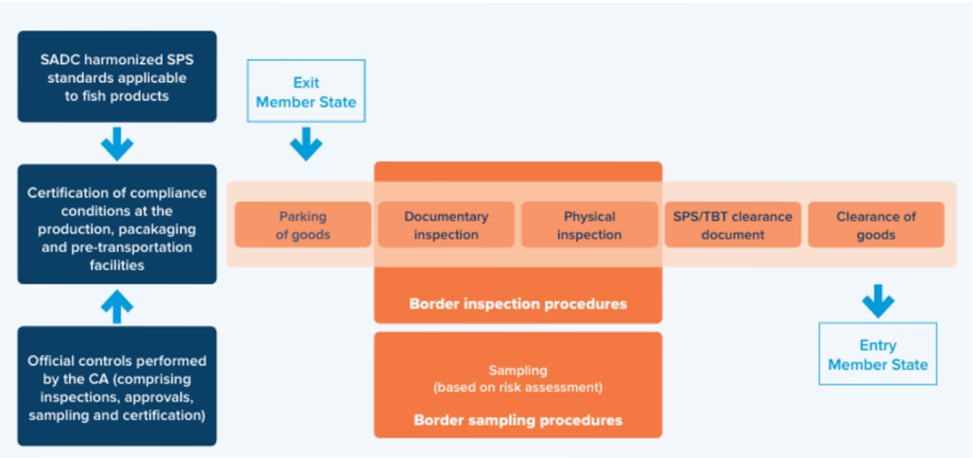
As seafood is one of the most traded agri-commodities Ref 103, its processing is closely linked with regional markets and export revenues in most coastal countries (see subsect. 5A, subchap. 1F). For instance, experience gathered in the Southern Africa Development Community (SADC) showed that integrating fishery commodities into the One Stop Border Post initiative is the most practical trade facilitation approach in terms of standardization and policy harmonization. This approach is often seen as a type of "market export", whereby high-value commodities are processed for foreign exchange and regional benefits Ref 25. The One Stop Border Post initiative involves placing officials of two countries in each other's border offices so that outward and inward clearance is carried out in one place sequentially Ref 88, thus providing an opportunity for joint, harmonized controls on each side of the border. The concept of a sanitary compliance and conformity assessment implementation framework through this initiative should address checks at borders as well as the application of the process control model for fisheries product quality and safety within the various fish value chains (see figure IV).
Figure IV The One Stop Border Post approach for common processing standards and trade facilitation
Instruments of governance
Effective governance of seafood processing requires a comprehensive approach that integrates a variety of regulatory instruments at the local, regional and international levels from harvesting and processing to marketing. These governing frameworks are crucial for addressing the multifaceted challenges of the seafood industry and for promoting practices that enhance economic sustainability and environmental stewardship Ref 60. The industry operates within a complex network of regulations to ensure food safety, protect labour rights and preserve the marine environment. These instruments include legal frameworks, international agreements, voluntary measures and organizational mandates that collectively oversee the management of value chains and the conservation of aquatic resources. Key instruments include:
- The United Nations Convention on the Law of the Sea and the FAO Code of Conduct for Responsible Fisheries, which establish global standards for marine resource governance.
- The Agreement for the Implementation of the Provisions of the United Nations Convention on the Law of the Sea of 10 December 1982 relating to the Conservation and Management of Straddling Fish Stocks and Highly Migratory Fish Stocks, which emphasizes international cooperation to ensure sustainable fisheries.
- The ILO Work in Fishing Convention, which sets forth international labour standards to ensure safe working conditions, fair wages and the prohibition of forced and child labour within the seafood industry.
- The Agreement under the United Nations Convention on the Law of the Sea on the Conservation and Sustainable Use of Marine Biological Diversity of Areas beyond National Jurisdiction, which recognizes the importance of conserving marine ecosystems for the sustainability of fisheries and aquatic food systems.
- The Kunming-Montreal Global Biodiversity Framework, established at the fifteenth Conference of the Parties to the Convention on Biological Diversity, which emphasizes the need for integrated approaches to biodiversity conservation and sustainable resource use.
- The WTO Fisheries Subsidies Agreement, which represents another critical element in global fisheries governance and is useful to curb harmful subsidies that contribute to overfishing and illegal, unreported and unregulated (IUU) fishing, thereby promoting cooperation, fairness and sustainable fishing practices.
- The Agreement on Port State Measures to Prevent, Deter and Eliminate Illegal, Unreported and Unregulated Fishing, which is legally binding and empowers port States to deny foreign vessels suspected of having engaged in IUU fishing from using their ports to land catches.
- The Voluntary Guidelines for Securing Sustainable Small-Scale Fisheries in the Context of Food Security and Poverty Eradication, which are a negotiated international instrument endorsed by the FAO Committee on Fisheries and include a dedicated chapter on value chain, post-harvesting and trade.
- The Fisheries Transparency Initiative, which strengthens governance by promoting transparency and accountability within the seafood processing industry.
In addition to international and regional frameworks, regional fisheries management organizations (RFMOs) and regional fisheries bodies play a pivotal role in the governance of shared fish stocks that spans across national boundaries. National regulations further complement international and regional frameworks by addressing specific local needs and conditions. For instance, the Food Safety Modernization Act of the United States of America and the General Food Law Regulation of the European Union impose stringent food safety and traceability requirements on seafood processing facilities.
5. Sustainability pathways
Management controls
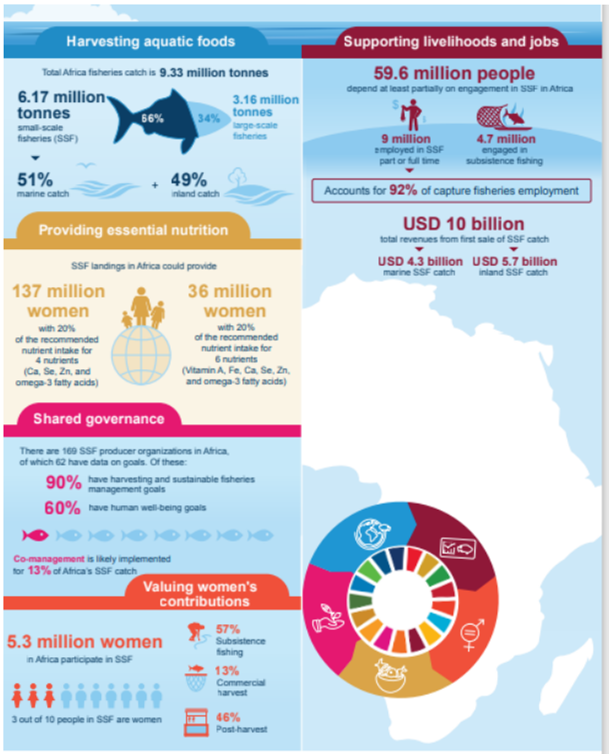
Fisheries management controls influence access rights, raw material supply and the profitability of fish commodity chains. Often, sustainability parameters such as catch per unit effort are used to address stock abundance and the viability of fish value chains. This is a useful policy instrument that controls fishing efforts, and the question is how best to optimize or "satisfice" fisheries management goals Ref 81. A combination of input and output control measures may be appropriate in some instances, whether total allowable catch, vessel or individual quotas, seasonal closures, community quotas, gear restrictions, permits and licences. The choice of measures could be a function of objectives, cost and national priorities. These management controls help to maintain fish production chains, especially in the small-scale sector, and to ensure full benefits for society (see figure V).
Figure V Small-scale fisheries' contribution to processing and value addition benefits in Africa
In addition to management control measures that are designed to support an ecosystem approach, there are market-based incentives for the sustainability of the seafood industry aimed at ensuring fair trade and stewardship and addressing concerns relating to overfishing (see box 4).
Box 4
Comprehensive fisheries management system of Iceland (Organisation for Economic Co-operation and Development (OECD), 2017)Iceland developed a comprehensive fisheries management system that integrates sustainability, traceability and quality assurance. Central to it is a quota management system that allocates fishing rights to individual vessels, ensures sustainable harvest levels and prevents overfishing. Advanced traceability systems track seafood products from catch to consumers, ensuring compliance with regulatory standards and enhancing consumer confidence. The active involvement of stakeholders, including fishers, processors and regulators, fosters a collaborative approach to fisheries management, highlighting the significance of quota management, transparency and stakeholder engagement for effective governance. |
These market-based tools have ensured that each player in the seafood industry is held accountable for the course of sustainability practices in the complex international seafood trade, especially regarding mislabelling Ref 48. The adoption of eco-certification processes, for instance, strives to improve awareness and information-sharing, which may be empowering for the seafood industry.
Quality infrastructure and standardization
Quality and safety are crucial drivers of sustainable seafood trade and processing methods. Consumers must be convinced that seafood is safe from foodborne pathogens, mycotoxins and other production hazards. Similarly, seafood buyers must meet increasingly robust food safety and quality control standards. The difficulty of establishing cause and effect along value chains creates an urgency to invest in mycotoxin prevention and other hazards Ref 5. In tropical settings, where microbial activities are predominant due to high temperatures and humidity, post-harvest activities might be compromised by growth of fungi moulds and bacterial infection. Understanding post-harvest best practices is imperative for social and economic reasons in the context of safety and seafood quality.
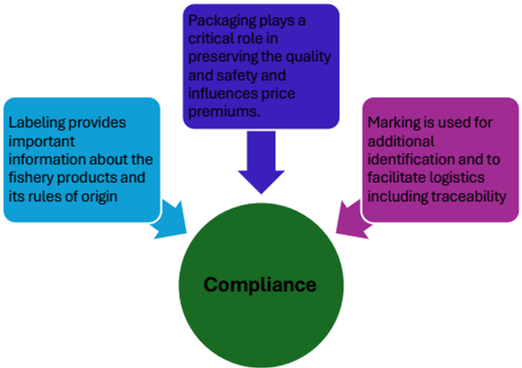
A prime example is the implementation of hazard analysis and critical control point systems, which are globally recognized approaches for improving food safety in seafood processing Ref 88. These systems are designed to proactively identify and control potential hazards and prevent food safety issues before they occur. Adopting these systems is often a prerequisite for accessing major international markets such as the European Union and the United States, where strict quality and safety standards are enforced Ref 71 Ref 82. Consequently, operators implementing such systems and pre-requisite programmes are better positioned to compete globally, thus enhancing their market access, competitiveness and consumer confidence. Policies must therefore be designed to maximize economic benefits while simultaneously enabling the prosperity of local markets and communities. As shown in figure VI, processing activities within the fish production chain are influenced by a continuum of management measures in the pre-harvest and harvest/culture stages and have an impact on post-harvest measures as well as retail trade and consumption patterns. These consumption patterns and dietary preferences within agrifood systems and commodity chains have implications for human well-being (see figure VI).
Figure VI Processing activities and implications for marketing and conservation practice
Building economic resilience under global change
As discussed in subsection 5B, chapter 7, global shocks such as the coronavirus disease (COVID-19) pandemic have affected fish harvesting and seafood processing, especially with social distancing, lockdowns and border closures to contain infection Ref 14. To be resilient under global change, multiple strategies must be deployed to address the public health, trade flows and nutritional needs of communities. In the absence of active fishing and processing, short-term health protocols and social safety nets are imperative Ref 54.
Policy innovation and sustainability entry points
Five key takeaways are provided below as tenets for seafood processing to complement and align with other chapters of the third World Ocean Assessment on food systems, trade, small-scale fisheries, gender, industrial fisheries and well-being:
- Sustainable Development Goals. The seafood industry has made significant progress in aligning with global objectives such as Goals 2 and 14, contributing to sustainable marine governance and food and nutritional security. Processing methods such as freezing and canning have an adverse effect on the nutritional value of seafood while reducing post-harvest losses, thus supporting food security, livelihoods and economic prosperity. Processing methods also address gender, well-being, decent work, responsible consumption and production and climate action (Goals 5, 8, 10, 12 and 13).
- Efficiency and value addition. The fish production chain consists of interconnected stages in which effective post-harvest techniques reduce spoilage and add value. Processing methods such as chilling, freezing and curing are crucial in transforming raw seafood into more stable and marketable products, thus contributing to food and nutrition security.
- Technological advancements. Advances in technology and modern infrastructure, including automation, digital platforms and precision tools, have improved fish supply chain efficiency Ref 101. This is achieved by inactivating spoilage microorganisms and enzymes that contribute to the deterioration of the product over time Ref 98. Technologies such as high-pressure processing, cold plasma and pulsed electric field processing are particularly effective in this regard Ref 98. However, they also present challenges that require regulatory frameworks in order to ensure long-term viability and sustainability.
- Environmental and social pressures. Factors such as adverse incentives and subsidies relating to overfishing, climate change and pollution pose risks to marine ecosystems, raw material supply and seafood production. Moreover, social issues such as labour rights, gender equity and social inclusion further challenge the industry's governance and demand policy reforms.
- Governance and regulatory frameworks. Effective governance of the seafood industry is essential for maintaining sustainability. International frameworks such as the United Nations Convention on the Law of the Sea and the WTO Fisheries Subsidies Agreement emphasize cooperation and regulatory harmonization to curb overfishing and ensure compliance with environmental and labour standards.
6. Summary and conclusion
In 2022, of the 165 million tons of fish destined for human consumption, live, fresh or chilled fish accounted for about 43% (FAO, 2024). This was followed by frozen (35%), prepared and preserved (12%) and cured (10%). Moreover, freezing is the main method of preserving aquatic foods, accounting for 62% of the 93 million tons of processed aquatic animal production for human consumption. This represents about 89% for direct human consumption, with the remaining 11% for non-food purposes such as fish meal in aquaculture and biofuel. Recently, much of the discarded food waste has been developed into affordable and nutritious products because of their nutritional value Ref 94, along with nutrients such as iron, calcium and other micronutrients that can address deficiencies in human health Ref 116.
By addressing social and economic issues in coastal communities, the seafood processing industry can play a central role in promoting gender inclusion, fair wages and decent work conditions for all (Sustainable Development Goals 5, 8, 10 and 12). To achieve a more sustainable and equitable future for seafood processing, stakeholders are encouraged to adopt some key policy recommendations:
1. Invest in public goods and fisheries governance. Seafoods systems are governed by public institutions because of the common benefits to global citizens. Governments and industry leaders should therefore invest in natural capital assets and fisheries conservation as well as appropriate technologies and modern infrastructure to ensure compliance with management best practices. These investments will drive compliance, reduce perverse incentives to overfish and cater to evolving consumer preferences and community benefits.
2. Promote ethical labour practices and social equity. Advanced processing techniques, especially for traceability and rules of origin, will play a pivotal role in compliance and meeting the diverse needs of stakeholders. However, technological innovation should not come at the expense of social inclusion and community resilience. In prioritizing and promoting social inclusion, it is important to ensure safe working conditions, fair wages, jobs for young people and gender equity at all stages of the seafood processing chain. Thus, Governments and industry actors could ensure that the ratification and enforcement of global labour standards to protect workers' rights and foster ethical consumption and production practices are sustained Ref 46.
3. Strengthen governance and policy harmonization. As global demand for seafood increases, integrated policy frameworks and value chain enhancements must be aligned to foster a more inclusive and resilient sector. Policymakers must prioritize harmonizing regulations across jurisdictions to facilitate fair trade, uphold environmental standards and ensure that labour rights are met Ref 41. Collaborative efforts between regional and global bodies will be essential to curbing overfishing, improving traceability and promoting sustainable fishing practices and processing methods.
4. Upgrade infrastructure and build capacity. Embracing circular economy best practices, such as renewable energy in processing plants and biodegradable packaging, will ensure that the industry remains aligned with sustainability principles and environmental stewardship. Developing nations and coastal communities require investments in cold storage facilities, modern processing plants and transportation networks to reduce post-harvest loss. Capacity-building programmes targeted at women, young people and small-scale fishers will empower local communities, increase revenues and create more equitable opportunities within seafood value chains and the processing industry.
5. Foster consumer awareness and demand for sustainable food products. Consumer awareness and education campaigns in eco-labelling and sustainability certifications should be a priority for all economic sectors (businesses) and Governments to boost demand and enable more informed and sustainable purchasing decisions for seafood Ref 90.
By taking these sustainable pathways, the seafood processing industry can meet global challenges in the future, safeguarding marine ecosystems and ensuring the well-being of millions of people who rely on seafood as a vital source of nutrition, jobs and export earnings.
References
- Abelti, A.L., and Teka, T.A. (2024). Intervening fish post-harvest losses to narrow the gap between demand and supply: a review on magnitude of fish post-harvest losses in some sub-Saharan African countries. Aquaculture, Fish and Fisheries, 4, e168.
- Adam, R., Amani, A., Kuijpers, R., Danielsen, K., Smits, E., Kruijssen, F., ... & Farnworth, C. R. (2024). Climate-resilient aquatic food systems require transformative change to address gender and intersectional inequalities. PLOS Climate, 3(7), e0000309
- African Development Bank (2022). Southern Africa regional integration strategy paper 2020-2026. https://www.afdb.org/en/documents/southern-africa-regional-integration-strategy-paper-2020-2026.
- African Development Bank (AfDB) (2016). Annual Report. African Development Bank Group, Abidjan.
- Akintola S.L., Fakoya K.A., Elegbede I.O., Odunsi E., and Jolaosho T. (2022). Postharvest practices in small-scale fisheries In Sustainable Fish Production and Processing, Galanakis C., ed. Academic Press; Cambridge, Massachusetts, pp. 79-110.
- Al-Maamari, R., Al-Haddad, M., and Al-Rumaihi, K. (2022). Marine pollution in Kuwait and its impacts on fish-stock decline in Kuwaiti waters: Reviewing the Kuwaiti government's policies and practices. Marine Pollution Bulletin, 175, 113247.
- Ayilu, Raymond, and Nyiawung, Richard (2022). Illuminating informal cross-border trade in processed small pelagic fish in West Africa. Maritime Studies. 21. 10.1007/s40152-022-00284-z.
- Barclay, K., Mangubhai, S., Leduc, B., Donato-Hunt, C., Makhoul, N., Kinch, J., and Kalsuak, Jy. (2021). Pacific handbook for gender equity and social inclusion in coastal fisheries and aquaculture. Pacific Community. Noumea, New Caledonia.
- Basurto, X., Gutierrez, N. L., Franz, N., Mancha-Cisneros, M. D. M., Gorelli, G., Aguión, A., ... & H. Thilsted, S. (2025). Illuminating the multidimensional contributions of small-scale fisheries. Nature, 637(8047), 875-884.
- Bavinck, M., Ahern, M., Hapke, H.M., Johnson, D.S., Kjellevold, M., Kolding, J., Overå, R., Schut, T., and Franz, N. (2023). Small fish for food security and nutrition. FAO Fisheries and Aquaculture Technical Papers. No. 694. FAO, Rome.
- Bavinck, M., Chuenpagdee, R., Diallo, M., Van der Heijden, P., Kooiman, J., Mahon, R., and Williams, S. (2005). Interactive fisheries governance, Delft: Eburon Publishers, p. 72. https://www.marecentre.nl/fishgovfood/documents/bavinck_interactive.pdf?utm_source=copilot.com.
- Bellmann, C., Tipping, A., and Sumaila, U.R. (2016). Global trade in fish and fishery products: an overview. Mar. Policy, 69, 181-188.
- Bennett, E.M., Peterson, G.D., and Gordon, L.J. (2022). Understanding the role of fish in food systems: A global perspective. Food Security, 14(1), 1-12.
- Bennett, N.J., and others (2020). The COVID-19 pandemic, small-scale fisheries and coastal fishing communities: Early evidence from a global scoping review. Coastal Management, 48(5), 336-347.
- Berkes, F., Hughes, T., Steneck, R., Wilson, J., Bellwood, D., Crona, B., Folke, C., Gunderson, L., Leslie, H., Norberg, J., Nyström, M., Olsson, P., Österblom, H., Scheffer, M., and Worm, B. (2006). Ecology. Globalization, roving bandits, and marine resources. Science (New York, N.Y.). 311. 1557-8.
- Berkes, F., Colding, J., and Folke, C. (2003). Navigating social-ecological systems: Building resilience for complexity and change. Cambridge University Press.
- Blasiak, R., Dauriach, A., Jouffray, J.B., Folke, C., Österblom, H., Bebbington, J., Bengtsson, F., Causevic, A., Geerts, B., Grønbrekk, W., Henriksson, P.J.G., Käll, S., Leadbitter, D., McBain, D., Crespo, G.O., Packer, H., Sakaguchi, I., Schultz, L., Selig, E.R., Troell, M., Villalón, J., Wabnitz, C.C.C., Wassénius, E., Watson, R. A., Yagi, N., and Crona, B. (2021). Evolving perspectives of stewardship in the seafood industry. Frontiers in Marine Science, 8, 671837. https://doi.org/10.3389/fmars.2021.671837.
- Bwala, M.N., (2023). Effect of smoking methods on polycyclic aromatic hydrocarbons (PAHs) contamination. National Environmental Standards and Regulations Enforcement Agency (NESREA). Ecotoxicol Environmental Contamination., volume 18, n.2, 18-25.
- Charles, A., Macnaughton, A., and Hicks, S. (2024). Environmental stewardship by small-scale fisheries. FAO, Rome.
- Cheung, W.W.L., Watson, R., and Pauly, D. (2021). Climate change and the oceans: Impacts on fisheries. Marine Policy, 123, 104320.
- Chuenpagdee R., and Rocklin D., eds. (2016). Small-scale Fisheries of the World. vol. II. TBTI Publication Series, St John's, NL, Canada.
- Cisneros-Montemayor, A.M., Ota, Y., Bailey, M., Hicks, C.C., Khan, A., Rogers, A., Sumaila, U.R. Virdin, J., He, K.K. (2020). Changing the narrative on fisheries subsidies reform: Enabling transitions to achieve SDG 14.6 and beyond. Marine Policy, vol. 117.
- Cooney, R., Bennun, L., and Haseeb, M. (2023). Integrated approaches to biodiversity and ecosystem services management. Journal of Cleaner Production, 416, 136541. https://www.sciencedirect.com/science/article/pii/S0959652623004419.
- Crenshaw, K.W. (1991). Mapping the margins: Intersectionality, identity politics, and violence against women of color. In Critical race theory: The key writings that formed the movement (pp. 357-383). New York: The New Press.
- Crona, B.I., Basurto, X., Squires, D., Gelcich, S., Daw, T.M., Khan, A., Havice, E., Chomo, V., Troell, M., Buchary, E.A., and Allison, E.H. (2016). Towards a typology of interactions between small-scale fisheries and global seafood trade. Marine Policy. 65, 1-10. https://doi.org/10.1016/j.marpol.2015.11.016
- d'Armengol, L., Prieto Castillo, M., Ruiz-Mallén, I., and Corbera, E. (2018). A systematic review of co-managed small-scale fisheries: social diversity and adaptive management improve outcomes. Global Environmental Change, 51, 91-103.
- Daw, T., Brown, K., and Rosendo, S. (2021). The role of distant-water fishing fleets in global fish supply: Implications for fisheries management. Marine Policy, 130, 104525.
- FAO, Duke University, and WorldFish (2023) Illuminating Hidden Harvests: The contributions of small-scale fisheries to sustainable development, FAO, Duke University, WorldFish, Rome, Italy, 10.4060/cc4576en
- FAO (2022). Post-harvest fish loss assessment: A guide to conducting a desk and field studies. Rome.
- FAO (2020). The State of World Fisheries and Aquaculture 2020. Rome.
- Foley, N.S., van Rensburg, T.M., and Armstrong, C.A. (2011). The rise and fall of the Irish orange roughy fishery: an economic analysis. Marine Policy, 35: 6, 756-763.
- Frangoudes, K., Gerrard, S., & Kleiber, D. (2019). Situated transformations of women and gender relations in small-scale fisheries and communities in a globalized world. Maritime Studies, 18(3), 241-248.
- Galappaththi, M., Collins, A. M., Armitage, D., & Nayak, P. K. (2021). Linking social wellbeing and intersectionality to understand gender relations in dried fish value chains. Maritime Studies, 20(4), 355-370.
- Ghaly, A.E., Ramakrishnan, V.V., Brooks, M.S., Budge, S.M., and Dave, D. (2010). Fish processing wastes as a potential source of proteins, amino acids and oils: A critical review. Journal of Microbial & Biochemical Technology, 5(4), 107-129.
- Gudmundsson, E., Asche, F., Nielsen, M. (2006). Revenue distribution through the seafood value chain. FAO Fisheries Circular. No. 1019. Rome, FAO. 42p.
- Guelker, D. (2023). Fishers and seafarers in international law - Really so different?, Marine Policy, Volume 148. 105473.
- Harper, S., Zeller, D., Hauzer, M., Pauly, D., and Sumaila, U.R. (2013). Women and fisheries: Contribution to food security and local economies. Marine Policy, 39, 56-63.
- Harper, S., Adshade. M., Lam, V.W.Y., Pauly D., and Sumaila U.R. (2020). Valuing invisible catches: Estimating the global contribution by women to small-scale marine capture fisheries production. PLoS ONE 15(3): e0228912. https://doi.org/10.1371/journal.pone.0228912.
- Harper, S. J., Williams, M., Kleiber, D., Axelrod, M., Mangubhai, S., Torell, E., ... & McDougall, C. (2026). Designing gender-inclusive data systems in small-scale fisheries. Ambio, 55(2), 245-259.
- Harrison, J., and Houghton R. (2020a). The role of policy in promoting fair trade and environmental standards in fisheries. Journal of Environmental Management, 260, 110189.
- Harrison, J., and Houghton R. (2020b). Sustainable seafood processing: Innovations in efficiency and environmental conservation. Marine Policy, 113, 104801.
- Hilborn, R., Branch, T.A., and Ernst, B. (2020). The management of fisheries: A retrospective and prospective view. Fish and Fisheries, 21(1), 1-26.
- Intergovernmental Panel on Climate Change (2022). Climate Change 2022: Impacts, Adaptation, and Vulnerability. Intergovernmental Panel on Climate Change.
- Irschlinger, T. (2024). World Trade Organization Talks on Subsidies That Contribute to Overcapacity and Overfishing: What's on the Table? International Institute for Sustainable Development (IISD) Report. IISD.org.
- Issifu, I., Deffor, E.W., Deyshappriya, N.P.R., Dahmouni, I., and Sumaila, U.R. (2022). Drivers of Seafood Consumption at Different Geographical Scales. J Sustain Res., 4(3): e220012.
- ILO (2016). Fishers first - Good practices to end labour exploitation at sea / International Labour Office, Fundamental Principles and Rights at Work Branch, Sectoral Policies Department. Geneva.
- Irschlinger, T. (2025). World Trade Organization talks on additional fisheries subsidy rules: What's on the table now? International Institute for Sustainable Development (IISD).
- Jacquet, J., and Pauly, D. (2008). Trade secrets: Renaming and mislabeling of seafood. Marine Policy, 32(3), 309-318.
- Jentoft, S., and Chuenpagdee, R. (2022). The importance of stakeholder participation in fisheries governance. Marine Policy, 130, 104593.
- Jentoft, S., and Chuenpagdee, R. (2009). Fisheries and coastal governance as a wicked problem. Marine Policy, 33(4), 553-560.
- Johnson, D., Acott, T., Stacey, N., and Urguhart, J. (2023). Social wellbeing and the values of Small-Scale Fisheries. Cham: Springer, MARE Publication Series, vol. 25.
- Jouffray, J.B., Blasiak, R., Norström, A.V., Österblom, H., and Nyström, M. (2019). The Blue Acceleration: The trajectory of human expansion into the ocean. One Earth, 2(1), 43-54
- Kleiber, D., Harris, L.M., and Vincent, A.C.J. (2017). Gender and small-scale fisheries: A case for counting women and beyond. Fish and Fisheries, 18(5), 958-972.
- Khan, A., Ahmed, S.M., Sarr, C. and others (2021). Nourishing nations during pandemics: why prioritize fish diets and aquatic foods in Africa. Maritime Studies. doi.org/10.1007/s40152-021-00236-z.
- Khan, A.S., and G. Cundill (2019). Hotspots 2.0: Towards an integrated understanding of stressors and response options. Ambio, 48: 639-648.
- Khan, A.S., Campbell, D., Singh-Renton, S., Murray, A., and Eyzaguirre, J. (2019). Chapter D. Toward Climate-Smart Value Chains in Caribbean Fisheries. CRFM Research Paper Collection, vol. 9: 252-281. CRFM, Kingston.
- Khan, A.S. (2012). Understanding global supply chains and seafood markets for the rebuilding prospects of Northern Gulf Cod Fisheries. Sustainability, 4(11): 2946-2969.
- Khan, A.S., and B. Neis (2010). The rebuilding imperative in fisheries: Clumsy solutions for wicked problems? Progress in Oceanography, 87(1-4): 347-356.
- Khan, A., Charles, A., and Armitage, D. (2016). Place-based or sector-based adaptation? A case study of municipal and fishery policy integration. Climate Policy. 18. 1-10. 10.1080/14693062.2016.1228520.
- Khan, A., and Chuenpagdee, R. (2014). An interactive governance and fish chain approach to fisheries rebuilding: A case study of the Northern Gulf cod in eastern Canada. Ambio, 43(5), 600-613. https://doi.org/10.1007/s13280-013-0446-y.
- Kleiber, D., Frangoudes, K., Snyder, H. T., Choudhury, A., Cole, S. M., Soejima, K., ... & Porter, M. (2017). Promoting gender equity and equality through the small-scale fisheries guidelines: experiences from multiple case studies. In The small-scale fisheries guidelines: global implementation (pp. 737-759). Cham: Springer International Publishing.
- Knott, C.D., Marschke, M.J., and Van Aken, H. (2022). The Blue Economy in a Time of Climate Change: A Rapid Review of the Evidence. Marine Policy, 136, 104932. DOI: 10.1016/j.marpol.2021.104932.
- Knott, C.D. (2020). The Blue Economy: The Promise of Sustainable Development for the Ocean. In M.A.H.N.W.L.N. Lejano, ed. Sustainable Development and the Blue Economy: A Systems Perspective (pp. 53-68). Springer.
- Knott, C.D., and Marschke, M.J. (2020). Governance and Management for the Blue Economy. Ocean & Coastal Management, 182, 104958. DOI: 10.1016/j.ocecoaman.2019.104958.
- Knott, C.D. (2016). Exploring the Potential for a Blue Economy in the Western Indian Ocean. African Journal of Marine Science, 38(1), 1-8. DOI: 10.2989/1814232X.2016.1143654.
- Kooiman, J., Bavinck, M., Jentoft, S., and Pullin, R. (2005). Fish for Life: Interactive Governance for Fisheries. MARE Publication Series, vol. 2. Amsterdam University Press.
- Kumar, S., Gupta, S., and Jha, A. (2021). Post-harvest losses in fisheries: A review of the challenges and solutions. Aquaculture Reports, 19, 100588.
- Kumar, S., and Tiwari, B. (2020). Sustainable practices in seafood processing: Innovations and challenges. Journal of Cleaner Production, 258, 120618.
- Kumar, P. S., Pillai, N. G., and Manjusha, U. (2014). El Nino Southern Oscillation (ENSO) impact on tuna fisheries in the Indian Ocean. SpringerPlus, 3, Article 591. https://doi.org/10.1186/2193-1801-3-591.
- Kumolu-Johnson, C.A., and Ndimele, P.E. (2011). A review on post-harvest losses in artisanal fisheries of some African countries. Journal of Fisheries and Aquatic Science, 6(4), 365-378.
- Kurnia, S., Triana, I.A., and Sultoni, R. (2020). The Concept of Blue Economy: A Literature Review. International Journal of Innovation, Creativity and Change, 13(1), 347-365.
- Lee, S. (2024). A Blue Economy for Sustainable Development: Policy Recommendations. Ocean & Coastal Management, 236, 105874.
- Lowitt, K. (2013). The Blue Economy: The Role of Coastal Communities in Sustainable Development. Coastal Management, 41(3), 226-241.
- Ludwig, D., R. Hilborn, and C. Walters. (1993). Uncertainty, resource exploitation and conservation: Lessons from history. Science, 260: 36-37.
- Lue, M., Makino, M., and Asari, M. (2022). Seafood Sustainability Supply Chain Trends and Challenges in Japan: Marine Stewardship Council Fisheries and Chain of Custody Certificates. Sustainability, 14, 13523. https://doi.org/10.3390/su142013523.
- Mangubhai, S., Barclay, K. M., Lawless, S., & Makhoul, N. (2023). Gender‐based violence: Relevance for fisheries practitioners. Fish and fisheries, 24(4), 582-594.
- Mangubhai, L., Cowley, S., Mangubhai, J.P., and Williams, M.J. (2022). Progressing gender equality in fisheries by building strategic partnerships with development organisations. World Development, 158: 105922.
- Mangubhai, S., and Lawless, S. (2021). The role of blue carbon in climate change mitigation: The case of coral reef ecosystems in the Coral Triangle. Ocean & Coastal Management, 210, 105677.
- Marschke, M., O'Leary, B.C., and Salomon, A. (2018). The blue economy: The next phase of sustainable development. Sustainability, 10(10), 3464. https://doi.org/10.3390/su10103464.
- Mcleod, E., Arora-Jonsson, S., Masuda, Y. J., Bruton-Adams, M., Emaurois, C. O., Gorong, B., ... & Whitford, L. (2018). Raising the voices of Pacific Island women to inform climate adaptation policies. Marine policy, 93, 178-185.
- Miller, K.A., and Shelton, S.C. (2010). The role of the ocean in global warming: Is it still a dirty word? Marine Policy, 34(4), 829-836.
- Naabi, M.R., and Bose, S. (2020). Blue economy in the context of sustainable development goals: Marschke et al (2018).
- Nakamura, Katrina (2024). Is tuna ecolabeling causing fishers more harm than good ?. npj Ocean Sustainability. 3. 10.1038/s44183-024-00074-6.
- Naylor, L., Sumaila U.R., Issifu, I., and others (2021). Blue food demand across geographic and temporal scales. Nature Communications, 12, 5413.
- Neis, B., Gollner, S., and Thiel, H. (2013). Towards an integrated approach for the assessment of ecosystem services in the marine environment: The example of the blue economy. Ecosystem Services, 5, 1-11.
- NEPAD (2022). Accelerating the Blue Economy: Policy and Action Plan. African Union.
- OECD (2017). Sustaining Iceland's fisheries through tradeable quotas: Country Study. OECD Environment Policy Papers, No. 9. OECD Publishing, Paris. https://doi.org/10.1787/46f8d776-en.
- Okeke-Ogbuafor, N., and Gray, T. (2021). Assessing the blue economy potential in Nigeria: Challenges and opportunities. Sustainability, 13(9), 4921.
- Ommer, R., and Neis, B. (2014). Introduction to the Special Feature on rebuilding fisheries and threatened communities. Ecology and Society. 19. 10.5751/ES-06960-190349.
- Österblom, H., Jouffray, J.-B., and Folke, C. (2015). The blue economy and the role of the ocean in sustainable development. Global Sustainability, 2, e2.
- Packer, M., Stoll, J.S., and Smith, R.C. (2019). Marine biodiversity and the blue economy: Opportunities and challenges. Ocean & Coastal Management, 170, 1-8.
- Paolo, B., Mariani, S., and Sgorbati, S. (2022). Blue economy and marine spatial planning: Lessons from the Mediterranean Sea. Ocean & Coastal Management, 219, 106061.
- Pedroza-Gutiérrez, C., and Hapke, H.M. (2022). Developing a blue economy in Mexico: Opportunities and challenges for sustainable growth. Sustainability, 14(4), 2072.
- Peñarubia, O., Islam, M.J., Olsen, R.L., Castro, I.J., Karunasagar, I., Lavilla-Pitogo, C.R., and Bondad-Reantaso, M.G. (2023). Value addition of food waste into affordable and nutritious products: Opportunities for food and nutrition security. Published in collaboration with the Food and Agriculture Organisation (FAO).
- Pérez-Escamilla, R. (2024). Food and nutrition security definitions, constructs, frameworks, measurements, and applications: global lessons. Frontiers in Public Health, 12: 1340149.
- Pinfold, G. (2007). Nova Scotia seafood processing sector: state of the industry and competitiveness assessment. https://novascotia.ca/fish/documents/seafoodreport.pdf.
- Revollo-Fernández, D. A., Fulton, S., and Chávez Sánchez, S. (2025). Value and economic impact of fuel subsidies on the Mexican fishing industry. Applied Economics, 57(50), 8379-8391.
- Russo, G.L., Langellotti, A.L., Torrieri, E., and Masi, P. (2023). Emerging technologies in seafood processing: An overview of innovations reshaping the aquatic food industry. Comprehensive Review in Food Science and Food Safety.
- Sangaramoorthy, T. (2019). The blue economy: The impacts of marine pollution on economic growth and sustainable development. ResearchGate.
- Se-Kwon, Kim (2014). Seafood processing by-product: trends and application. Springer: New York.
- Siddiqui, S.A., Singh, S., Bahmid, N.A., Sasidharan, A. (2024). Applying innovative technological interventions in the preservation and packaging of fresh seafood products to minimize spoilage - A systematic review and meta-analysis. Heliyon, 4, 10(8): e29066. doi: 10.1016/j.heliyon.2024.e29066.
- Soeparna, I.I., and Taofiqurohman, A. (2024). Transversal policy between the protection of marine fishery resources and fisheries subsidies to address overfishing in Indonesia. Marine Policy, 163, Article 106112. https://doi.org/10.1016/j.marpol.2024.106112.
- Smith, M.D., Roheim, C.A., Crowder, L.B., Halpern, B.S., Turnipseed, M., Anderson, J.L., Asche, F., Bourillón, L., Guttormsen, A., Khan, A.S., and others (2010). Sustainability and global seafood. Science, 327(5967), 784-786. https://doi.org/10.1126/science.1185345.
- Song, A., Fabinyi, M., and Barclay, K. (2024). China and seafood trade after coronavirus: the role of state actors. Marine Policy, 160, 105992.
- Sumaila, and others (296 co-authors) (2021). WTO must ban harmful fisheries subsidies. Science, 374: 6567.
- Sumaila, U.R., Zeller, D., and Pauly, D. (2021). The impact of subsidies on fisheries: A global perspective. Global Environmental Change, 68, 102229.
- Sumaila, U.R., Cheung, W., Dyck, A., Gueye, K., Huang, L., and others (2012). Benefits of rebuilding global marine fisheries outweigh costs. PLoS ONE, 7(7), e40542. Sumaila, U.R., Ebrahim, N.,
- Schuhbauer, A., Skerritt, D., Li, Y., Kim, H.S., Mallory, T.G., Lam, V., and Pauly, D. (2019). Updated estimates and analysis of global fisheries subsidies. Marine Policy, 109, 103695.
- Sumaila, U.R., Khan, A., Teh, L., Watson, R., Tyedmers, P., and Pauly, D. (2010). Subsidies to high seas bottom trawl fleets and the sustainability of deep-sea demersal fish stocks. Marine Policy, Volume 34:3, 495-497.
- Tickler D., Simmonds, E.J., and McPhee, D. (2018). The role of fisheries in the blue economy. Nature sustainability, 1(5), 261-272.
- Thilsted, J.P., Van Houtte, A., and Reddy, R. (2023). Aquatic foods and the blue economy: Opportunities for enhancing food and nutrition security. Global Food Security, 38, 100152.
- Thorpe, A., and A.J.L. (2005). The economic value of coastal and marine ecosystem services. Environmental Science & Policy, 8(5), 1-12
- Tilley, A., Burgos, A., Duarte, A., dos Reis Lopes, J., Eriksson, H., & Mills, D. (2021). Contribution of women’s fisheries substantial, but overlooked, in Timor-Leste. Ambio, 50(1), 113-124.
- Torreblanca, S., Gutiérrez, A., and Rojas, M. (2022). Strengthening international regulations for sustainable distant-water fisheries: A global perspective. Ocean & Coastal Management, 218, 105645.
- Revollo-Fernández, D.A., Fulton, S., and Chávez Sánchez, S. (2024). Value and economic impact of fuel subsidies on the Mexican fishing industry. Applied Economics, 1-13. https://doi.org/10.1080/00036846.2024.2399814.
- UN Nutrition (2021). The role of aquatic foods in sustainable healthy diets. https://www.unnutrition.org/wp-content/uploads/FINAL-UN-Nutrition-Aquatic-foods-Paper_EN.pdf.
- UN Nutrition (2022). UN Nutrition Strategy 2022-2030. Geneva: United Nations. https://www.unnutrition.org.
- UNIDO (2024). Improving Blue Economy Trade Corridors in the SADC Region: Towards the Adoption of a Regional Strategy for OSBP on Fisheries Products under ProFishBlue Project. UNIDO, Vienna.
- UNIDO (2025). Strategic and Operational Guide to Assess the Conformity of Fishery Products: Improving Trade under the One Stop Border Post in the SADC Region. UNIDO, Vienna.
- Venugopal, V. (2006). Marine pollution in Kuwait and its impacts on fish-stock decline in Kuwaiti waters: Reviewing the Kuwaiti government's policies and practices.
- Wabnitz CCC, Blasiak R, Harper S, Jouffray J-B, Tokunaga K, Norström AV (2021) Gender dynamics of ocean risk and resilience in SIDS and coastal LDCs. Ocean Risk and Resilience Action Alliance (ORRAA) Report
- Wabnitz, C.C.C., Brugere, C. et al. (2026) Gender and Fisheries – The Democratic Socialist Republic of Sri Lanka. Country Fact Sheet. Ocean Risk and Resilience Action Alliance (ORRAA). https://oceanrisk.earth/fact-sheets/#the-democratic-socialist-republic-of-sri-lanka
- Wabnitz, C.C.C. and Jaiteh, V. F. et al. (2025) Gender and Fisheries – Ghana. Country Fact Sheet. Ocean Risk and Resilience Action Alliance (ORRAA). https://oceanrisk.earth/fact-sheets/#ghana
Wabnitz, C.C.C., House, J. et al. (2026) Gender and Fisheries – Vanuatu. Country Fact Sheet. Ocean Risk and Resilience Action Alliance (ORRAA). https://oceanrisk.earth/fact-sheets/#Vanuatu
FAO. 2015. Voluntary Guidelines for Securing Sustainable Small-Scale Fisheries in the Context of Food Security and Poverty Eradication. Rome. https://openknowledge.fao.org/handle/20.500.14283/i4356en.
FAO. 2024. The State of World Fisheries and Aquaculture 2024: Blue Transformation in action. Rome. https://doi.org/10.4060/cd0683en.
Sumaila, U.R., Zeller, D., Hood, L., Palomares, M.L.D., Li, Y. and Pauly, D. 2020. Illicit trade in marine fish catch and its effects on ecosystems and people worldwide. Science Advances, 6(9): eaaz3801. https://doi.org/10.1126/sciadv.aaz3801.