
Pandemics, including impacts of the coronavirus disease (COVID-19) pandemic
Writing team: Easton R. White (coordinating author), Nsikak Benson, Priyal Bunwaree, Ian Butler (lead member), Victoria Erasmus, Amelie Laute, Candace May, Carmen Mifsud (co-lead member), Sindhura Polepalli, Thauan Santos and Sebastian Villasante.
Key points
- The coronavirus disease (COVID-19) pandemic affected marine ecosystems and the people who depend on them all around the world.
- Seafood workers were particularly susceptible to contracting the disease, as a result of particular working conditions.
- Lockdowns and other public health measures caused immediate drops in seafood demand and tourism worldwide.
- Decreases in boat traffic and visitors to popular tourist destinations resulted in several sightings of species in places where they are rarely seen, or in higher densities compared with the years before the pandemic.
- Cancelled scientific surveys and decreases in fisheries observations resulted in an increase in illegal fishing activities in some areas.
- There are still many unknowns in terms of the direct and indirect effects of the COVID-19 pandemic; more research is needed to prepare for future human pandemics.
1. Introduction
Human pandemics are rare events that can have outsized impacts on marine ecosystems Ref 5 Ref 23 Ref 72 Ref 103. In 2020, the COVID-19 pandemic started to spread around the globe. In 2020 and 2021 alone, there were over 10 million excess deaths related to the disease Ref 108. The pandemic had both immediate and long-lasting impacts on marine ecosystems and those who rely on them, as well as direct health and safety implications for those working in the seafood sector and in coastal areas Ref 23 Ref 83. For example, studies show that seafood workers were particularly susceptible to being infected by COVID-19, as a consequence of tight working quarters and moist working conditions Ref 105 - not because they were handling seafood, as the COVID-19 pandemic was sustained through human-to-human transmission Ref 24. In addition, because of the mandatory use of personal protective equipment, such as face masks and gloves, plastic use, and consequently plastic pollution, increased in the early phases of the pandemic, especially before vaccines became widely available Ref 2 Ref 11. Neither health and safety issues affecting seafood workers, nor plastic pollution, is new or unique to the pandemic, but the event did intensify those and other ongoing problems, such as the marginalization of groups that are especially vulnerable to the impacts of COVID-19.
In addition to those direct impacts, a host of secondary effects developed as lockdowns and other public health measures were put into place Ref 104. This period has been termed the "anthropause" due to the resulting decrease in anthropogenic activity across both terrestrial and marine ecosystems Ref 73. For example, mobility restrictions affected businesses in coastal areas. In view of the drastic decline in people eating in seafood restaurants and engaging in tourism in coastal areas, workers in those areas were hit particularly hard (see figure below) Ref 52 Ref 99 Ref 103. In areas that are highly dependent on tourism (see subsect. 5A, chap. 4), livelihoods completely shifted during the pandemic Ref 1. For example, in the Galapagos Islands, essentially all tourism stopped early in the pandemic Ref 16. In the European Union and other regions that are highly dependent on fishing activities, some businesses began selling seafood directly to consumers Ref 96 Ref 95. The pandemic also had lingering effects on ocean and coastal communities. For instance, consumer preferences shifted, as people began cooking more seafood at home, a trend that continued after the pandemic Ref 84 Ref 95.
Taken all together, pandemic-related restrictions affected a substantial population. Over 750 million people, because of where they live, depend heavily on marine resources Ref 79, while in the United States of America alone, 3 million people work in ocean-dependent businesses Ref 62. Furthermore, aquatic foods provide at least 20% of the animal protein intake of 3.3 billion people across the globe Ref 25. The COVID-19 pandemic also revealed the importance of community organizations in the provision of social security support, particularly during idiosyncratic shocks Ref 25.
Figure Containment of the COVID-19 pandemic in five countries
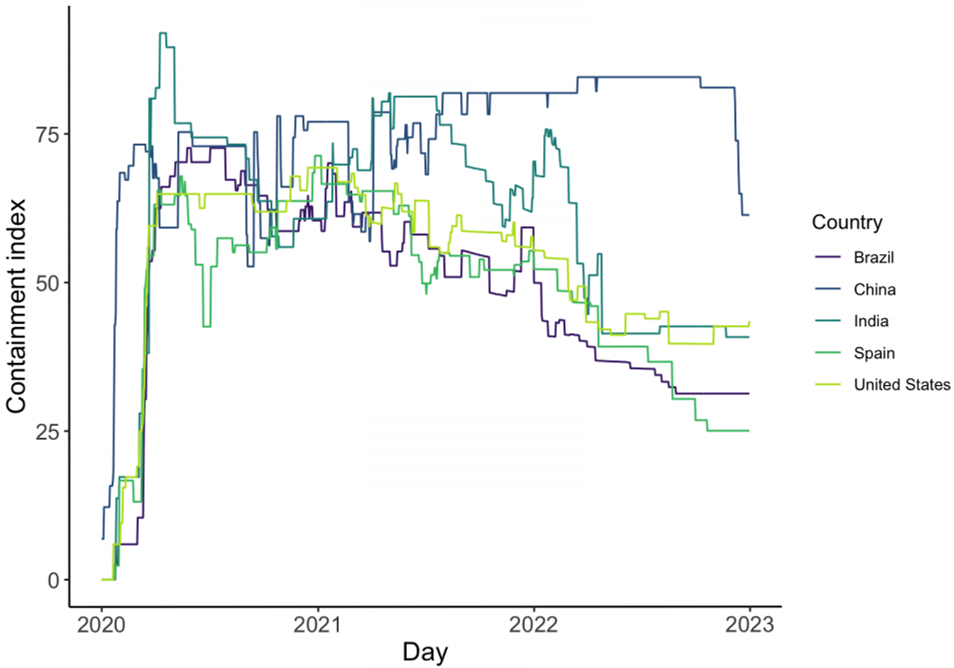
Note: Composite measure of containment based on 13 policy response indicators, including school closures, workplace closures, travel bans, testing policies, contact tracing, face coverings and vaccine policies, rescaled to a value from 0 to 100 (100 being the strictest).
At the same time, some animal species may have benefited from the reduced human presence, including decreases in tourism and boat traffic Ref 85. Throughout the pandemic, species, including marine megafauna, were reported inhabiting waters where they had rarely been seen in the years prior to the event Ref 73. In addition, the corresponding reduction in underwater noise led to changes in the communication behaviour of some animals Ref 45.
While the COVID-19 pandemic had wide-ranging effects, it is not the first human pandemic to have affected the world's oceans. The flu pandemic of 1918-1920 killed more than 50 million people worldwide Ref 57. The disease spread quickly, especially as the First World War raged on, causing people to move across the globe. Similar to during the COVID-19 pandemic, many non-pharmaceutical measures, such as social distancing, went into effect during the flu pandemic of 1918-1920. Because of strong mobility restrictions, some Pacific islands, including American Samoa, remained relatively unscathed by the pandemic Ref 81. However, coastal communities, including Inuit groups across the Arctic, were hit particularly hard Ref 56. In those communities, workers were concentrated during short fishing windows in the summer Ref 65. Fishing pressures in many places around the globe also decreased at that time, but this was primarily due to fishing boats being used for wartime activities. Elsewhere, such as in eastern Canada, there were no changes in catch during the pandemic Ref 77. Similarly, the outbreak of severe acute respiratory syndrome (SARS) in 2003, which had nearly a 10% mortality rate, impacted local and regional economies Ref 47. In particular, the growth rate of Chinese ocean-related industries declined drastically during that period, much faster than the Chinese economy as a whole Ref 112.
Despite these previous pandemics, the unprecedented nature of the COVID-19 pandemic, along with its associated lockdowns, meant that early in the pandemic there were gaps in terms of knowledge, policies and the capacity to emerge. For example, new policies had to be written to ensure the safety of workers in the seafood sector and to distribute relief funds to them in some locations Ref 22. Early in the pandemic, the leaders of National Oceanic and Atmospheric Administration fisheries compiled their thoughts on how science and management might have to change for future pandemics, including as a result of travel restrictions Ref 49. In addition, data and monitoring gaps occurred in many places during the pandemic. The pandemic created challenges and opportunities, with heterogenous impacts that varied according to the scale of seafood operations, production methods, geography, value chains and gender Ref 53. The cumulative impacts of climate change and conflicts also contributed to pandemic-related hardships.
The present chapter provides a review of the literature, covering the period from 2020 to 2024, on the various ways in which the COVID-19 pandemic impacted coastal communities and marine ecosystems. In addition to highlighting effects specific to human pandemics, it illustrates how the pandemic aggravated existing issues, such as plastic pollution. Persisting knowledge gaps are noted, and ways that future pandemics could be handled to take marine ecosystems into consideration are discussed. References are made to other chapters in the third World Ocean Assessment that are intricately linked to the COVID-19 pandemic.
2. The impacts of an increase in single-use face mask use in the context of pollution
To slow down COVID-19 transmission, people had to use personal protective equipment, such as face masks, goggles and gloves, most of which were single-use. The use of single-use face masks was mandatory and common during the pandemic, as they are considered an effective and affordable public healthcare measure for containing viral transmission. For instance, on fishing vessels departing from ports in Namibia, fisheries observers and fishing crews were expected to consistently wear face masks while on board Ref 21.
However, the marked increase in the manufacture and use of plastics throughout the pandemic led to a significant increase in the illegal disposal of plastic waste into the oceans globally Ref 80 Ref 107. In particular, the mismanagement of face masks and other personal protective equipment has caused various problems Ref 55 Ref 98; an estimated 10 million face masks could have been improperly disposed of and introduced into the environment monthly during the pandemic Ref 109.
Not only do single-use face masks and other personal protective equipment reduce the aesthetic and recreational value of the environment (see sect. 4, subchap. 6E), as seen on Italian beaches Ref 75, but they can also easily be ingested by fishes and other organisms, creating an ecological problem Ref 11 Ref 39. In addition, wild animals have become entangled in face masks, which can cause immediate mortality or reduce feeding, facilitate predation, and cause infection or wounds, among other effects Ref 66. Face masks are also a source of microplastics as they contain polystyrene, polypropylene, polyester or polyethylene Ref 2 Ref 11. It is well known that microplastic pollution can inhibit the growth rates, feeding and reproduction of marine species, while also causing stress, neurotoxicity and even death Ref 39.
3. The impact of lockdowns and human activities in the ocean on animal behaviour, biodiversity and presence
The reduction of human presence on and near the ocean, which included less marine shipping traffic, recreational activities and fishing, changed the behaviour of a variety of marine species. These changes were mostly positive and included enhanced communication and breeding success, reoccupation of urbanized areas, or increases in biodiversity and abundance Ref 1. However, the reduced human presence also had neutral or negative effects on some species, including owing to increased illegal activities and less conservation and other forms of human assistance Ref 28 Ref 69.
One of the major effects of the pandemic on the ocean was the reduction of shipping and other anthropogenic activities, which in turn decreased noise pollution. Ambient sound pressure levels were significantly lower in many regions, sometimes even three times quieter Ref 28 Ref 69. Below 100 Hz, the frequency range often dominated by shipping sound, an average reduction of 1.5 decibels was reported in Vancouver, Canada, during the first quarter of 2020 compared with the previous year Ref 85. In other regions, ambient sound pressure levels did not vary significantly, especially if the soundscape was commonly dominated by other sources of sound, like biological sounds Ref 54 or geophonic sounds (naturally occurring non-biological sounds Ref 45).
Since sound travels quickly and far underwater, marine species often use sound for various life functions, including communication (see sect. 4, subchap. 4E). The reduction in noise pollution in many ocean regions led to a change in the communication behaviour of some acoustically active species, including increases in call rate, type or intensity Ref 17 Ref 28. For instance, a doubling in the number of humpback whale calls Ref 45 and an increase in white-beaked dolphin whistles Ref 71 were recorded in Iceland when there were fewer whale-watching vessels. In New Zealand, the communication range of fish and dolphins increased by an estimated 65% Ref 69.
In addition, the reduced number of visitors on shorelines impacted the breeding and nesting behaviour of some species. For instance, sea turtle nesting behaviour improved, with an increased number of nests and more nesting time in various places, including Costa Rica, India, Thailand and the United States Ref 51 Ref 70. In contrast, a breeding colony of common murres was disturbed by a sevenfold increase in the number of sea eagles, attributed to the absence of tourists Ref 32. Furthermore, the reduced human presence in coastal areas, along with improved visibility due to clearer water Ref 74, led to various sightings of animals in uncommon habitats. Similar to reports of wildlife in deserted cities, examples of unusual marine sightings include dolphins in the harbour of Trieste, Italy Ref 73, eagle rays in Dubai Marina Ref 3, dugongs and false killer whales close to the coast in Thailand Ref 93 and sea lions in urban centres in Argentina Ref 93. Many studies also reported increased biodiversity, including in coral reefs Ref 12 Ref 67 Ref 82 and mangroves Ref 10. The reduced presence of humans, along with less fishing and harvesting, also resulted in higher abundances of fish Ref 6 Ref 26 Ref 40 Ref 44 Ref 46 Ref 63 Ref 67 Ref 82 Ref 111, shrimp Ref 13 and horseshoe crabs Ref 15. (These increases were likely a result of short-term changes in habitat use rather than increases in the total population size.) However, some negative impacts on marine ecosystems were also reported after the COVID-19 pandemic. For instance, some fish populations may have been exposed to an increase in unregulated fishing activities Ref 55, and the SARS-CoV-2 virus may have directly affected marine species, due to its potential to infect marine mammals and birds Ref 60. Birds and marine mammals such as whales, seals and dolphins can be infected by different coronavirus genera, which they could have come into contact with through discarded medical waste in the water. In the past, dozens to thousands of harbour, Baikal and common seals, striped dolphins and harbour porpoises have died of viral pneumonia or measles Ref 60.
4. Changes in shipping and port activities and impacts on seafarers and port workers
Facilitating the maritime supply chain was critical during the pandemic. The unprecedented impacts on global trade flows meant that the maritime supply chain, in particular, shipping and port activities, needed to adapt to changes rapidly Ref 91. Each stage of the fisheries and aquaculture supply chain was susceptible to being disrupted or stopped by measures arising from COVID-19 restrictions. Only by protecting each stage of the supply chain could the continued availability of fish and fish products be ensured Ref 24. Ports are key infrastructure that support international trade and the global economy, and port workers and seafarers are vital actors in the maritime supply chain. According to the International Labour Organization (ILO), there are over 2,000 ports globally, including 856 international ports, with variable sizes, services and capabilities Ref 91. In its resolution 75/17, the General Assembly recognized that there were approximately 2 million seafarers serving over 98,000 commercial ships, transporting more than 11 billion tons of seaborne trade in 2019 Ref 90.
Lockdowns and movement restrictions limited the ability and functioning of seafarers and port workers, which adversely impacted the maritime supply chain. According to the International Maritime Organization (IMO), the impacts of the COVID-19 pandemic on seafarers and other maritime professionals included isolated crews, difficulties in repatriation, altered working conditions and labour shortages. For instance, there were significant challenges in terms of crew change and seafarers' welfare conditions, including their rights to wages, shore leave, sick leave, access to medical care, food supplies and repatriation Ref 90. Many seafarers and port workers were stuck onboard ships for months beyond the end of their contracts due to travel restrictions and the lack of clear protocols for crew replacement. IMO estimated that, in 2020, around 400,000 seafarers globally had not been repatriated and were still on their ships despite their contracts having expired, while another 400,000 were unable to join ships and provide for their families Ref 30 Ref 35.
In addition, in some places, such as Spain, shortages of port workers due to infections or quarantines resulted in slower port operations and increased delays in loading and unloading ships. Another drawback was the lack of inspectors and administrative staff to renew fishing licences in other countries due to restrictions. Fishers were also impacted. For example, in Galicia, Spain, the mental and physical health of fishers was also affected after the first lockdown, which began in March 2020. They were scared of the virus due to the lack of space on board for social distancing among crew members, the scarcity of sanitary material for fishers and the need to protect family members Ref 96 Ref 95.
Travel restrictions and lockdowns from COVID-19 significantly disrupted port operations and, consequently, international trade and commerce. While trade declined globally, impacts varied regionally. For instance, major drops occurred in ship calls in Europe, Oceania and the Americas, while moderate decreases occurred in Africa, the Far East and the Persian Gulf Ref 88. UNCTAD reported an 8.7% contraction in ship calls globally in the first half of 2020 compared with a year earlier Ref 88.
To ease trade, it was necessary to ensure swift and safe cargo handling in the maritime supply chain, which entailed regulatory, governance and operational adjustments for ports, port workers and seafarers. Port workers and seafarers were given the status of "essential workers" or "key workers" in various countries Ref 88. However, the severity of the measures varied by country Ref 88. In 2020, the General Assembly adopted resolution 75/17, urging Member States to designate seafarers and other maritime personnel as "key workers" Ref 90. In that resolution, the Assembly also encouraged the implementation of the travel and ship crew change protocols approved by the IMO Maritime Safety Committee at its 102nd session, in order to ensure safety during the COVID-19 pandemic. This protection was further bolstered by the resolution adopted by the IMO Assembly at its thirty-second session, in which the Assembly urged member States to designate seafarers as "key workers" to "facilitate shore leave and safe and unhindered movement across borders", to prioritize the vaccination of seafarers and to provide them with immediate access to medical care and medical evacuation in cases where urgent medical attention was required Ref 35.
IMO, in coordination with organizations including ILO, the International Transport Workers' Federation and the International Chamber of Shipping established the Seafarer Crisis Action Team to monitor developments, coordinate efforts, communicate with stakeholders and provide focused support for seafarers in need of urgent assistance, especially in connection with crew changes, repatriation, medical access and abandonment (United Nations, 2020, and subsect. 5A, chap. 6). IMO reports that the Team has dealt with over 500 cases involving thousands of individual seafarers to date, and continues to respond to new cases Ref 35.
5. Impacts on ocean sciences and observation
The impact of COVID-19 on global scientific production can be measured in different ways. According to Gao and others Ref 29, "researchers in the 'bench' sciences, female scientists, and those with young children experienced significant declines in research time and other publication-based metrics, according to data collected before the summer of 2020", and none of this is different in ocean sciences. Jiang and others Ref 38 pointed out that the amount of attention paid to the ocean during the pandemic was nearly negligible, despite its prominent effect on human well-being.
Due to the lockdown and movement restrictions, many fieldwork and research missions were temporarily suspended. This particularly impacted missions involving in situ data collection, such as expeditions and surveys on research vessels and laboratory experiments Ref 37. Several studies confirmed that, due to the cancellation of numerous research cruises and the disruption of ship-based observations, year-long gaps in time series data exist, which are irreversible and permanent Ref 7 Ref 49. This disrupts records of trends and introduces a "dark" period that researchers cannot fill. For example, Viglione Ref 94 demonstrated how weather forecasts and climate records have COVID-19-associated gaps that cannot be filled. For some countries, data collection was not completely discontinued, but data quantity was reduced Ref 7 Ref 21. Boyer and others Ref 7 also demonstrated that ship days at sea for research by the National Oceanographic and Atmospheric Administration of the United States declined significantly in 2020 and the first quarter of 2021, reflecting the impacts of COVID-19 on ocean sciences and observation. Furthermore, work groups to discuss data were poorly attended, and certain consultations, such as environmental impact assessment consultations, were limited. Thus, reports and projects were mostly finalized with limited input from stakeholders Ref 49.
However, short-term ocean observations were not interrupted, nor were autonomous observations Ref 7. In addition, during the pandemic, research aimed at gaining a better understanding of the impacts of COVID-19 on maritime supply chains, port logistics and global maritime transportation was initiated Ref 7. Many researchers redirected their studies, often discontinuing their ongoing research. However, Visbeck Ref 97 stressed that, given the diversity of research and areas related to ocean sciences, not all sectors of the ocean sciences community had the same level of access, abilities, choices and resilience.
International travel, which is essential for scientific collaboration and global research network meetings, was severely limited as a result of COVID-19. Innovative collaborations involving civil society and the private sector, which both hold significant potential for advancing real-time ocean observation and stewardship, were also severely limited Ref 19. Conferences, workshops and joint expeditions were postponed, cancelled or held virtually, affecting collaborative projects between countries and institutions on maritime and ocean affairs.
The pandemic particularly impacted early-career researchers and early-career ocean professionals Ref 76. In terms of education and research, postgraduate courses and training programmes in maritime and ocean sciences were also affected. Doctoral and master's students who depended on data collection or participation in expeditions faced delays in completing their projects. This particularly affected applied research that required field research or face-to-face international cooperation.
In terms of funding, many governments and funding agencies redirected research resources to studies related to health and fighting the pandemic. As a result, other sciences, including ocean and maritime sciences, saw a drop in funding for projects not directly related to COVID-19. There was also a decrease in new grants and scholarships, as well as in funding for long-term projects and the reorientation of research Ref 76. This decline was impactful since States devote, on average, only 1.7% of their research budgets to ocean sciences (0.03% to 11.8%, depending on the country), much less than they spend on other major scientific fields Ref 37.
Despite this, the coincidence between the COVID-19 pandemic, which began in 2020, and the United Nations Decade of Ocean Science for Sustainable Development (2021-2030), offered a number of important links for ocean sciences Ref 92. Indeed, the pandemic brought to the forefront the need to think about global resilience and sustainability, themes that are also central to the Ocean Decade agenda.
In addition, awareness of the links between the ocean and public health, a central theme of the Ocean Decade, increased. Issues such as marine pollution, biodiversity loss and climate change, which all affect ocean health, came to be seen as essential to long-term human well-being. At the same time, virtual initiatives and virtual international collaboration were strengthened, creating new opportunities for inclusive global dialogue on the ocean. Virtual events allowed the participation of developing countries and scientists who might not have been able to attend face-to-face events. Virtual conferences also have the benefits of lower costs, time savings, increased flexibility and accessibility and lower carbon emissions Ref 31. Lastly, many researchers were able to accurately predict the impacts of COVID-19 on scientific research, expertise that could be used to better cope with and prepare for future crises Ref 33.
6. The decrease in compliance and observation and the associated increase in illegal activities
COVID-19 hampered the monitoring, controlling, surveilling and collection of fisheries data by fisheries observers Ref 21. It was challenging to deploy fisheries observers, especially in view of concerns about their health and safety Ref 21 Ref 41. Some countries, such as Namibia, had a significant reduction in observed fishing trips in 2020 compared with 2019 and 2021 Ref 21. Other countries, such as Canada, "pulled" fisheries observers from all vessels completely Ref 86. This reduction in observer coverage meant that some vessels had no observers and essentially no law enforcement or data collection. The absence of observers on board fishing vessels is a driver for illegal, unreported and unregulated (IUU) fishing activities Ref 21. Monitoring of fishing activities must be maintained to ensure that control measures established by management are enforced and that IUU fishing activities do not increase. The most common impact on monitoring, control and surveillance activities reported was the disruption of at-sea observer programmes Ref 24. Furthermore, because data collected by fisheries observers are used as inputs for stock assessment models, this disruption could have affected the evaluation of fish stocks.
The COVID-19 pandemic led to a reported rise in illegal activities relating to the fisheries sector and the protection of the marine environment. A lack of monitoring and enforcement, and the increased needs of impoverished people, may have led to increased IUU fishing activities Ref 55.
In some regions, monitoring and enforcement mechanisms were severely impeded. For example, some regional fisheries management organizations (RFMOs) suspended observer coverage on board fishing vessels in areas they manage Ref 36 Ref 100. At the domestic level, States took various measures, some of which positively impacted monitoring and enforcement procedures, while others impeded them.
Positive action taken included campaigns in Belize aimed at increasing awareness of laws and seeking the cooperation of the public in reporting IUU fishing activities Ref 89. In Malaysia, border security was considered a priority, and an increase in coordination between enforcement authorities was noted Ref 68. However, in other regions, monitoring and enforcement remained the same, but the negative impact of the pandemic on livelihoods led to increased infringement of fisheries laws. These illegal activities included fishing in no-take zones, the use of destructive fishing gear and even mangrove deforestation along coastlines Ref 68.
In addition, a significant decrease in monitoring and enforcement efforts was also reported in several countries, often due to the reallocation of resources to other matters of national importance, such as public health and economic productivity. This led to an intensification of recreational and commercial fishing in some areas, with an increase in illegal fishing activities and cases of vessels fishing nearer to the coast Ref 4 Ref 5.
Also, wildlife conservation laws were not respected; for example, juvenile species in The Bahamas conch fisheries were illegally fished Ref 4. Marine protected areas (MPAs) are usually afforded a higher level of legal protection, yet in some countries law enforcement became less of a priority, leading to an increase in illegal fishing in these areas Ref 43 Ref 68. Automatic identification system data demonstrated that in the Chagos MPA the number of suspected illegal fishing vessels per month was 19 times higher in 2022 compared with the period from 2010 to 2020.
However, authorities could not board vessels due to COVID-19 restrictions, and this led to a reduction in convictions Ref 14. Thus, an absence of fishing-related convictions during the pandemic may not equate to a reduction in offences, but could represent an absence of detection and enforcement. Likewise, the decrease in the quantity and accuracy of fisheries data during the pandemic due to reduced observer coverage and monitoring means that no complete picture of related illegal activities at sea exists. Trans-shipment by fishing vessels is regulated by States and RFMOs. However, trans-shipment records during the pandemic differed from those of previous years, and it was inferred that fishing companies might not have reported their activities "knowing of the poor monitoring of the activity at the time due to the pandemic" Ref 59.
An increase in the disabling of automatic identification systems was also recorded during the pandemic, for example, on Spanish purse seiners and longliners in the Indian Ocean Ref 20. Under international law, automatic identification systems have important functions where their use is prescribed: they improve the safety and efficiency of navigation, enhance the safety of life at sea and protect the marine environment Ref 34. Disabling automatic identification systems, which is illegal in cases where the system is prescribed, increases the risk of collisions, while also decreasing the transparency and effectiveness of monitoring and enforcement. However, automatic identification system laws are generally not enforced in the fisheries sector Ref 8.
Lastly, in terms of human rights and labour laws, fishing vessel crews were mistreated in some instances Ref 78.
7. Impact on trade and supply chains
The impacts of the COVID-19 pandemic on maritime trade - one of the most important sectors of the ocean economy - significantly affected the global economy Ref 50 Ref 110. Due to the nature of the pandemic and the closure of national borders, the maritime industry was one of the most affected sectors Ref 50 Ref 110. However, the COVID-19 pandemic had contradictory impacts on maritime trade; it significantly reduced the global economy in the short term, while the export of many anti-epidemic materials also stimulated maritime trade growth.
From a regional perspective, the pandemic immediately impacted the Asia-Pacific region. The export routes of China were particularly hit, especially in the first quarter of 2020, when lockdowns affected production and supply chains. Nonetheless, this also affected shipping routes around the world. Container traffic in European ports was reduced due to the economic slowdown and mobility restrictions, with ship calls dropping by 10.2% Ref 18. Across the major ports in Europe, the countries most severely affected at the start of the pandemic, such as Italy and Spain, suffered from the restrictions imposed by the pandemic, with reduced traffic and port capacity, as well as disruptions to internal logistics. In the Americas, countries with a high dependence on imports and exports, such as Brazil and Mexico, suffered from delays and a reduced volume of transported goods. In the case of the United States, major ports such as Los Angeles and Long Beach faced congestion, due to high demand for imports following the recovery in trade. At the same time, they faced a shortage of port workers and containers.
In terms of the volume and profile of cargo handled, the reduction in global trade led to factory closures and quarantines, resulting in a significant drop in the volume of maritime cargo. From March to June 2020, when the most severe restrictions were in force, shipping activity was generally reduced Ref 58. Mobility varied between -13.77% and -5.62% for container ships, -3.32% and +2.28% for dry bulk, -9.27% and -0.22% for wet bulk and -42.77% and -19.57% for passenger traffic. In the second half of 2020, maritime trade began to recover as a consequence of an increase in demand for medical products and protective equipment, along with a leap in e-commerce - greatly altering the dynamics of the industry. The imbalance between demand and port capacity led to terminal congestion and delays in the delivery of goods. In general, nodes and links in the global shipping container network were severely damaged due to COVID-19 Ref 48.
The pandemic resulted in temporary port closures, reduced demand for energy and raw materials, and the unavailability of ships and containers Ref 42. In response to the pressure on maritime transport, different kinds of emergency policies were enacted, with many countries adopting measures to guarantee the functioning of ports and essential cargo operations. In some cases, staffing regulations and port operations were temporarily relaxed to facilitate the movement of goods and maritime workers.
Some companies and countries began to re-evaluate their supply chains with a view to reducing their dependence on certain ports and routes. At the same time, the pandemic accelerated the adoption of digital technologies and automation in ports to improve efficiency and deal with future crises. It also impacted the consumption profile of certain segments of the population with online shopping and e-commerce. UNCTAD Ref 87 sums up some elements that were crucial to navigating the COVID-19-related disruption to maritime transport and logistics, such as making use of international recommendations and directives, being prepared and having protocols, supporting workers, and facilitating and prioritizing the flow of essential goods Ref 96 Ref 95. For example, in fish markets, supermarkets and fishmongers, telephone and online sales progressively dominated, triggering home delivery, while direct sales also recovered over time during the pandemic. The retail sector made a great effort to promote online sales and home delivery to facilitate the consumption of fresh fish products Ref 96 Ref 95.
However, some studies also showed that COVID-19 generated new windows of opportunity for some countries and actors. For example, in the European Union, Carpenter and others Ref 9 found that the economic impact of COVID-19 on the fisheries sector was smaller than initially expected, and companies made a profit overall, despite some losses. This was in part due to low fuel prices, which reduced operating costs, and the early response from governments to support the sector. Nielsen and others Ref 61 combined surveys from industry representatives and official data to conclude that, on average, COVID-19 negatively impacted income. Overall, it seems clear that individual supply chains and firms, and possibly industries, experienced significant negative impacts of COVID-19, but that, in aggregate, this was mostly made up for by other supply chains and firms, which made the most of new opportunities Ref 61. The fact that there were no or only moderate impacts on quantity and price for the sectors where data are available suggests that, in total, the aquaculture industry of the European Union and the markets it serves were highly resilient through the first stage of the pandemic Ref 61.
8. Outlook
There has been an immense amount of interest and research related to the impacts of COVID-19 on the world's oceans (a Google Scholar search in October 2024 yielded over 160,000 results for the search terms "COVID-19" and "ocean"). However, the full scope of the pandemic's effects on the oceans and those who rely on them will never be fully known. Data gaps occurred during the pandemic, and some data sets (e.g., seafood worker demographics) were not collected regularly before, during or after the pandemic. In addition, further research is needed to determine whether some of the reported changes (e.g. in terms of biodiversity or species behaviour) were long-lasting or disappeared after the end of lockdown measures. These gaps and missed opportunities highlight the importance of continuing, and establishing more, long-term monitoring programmes, so that the effects of rare events can be captured, especially in underresourced locations. Importantly, more work is needed to assess the long-term effects of the pandemic and what lessons can be learned for future human pandemics and other extreme events for socioecological systems Ref 106.
9. Key remaining knowledge gaps
There are insufficient long-term data on the effects of reduced human activity on marine ecosystems during the pandemic. In addition, it is unclear how shifts in consumer preferences for seafood, such as people cooking at home more, will affect the seafood industry in the long term. Furthermore, there are inadequate data on the ecological impacts of increased plastic waste, particularly single-use masks and personal protective equipment, on marine species and habitats. Comprehensive studies on how pandemic-related restrictions on scientific research expeditions affected the long-term monitoring of ocean systems are lacking. Also, the understanding of how pandemic-driven shifts in IUU fishing have impacted fish stocks and marine ecosystems is incomplete. Moreover, it is not known which effects of the COVID-19 pandemic were unique and which may inform future large-scale disruptions, such as other global pandemics. Lastly, the long-term impacts of reduced anthropogenic noise on marine species communication and behaviour are unclear.
10. Key remaining capacity-building gaps
Improved policies and protocols are needed to protect seafood workers, particularly those who work in crowded or moist working environments, from future pandemics. Increased knowledge of the demographics of those working in the seafood sector is also necessary. In addition, it is important to strengthen global monitoring and enforcement mechanisms in order to prevent increases in illegal activities, such as IUU fishing, during crises that disrupt surveillance. Another area for improvement is the capacity for rapid adaptation in fisheries management, such as through the use of remote or automated monitoring systems, to mitigate gaps in observer programmes. Furthermore, developing sustainable, low-plastic personal protective equipment would reduce pollution in marine environments. Increased investment is needed in robust technologies and tools for autonomous ocean monitoring that could be used during disruptions to traditional research Ref 102. Lastly, a greater focus on resilience planning in the seafood supply chain would help to prepare the industry for future pandemics by ensuring an equitable distribution of relief funds and the existence of safety protocols.
11. Conclusions
The COVID-19 pandemic profoundly impacted marine ecosystems, and those who rely on them, worldwide. The large amounts of plastics manufactured and used throughout the pandemic increased the illegal disposal of plastic waste into the oceans globally, causing plastic and microplastic pollution of the marine environment. However, the decrease in anthropogenic activity also altered the behaviour of marine species, for instance, leading to increased breeding and calling activity. Port operations were also severely impacted, slowing international trade and commerce, while seafood workers were at particular risk of contracting the disease. There were also drops in the demand for seafood and tourism in coastal areas. Scientific research and fisheries observations were also hindered, leading to an increase in illegal fishing activities in some areas. As a result, it is critical to strengthen policies and address research gaps in order to handle future pandemics with more resiliency.
Acknowledgements
Generative artificial intelligence was used for brainstorming, finding references and improving the readability of the text.
References
- Abbas and others (2021). Exploring the impact of COVID-19 on tourism: Transformational potential and implications for a sustainable recovery of the travel and leisure industry. Current Research in Behavioral Sciences, 2, 100033. https://doi.org/10.1016/j.crbeha.2021.100033.
- Aragaw, T.A. (2020). Surgical face masks as a potential source for microplastic pollution in the COVID-19 scenario. Marine Pollution Bulletin, 159, 111517. https://doi.org/10.1016/j.marpolbul.2020.111517.
- Bar, H. (2021). COVID-19 lockdown: Animal life, ecosystem and atmospheric environment. Environment, Development and Sustainability, 23(6), 8161-8178. https://doi.org/10.1007/s10668-020-01002-7.
- Bates and others (2021). Global COVID-19 lockdown highlights humans as both threats and custodians of the environment. Biological Conservation, 263, 109175. https://doi.org/10.1016/j.biocon.2021.109175.
- Bennett, N.J., Finkbeiner, E.M., Ban, N.C., Belhabib, D., Jupiter, S.D., Kittinger, J.N., Mangubhai, S., Scholtens, J., Gill, D., and Christie, P. (2020a). The COVID-19 Pandemic, Small-Scale Fisheries and Coastal Fishing Communities. Coastal Management, 1-11. https://doi.org/10.1080/08920753.2020.1766937.
- Bertucci and others (2023). Effects of COVID-19 lockdown on the observed density of coral reef fish along coastal habitats of Moorea, French Polynesia. Regional Environmental Change, 23(1), 16. https://doi.org/10.1007/s10113-022-02011-0.
- Boyer and others (2023). Effects of the Pandemic on Observing the Global Ocean. Bulletin of the American Meteorological Society, 104(2), E389-E410. https://doi.org/10.1175/BAMS-D-21-0210.1.
- Bunwaree (2023). The Illegality of Fishing Vessels 'Going Dark' and Methods of Deterrence. International and Comparative Law Quarterly, 72(1), 179-211. https://doi.org/10.1017/S0020589322000525.
- Carpenter and others (2023). The economic performance of the EU fishing fleet during the COVID-19 pandemic. Aquatic Living Resources, vol. 36, 2. Available at https://doi.org/10.1051/alr/2022022.
- Chaudhuri and Bhattacharyya (2021). Impact of Covid-19 lockdown on the socioenvironmental scenario of Indian Sundarban. In Environmental Resilience and Transformation in Times of COVID-19 (pp. 25-36). Elsevier. https://doi.org/10.1016/B978-0-323-85512-9.00032-2.
- Chen and others (2021). Used disposable face masks are significant sources of microplastics to environment. Environmental Pollution, 285, 117485. https://doi.org/10.1016/j.envpol.2021.117485.
- China and others (2021). Reduced human activity in shallow reefs during the COVID-19 pandemic increases fish evenness. Biological Conservation, 257, 109103. https://doi.org/10.1016/j.biocon.2021.109103.
- Coll and others (2021). Ecological and economic effects of COVID-19 in marine fisheries from the Northwestern Mediterranean Sea. Biological Conservation, 255, 108997. https://doi.org/10.1016/j.biocon.2021.108997.
- Collins and others (2023). Changes in illegal fishing dynamics in a large-scale MPA during COVID-19. Current Biology, 33(16), R851-R852. https://doi.org/10.1016/j.cub.2023.05.076.
- Degnarain, N. (2020). Six Places Where Oceans, Rivers And Marine Life Have Rebounded During The Coronavirus Pandemic. Forbes, 16 May. https://www.forbes.com/sites/nishandegnarain/2020/05/16/six- places-where-oceans-rivers-and-marine-life-have-rebounded-during-the-coronavirus- pandemic/?sh=43d597f63fb0.
- Díaz-Sánchez and Obaco (2021). The effects of Coronavirus (COVID-19) on expected tourism revenues for natural preservation. The case of the Galapagos Islands. Journal of Policy Research in Tourism, Leisure and Events, 13(2), 285-289. https://doi.org/10.1080/19407963.2020.1813149.
- Duane and others (2023). The Effect of COVID-19 Shutdowns on Hawaiian Coral Reef Soundscapes. OCEANS 2023 - Limerick, 1-6. https://doi.org/10.1109/OCEANSLimerick52467.2023.10244572.
- EMSA (2024). European Maritime Safety Agency Newsroom. https://emsa.europa.eu/newsroom/item/4407-covid19.html.
- Enevoldsen and others (2024). State of the Ocean Report 2024. UNESCO-IOC. https://doi.org/10.25607/4WBG-D349.
- Engel and Hobson. (2023). AIS Utilisation in ICCAT by European Flagged Fishing Vessels Between 2018-2021 (23-010; p. 39). Ocean Mind. Available at https://static 1.squarespace.com/static/645662d9155d6a5bec4b27e8/t/648d895f6ca0e13bf82a3f44/168699 7351332/23-010-AIS-utilization-in-ICCAT-by-European-flagged-fishing-vessels-between-2018- 2021 a.pdf.
- Erasmus and others (2022). Impacts of COVID-19 on at-sea data collection and regulatory activities and fisheries catches off Namibia. Regional Studies in Marine Science, 55, 102519. https://doi.org/10.1016/j.rsma.2022.102519.
- European Commission. Proposal for a COUNCIL REGULATION on the Establishment Of A European Instrument For Temporary Support To Mitigate Unemployment Risks In An Emergency (SURE) Following the COVID-19 Outbreak. COM/2020/139 final. https://eur-lex.europa.eu/legal- content/EN/TXT/?qid=1587138033761&uri=CELEX%3A52020PC0139. 2020.
- FAO (2020). How is COVID-19 affecting the fisheries and aquaculture food systems. https://doi.org/10.4060/ca8637en.
- FAO (2021). The impact of COVID-19 on fisheries and aquaculture food systems, possible responses. https://doi.org/10.4060/cb2537en.
- FAO (2022). The State of World Fisheries and Aquaculture 2022. Towards Blue Transformation. Rome, FAO. https://doi.org/10.4060/cc0461en.
- Feeney and others (2022). COVID-19 lockdown highlights impact of recreational activities on the behaviour of coral reef fishes. Royal Society Open Science, 9(11), 220047. https://doi.org/10.1098/rsos.220047.
- Food and Agriculture Organization of the United Nations (2020). Migrant workers and the COVID-19 pandemic |Policy Support and Governance| Food and Agriculture Organization of the United Nations, 7 April. https://www.fao.org/policy-support/tools-and-publications/resources-details/en/c/1270461/.
- Fournet and others (2021). The impact of the "Anthropause" on the communication and acoustic habitat of Southeast Alaskan humpback whales. The Journal of the Acoustical Society of America, 149(4_Supplement), A136-A136. https://doi.org/10.1121/10.0005328.
- Gao and others (2021). Potentially long-lasting effects of the pandemic on scientists. Nature Communications, 12(1), 6188. https://doi.org/10.1038/s41467-021-26428-z.
- Gautham, P. (2021). An unwanted prison sentence for seafarers stuck at home and stranded at sea. UN News, 6 January. https://news.un.org/en/story/2021/01/1081482.
- Guetter and others (2022). In-person vs. virtual conferences: Lessons learned and how to take advantage of the best of both worlds. The American Journal of Surgery, 224(5), 1334-1336. https://doi.org/10.1016/j.amjsurg.2022.07.016.
- Hentati-Sundberg and others (2021). COVID-19 lockdown reveals tourists as seabird guardians. Biological Conservation, 254, 108950. https://doi.org/10.1016/j.biocon.2021.108950.
- Hobday and others (2024). Predicting and assessing the impacts of COVID-19 disruption on marine science and sectors in Australia. Reviews in Fish Biology and Fisheries. https://doi.org/10.1007/s11160-024-09899-3.
- IMO (2015). Revised Guidelines for the Onboard Operational Use of Shipborne Automatic Identification Systems (AIS). https://wwwcdn.imo.org/localresources/en/KnowledgeCentre/IndexofIMOResolutions/AssemblyDocuments/A.1106(29).pdf.
- IMO (2022). Comprehensive Action to Address Seafarers' Challenges During the COVID-19 Pandemic (Assembly Resolution A.1160(32) Agenda Item 12; p. 3). https://wwwcdn.imo.org/localresources/en/KnowledgeCentre/IndexofIMOResolutions/AssemblyDocuments/A.1160(32).pdf.
- Indian Ocean Tuna Commission (IOTC) Secretariat. (2020). IOTC Circular 2020-14 Temporary Suspension of Observer Deployments under the IOTC Regional Observer Programme. Food and Agriculture Organization of the United Nations, 19 March. https://iotc.org/sites/default/files/documents/2020/03/Circular_2020-14 _- Suspension_of_observer_deployments_under_ROPE.pdf.
- IOC-UNESCO (2020). Global ocean science report 2020: Charting capacity for ocean sustainability, executive summary (IOC Policy Series, 2020-1, p. 25). Intergovernmental Oceanographic Commission.
- Jiang and others (2022). Global impacts of COVID-19 on sustainable ocean development. The Innovation, 3(4), 100250. https://doi.org/10.1016/j.xinn.2022.100250.
- Jimoh and others (2023). Impact of face mask microplastics pollution on the aquatic environment and aquaculture organisms. Environmental Pollution, 317, 120769. https://doi.org/10.1016/j.envpol.2022.120769.
- Johnson and others (2023). Insights from the 2-year-long human confinement experiment in Grand Cayman reveal the resilience of coral reef fish communities. Scientific Reports, 13(1), 21806. https://doi.org/10.1038/s41598-023-49221-y.
- Kearns, M. (2020). COVID-19 prompts NOAA to extend fisheries observer waiver for the US Greater Atlantic region. SeafoodSource, 1 July. https://www.seafoodsource.com/news/supply-trade/covid-19-prompts-noaa-to-extend-fisheries-observer-waiver-for-the-us-greater-atlantic-region.
- Khan and others (2022). The dynamic interaction between COVID-19 and shipping freight rates: A quantile on quantile analysis. European Transport Research Review, 14(1), 43. https://doi.org/10.1186/s12544-022-00566-x.
- King and others (2022). Marine reserves and resilience in the era of COVID-19. Marine Policy, 141, 105093. https://doi.org/10.1016/j.marpol.2022.105093.
- Kough and others (2022). Anthropause shows differential influence of tourism and a no-take reserve on the abundance and size of two fished species. Aquatic Conservation: Marine and Freshwater Ecosystems, 32(10), 1693-1709. https://doi.org/10.1002/aqc.3856.
- Laute and others (2022). Impact of whale-watching vessels on humpback whale calling behavior on an Icelandic foraging ground during the Covid-19 pandemic. Marine Ecology Progress Series, 701, 159-173. https://doi.org/10.3354/meps14202.
- Lecchini and others (2021). Effects of COVID-19 pandemic restrictions on coral reef fishes at eco- tourism sites in Bora-Bora, French Polynesia. Marine Environmental Research, 170, 105451. https://doi.org/10.1016/j.marenvres.2021.105451.
- LeDuc and Barry. (2004). SARS, the First Pandemic of the 21st Century. Emerging Infectious Diseases, vol. 10 (11). Available at https://doi.org/10.3201/eid1011.040797_02.
- Li and others (2024). Data-driven research on the impact of COVID-19 on the global container shipping network. Ocean & Coastal Management, 248, 106969. https://doi.org/10.1016/j.ocecoaman.2023.106969.
- Link and others (2021). A NOAA Fisheries science perspective on the conditions during and after COVID-19: Challenges, observations, and some possible solutions, or why the future is upon us. Canadian Journal of Fisheries and Aquatic Sciences, 78(1), 1-12. https://doi.org/10.1139/cjfas-2020-0346.
- Liu and others (2023). Enablers for maritime supply chain resilience during pandemic: An integrated MCDM approach. Transportation Research Part A: Policy and Practice, 175, 103777. https://doi.org/10.1016/j.tra.2023.103777.
- Loh and others (2022). Positive global environmental impacts of the COVID-19 pandemic lockdown: A review. GeoJournal, 87(5), 4425-4437. https://doi.org/10.1007/s10708-021-10475-6.
- Love and others (2021). Emerging COVID-19 impacts, responses, and lessons for building resilience in the seafood system. Global Food Security, 28, 100494. https://doi.org/10.1016/j.gfs.2021.100494.
- Love and others (2024). A Scoping Review of Aquatic Food Systems during the COVID-19 Pandemic. Reviews in Fisheries Science & Aquaculture, 32(2), 189-210. https://doi.org/10.1080/23308249.2023.2231096.
- Madrigal and others (2024). Comparing the underwater soundscape of the Hawaiian Islands Humpback Whale National Marine Sanctuary and potential influences of the COVID-19 pandemic. Frontiers in Marine Science, 11, 1342454. https://doi.org/10.3389/fmars.2024.1342454.
- Mallik and others (2022). Impact of COVID-19 lockdown on aquatic environment and fishing community: Boon or bane? Marine Policy, 141, 105088. https://doi.org/10.1016/j.marpol.2022.105088.
- Mamelund and others (2013). Influenza-Associated Mortality during the 1918-1919 Influenza Pandemic in Alaska and Labrador: A Comparison. Social Science History, 37(2), 177-229.
- Martini and others (2019). The Spanish Influenza Pandemic: A lesson from the history 100 years after 1918. Journal of Preventive Medicine and Hygiene, vol. 60, E64 Pages. https://doi.org/10.15167/2421-4248/JPMH2019.60.1.1205.
- Millefiori and others (2021). COVID-19 impact on global maritime mobility. Scientific Reports, 11(1). https://www.nature.com/articles/s41598-021-97461-7.
- Ministry of Fisheries and Trade of Tuvalu (2023). Tuvalu Fisheries Annual Report 2022 (p. 61). Tuvalu Fisheries Department Ministry of Fisheries and Trade Government of Tuvalu. https://tuvalufisheries.tv/wp-content/uploads/2023/08/TFD-AR-2022_final-draft14Jul2023.pdf.
- Mohapatra and others (2021). Negative and positive environmental perspective of COVID-19: Air, water, wastewater, forest, and noise quality. Egyptian Journal of Basic and Applied Sciences, 8(1), 364-384. https://doi.org/10.1080/2314808X.2021.1973182.
- Nielsen, R., Villasante, S., Polanco, J.M.F., Guillen, J., Llorente Garcia, I. and Asche, F. (2023). The Covid-19 impacts on the European Union aquaculture sector. Marine Policy, vol. 147, 105361. Available at https://doi.org/10.1016/j.marpol.2022.105361.
- NOAA (2024). Our World Ocean Provides [Infographic]. https://oceanservice.noaa.gov/facts/why-care-about-ocean.html.
- Olán-González, and others (2022). COVID-19 lockdown reveals fish density may be much higher in marine reserves. Ecology. https://doi.org/10.1101/2022.05.17.492376.
- Olán-González, and others (2023). Ecotourism impacts on reef fishes in a marine reserve during the COVID-19 era. Frontiers in Ecology and the Environment, 21(7), 317-323. https://doi.org/10.1002/fee.2657.
- Paskoff and others (2019). Sex- and age-based differences in mortality during the 1918 influenza pandemic on the island of Newfoundland. American Journal of Human Biology, 31(1), e23198. https://doi.org/10.1002/ajhb.23198.
- Patrício Silva and others (2021). Risks of Covid-19 face masks to wildlife: Present and future research needs. Science of The Total Environment, 792, 148505. https://doi.org/10.1016/j.scitotenv.2021.148505.
- Patterson Edward and others (2021). COVID-19 lockdown improved the health of coastal environment and enhanced the population of reef-fish. Marine Pollution Bulletin, 165, 112124. https://doi.org/10.1016/j.marpolbul.2021.112124.
- Phua and others (2021). Marine protected and conserved areas in the time of COVID. PARKS, 27, 85-102. https://doi.org/10.2305/IUCN.CH.2021.PARKS-27-SICP.en.
- Pine and others (2021). A Gulf in lockdown: How an enforced ban on recreational vessels increased dolphin and fish communication ranges. Global Change Biology, 27(19), 4839-4848. https://doi.org/10.1111/gcb.15798.
- Quesada-Rodríguez, and others (2021). Impact of 2020 COVID-19 lockdown on environmental education and leatherback sea turtle (Dermochelys coriacea) nesting monitoring in Pacuare Reserve, Costa Rica. Biological Conservation, 255, 108981. https://doi.org/10.1016/j.biocon.2021.108981.
- Reverberi, M. (2023). The non-silent world: Acoustic responses of white-beaked dolphins (Lagenorhynchus albirostris) to changes in maritime traffic: A case study during the covid-19 anthropause in Skjálfandi Bay, Iceland [Master's Dissertation, University of Akureyri]. http://hdl.handle.net/1946/45856.
- Ross, W., Jacobs, Dr. N., and Oliver, C. (2021). NOAA Fisheries Updated Impact Assessment of the COVID-19 Crisis on the U.S. Commercial Seafood and Recreational For-Hire/Charter Industries: National Snapshot, January-July 2020. NOAA Fisheries, January. https://media.fisheries.noaa.gov/2021-02/Updated-COVID-19-Impact-Assessment-webready.pdf.
- Rutz and others (2020). COVID-19 lockdown allows researchers to quantify the effects of human activity on wildlife. Nature Ecology & Evolution, 4(9), 1156-1159. https://doi.org/10.1038/s41559-020-1237-z.
- Saadat and others (2020). Environmental perspective of COVID-19. Science of The Total Environment, 728, 138870. https://doi.org/10.1016/j.scitotenv.2020.138870.
- Saliu, F., Veronelli, M., Raguso, C., Barana, D., Galli, P., and Lasagni, M. (2021). https://linkinghub.elsevier.com/retrieve/pii/S2666765721000132.
- Schadeberg and others (2022). Productivity, pressure, and new perspectives: Impacts of the COVID-19 pandemic on marine early-career researchers. ICES Journal of Marine Science, 79(8), 2298-2310. https://doi.org/10.1093/icesjms/fsac167.
- Schijns and others (2021). Five centuries of cod catches in Eastern Canada. ICES Journal of Marine Science, 78(8), 2675-2683. https://doi.org/10.1093/icesjms/fsab153.
- Schwenzfeier and others (2023). Behind the MSC Blue Tick: Illegal Fisheries, Marine Pollution, High Grading and Blowouts - Further Infringements in MSC-Certified Tuna Fisheries of the Western and Central Pacific Ocean (p. 46). Shark Guardian.
- Selig and others (2019). Mapping global human dependence on marine ecosystems. Conservation Letters, 12(2), e12617. https://doi.org/10.1111/conl.12617.
- Shams and others (2021). Plastic pollution during COVID-19: Plastic waste directives and its long-term impact on the environment. Environmental Advances, 5, 100119. https://doi.org/10.1016/j.envadv.2021.100119.
- Shanks and others (2013). Pacific islands which escaped the 1918-1919 influenza pandemic and their subsequent mortality experiences. Epidemiology and Infection, 141(2), 353-356. https://doi.org/10.1017/S0950268812000866.
- Somchuea and others (2022). Marine Resource Recovery Following the COVID-19 Event in Southern Thailand. Civil Engineering Journal, 8(11), 2521-2536. https://doi.org/10.28991/CEJ-2022-08-11-011.
- Sorensen and others (2020). From Bad to Worse: The Impact on COVID-19 on Commercial Fisheries Workers. Taylor & Francis Group, 4. https://doi.org/10.1080/1059924X.2020.1815617. 2020.
- Stoll and others (2021). Alternative Seafood Networks During COVID-19: Implications for Resilience and Sustainability. Frontiers in Sustainable Food Systems, 5, 614368. https://doi.org/10.3389/fsufs.2021.614368.
- Thomson and others (2020). Real-time observations of the impact of COVID-19 on underwater noise. The Journal of the Acoustical Society of America, 147(5), 3390-3396. https://doi.org/10.1121/10.0001271.
- Thomson, J. (2020). Fisheries and Oceans Canada pulls at-sea observers from fishing boats due to coronavirus pandemic. The Narwhal, 8 April.
- UNCTAD (2022a). COVID-19 and Maritime Transport Navigating the Crisis and Lessons Learned (COVID 19 Response, p. 99). https://unctad.org/system/files/official-document/tcsdtlinf2022d1_en.pdf.
- UNCTAD (2022b). Emerging strategies for ports during the pandemic (Policy Brief 93; p. 4). United Nations. https://unctad.org/system/files/official-document/presspb2022d1_en.pdf.
- UNCTAD (2022c). Impact and implications of COVID-19 for the ocean economy and trade strategy: Case studies from Barbados, Belize and Costa Rica. United Nations.
- United Nations (2020). International cooperation to address challenges faced by seafarers as a result of the COVID-19 pandemic to support global supply chains (Agenda item 128 (a); UNGA 75th Assembly, p. 3). https://documents.un.org/doc/undoc/ltd/n20/332/14/pdf/n2033214.pdf.
- United Nations (2021). COVID-19 and Maritime Transport: Impact and Responses (Series No 15; Transport and Trade Facilitation Series, p. 74). United Nations Conference on Trade and Development. https://unctad.org/system/files/official-document/dtltlb2021d1_en.pdf.
- United Nations (2024). UN Report: Ocean Decade Vision 2030 White Papers. https://oceandecade.org/publications/ocean-decade-vision-2030-white-papers/.
- Usui and others (2021). Impacts of the COVID-19 pandemic on mammals at tourism destinations: A systematic review. Mammal Review, 51(4), 492-507. https://doi.org/10.1111/mam.12245.
- Viglione, G. (2020). How COVID-19 could ruin weather forecasts and climate records. Nature, 13 April, 580, 440-441.
- Villasante and others (2024). Impacts of the COVID-19 pandemic on the Spanish seafood sector. Marine Policy, 169, 106293. https://doi.org/10.1016/j.marpol.2024.106293.
- Villasante and others (2021). Rapid Assessment of the COVID-19 Impacts on the Galician (NW Spain) Seafood Sector. Frontiers in Marine Science, 8, 737395. https://doi.org/10.3389/fmars.2021.737395.
- Visbeck, M. (2020). Ocean Science During the Corona Virus Pandemic: Challenges and Opportunities. The Oceanographic Society, June. https://tos.org/oceanography/assets/docs/33-2_visbeck.pdf.
- Wang and others (2023). Global face mask pollution: Threats to the environment and wildlife, and potential solutions. Science of The Total Environment, 887, 164055. https://doi.org/10.1016/j.scitotenv.2023.164055.
- Ward-Paige and others (2020). A framework for mapping and monitoring human-ocean interactions in near real-time during COVID-19 and beyond [Preprint]. Open Science Framework. https://doi.org/10.31219/osf.io/sxnu5.
- WCPFC CHAIR (2020). Commission Decision in response to COVID-19 regarding suspension of requirement for purse seine observer coverage until 31 May 2020. Western and Central Pacific Fisheries Commission, 8 April.
- Weng and others (2023). Decreased tourism during the COVID-19 pandemic positively affects reef fish in a high use marine protected area. PLOS ONE, 18(4), e0283683. https://doi.org/10.1371/journal.pone.0283683.
- White, E.R. (2025). Measuring what matters in the era of big data. Frontiers in Ecology and the Environment, vol. 23, e70013. Available at https://doi.org/10.1002/fee.70013.
- White, E.R. and others (2021). Early effects of COVID-19 on US fisheries and seafood consumption. Fish and Fisheries, 22(1), 232-239. https://doi.org/10.1111/faf.12525.
- White, E.R. and Hébert-Dufresne (2020). State-level variation of initial COVID-19 dynamics in the United States: The role of local government interventions. PLoS ONE, 14. https://doi.org/10.1371/journal.pone.0240648.
- White, E.R. and others (2022). The direct and indirect effects of a global pandemic on US fishers and seafood workers. PeerJ, 10, e13007. https://doi.org/10.7717/peerj.13007.
- White, E.R. and Wulfing, S. (2024). Extreme events and coupled socio-ecological systems. Ecological Modelling, vol. 495, 110786. Available at https://doi.org/10.1016/j.ecolmodel.2024.110786.
- Williams and others (2022). The past, present, and future of plastic pollution. Marine Pollution Bulletin, 176, 113429. https://doi.org/10.1016/j.marpolbul.2022.113429.
- World Health Organization (2022). Global excess deaths associated with COVID-19, January 2020-December 2021. https://www.who.int/data/stories/global-excess-deaths-associated-with-covid-19- january-2020-december-2021.
- WWF (2020). Nello smaltimento di mascherine e guanti serve responsabilit?. World Wide Fund for Nature. https://www.wwf.it/scuole/?53500%2FNello-smaltimento-di-mascherine-e-guanti-serve-responsabilita.
- Xu and others (2021). Estimating the effect of COVID-19 epidemic on shipping trade: An empirical analysis using panel data. Marine Policy, 133, 104768. https://doi.org/10.1016/j.marpol.2021.104768.
- Yosef and others (2022). Anthropopause positively influenced Red Sea Clownfish (Amphiprion bicinctus) populations but not the host sea anemone (Actiniaria spp.) in Eilat, Israel. Marine Policy, 145, 105280. https://doi.org/10.1016/j.marpol.2022.105280.
- Zhao and others (2014). Defining and quantifying China's ocean economy. Marine Policy, 43, 164-173. https://doi.org/10.1016/j.marpol.2013.05.008.